Just Italia Barrio Salamanca brings Italian trattoria tradition to one of Madrid's most residential and affluent neighbourhoods, on Calle de Castelló in the Salamanca district. The restaurant occupies a corner of a quartier better known for Spanish fine dining and designer retail, offering a counterpoint in the form of straightforward Italian cooking pitched at a loyal local crowd rather than tourists or occasion-seekers.
Pearl is the En Primeur Club membership app — saves, bookings, and concierge access live there. Same editors, same standards.
- Address
- Calle de Castelló, 113, Salamanca, 28006 Madrid, Spain
- Phone
- +34911576928
- Website
- justitalia.es
- Directions
- Get directions
 Saves & bookings on Pearl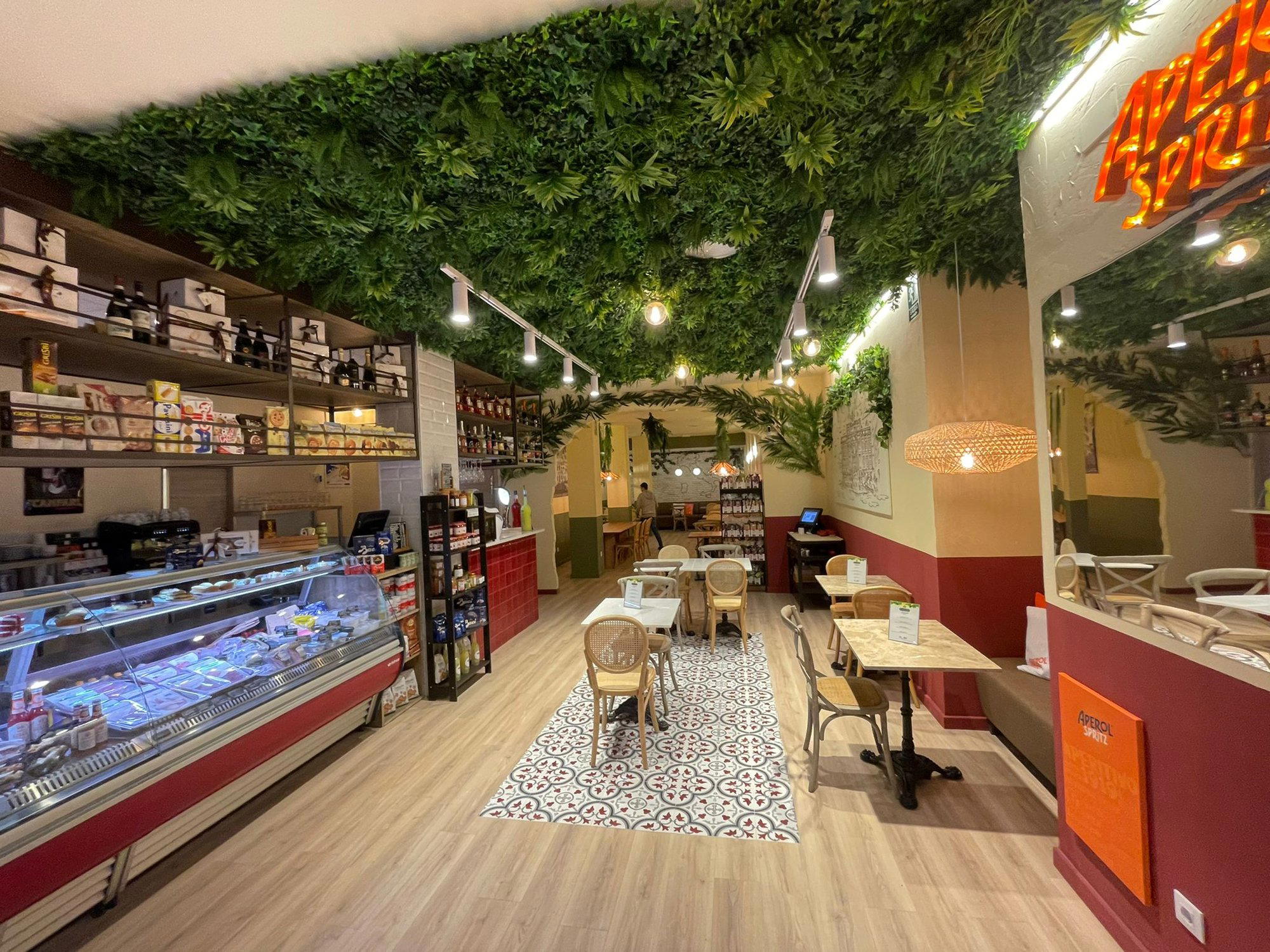
Italian Cooking in a Spanish Postcode
Madrid's Salamanca district has long positioned itself as the city's most composed neighbourhood: wide Bourbon-era avenues, a concentration of independent boutiques, and a dining scene that skews toward Spanish tradition and high-end creative tasting menus. The neighbourhood is home to some of Spain's most decorated kitchens — venues like Deessa and Paco Roncero represent the kind of Michelin-weighted ambition that defines Madrid's upper dining tier. Against that backdrop, the Italian trattoria occupies a quieter but equally purposeful role: it is where the neighbourhood eats on a Tuesday.
Just Italia Barrio Salamanca sits on Calle de Castelló, a street that runs through the heart of the district and doubles as a daily artery for residents rather than a tourist corridor. That address matters. Italian restaurants in Madrid have historically clustered around busier, more visitor-facing zones, but a positioning this deep inside Salamanca signals a different orientation — one aimed at repeat custom from a residential base rather than footfall from passing trade. It is the kind of address where the clientele knows the menu before they sit down.
The Italian Table in Madrid: A Longer Tradition Than It Appears
Italy's culinary influence on Spain is older and more layered than most diners appreciate. The Habsburg connections between the two countries, the shared Mediterranean pantry of olive oil, cured pork, and preserved fish, and the postwar Italian immigration waves all contributed to a Spanish familiarity with Italian cooking that predates the trattoria boom of the 1990s and 2000s. Madrid's appetite for pasta, pizza, and cured meats has sustained a generation of Italian restaurants across every price point and neighbourhood, from the student-budget joints of Malasaña to the white-tablecloth end of the Recoletos axis.
What has shifted in the past decade is quality stratification. Madrid now has a cohort of Italian restaurants that take sourcing seriously, importing PDO-designated ingredients and building wine lists around regional Italian producers rather than the standard Chianti-and-Prosecco shorthand. The trattoria format, at its most considered, functions as the Italian equivalent of a Spanish casa de comidas: unpretentious in presentation, disciplined in sourcing, consistent in execution. Just Italia, as a brand with a presence in Salamanca, occupies that middle ground between casual and considered.
What the Neighbourhood Demands
Salamanca's dining culture is shaped by a resident demographic that tends to eat late, spend comfortably, and return regularly. The neighbourhood does not reward gimmickry. A restaurant that relies on novelty or spectacle will find the Salamanca crowd harder to hold than one that simply delivers the same plate, cooked correctly, every service. Italian cooking, particularly pasta, risotto, and wood-fired or oven-baked preparations, lends itself naturally to that kind of consistent register.
Madrid's creative fine dining scene, anchored by venues like DiverXO, Coque, and DSTAgE, operates in a separate category entirely. Those kitchens are destination restaurants, drawing from across the city and beyond. The Italian trattoria in Salamanca competes on different terms: proximity, familiarity, and the particular satisfaction of a meal that does not require a special occasion to justify. For a broader view of where Just Italia sits within Madrid's full dining spectrum, the EP Club Madrid restaurants guide maps the city's range from neighbourhood staples to Michelin-weighted tables.
Italy's Regional Depth and What It Means at the Table
Italian cuisine's strength as an export format lies in its regional specificity. The differences between a Roman cacio e pepe, a Bolognese ragù, a Neapolitan pizza, and a Venetian bigoli in salsa are not interchangeable variations on a theme, they are distinct culinary traditions shaped by geography, agriculture, and centuries of local practice. A restaurant that draws on this depth, even selectively, is doing something meaningfully different from one that treats Italian cooking as a single, undifferentiated category.
Spain's own dining culture shares that regional intensity. The distance in philosophical approach between Arzak in San Sebastián and Quique Dacosta in Dénia, or between El Celler de Can Roca in Girona and Aponiente in El Puerto de Santa María, reflects a country that has always understood cuisine through a regional lens. A Spanish diner in Salamanca, accustomed to thinking about provenance and regional identity in their own national cooking, tends to apply the same scrutiny to what lands on the plate from an Italian kitchen. That is a demanding audience in the leading sense.
Planning Your Visit
Just Italia Barrio Salamanca is located at Calle de Castelló, 113, in the 28006 postcode, within walking distance of the Núñez de Balboa and Lista metro stations on Line 4. Salamanca is one of Madrid's safest and most walkable districts, and the Castelló corridor is well-served by city buses connecting to the broader centre. Booking ahead is the prudent approach for weekend evenings in any Salamanca restaurant that has built a local following, the neighbourhood's residents tend to plan their dining rather than improvise it. For current hours, reservations, and any menu information, visiting the restaurant directly is recommended, as operational details are not published through this platform. Madrid's dinner service typically runs from around 9pm, with kitchens in Salamanca often active until midnight on busy nights.
For those building a wider Spain itinerary around serious eating, the country's top tier extends well beyond Madrid. Azurmendi in Larrabetzu, Martin Berasategui in Lasarte-Oria, Mugaritz in Errenteria, Cocina Hermanos Torres in Barcelona, Ricard Camarena in València, and Atrio in Cáceres each represent different expressions of Spanish regional cooking at its most considered. For global comparison, Le Bernardin in New York City and Atomix in New York City illustrate the range of what sustained culinary ambition looks like across different formats and traditions.
How JUST ITALIA BARRIO SALAMANCA Madrid: Hours and Dress Code compares with similar nearby venues.
| Venue | Cuisine | Price |
|---|---|---|
| ita | Farm to table | €€ |
| Surtopía | Andalusian | €€€ |
Continue exploring
More in Madrid
Restaurants in Madrid
Browse all →
Bars in Madrid
Browse all →
Hotels in Madrid
Browse all →



At a Glance
- Cozy
- Casual
- Casual Hangout
- Family
- Standalone
Current opening hours
- Monday
- 11:30 AM–12 AM
- Tuesday
- 11:30 AM–12 AM
- Wednesday
- 11:30 AM–12 AM
- Thursday
- 11:30 AM–12 AM
- Friday
- 12 PM–12:30 AM
- Saturday
- 12 PM–12:30 AM
- Sunday
- 12 PM–12 AM
Hours can change for holidays and private events. Last verified .
Relaxed and casual atmosphere reminiscent of small family-run Italian spots, with moderate noise levels.
Know Before You Go
- Getting there
- Calle de Castelló, 113, Salamanca, 28006 Madrid, Spain