Our verdict
Pizzart Luchana sits on Calle de Luchana in Madrid's Chamberí district, where the neighbourhood's residential character sets the backdrop for a pizza-focused address that operates well outside the city's fine-dining circuit. The format positions it in a tier defined by craft over ceremony, drawing a local crowd that returns for the product rather than the occasion.

Pearl is the En Primeur Club membership app, where members save venues, book tables and use the concierge.
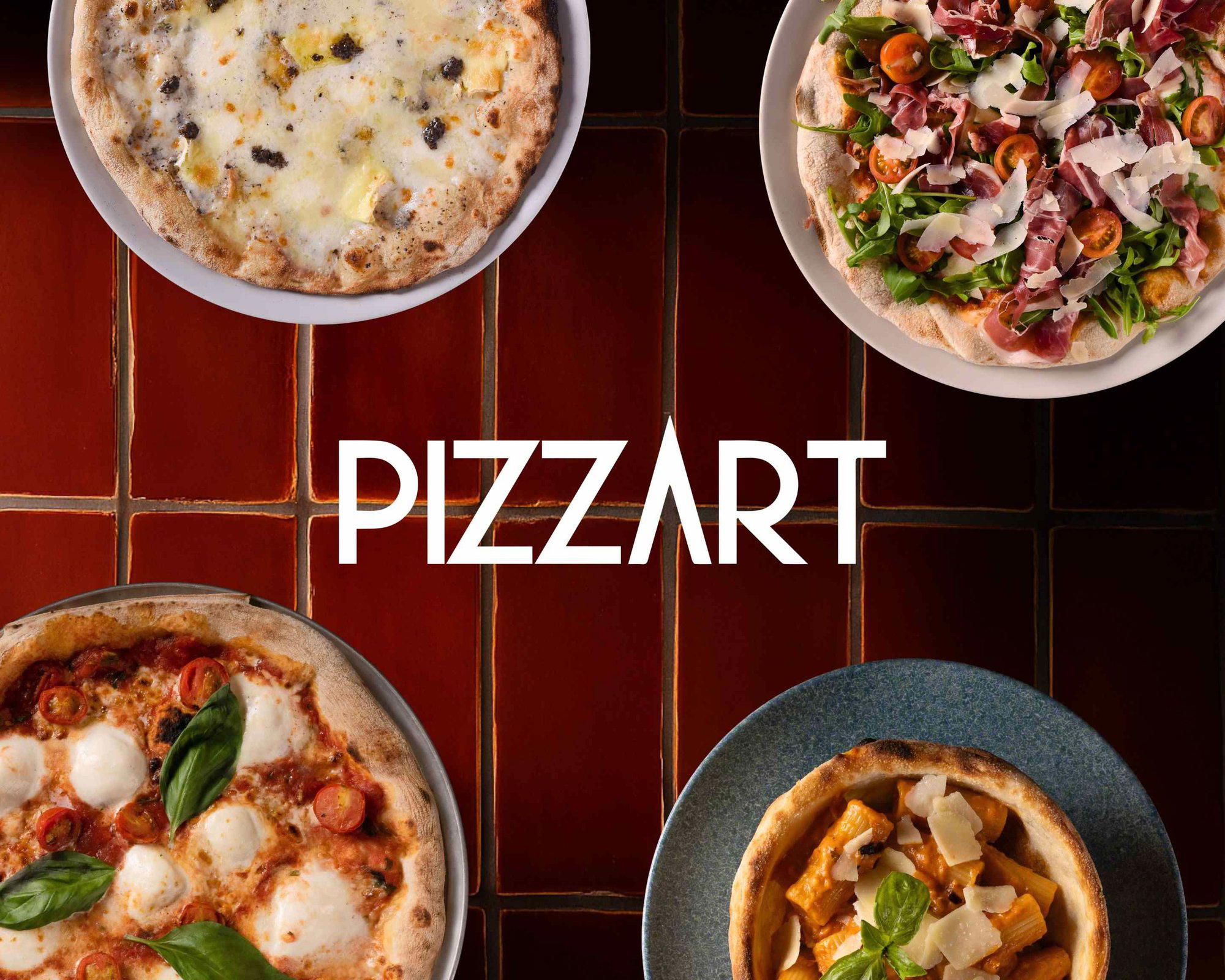
The menu
What to order
- Pizza Roulette
- Porchetta Pizza
- Carbonara Rigatoni
A Street in Chamberí, and What It Tells You About the Menu
Calle de Luchana runs through one of Madrid's most settled residential barrios, where the density of neighbourhood bars and mid-format restaurants reflects a population that eats out habitually rather than occasionally. The street does not attract the destination-dining crowd that gravitates toward Chamberí's more conspicuous addresses, and that is precisely the point. In a city where the premium dining conversation is dominated by tasting-menu formats at places like DiverXO, Coque, and Deessa, the neighbourhood pizza address operates under a different logic entirely: proximity, repetition, and the kind of product that earns regular visits rather than special-occasion bookings.
Pizzart Luchana belongs to that category. The name places pizza at the centre of the proposition, and the Luchana address anchors it firmly in the fabric of local Chamberí rather than in the broader Madrid dining circuit. What that means in practice is a menu architecture built around a single product type, executed with enough consistency to build a neighbourhood following in a barrio where residents have well-formed eating habits and a short tolerance for mediocrity.
What a Pizza-Focused Menu Reveals About Priorities
When a restaurant commits its menu to a single product category, the decision functions as an editorial statement. There is nowhere to hide: the dough, the fermentation, the temperature management, the topping ratios, and the bake all become the entire argument. Madrid's pizza scene has matured considerably over the past decade, moving from a landscape defined by international chains and Italian-immigrant trattoria formats toward a smaller cohort of addresses that treat the product with the same technical seriousness applied to Spanish regional cooking elsewhere in the city.
That shift mirrors what has happened in other European capitals: the arrival of long-fermented doughs, higher-hydration blends, and wood or electric deck ovens calibrated for specific crust outcomes has separated the category into tiers that are increasingly legible to the eating public. A pizza-focused menu, when executed at the craft end of that spectrum, communicates its ambitions through process signals rather than description. The presence of named flour varieties, fermentation times listed on menus, or topping provenance noted on the board all function as shorthand for where a given address has positioned itself.
The menu structure at a venue like Pizzart Luchana, operating in a residential street rather than a tourist corridor, tends to reward regulars over first-timers. The logic of returning customers is different from the logic of destination diners: the former want reliable execution and incremental variation; the latter want a legible narrative they can carry away. Both audiences exist in Madrid, but the Luchana address serves the former more naturally than the latter.
Chamberí and the Economics of the Neighbourhood Format
Chamberí has historically attracted a professional, middle-to-upper-middle demographic that supports mid-format restaurants at a density few other Madrid barrios can match. The district sits between the higher-volume commercial energy of Malasaña to the south and the quieter, more expensive residential calm of Almagro to the east, and its restaurant mix reflects that position: sociable, quality-conscious, priced for regularity rather than occasion.
Within that context, a pizza address at the craft end of the category competes less with the broader Madrid restaurant market and more with the specific habits of the surrounding streets. It is the trattoria three blocks away, the neighbourhood ramen counter that opened eighteen months ago, and the established Spanish regional restaurant that has held the same tables for twenty years. That is the competitive set that matters, and winning within it requires consistency above all else.
Spain's broader restaurant culture, visible in destinations from El Celler de Can Roca in Girona to Arzak in San Sebastián and Martín Berasategui in Lasarte-Oria, is often discussed through the lens of its multi-starred fine-dining tier. But the day-to-day eating life of Spanish cities runs on a different register: neighbourhood-scale venues with focused menus, afternoon lunch services, and a relationship with regulars built over years rather than curated through reservation platforms. Pizzart Luchana operates in that register.
Planning Your Visit
Chamberí is direct to reach from central Madrid. The Iglesia and Bilbao metro stations, both on Line 1, place Calle de Luchana within a short walk. The barrio's grid layout makes orientation easy for visitors arriving from other parts of the city. Given the neighbourhood format and the local clientele, arriving outside peak lunch and dinner windows on weekdays tends to involve shorter waits than weekend evenings, when Chamberí's density of residents eating out creates pressure across most formats in the area.
For context on the broader Madrid dining scene, see our full Madrid restaurants guide. Those with an appetite for Spain's wider regional cooking should also consider addresses such as Aponiente in El Puerto de Santa María, Azurmendi in Larrabetzu, Quique Dacosta in Dénia, Mugaritz in Errenteria, Ricard Camarena in València, Cocina Hermanos Torres in Barcelona, and Atrio in Cáceres, each of which represents a distinct strand of the country's broader culinary confidence.
At a Glance: Format Comparison
| Venue | Format | Price Tier | Booking Lead Time |
|---|---|---|---|
| Pizzart Luchana | Neighbourhood pizza | Mid-range | Walk-in likely |
| DiverXO | Progressive tasting menu | €€€€ | Months in advance |
| Coque | Spanish creative tasting menu | €€€€ | Weeks to months |
| Deessa | Modern Spanish tasting menu | €€€€ | Weeks in advance |
| Paco Roncero | Creative tasting menu | €€€€ | Weeks in advance |
Frequently asked questions
What dish is Pizzart Luchana famous for?
What the name and address establish clearly is a pizza-centred proposition in Chamberí, a barrio where neighbourhood restaurants build reputations through repeated execution of a focused product rather than through any single signature. For verified current menu detail, contacting the venue directly is advisable.
How hard is it to get a table at Pizzart Luchana?
Pizzart Luchana's Chamberí location and neighbourhood format suggest it operates closer to the walk-in or short-notice end of the booking spectrum, unlike Madrid's tasting-menu addresses, several of which require weeks or months of lead time. Weekend evenings in Chamberí draw heavy local foot traffic across most formats, so arriving early or mid-week is the more reliable approach.
What is Pizzart Luchana known for?
The venue is positioned as a pizza-focused address in Chamberí's Calle de Luchana, serving a primarily residential neighbourhood with consistent eating habits. Its standing within the local Chamberí scene, rather than the broader Madrid fine-dining circuit, defines the kind of recognition it carries: the loyalty of a regular clientele rather than critical award cycles. No Michelin recognition or 50 Best placement is recorded for the venue.
Is Pizzart Luchana suitable for visitors staying outside Chamberí?
For visitors based in central Madrid, the Iglesia or Bilbao metro stops on Line 1 put Calle de Luchana within easy reach. The neighbourhood context means the experience is shaped by local rhythms rather than tourist programming, which can be an asset for visitors wanting to eat outside the well-worn centro histórico circuit. The pizza format and mid-range positioning make it an accessible option without the planning horizon required by Madrid's tasting-menu tier.
Cuisine-First Comparison
Comparable venues nearby, for context on price, style, and recognition.
| Venue | Cuisine | Price | Notes |
|---|---|---|---|
| Pizzart LuchanaThis venue (the venue you are viewing) | Authentic Italian Pizza | $20–30 | Not listed |
| Pizzart Recoletos | Artisanal Italian Pizza | $20–30 | Recoletos |
| NAP | Authentic Neapolitan Pizza | $20–30 | Lavapies |
| El Bacaro de Fabio | Venetian Italian Trattoria | $30–50 | Palacio |
| Oven Mozzarella Gran Vía | Authentic Italian Pizza and Pasta | $20–30 | Chueca |
| L'ORO DI NAPOLI YESERIAS | Neapolitan Pizza & Italian Pasta | $20–30 | Acacias |
Continue exploring
More in Madrid
Restaurants in Madrid
All restaurants in Madrid →
Bars in Madrid
All bars in Madrid →

Details
- Lively
- Trendy
- Modern
- Group Dining
- Casual Hangout
- Date Night
- Open Kitchen
- A La Carte
- Vegetarian Friendly
- Vegan Options
Current opening hours
- Monday
- 10 AM–12:30 AM
- Tuesday
- 10 AM–12:30 AM
- Wednesday
- 10 AM–12:30 AM
- Thursday
- 10 AM–12:30 AM
- Friday
- 10 AM–12:30 AM
- Saturday
- 11 AM–12:30 AM
- Sunday
- 11 AM–12:30 AM
Hours can change for holidays and private events. Hours as of .
Pleasant and lively atmosphere with friendly service, suitable for casual meals.