Planted on the edge of Plaza de la Paja in Madrid's La Latina quarter, El Bacaro de Fabio draws from the Italian bacaro tradition — the neighbourhood wine-bar format that prizes provenance over spectacle. The kitchen operates within a short sourcing radius, and the room reflects the medieval square outside its windows rather than competing with it. For visitors working through Madrid's serious dining scene, this is a calibrated counterpoint to the city's tasting-menu flagship tier.
Pearl is the En Primeur Club membership app — saves, bookings, and concierge access live there. Same editors, same standards.
- Address
- Pl. de la Paja, 2, Centro, 28005 Madrid, Spain
- Phone
- +34910390457
- Website
- elbacarodefabio.es
- Directions
- Get directions
 Saves & bookings on Pearl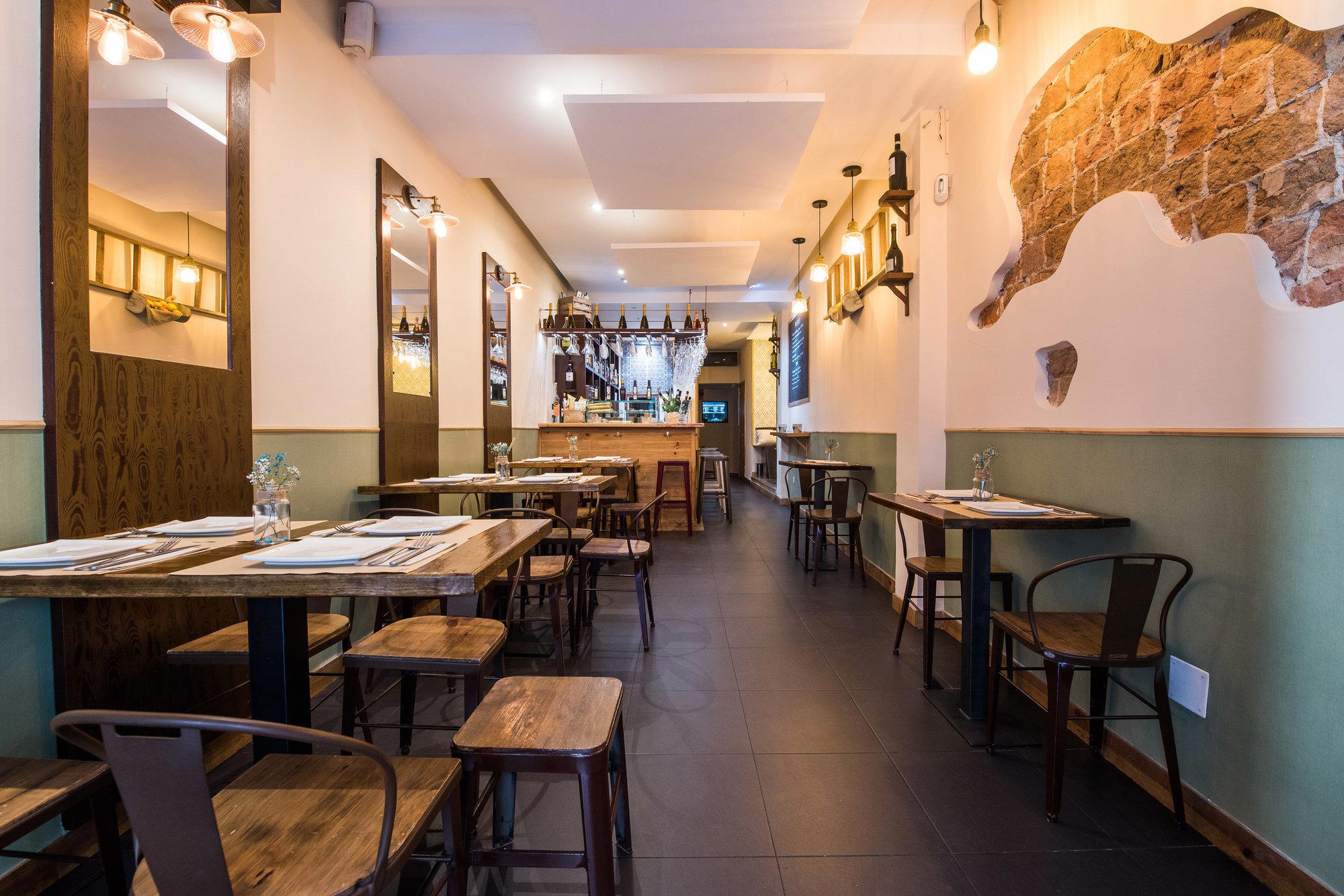
Plaza de la Paja and the Room That Faces It
La Latina's Plaza de la Paja is one of Madrid's oldest medieval squares, and the buildings that frame it have been accumulating context for centuries. Arriving at El Bacaro de Fabio from the cobbled approach off Calle de la Cava Baja, the square opens ahead of you before the restaurant does — a deliberate spatial sequence that sets the register before you sit down. The format here belongs to the Venetian bacaro tradition: a wine-led, counter-friendly model built around small plates and carefully sourced provisions rather than theatrical tasting menus. That tradition has a clear logic — the bacaro exists to frame ingredients and producers, not to mediate between the kitchen and the guest through elaborate technique.
Madrid's serious dining tier in 2024 runs heavily toward creative tasting menus. DiverXO, Coque, Deessa, DSTAgE, and Paco Roncero all operate at the €€€€ tier with structured progression menus and significant advance bookings. El Bacaro de Fabio sits outside that cohort deliberately, the bacaro format resists the sequenced-experience model and instead positions the guest as a participant in an ongoing conversation about what's available, what's in season, and where it came from. That positioning is a genuine editorial choice about what dining should do.
The Italian Bacaro in a Spanish Context
The bacaro is Venice's oldest hospitality format, predating the modern restaurant concept by several centuries. Traditionally, bàcari operated as standing wine bars where local producers brought their bottles and the kitchen assembled small plates, cicchetti, from whatever the morning's market offered. Provenance wasn't a marketing angle in that model; it was a structural requirement. You served what was available from people you knew.
Transplanting that format to Madrid creates an interesting tension. Spanish wine culture runs deep in La Latina, where tapas bars have operated on a similar sourcing logic for generations, but the Italian bacaro adds a layer of producer-specificity that differs from the generalist Spanish approach. Where a traditional Madrid taberna might pour house wine from an unnamed cooperative, the bacaro format demands named bottles with traceable origins. At El Bacaro de Fabio, that Italian insistence on provenance intersects with a Spanish neighbourhood that already understands the rhythm of small plates and shared tables.
This intersection matters beyond the conceptual. Spain's ingredient supply chains are among Europe's most sophisticated at the premium end, the same networks that feed El Celler de Can Roca in Girona and Mugaritz in Errenteria also service smaller, less-flagged kitchens that know where to source. A Madrid restaurant operating on Italian sourcing principles with access to Spanish producers sits at a genuinely productive intersection, Iberian charcuterie logic applied to bacaro format, Levantine citrus and vegetables feeding a Venetian-derived small-plates model.
Sourcing as the Central Argument
The editorial angle at a venue like this is always ingredient provenance, what arrives in the kitchen, from where, and how that shapes what reaches the table. The bacaro tradition is structurally honest about this: the menu changes because the supply changes, not because a chef wants to express a new concept. That makes sourcing the primary curatorial act. A kitchen working within this framework makes its most important decisions before service, not during it.
Spain's regional produce diversity gives that curatorial act significant range. The country's north-south gradient runs from Atlantic seafood cultures in Galicia and the Basque Country, the territory of Arzak and Martin Berasategui, through Castilian legume and game traditions in the centre, down to Andalusian olive oil and sherry cultures in the south, where Aponiente has built an entire creative argument around marine ingredients from the Bay of Cádiz. A Madrid kitchen drawing from this geography has access to one of the most varied ingredient maps in Europe.
The Italian framework adds a different layer: cured meats, aged cheeses, and preserved products with documented regional origins. When that Italian charcuterie and cheese logic meets Spanish raw-material quality, jamón ibérico with verified dehesa provenance, cheeses from Castilla-La Mancha or the Pyrenees, anchovies from Cantabria, the sourcing argument becomes genuinely bilateral rather than derivative. Neither tradition dominates; the result is a kitchen that reads like a well-organised import of two serious food cultures rather than a fusion exercise.
La Latina as a Dining Quarter
The neighbourhood context matters here. La Latina is Madrid's oldest and densest restaurant quarter, with a bar and restaurant density that rewards walking rather than planning. The streets between Plaza de la Paja and Plaza de la Cebada contain some of the city's most consistent traditional tapas addresses alongside more recent openings that have introduced natural wine lists and market-led menus. The Saturday and Sunday El Rastro flea market moves through nearby streets, generating a rhythm of afternoon eating and drinking that is specific to this neighbourhood and largely absent from Madrid's northern dining districts.
For visitors covering Spain's full serious dining range, from Quique Dacosta in Dénia to Azurmendi in Larrabetzu, from Ricard Camarena in València to Cocina Hermanos Torres in Barcelona, El Bacaro de Fabio represents the end of that itinerary where formality drops and provenance takes over from performance. That's a useful mode to end on. See also our full Madrid restaurants guide for broader context on where this fits within the city's tiers.
Internationally, the small-plates, producer-forward format has developed serious critical credibility. Lazy Bear in San Francisco built a counter-culture dining model that eventually earned Michelin recognition; Le Bernardin in New York demonstrates that ingredient-first philosophy can operate at the highest tier of formal fine dining. El Bacaro de Fabio sits at a different point on that spectrum, less formal, more neighbourhood-specific, but shares the foundational logic: the ingredient is the argument, and the kitchen's job is not to obscure it.
Planning a Visit
El Bacaro de Fabio is located at Plaza de la Paja, 2, in the Centro district of Madrid (28005). The address places it directly on the square, walkable from La Latina metro station and from the main concentration of La Latina's tapas bars on Calle de la Cava Baja. Booking details, current hours, and pricing are best confirmed directly with the venue, as the bacaro format means availability and menu composition can shift with short notice.
| Venue | Format | Price Tier | Booking Lead Time |
|---|---|---|---|
| El Bacaro de Fabio | Italian bacaro / small plates | Unconfirmed | Confirm directly |
| DiverXO | Progressive tasting menu | €€€€ | Several weeks to months |
| Coque | Creative tasting menu | €€€€ | Several weeks |
| DSTAgE | Modern Spanish tasting menu | €€€€ | Several weeks |
| Atrio (Cáceres) | Creative fine dining | €€€€ | Advance booking advised |
Continue exploring
More in Madrid
Restaurants in Madrid
Browse all →
Bars in Madrid
Browse all →
Hotels in Madrid
Browse all →


At a Glance
- Cozy
- Classic
- Intimate
- Casual Hangout
- Group Dining
- Date Night
- Terrace
- Standalone
- Beer Program
- Local Sourcing
- Street Scene
Current opening hours
- Monday
- 1 PM–12 AM
- Tuesday
- 1 PM–12 AM
- Wednesday
- 1 PM–12 AM
- Thursday
- 1 PM–12 AM
- Friday
- 1 PM–12 AM
- Saturday
- 12:30 PM–12 AM
- Sunday
- 12:30 PM–12 AM
Hours can change for holidays and private events. Last verified .
Warm and welcoming with a simple, comfortable setting that evokes the essence of Venice; terrace seating on Plaza de la Paja provides a pleasant outdoor atmosphere.
Know Before You Go
- Getting there
- Pl. de la Paja, 2, Centro, 28005 Madrid, Spain