
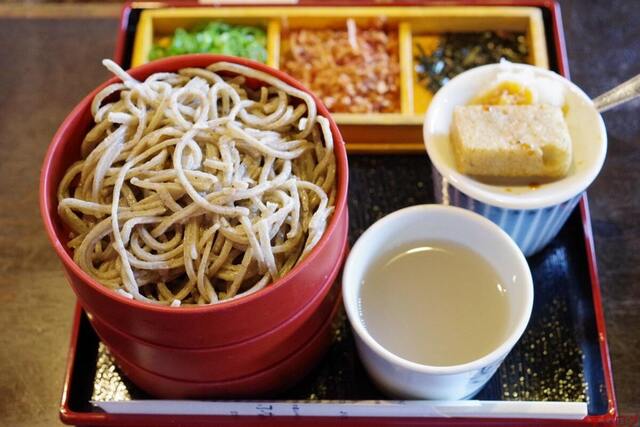
Okuizumo’s soba culture is agricultural before it is fashionable, and Jun Soba Ippuan fits that grain-first reading of Shimane dining. Selected for Tabelog 100 Soba WEST 2025, the house-restaurant format points to a rural noodle tradition where buckwheat, udon, sake, and shochu sit closer to local routine than destination theatrics.
Pearl is the En Primeur Club membership app — saves, bookings, and concierge access live there. Same editors, same standards.
- Address
- 89-2 Shimoyokota, Okuizumo, Nita District, Shimane 699-1822, Japan
- Phone
- +81 854-52-9870
- Website
- ippu-an.com
 Saves & bookings on Pearl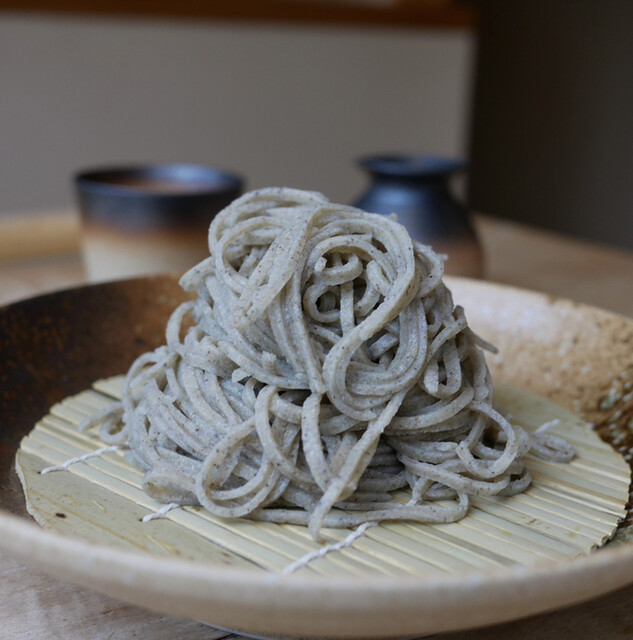
Approaching a soba house in Okuizumo is different from walking into a station-side noodle counter in Tokyo or Osaka. The tempo is slower, the cues are domestic, and the meal makes more sense when read through the surrounding mountain basin: buckwheat country, not metropolitan trend. Jun Soba Ippuan belongs to that rural Japanese category where the room, the grain, and the short lunch rhythm carry as much meaning as the menu itself.
That matters because soba is one of Japan’s clearest tests of sourcing discipline. Wheat noodles can forgive more handling; buckwheat is less accommodating, more direct, and more tied to place. In Shimane, the appeal is not ornament. It is the relationship between milling, water, noodle texture, dipping broth, and the restraint expected of a serious soba meal. The restaurant’s selection for Tabelog 100 Soba WEST 2025 gives it a clear external signal within a field that includes specialist houses across western Japan, while its presence in Okuizumo keeps the experience far from the urban tasting-menu economy.
Buckwheat country, not city spectacle
Western Japan’s soba map is uneven. Kyoto and Osaka have the density, but mountain towns supply a different kind of authority: proximity to buckwheat growing regions, farmhouse formats, and a customer base that treats soba as daily food rather than performance. Okuizumo sits in that second register. The strength of a place like this is not a chef biography or a long sequence of composed plates; it is the confidence to let soba and udon remain the centre of gravity.
The listed categories, soba and udon, put the kitchen inside a practical Japanese noodle tradition rather than a narrow connoisseur-only format. That breadth is useful for mixed groups, but the editorial reason to come is the buckwheat. In premium soba culture, the difference between a competent bowl and a destination-worthy one is rarely theatrical. It comes down to proportion, cut, aroma, broth control, and whether the noodle feels tied to its region rather than interchangeable with a city chain. Jun Soba Ippuan’s repeated Tabelog Soba selections in 2022, 2024, and 2025 place it in a sustained recognition bracket, not a single-season anomaly.
Price is part of the story too, even if the right rail carries the details. Rural soba at this level can remain relatively accessible compared with sushi counters, kappo rooms, and wagyu-led set menus in major cities. That creates a useful contrast for travellers building a Japan itinerary: a serious meal does not always require luxury pricing, formal pacing, or a reservation war. For broader planning across the area, Our full Nita-gun restaurants guide gives the local dining context, while Our full Nita-gun hotels guide, Our full Nita-gun bars guide, Our full Nita-gun wineries guide, and Our full Nita-gun experiences guide help frame the wider stop.
The house-restaurant format keeps the meal grounded
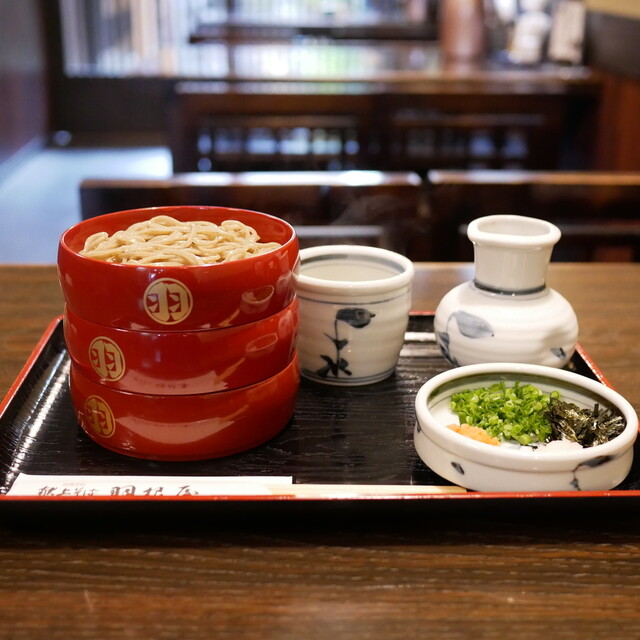
The setting is listed as a house restaurant, with counter seating and tatami space, which signals a meal closer to regional hospitality than polished urban minimalism. That format suits soba. The food does not need a dramatic room; it needs a calm one. Private-room availability for a small group and a non-smoking policy also make the address more flexible than many old-school noodle shops, especially for families or travellers combining a meal with a rural drive through Shimane.
The drink list points in the same direction. Sake and shochu are not decorative add-ons here; they are the natural companions to buckwheat and broth in this part of Japanese dining. Soba houses have long played a dual role: lunch stop, casual gathering place, and, in some regions, a place for soba-mae, the habit of drinking before noodles. Without overstating the format, the presence of both sake and shochu keeps the restaurant within that broader tradition.
For comparison inside Japan’s lower-priced specialist dining tier, the useful peers are not luxury restaurants but other focused regional addresses. China Sanchi Soba Kobo Funatsu, Teuchi Kamiyo Soba, and Kenjo Soba Haneya Honten sit in a similar price band, which helps show how soba excellence often operates outside the country’s high-spend dining narrative. The contrast with urban or category-shifting venues such as -Grilled beef Sukiyaki- KAMAKURA TANUKIAN 鎌倉 たぬき庵 in Kamakura, . 鮪と炭火焼き うお炭 秋葉原店 in Tokyo, .cafe in Osaka, and .know in Kumamoto is instructive: those addresses belong to different city rhythms, while Okuizumo soba asks for a quieter reading.
How to read the meal
The defining idea is plain: buckwheat first. That does not mean austere dining for its own sake. It means the meal should be judged by noodle focus, regional fit, and whether the supporting elements stay in proportion. The listing also includes udon, take-out service, and a health-and-wellness menu note, but the critical signal remains soba, reinforced by the Tabelog 100 Soba WEST 2025 selection.
Travelers coming through Shimane should treat this as a precision stop rather than a long-form restaurant event. It is suited to a lunch built around local movement: station arrival, countryside driving, or a wider Okuizumo itinerary. Children are welcomed, payment options are broad for a rural noodle house, and parking availability makes the address easier to fold into a day outside the bigger cities. Those practical strengths do not make the food secondary; they make the soba tradition easier to access without stripping it of place.
Japan’s dining range is often flattened into sushi, ramen, wagyu, and tasting menus. A soba house like this pushes against that simplification. It shows why regional noodle craft deserves the same attention as more expensive formats: fewer components, sharper judgment, less room for disguise. For readers mapping other Japanese dining styles, compare the category shift with (Shoku) Vietnam in Kawasaki, [Curry Senmon Ten] Maruyama Kyoju. in Sapporo, [ki:] in Kyoto, #肉といえば松田 奈良本店 in Kashihara, 1/3 HAMBURGER FACTORY in Kanazawa, 1000 in Yokohama, and 1000mヒュッテ 1000m Hut in Kutchan. For Japanese food culture outside Japan, Jōdo Saké Bar in Los Angeles and Onigiri Time in Pasadena show how different formats carry pieces of the same pantry abroad.
Comparison Snapshot
Comparable venues by cuisine and price in the same metro.
| Venue | Cuisine | Price | Notes |
|---|---|---|---|
| Jun Soba IppuanThis venue — the venue you are viewing | Traditional Japanese Soba | $ | Not listed |
| Koja Sobaya (古謝そば屋) | Traditional Miyako Soba | $ | Hirara, Miyakojima City |
| Sukesama (ぎょうざ処 亮昌) | Kyoto Gyoza Specialist | $ | Gion |
| つけめん 頑者 新横浜ラーメン博物館店 | Tsukemen (Dipping Ramen) | $ | Shin-Yokohama |
| Maki no Udon (牧のうどん 空港店) | Traditional Fukuoka Kamaage Udon | $ | Hakata |
| Nakakooriten Kakigori | Japanese Kakigori (Shaved Ice) | $ | Shingu |
Recognition history
Dated appearances from independent guides and award organizations, with the underlying list record or original source where available.
Tabelog 100 #62 · No. 62
Tabelog · Tabelog 100 - Soba - WEST - 2025
Continue exploring
More in Nita-gun
Restaurants in Nita-gun
Browse all →

At a Glance
- Quiet
- Cozy
- Minimalist
- Solo
- Casual Hangout
- Standalone
- Local Sourcing
Current opening hours
- Monday
- 11 AM–3 PM
- Tuesday
- 11 AM–3 PM
- Wednesday
- 11 AM–3 PM
- Thursday
- Closed
- Friday
- 11 AM–3 PM
- Saturday
- 11 AM–3 PM
- Sunday
- 11 AM–3 PM
Hours can change for holidays and private events. Last verified .
Simple, restrained, and artisanal, with an emphasis on quiet precision and traditional soba craftsmanship.