Our verdict
At the airport edge of Fukuoka, Maki no Udon draws the kind of repeat custom that says more about a city's food culture than any fine-dining credential. The Hakata branch of one of Kyushu's most-followed udon chains, it occupies the same neighbourhood logic as the city's tonkotsu counters: low formality, high consistency, and a bowl that local regulars will drive across town for.

Pearl is the En Primeur Club membership app — saves, bookings, and concierge access live there. Same editors, same standards.
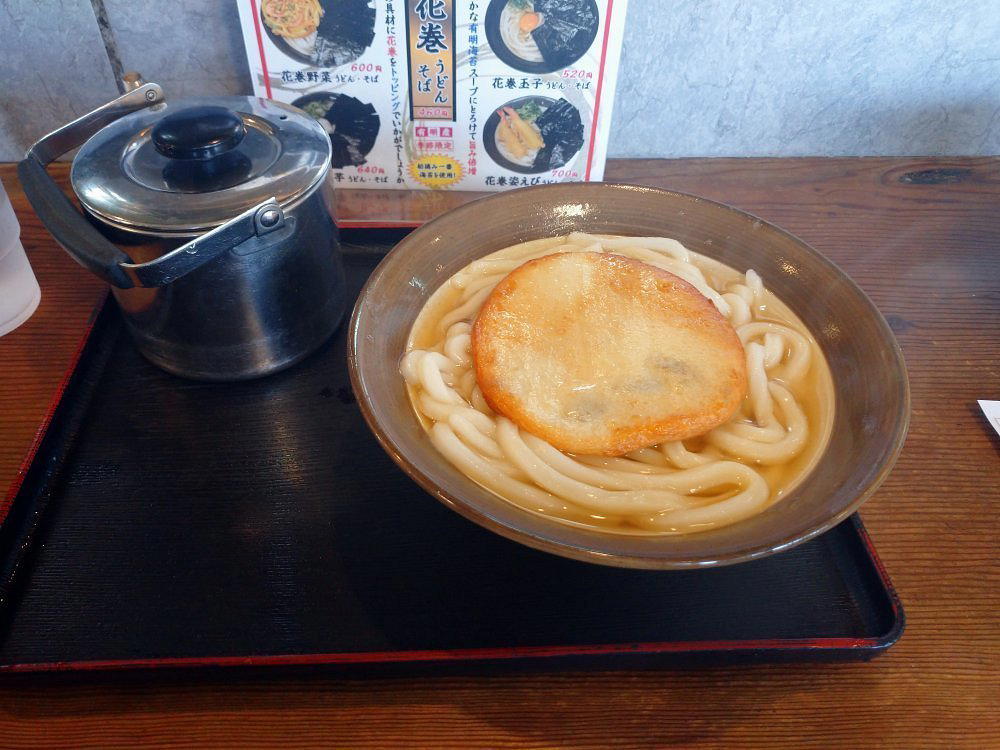
The menu
What to order
- Niku goboten udon
- Goboten udon
What the Regulars Know About Fukuoka Udon
There is a version of Fukuoka dining that appears in the guidebooks, built around Michelin counters, omakase tasting menus, and the kind of reservations that require planning months in advance. Places like Goh (French) and Chikamatsu (Sushi) represent that register of the city well. Then there is the version that locals actually live inside, and in Fukuoka that version is built as much on udon as on ramen. Maki no Udon (牧のうどん 空港店), the airport-area branch of one of Kyushu's most-recognised udon operations, belongs to that second category. Its address in the Higashi-Hiraо district puts it on the functional eastern fringe of the city, close to Fukuoka Airport, which gives it a slightly different rhythm from downtown counters: the clientele is a mix of neighbourhood regulars who have been eating here for years and travellers catching one last bowl before departure.
What brings the regulars back is a specific quality that Fukuoka udon does differently from Sanuki-style udon in Kagawa or the thick, chewy versions common in Tokyo. Hakata udon is deliberately soft. The noodle is built to absorb broth rather than hold its own texture against it, and the broth itself tends toward a lighter, cleaner dashi profile than the richer pork-forward stocks you find in the city's tonkotsu ramen shops. This is not a style that photographs dramatically. It is a style that rewards the person who has eaten it thirty times and understands what they are looking for.
The Unwritten Logic of the Bowl
At this type of Kyushu udon counter, the ordering logic that regulars follow reflects something about how the cuisine is structured. The bowl arrives as a canvas, and the toppings — burdock root tempura, soft-cooked egg, green onion, various forms of age (deep-fried tofu) — function as the variables that a diner adjusts over many visits rather than deciding on once. First-time visitors tend to order a standard combination. Regulars make micro-adjustments: more broth, a specific topping added or removed, a request timed around what they know is freshest at a given hour. This accumulated preference is the kind of knowledge that only consistent return visits produce.
The Fukuoka udon scene sits in an interesting position relative to the city's more internationally recognised food categories. Tonkotsu ramen commands global attention; Hakata-style sushi gets its share of coverage. Udon, by contrast, operates as a more locally anchored tradition, with places like Maki no Udon drawing almost exclusively from a base of people who grew up eating in this register. That insularity is not a limitation. It is evidence of how thoroughly the format is embedded in everyday Fukuoka life. For the broader context of the city's dining character, the EP Club Fukuoka restaurants guide maps how these categories sit alongside each other.
The Airport Branch in Context
The airport location of this particular branch shapes the experience in ways worth understanding before you arrive. Maki no Udon as a chain has roots across Fukuoka Prefecture and parts of Saga, and the airport-area branch (博多区東平尾2-4-30) is one of the more traffic-heavy locations in the network. It serves a neighbourhood function during slower hours and a transit function during peak airport periods. The two audiences coexist without tension at the counter level, though the rhythm of service shifts noticeably depending on time of day.
Compared to destination-dining experiences elsewhere in Japan, such as Gion Sasaki in Kyoto or HAJIME in Osaka, this is entirely different territory. There is no advance reservation, no dress code consideration, no tasting menu structure. The comparison is useful not to position Maki no Udon as lesser, but to clarify where it sits inside Japanese food culture: in the everyday working tier that sustains a city's culinary identity far more consistently than its ceremonial counters do.
Within Fukuoka's own food scene, this branch sits at a different register than Asago, Beef Taigen, or Bekk, each of which operates in a more formal or specialist mode.
What Keeps People Returning
The regulars' economy of a place like this runs on reliability. In a city with a food culture as dense as Fukuoka's, consistency is not a small achievement. The same bowl, executed to the same standard, at the same pace, on a Tuesday afternoon or a Sunday morning: that is the implicit contract of the neighbourhood udon counter, and it is one Maki no Udon has maintained across enough years to build the kind of repeat custom that sustains a location in a competitive food city.
For visitors making their way through a broader Japanese itinerary that might include Harutaka in Tokyo or akordu in Nara, a stop at this type of counter provides useful calibration. The high-formality end of Japanese dining is easier to research in advance; the everyday register requires more local knowledge and more willingness to sit at a counter where the menu is primarily in Japanese and the order comes quickly. That friction is part of what makes the experience read as authentic rather than curated.
The airport proximity is, in practical terms, an advantage if you are timing a final meal before a domestic or international departure from Fukuoka Airport. The bowl is fast to prepare, the format requires no lengthy commitment, and the price point keeps the decision low-stakes. What you get in return is a direct read on how Fukuoka's food culture actually operates at ground level, which is more instructive than many experiences that cost considerably more.
Planning a Visit
Maki no Udon 空港店 sits in the 博多区東平尾 district, close enough to Fukuoka Airport to make it a practical pre-departure stop. No reservation is required or expected at a counter of this type. Specific hours, current pricing, and any recent changes to the menu are best confirmed locally or through current Japanese-language sources, as the venue's operational details are not consistently published in English. Arriving outside of peak lunch hours (roughly 12:00-13:30) tends to mean shorter waits and a slightly calmer counter environment, which is worth factoring in if your timing allows flexibility. Payment norms at Fukuoka's everyday udon counters skew toward cash, though this varies by location and should be verified on arrival.
Frequently asked questions
Where exactly is Maki no Udon (牧のうどん 空港店)?
Maki no Udon (牧のうどん 空港店) is located at 博多区東平尾2-4-30, 福岡市, 福岡県, 812-0853, Fukuoka.
Is Maki no Udon 空港店 a good option for a meal before departing Fukuoka Airport?
The 博多区東平尾2-4-30 address places this branch within practical range of Fukuoka Airport, making it one of the few options in that corridor where travellers can eat a proper Fukuoka-style udon bowl rather than terminal food. As a walk-in counter with no booking requirement, timing is straightforward — factor in the queue at busy departure hours. For visitors leaving the city, it serves as a low-friction final stop in a food culture that Fukuoka locals take seriously.
What do regulars order at Maki no Udon (牧のうどん 空港店)?
At Kyushu-style udon counters like this one, regulars typically anchor their order around the broth-soaked soft noodles that define the regional style — the udon here absorbs the soup as it sits, which means seasoned visitors often factor in pacing. The 博多区東平尾 location draws a mix of airport-bound travellers and local repeat customers, and the ordering rhythm tends to follow the menu's set combinations rather than improvised requests. Topping choices such as burdock tempura or soft-boiled egg are standard points of customisation at this type of Fukuoka counter.
What's the best way to book Maki no Udon (牧のうどん 空港店)?
No reservation is required or expected at Maki no Udon 空港店 — this is a walk-in counter operation in the Fukuoka tradition of accessible, queue-and-seat udon dining. The airport proximity in 博多区東平尾 means peak times align with departure windows, so arriving outside the midday and early evening rushes typically means a shorter wait. No phone or website booking channel is listed for this branch.
Cuisine and Awards Snapshot
| Venue | Cuisine | Price | Awards |
|---|---|---|---|
| Maki no Udon (牧のうどん 空港店)This venue (the venue you are viewing) | Traditional Fukuoka Kamaage Udon | $1–10 | Not listed |
| Chikamatsu | Edomae Sushi Omakase | $200–300 | La Liste Top Restaurants · Tabelog Gold #5 |
| Gahoujin 我逢人 | Seasonal Sushi Omakase | $200–300 | Tabelog Bronze #80 |
| Genkiippai | Hakata Tonkotsu Ramen | $10–20 | Tabelog 100 #51 |
| Matsuyama | Seasonal Kyushu Kaiseki Omakase | $300–500 | Tabelog Silver #74 |
| Mihara Tofuten | Traditional Japanese Tofu Izakaya | $30–50 | Not listed |
Continue exploring
More in Fukuoka
Restaurants in Fukuoka
All restaurants in Fukuoka →
Details
- Classic
- Cozy
- Casual Hangout
- Family
- Solo
- Sake Program
- A La Carte
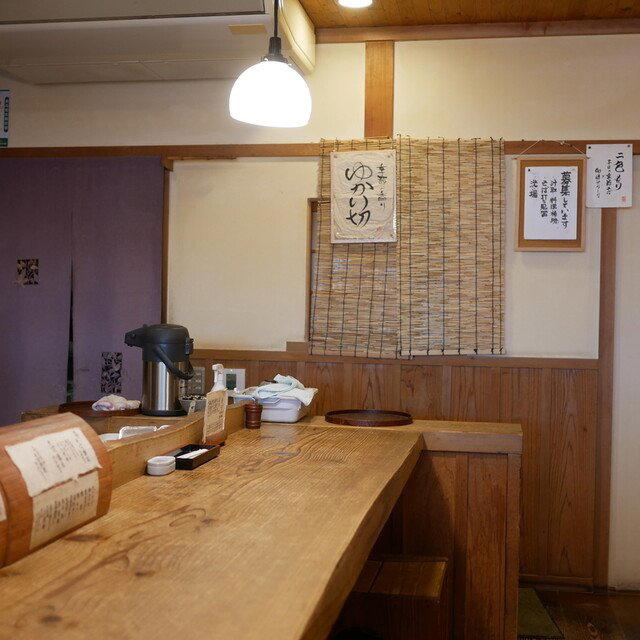
Simple, no-frills atmosphere with counter and tatami seating focused on quick, comforting noodle service.