On College Street in Toronto's Little Italy, J's Steak Frites brings a focused, French-bistro sensibility to one of the city's most food-dense corridors. The kitchen centers on the steak frites format, a discipline that rewards sourcing decisions and technique over novelty. For those tracking where Toronto's mid-range dining is genuinely doing something worth the detour, this address belongs in the conversation.
Pearl is the En Primeur Club membership app — saves, bookings, and concierge access live there. Same editors, same standards.
- Address
- 577 College St, Toronto, ON M6G 1B2, Canada
- Phone
- +14379959999
- Website
- jssteakfrites.ca
- Directions
- Get directions
 Saves & bookings on Pearl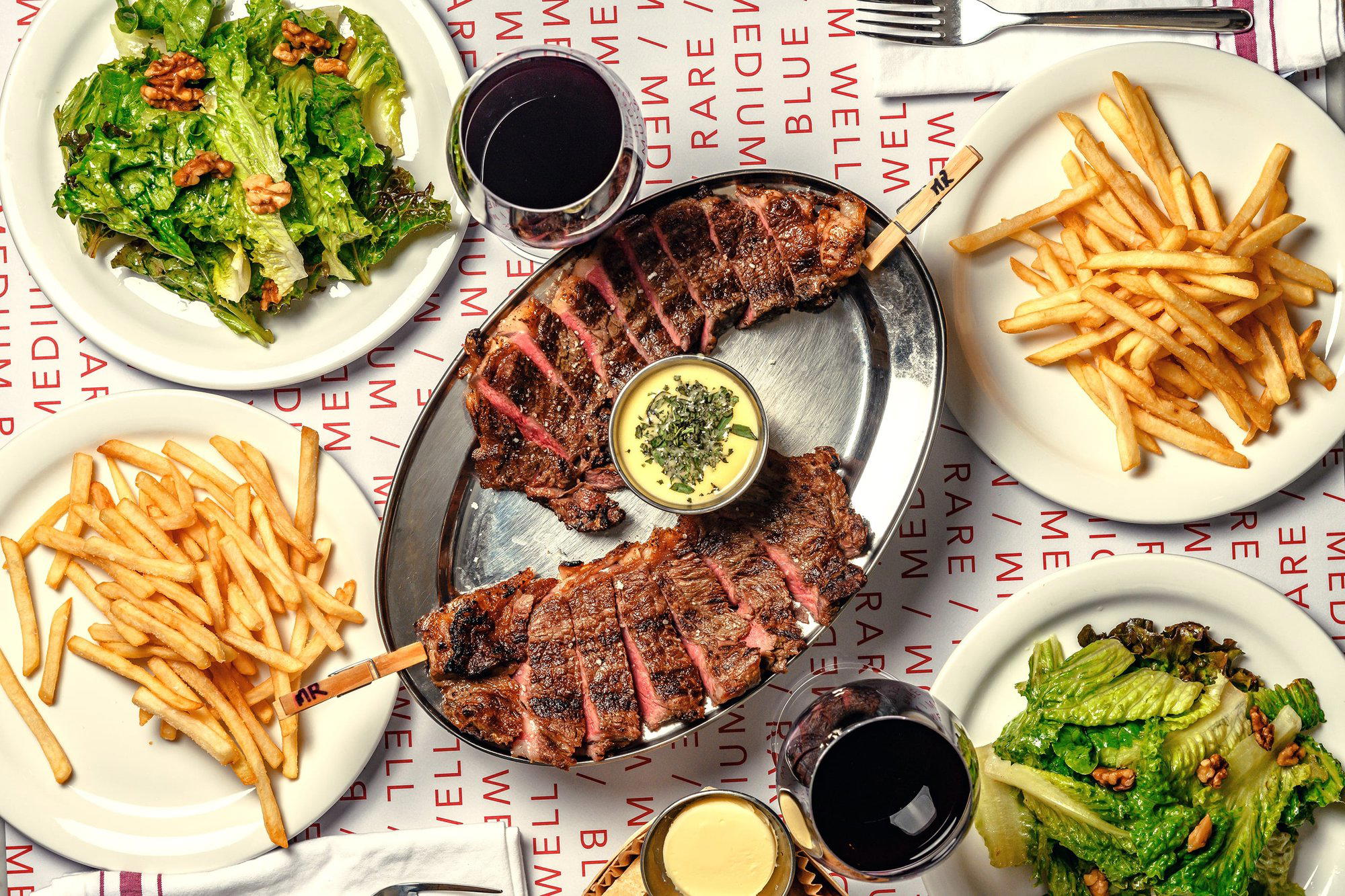
College Street and the Case for the Single-Dish Kitchen
College Street between Bathurst and Ossington has been absorbing restaurants for decades, cycling through Italian social clubs, Portuguese bakeries, and successive waves of independently owned dining rooms. J's Steak Frites, at 577 College St, sits inside that ecosystem, operating in a format that is as legible as it is demanding: the French bistro discipline of steak frites, where there is nowhere to hide if the sourcing or the execution falters.
It is one of the few restaurant concepts built almost entirely around the quality of two ingredients, the beef and the potato, and the precision of a small set of techniques. In Paris, the brasseries that have defined the format for generations succeed not through elaboration but through consistency and supply chains: specific cuts from known producers, frites cooked in specific fat at a controlled temperature, béarnaise or frites sauce made fresh.
What the Format Demands from the Sourcing
Ontario has its own beef production, but the premium end of the Canadian steakhouse market has long oriented toward Alberta, specifically toward the ranching operations around High River and Lethbridge that produce CAAMP-certified Angus and heritage breeds with the fat marbling that rewards high-heat cooking. A steak frites operation in Toronto that is serious about the format has to make a deliberate choice about that supply chain: Ontario producer relationships, Prairie imports, or a mix that reflects both regional specificity and practical sourcing logistics.
That sourcing decision flows downstream into everything. The cut selection, whether the kitchen commits to bavette, entrecôte, or hanger over the more predictable striploin, tells you something about the kitchen's relationship with the animal. Bistro tradition in France has always favored the working cuts: bavette de boeuf, onglet, côte de boeuf for sharing. These are cuts that require a butcher relationship, not just a distributor. In Toronto's better independently owned rooms, that kind of direct relationship with a supplier has become a distinguishing marker, separating kitchens that think about the full carcass from those that order portion-controlled center cuts from a broadline supplier. At the level of a College Street bistro format, the choice of cut is one of the clearest signals of kitchen intent.
Alo, Sushi Masaki Saito, Aburi Hana, DaNico, and Don Alfonso 1890, each running tasting menus or highly curated formats that price against international peers. The bistro format sits in a different tier and a different register, more repeatable, less ceremonial, more dependent on a regular neighborhood clientele than on destination diners. That is not a lesser category; it is a different discipline, and College Street is one of the better Toronto corridors for supporting it.
The Frites Side of the Equation
Steak can be managed through sourcing alone; frites require both sourcing and process. The potato variety matters, Bintje and Agria are the European standards; Russet Burbank is the North American workhorse, and each behaves differently in hot fat. The fat itself is a choice with both flavor and operational implications: beef tallow gives depth and is period-appropriate for the bistro format; refined vegetable oil is operationally simpler but flatter. The double-fry protocol, blanch at lower temperature, finish at high heat, is the structural requirement for a frite that holds its exterior crunch while staying yielding inside. Any kitchen running high volume on a Saturday night has to have the process locked in, not improvised.
A city like Toronto, which now has genuine depth across Japanese, Italian, and contemporary Canadian cooking (see Tanière³ in Quebec City or AnnaLena in Vancouver for how other Canadian cities are approaching the problem of ingredient-led cooking), is still building out its bistro fluency. The French bistro model is harder to sustain than it looks, and rooms that take it seriously, holding to the format's discipline rather than drifting toward fusion or expansion, are doing something the market actually needs.
Planning Your Visit
J's Steak Frites is at 577 College St in the stretch of Little Italy that runs west of Bathurst. College Street has strong transit access on the 506 Carlton streetcar, and street parking is available in the surrounding blocks, though weekend evenings on College fill quickly. For restaurants of this type and neighbourhood profile in Toronto, arriving without a reservation on a Thursday through Saturday is a gamble; a midweek visit or an early-evening slot on weekends gives more flexibility. The format, focused menu, relatively compact room, means the kitchen runs at pace during service, and the experience is calibrated for a two-hour visit rather than a long tasting evening.
Elsewhere in the Canadian dining network, ingredient-focused operations at the farm or estate level include Eigensinn Farm in Singhampton and Restaurant Pearl Morissette in Lincoln, both of which push the sourcing question to its logical extreme. Closer to Toronto, The Pine in Creemore and Barra Fion in Burlington represent the regional dining network that serious Toronto diners use to triangulate what good Ontario-sourced cooking can look like. For traditional Canadian dining with historical depth, Aux Anciens Canadiens in Quebec remains the reference point. International reference rooms worth knowing for the bistro and French-technique end of the spectrum include Le Bernardin in New York City and, for a Korean-inflected fine dining contrast, Atomix in New York City. Jérôme Ferrer - Europea in Montreal and Narval in Rimouski round out the Canadian comparison set for anyone tracing how French-influenced cooking plays across the country. For a Calgary contrast in the meat-focused dining category, Bearspaw Golf Club in Calgary represents the Prairie end of the beef-and-dining equation.
A Credentials Check
Comparable venues nearby, for context on price, style, and recognition.
| Venue | Cuisine | Price | Notes |
|---|---|---|---|
| J's Steak FritesThis venue — the venue you are viewing | Parisian Steak Frites | $$ | Not listed |
| Burdock Kensington Tavern | Canadian Steakhouse Tavern with Craft Beer | $$ | Kensington |
| The Dirty Bird Chicken + Waffles | Fried Chicken & Waffles | $$ | Kensington |
| COMPTON AVE | British Gastro Pub | $$ | Little Portugal |
| Gusto 101 | Modern Southern Italian | $$ | Fashion District |
| Aloette Go | Modern American Burgers & Fried Chicken | $$ | Liberty Village |
Continue exploring
More in Toronto
Restaurants in Toronto
Browse all →
Bars in Toronto
Browse all →
Hotels in Toronto
Browse all →



At a Glance
- Classic
- Cozy
- Intimate
- Rustic
- Date Night
- Celebration
- Special Occasion
- Casual Hangout
- Standalone
- Extensive Wine List
- Craft Cocktails
- Local Sourcing
Current opening hours
- Monday
- Closed
- Tuesday
- Closed
- Wednesday
- 5:45–11 PM
- Thursday
- 5:45–11 PM
- Friday
- 5:45–11 PM
- Saturday
- 5:45–11 PM
- Sunday
- 4:30–9:30 PM
Hours can change for holidays and private events. Last verified .
Cheery, unfussy bistro atmosphere with warm lighting and friendly service that evokes the streets of Paris.