Joon
Our verdict
Joon sits in Monnickendam, one of the Netherlands' most quietly serious dining towns, where the Gouwzee waterfront sets a tone that larger cities rarely match. The address on Galgeriet places it within a village that has long punched above its size in regional Dutch fine dining. Expect cooking that reflects the agricultural and coastal richness of North Holland's hinterland.

Pearl is the En Primeur Club membership app — saves, bookings, and concierge access live there. Same editors, same standards.
Waterfront Villages and the Dutch Fine Dining Map
The Dutch fine dining circuit is not defined by Amsterdam alone. Over the past two decades, some of the country's most committed cooking has emerged from smaller towns where lower overheads, proximity to producers, and a stable local clientele allow kitchens to work at a slower, more deliberate pace. Monnickendam is one of those towns. Sitting on the Gouwzee, roughly twenty kilometres north of Amsterdam, it belongs to the ring of Waterland villages that have remained architecturally intact while the capital expanded, and that character carries into its restaurant culture. Joon, at Galgeriet 5B, occupies that context directly: a waterfront address in a settlement where the surrounding landscape — polders, channels, grazing land, North Sea access — determines what ends up on the plate more immediately than it would in any urban kitchen.
For a broader map of where Monnickendam fits among the Netherlands' serious dining destinations, see our full Monnickendam restaurants guide.
What Galgeriet Communicates Before You Sit Down
The Galgeriet address is not incidental. In Monnickendam, the old harbour edge carries the weight of a town that traded in herring and smoked eel for centuries, and that history runs through the local food culture in ways that are difficult to replicate inland. Approaching from the village centre, the water is present before the restaurant is: you hear it, smell the air off the Gouwzee, and understand that the kitchen here has access to ingredients that an Amsterdam restaurant would need to order in. That proximity to source is the primary editorial fact about Joon's setting, and it frames everything that follows.
The Netherlands' fine dining tier has become more geographically distributed. Houses like De Librije in Zwolle, 't Nonnetje in Harderwijk, and Inter Scaldes in Kruiningen have established that the most rigorous ingredient-led cooking in the country rarely happens at a central city address. Joon sits inside that broader pattern, in a town where the water and the polder together function as a natural larder rather than a backdrop.
Ingredient Sourcing as the Core Editorial Argument
North Holland's agricultural profile is specific. The polders immediately surrounding Monnickendam produce dairy, lamb, and waterfowl under conditions that differ from those found in the southern Netherlands or in Belgium. The Gouwzee and the broader IJmeer system historically provided eel, pike-perch, and perch to the smoking houses that once lined these harbours. Whether a contemporary kitchen draws on those traditions directly or interprets them through a modern Dutch or European technical framework, the sourcing logic is built into the geography in a way that does not require artifice. Restaurants that operate at this price tier in smaller Dutch towns, compare the positioning of De Groene Lantaarn in Staphorst or De Lindenhof in Giethoorn, tend to anchor their identity in exactly this kind of regional specificity rather than in international reference points.
That sourcing logic distinguishes smaller-town Dutch fine dining from what operates in Amsterdam's upper tier. Ciel Bleu in Amsterdam and Aan de Poel in Amstelveen operate within a different competitive frame, one shaped partly by hotel infrastructure and urban footfall. The kitchen at a Waterland address like Joon is measured instead against what the immediate region can supply and what that supply makes possible across seasons.
Atmosphere and Format
Monnickendam's scale enforces a certain intimacy. The village has fewer than ten thousand residents, which means that any restaurant operating at a serious level does so for a combination of locals, Amsterdam day-trippers making a deliberate excursion, and visitors who have done the research. The format at this kind of address in North Holland typically runs toward a set menu or limited-choice structure, the supply chains from smaller regional producers do not support the broad à la carte portfolios that urban kitchens maintain. That constraint is also a discipline: a kitchen working with what arrives from nearby farms and water systems builds menus around availability rather than around a fixed repertoire, which is a different kind of rigor from what you find at a restaurant ordering globally.
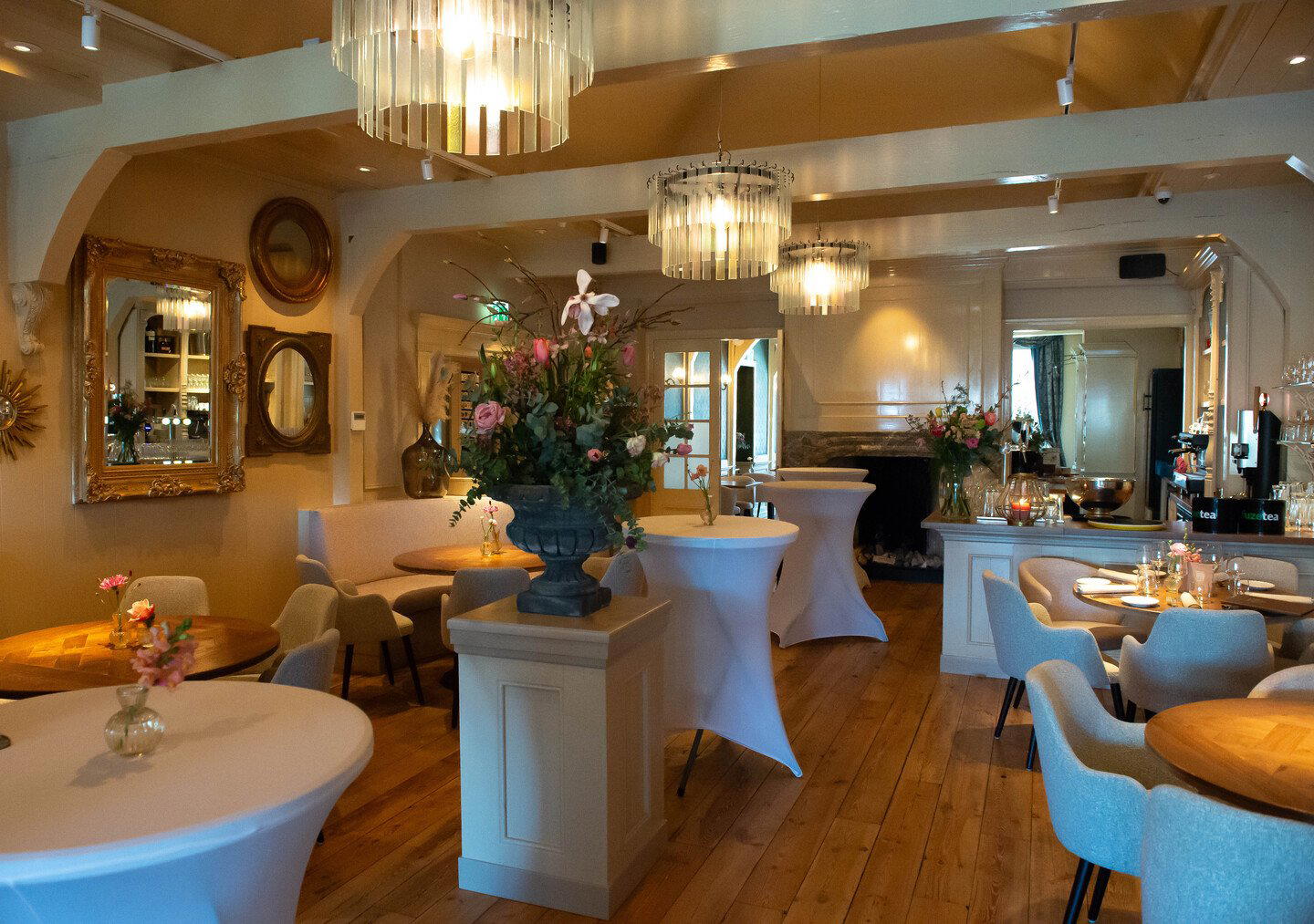
The physical environment at Galgeriet communicates this without explanation. The harbour-edge setting, the low horizontal light off the Gouwzee in the late afternoon, the absence of urban noise: these elements produce a pace that is slower than Amsterdam dining, and that pace is appropriate to cooking that tracks seasonal and tidal rhythms. It places Joon in a peer group that includes De Bokkedoorns in Overveen and Brut172 in Reijmerstok, restaurants where the natural setting is not decoration but context for the cooking itself.
Where Joon Sits in the Broader Dutch Creative Scene
The Netherlands' fine dining map now includes a meaningful cohort of kitchens working in the organic and hyper-regional register: De Nieuwe Winkel in Nijmegen and De Lindehof in Nuenen represent one end of the creative spectrum, while technically precise houses like FG François Geurds in Rotterdam and Tribeca in Heeze sit in a different register. A Waterland address positions a kitchen between those poles: regional sourcing provides the identity, but the technical ambition of Dutch fine dining as a category pushes toward craft that goes beyond rusticity. The comparison extends internationally: the ingredient-proximity argument at a harbour address like Galgeriet has equivalents in how kitchens at coastal European addresses relate to local catch, though the Dutch version operates under the additional influence of a national fine dining culture that the Michelin Guide has tracked seriously since the 1990s.
For context on what serious cooking at a waterfront address can achieve at international scale, see Le Bernardin in New York City, where the argument for sourcing discipline at the highest technical level has been made continuously for decades. The comparison is not of scale but of method: the sourcing argument is the same even when the kitchen size, the price bracket, and the competitive set differ entirely.
Planning Your Visit
Monnickendam is accessible from Amsterdam Centraal by bus (line 315 to Monnickendam village centre) in under forty minutes, making it a viable lunch or dinner excursion from the capital rather than an overnight destination for most visitors. The village is compact enough to walk between the bus stop and Galgeriet in under ten minutes. For those combining the visit with other serious North Holland or national dining destinations, 't Amsterdammertje in Loenen aan de Vecht and De Treeswijkhoeve in Waalre represent comparable territory in terms of ambition and regional focus. Booking details, current hours, and pricing are best confirmed directly with the restaurant, as the venue's publicly available contact information is limited. Waterland restaurants at this level tend toward advance booking requirements, particularly on weekends, given the combination of limited seating and strong regional demand.
For those mapping a broader Dutch itinerary that extends to more technically ambitious international reference points, Atomix in New York City illustrates how a kitchen can build a complete identity around sourcing philosophy and cultural specificity at the highest competitive tier, a useful frame for understanding what that commitment looks like when it is sustained at scale.
Frequently asked questions
Is Joon a family-friendly restaurant?
Joon sits on the Galgeriet harbour edge in a village of fewer than ten thousand residents, which tends to shape a quieter, more considered dining format rather than a casual family room. That setting suits adults and older children comfortable with a slower, course-driven pace. Younger children or families seeking an informal meal will find more flexibility elsewhere in Monnickendam's centre.
What should I expect atmosphere-wise at Joon?
The Galgeriet address places Joon on Monnickendam's historic harbour edge, a location that carries the town's centuries-old trading character rather than modern urban noise. Monnickendam's compact scale keeps the room intimate by default — this is not a city-centre venue where volume and throughput drive the format. Expect the pace and tone of a destination restaurant, where the journey to the table is part of the proposition.
Is Joon worth the trip from Amsterdam for a single meal?
Bus line 315 from Amsterdam Centraal reaches Monnickendam village centre in under forty minutes, making Joon a workable lunch or dinner destination rather than an overnight commitment. Kitchens at this address and in this register — hyper-regional, harbour-edge, rooted in North Holland sourcing — are rare at that distance from the capital. Whether the trip makes sense depends on how seriously you weight provenance-led cooking over urban convenience.
What should I eat at Joon?
The body of Joon's cooking draws from North Holland's agricultural profile: polder dairy, lamb, and waterfowl raised under conditions shaped by the surrounding wetlands, alongside the smoked and cured fish traditions the town has maintained for centuries. The kitchen operates in the hyper-regional register that defines the most committed Dutch fine dining outside Amsterdam. Specific seasonal dishes change with availability, so the menu at any given visit will reflect what North Holland produces at that moment.
A Quick Peer Check
Comparable venues nearby, for context on price, style, and recognition.
| Venue | Cuisine | Price | Notes |
|---|---|---|---|
| JoonThis venue — the venue you are viewing | French-International | Not listed | Not listed |
| De Vrijstad | French Fine Dining with Asian Influences | $50–100 | Vianen historic centre |
| Jaspers | Modern French-Dutch Fine Dining | $50–100 | Hercules Seghersbuurt |
| De Witte Dame | Contemporary European Fine Dining | $50–100 | Abcoude |
| Restaurant Unique | Creative French Fine Dining | Not listed | Gouda Vest |
| Spui76 | High-end French with Dutch and Seafood | Not listed | Spakenburg |
Continue exploring
More in Monnickendam
Restaurants in Monnickendam
All restaurants in Monnickendam →
Bars in Monnickendam
Browse all →
Hotels in Monnickendam
All hotels in Monnickendam →
Wineries in Monnickendam
Browse all →
Details
- Cozy
- Elegant
- Scenic
- Date Night
- Special Occasion
- Waterfront
- Terrace
- Waterfront
- A La Carte
- Tasting Menu
- Wine
- Vegetarian Friendly
Current opening hours
- Monday
- 5:30–10 PM
- Tuesday
- Closed
- Wednesday
- 5:30 PM–12 AM
- Thursday
- 12 AM–5 PM, 5:30–10 PM
- Friday
- 5:30–10 PM
- Saturday
- 5:30–10 PM
- Sunday
- 12–10 PM
Hours can change for holidays and private events. Last verified .
Cozy atmosphere with harbor views, friendly attentive service, and beautifully presented dishes.