
Jikka gives Kumamoto’s dining map a low-key Southeast Asian counterpoint: Thai, Vietnamese and curry cooking in Kengun rather than the castle-side restaurant corridor. Its Tabelog 100 Asian cuisine and Ethnic cuisine WEST selections in 2022, 2023 and 2024 make it a useful marker for how regional Japan now treats spice, herbs and everyday affordability with serious intent.
Pearl is the En Primeur Club membership app — saves, bookings, and concierge access live there. Same editors, same standards.
- Address
- 熊本県熊本市東区健軍3-1-55
- Phone
- +81963690025
- Website
- tabelog.com
 Saves & bookings on Pearl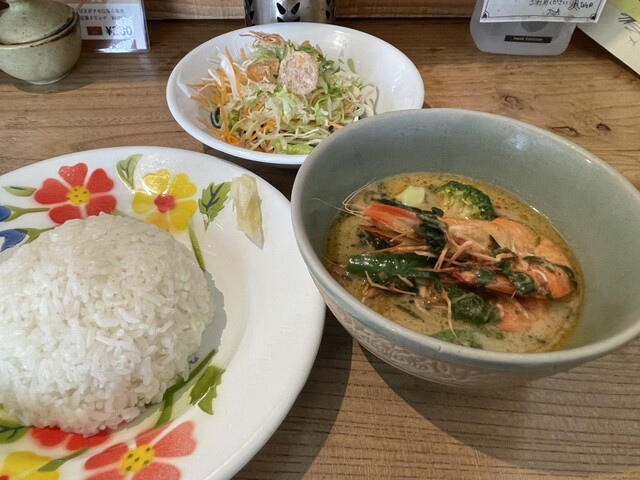
Approaching the Kengun side of Kumamoto, the city feels less like a restaurant district and more like daily-life Japan: tram stops, residential blocks, small storefronts, and the rhythm of lunch rather than ceremony. That setting matters. Southeast Asian cooking in regional Japanese cities often works at its strongest when it is not trying to imitate a capital-city dining room. The point is clarity: herbs, rice, curry, acidity, and heat translated into a local routine.
Jikka sits in that register. Its categories, Thai, Vietnamese and curry, place it outside Kumamoto’s better-known lanes of horse meat, ramen, tonkatsu and wagyu-led dining. In a city where many visitors plan around regional Japanese specialities, this is the kind of address that shows how broader Asian foodways have become part of the everyday restaurant fabric. The recognition is not decorative either: selection for Tabelog 100 Asian cuisine and Ethnic cuisine WEST in 2022, 2023 and 2024 puts it among a small group of western Japan restaurants judged within that specific genre rather than against sushi counters or kaiseki rooms.
Why Kumamoto's Asian cooking scene matters beyond the usual local-speciality circuit
Kumamoto dining is often framed through regional pride: local beef, poultry, pork cutlets, ramen, and produce from Kyushu’s volcanic soils. That frame is useful, but incomplete. The city also has a smaller layer of restaurants that use imported culinary grammar, especially spice and herb-led cooking, to broaden what a Kumamoto meal can be. Jikka belongs to that layer, where the sourcing question is less about named luxury ingredients and more about how a kitchen balances fresh aromatics, rice-based comfort, curry structure and the sharper edges of Southeast Asian seasoning for a local lunch audience.
That makes the restaurant a different proposition from Kumamoto’s high-spend rooms. antica locanda MIYAMOTO, for example, sits in a much higher price bracket and speaks to the city’s ambitious Western dining tier. China Sichuan Togen points toward Chinese regional cooking, while Amakusa Daiou Senmon Ten Tosaka keeps the focus closer to Kyushu’s own poultry culture. Read together, these places show a city with more range than the standard visitor checklist suggests.
The useful comparison is not status, but function. Some Kumamoto restaurants are destination meals; others are neighbourhood anchors with enough precision to draw attention beyond their immediate blocks. Jikka’s 16-seat scale and repeated genre-specific recognition put it in the second camp. It is not competing with steakhouse formality or Italian tasting-menu pricing. It is part of the smaller, sharper category where weekday accessibility and specialist cooking can overlap.
Spice, herbs and curry as a sourcing argument
Ingredient sourcing is often discussed in luxury language, but Southeast Asian cooking exposes it more plainly. Curry depends on how spices are layered, not merely how much heat is used. Vietnamese and Thai repertoires depend on freshness, crunch, acid and aromatic lift. When those cuisines travel into Japan, the kitchen’s real test is adaptation: finding the right local supply chain for herbs and vegetables, keeping rice and sauce in balance, and avoiding the softened, sweetened version that can flatten the original forms.
Jikka’s presence on a Tabelog 100 Asian and Ethnic cuisine WEST list is useful because that award category is cuisine-specific. It signals that the restaurant is being read within the field of Asian and ethnic cooking in western Japan, where curry houses, Thai specialists, Vietnamese kitchens and hybrid neighbourhood restaurants are compared on their own terms. For diners, the practical implication is simple: this is not a token non-Japanese option in Kumamoto. It is a specialist entry in a genre that has enough depth across western Japan to merit its own ranking architecture.
That point also explains why the restaurant belongs in a broader Kumamoto itinerary rather than as a detour from it. A meal here can sit between local Japanese meals without repeating them. For visitors building a wider city plan, Our full Kumamoto restaurants guide gives the dining context, while Our full Kumamoto hotels guide, Our full Kumamoto bars guide, Our full Kumamoto wineries guide and Our full Kumamoto experiences guide help place the meal inside the wider trip.
How to read Jikka against the city's other serious small restaurants
Kumamoto’s interesting restaurant spread is not confined to one neighbourhood or one cuisine. .know and BARON point to the city’s contemporary small-venue layer, where format and point of view matter more than size. Jikka adds another axis: affordable Asian cooking with national-list recognition and a compact room. In a city where many travellers chase local specialities first, that combination gives the restaurant its editorial weight.
The wider Japanese comparison is also instructive. Vietnam, curry and Asian comfort formats have become serious restaurant categories across the country, not just casual fallbacks. (Shoku) Vietnam in Kawasaki shows how Vietnamese cooking has earned its own dedicated audience near Tokyo. [Curry Senmon Ten] Maruyama Kyoju. in Sapporo points to curry as a regional craft rather than a single national template. [ki:] in Kyoto.cafe in Osaka, -Grilled beef Sukiyaki- KAMAKURA TANUKIAN 鎌倉 たぬき庵 in Kamakura and. 鮪と炭火焼き うお炭 秋葉原店 in Tokyo sit in different culinary lanes, but together they show how Japanese city dining is now less about a single national canon and more about exacting specialists at varied price points.
That national spread even reaches beyond Japan in EP Club’s restaurant map. Jōdo Saké Bar in Los Angeles and Onigiri Time in Pasadena show Japanese food culture moving outward; Jikka shows the reverse movement, with Southeast Asian forms settling into a Kyushu city and earning recognition on local terms. The result is not fusion as a slogan. It is a practical, small-room answer to how Kumamoto eats when it looks past its familiar regional signatures.
Side-by-Side Snapshot
Nearby venues at a similar price tier for orientation.
| Venue | Cuisine | Price | Notes |
|---|---|---|---|
| JikkaThis venue — the venue you are viewing | Casual Thai, Vietnamese & Curry Lunch Spot | $ | Not listed |
| Kumamoto Ramen Kokutei Honten | Kumamoto Ramen | $ | Nihongi |
| Mexico Restaurant Toru Tacos | Authentic Mexican tacos & tortas | $$ | Karashimacho / Sakuramachi, central Kumamoto |
| Sri Lanka Kumamoto | Sri Lankan Curry & Home-Style Dishes | $ | Chuo-ku |
| Kairakuen | Kumamoto Chinese specializing in Tai-pien noodles | $ | Shinmachi, Chuo Ward |
| Hyogo Dori | Yakitori & Chicken Dishes | $$$ | Chuo Ward |
Recognition history
Dated appearances from independent guides and award organizations, with the underlying list record or original source where available.
Tabelog 100 #86 · No. 86
Tabelog · Tabelog 100 - Asian cuisine / Ethnic cuisine - WEST - 2024



At a Glance
- Cozy
- Lively
- Solo
- Family
- Casual Hangout
- After Work
- Standalone