

Tabelog 100 #62
Our verdict
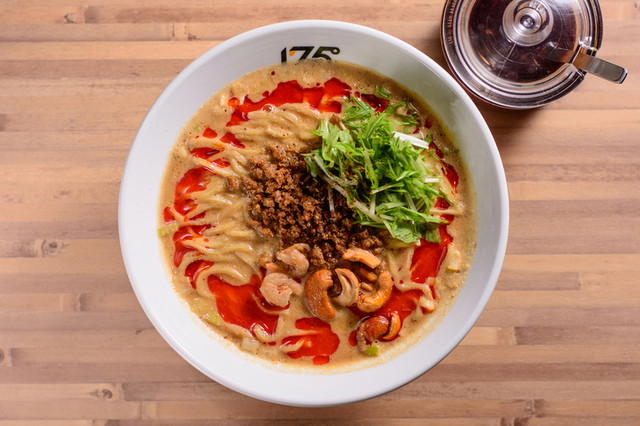
Japanese Ramen Noodle Lab Q serves modern tanrei ramen at counter service in Sapporo, with shoyu and shio bowls, a sake program, and a lunch-friendly quick bite format.

Pearl is the En Primeur Club membership app, where members save venues, book tables and use the concierge.
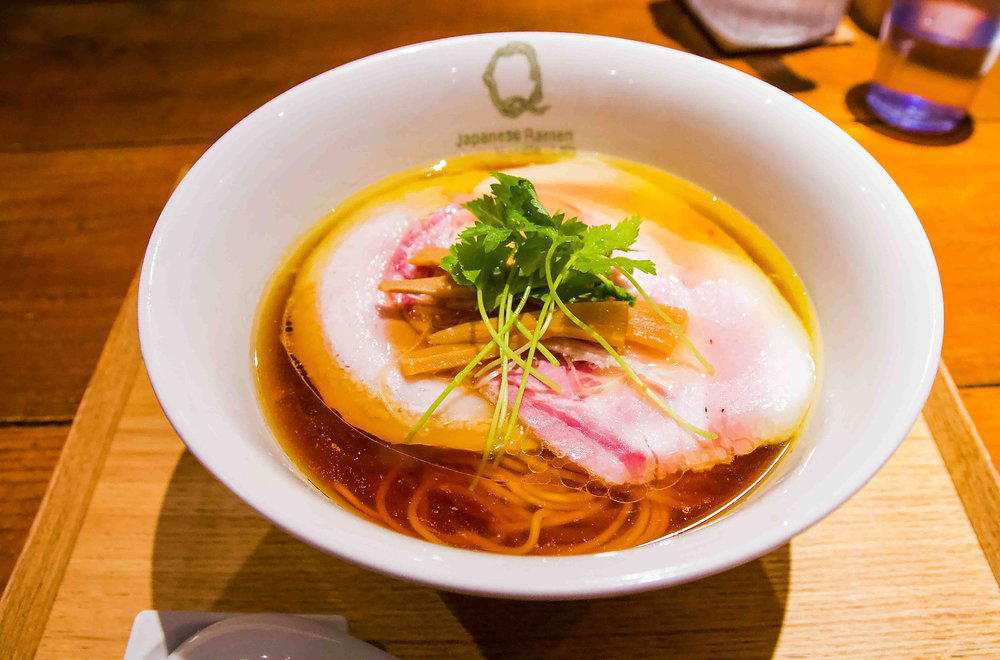
Below Street Level in Chuo Ward: Ramen as Architecture
Basement dining in Sapporo operates by different logic than the city's ground-floor ramen counters. You descend a staircase, the street noise cuts out, and the room asserts itself before the food does. Japanese Ramen Noodle Lab Q occupies basement level one of the Rindo Building on Kita 1 Jonishi in Chuo Ward, a central Sapporo address that places it within walking distance of the Odori Park corridor and the concentrated dining blocks that define the city's midtown eating culture. The subterranean format is not incidental to the experience here: it shapes the acoustics, the light temperature, and the degree of deliberateness a guest brings to the table. You are not dropping in; you are going somewhere specific.
Sapporo has one of Japan's most codified ramen identities. Miso ramen, developed here in the postwar decades, became the city's calling card nationally, and Hokkaido's cold climate created an appetite for fat-rich, deeply savory broths that could sustain workers through the winter. That heritage now supports a broad spectrum of operators, from quick-serve chains to concept-driven labs that treat the bowl as a medium for precision rather than nostalgia. Noodle Lab Q positions itself in the latter category, as the name signals. "Lab" in a Sapporo ramen context is not casual branding; it signals a methodological stance, an interest in formulation over tradition-for-its-own-sake, closer in spirit to the technical ramen movement that gained momentum in Tokyo before spreading back to regional cities.
The Physical Container
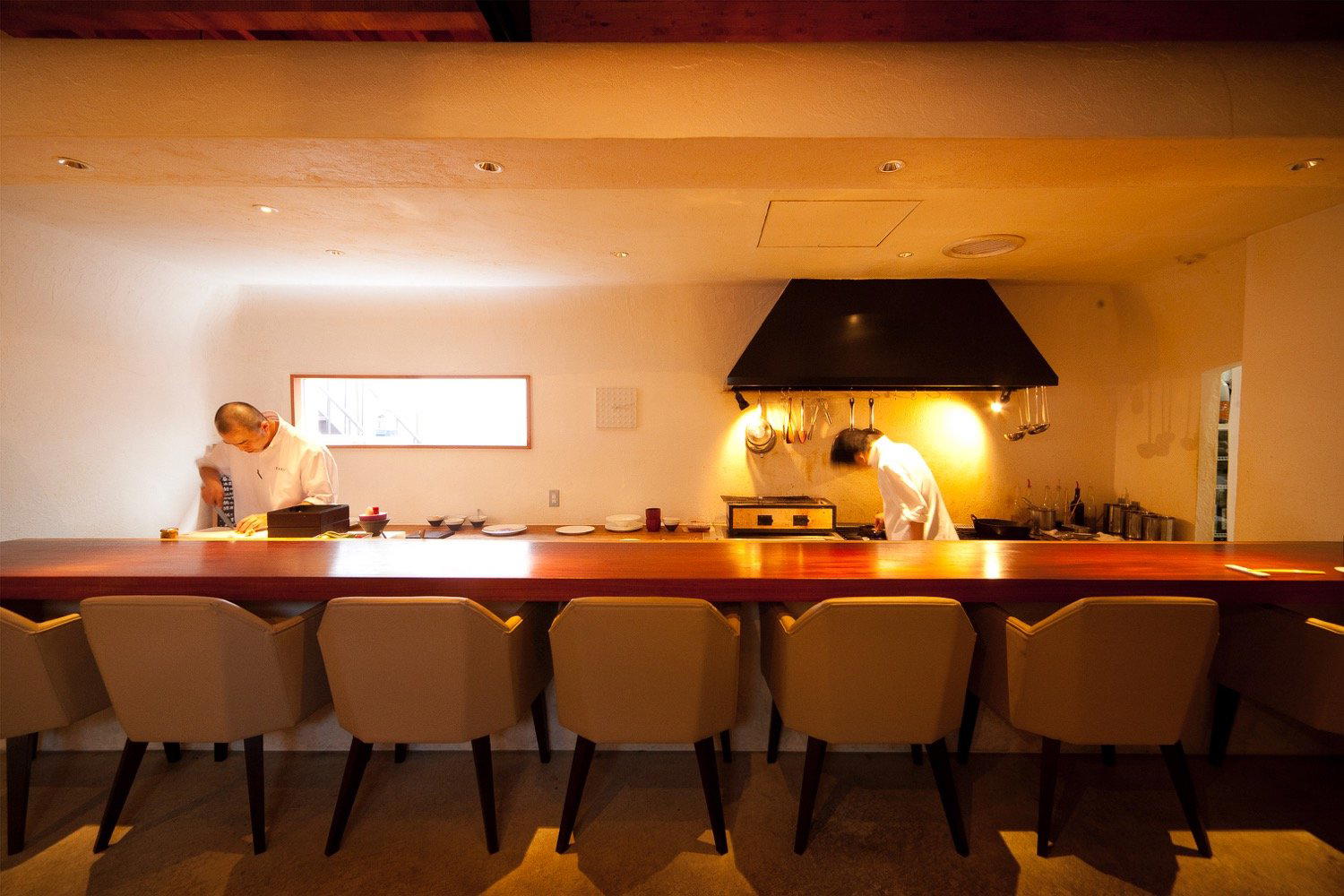
Basement restaurant design in Japanese cities tends toward one of two approaches: the intimate izakaya model, where low ceilings and wood tones create compression and warmth, or the pared-back counter format that foregrounds the kitchen as the room's dominant visual element. Noodle Lab Q's Rindo Building address places it in a building stock typical of Chuo Ward's commercial core, where mid-century and early-Heisei construction creates compact footprints at street level that open into more considered interiors below. The lab framing suggests the second approach: a space organized around the work of making ramen rather than around theatrical comfort. In this kind of room, the counter arrangement, the sightlines to the kitchen, and the materials used at worktop height carry more communicative weight than any decorative element. What you see being made is part of what you consume.
This design logic connects Noodle Lab Q to a wider pattern visible across Japan's more serious ramen operations. Where traditional shops prioritize throughput and stack tables close, concept-oriented counters slow the pace down and use physical proximity to the kitchen as a substitute for the omakase theatrics you would find at, say, the sushi or kaiseki tier. Sapporo peers like Higebozu occupy the same cultural register: ramen treated not as fast food but as a craft proposition worth lingering over.
Where Ramen Labs Sit in Sapporo's Dining Hierarchy
Sapporo's restaurant scene runs a wider range than most visitors expect. At the formal end, kaiseki houses like Hanakoji Sawada and sushi operations like Arima operate within the same credentialing frameworks as their Kyoto and Tokyo counterparts. Below that tier, Sapporo's ramen, seafood, and Hokkaido-produce-driven mid-range dining creates a second layer that is arguably the city's most distinctive contribution to Japan's national food conversation. Noodle Lab Q sits in that second layer but at its more considered end. The "lab" positioning is a deliberate signal to a guest who knows the difference between a bowl assembled from proprietary tonkotsu shortcuts and one where broth construction and noodle calibration are treated as variables worth controlling.
Compared to the broader Sapporo ramen field, which includes high-volume institutions around the Susukino and Ramen Yokocho corridors, a basement counter with a concept-forward name in Chuo Ward reads as a place more interested in a smaller, more engaged audience. This matches a national trend: as Japan's ramen culture matures, operators are bifurcating between volume-driven shops optimized for tourist traffic and destination-style counters that compete on intellectual seriousness rather than throughput. Hidetaka and aki nagao represent adjacent points on Sapporo's dining spectrum, each occupying a defined niche within the city's mid-to-upper dining range.
For context on how concept-driven Japanese restaurants perform at higher price tiers nationally, the omakase and tasting-menu format at places like Harutaka in Tokyo or Gion Sasaki in Kyoto illustrates how design-led interiors and counter formats have become shorthand for seriousness across categories. Ramen labs in Sapporo are making a related argument at a different price point.
Hokkaido Ingredients and the Ramen Frame
Sapporo's geographic position within Hokkaido matters to any ramen operation serious about its broth. The prefecture produces some of Japan's most consequential dairy, pork, seafood, and vegetable stocks, and Chuo Ward restaurants sit in a city with direct supply lines to all of it. Hokkaido miso varieties, particularly those from smaller regional producers, carry flavor profiles distinct from their Kyushu or Honshu counterparts: earthier, with higher koji ratios in some cases, and better suited to cold-weather eating. A ramen lab in this context has access to a pantry that operators in other cities cannot easily replicate. This is the ingredient context against which any Sapporo ramen offering is implicitly measured, and it raises the baseline for what a Chuo Ward counter with serious ambitions should be doing with the regional supply chain.
Other Hokkaido-focused dining concepts make explicit use of this geography. Exploring the full range of what the region's ingredient culture supports across formats is part of what makes the city worth extended dining attention. See our full Sapporo restaurants guide for mapped coverage of how Chuo Ward and the broader city divide across cuisine type, price tier, and format.
Planning Your Visit
Japanese Ramen Noodle Lab Q is located at basement level one of the Rindo Building, Kita 1 Jonishi 2-chome, Chuo Ward, Sapporo, Hokkaido. The Chuo Ward address is accessible from Sapporo's central subway network, with Odori and Sapporo stations both within walking range of the Kita 1 Jonishi block. Visiting Sapporo in winter, when the city drops well below freezing and Hokkaido miso broth makes most sense as a meal, aligns the experience with its natural season.
For broader Japan context, the ramen counter format at this level of intention connects to a dining culture visible from Fukuoka to Tokyo. Goh in Fukuoka and HAJIME in Osaka represent how Japanese cities outside the capital are producing concept-driven dining that competes on precision rather than pedigree. Noodle Lab Q makes a comparable argument within ramen's own register.
Frequently asked questions
Where do I go for Japanese Ramen Noodle Lab Q?
Japanese Ramen Noodle Lab Q is located at Japan, 〒060-0001 Hokkaido, Sapporo, Chuo Ward, Kita 1 Jonishi, 2 Chome−1−3 りんどうビル B1, Sapporo.
Is Japanese Ramen Noodle Lab Q in central Sapporo easy to find?
The venue is at basement level one of the Rindo Building, Kita 1 Jonishi 2-chome, Chuo Ward, a central Sapporo address within walking distance of the main grid. Basement entrances in Sapporo's dining district are common but require attention to building signage. Chuo Ward places it close to Odori and Susukino, the two poles of the city's dining activity.
What dish is Japanese Ramen Noodle Lab Q famous for?
The name signals the kitchen's orientation: this is a ramen operation with a laboratory approach, meaning the broth and noodle construction are treated as subjects of precision rather than convention. Hokkaido's ingredient base, dairy, seafood, and cold-climate produce, informs what serious Sapporo ramen counters build their bowls around.
Can I walk in to Japanese Ramen Noodle Lab Q?
The venue is located at B1 of the Rindo Building on Kita 1 Jonishi, a central address with reasonable foot traffic. Arriving early in a service window is the practical approach at counters of this format.
What has Japanese Ramen Noodle Lab Q built its reputation on?
The 'Lab Q' designation points to an experimental or methodical approach to ramen construction, distinguishing it from traditional Sapporo miso-ramen houses that operate within established regional templates. Located below street level in Chuo Ward, Sapporo's central district, it occupies a space where the physical remove from the street reinforces a focused dining environment.
The Quick Read
Comparable venues nearby, for context on price, style, and recognition.
| Venue | Cuisine | Price | Awards | Notes |
|---|---|---|---|---|
| Japanese Ramen Noodle Lab QThis venue (the venue you are viewing) | Modern Tanrei Ramen | $20–30 | Tabelog 100 #62 | Not listed |
| Yoshoku Konoyoshi Kiyotaku kitano ten | Japanese Yoshoku | Not listed | Tabelog 100 #23 | Kiyota, Japanese Yoshoku |
| Curry Kong | Japanese Soup Curry | $10–20 | Tabelog 100 #30 | Chūō, Japanese Soup Curry |
| Soup Curry Okushiba Shoten Ekimae souseiji | Hokkaido shrimp-broth soup curry | $20–30 | Tabelog 100 #99 | Chūō, Hokkaido shrimp-broth soup curry |
| sapporo soup curry dip | Sapporo Soup Curry | $10–20 | Tabelog 100 #3 | Kita, Sapporo Soup Curry |
| Menya Yukikaze Susukino ten | Japanese Ramen | $10–20 | Tabelog 100 #40 | Chūō, Japanese Ramen |
Recognition history
Dated appearances from independent guides and award organizations, with the underlying list record or original source where available.
Opinionated About Dining Casual in Japan Ranked #43
Opinionated About Dining
Tabelog 100 #62 · No. 62
Tabelog · Tabelog 100 - Ramen - HOKKAIDO - 2025
Continue exploring
More in Sapporo
Restaurants in Sapporo
All restaurants in Sapporo →
Bars in Sapporo
All bars in Sapporo →
Details
- Modern
- Minimalist
- Casual Hangout
- Solo
- Open Kitchen
- Sake Program
- Local Sourcing
- A La Carte
- Counter Dining
Current opening hours
- Monday
- 11 AM–3 PM
- Tuesday
- 11 AM–3 PM
- Wednesday
- 11 AM–3 PM
- Thursday
- 11 AM–3 PM
- Friday
- 11 AM–3 PM
- Saturday
- 11 AM–3 PM
- Sunday
- Closed
Hours can change for holidays and private events. Hours as of .
Compact basement space with 18 seats at counter and large table, focused on the craft of ramen preparation during lunch hours.