Our verdict
On a quiet lane in San Blas, Intillay Peruvian Fusion Food sits at the intersection of Andean ingredient culture and contemporary technique. The address on Calle Tandapata places it among Cusco's artisan quarter restaurants, where the cooking draws on the alta cocina wave that has reshaped how the city presents its own food to the world. Visitors looking for Cusco's evolving fusion scene will find this a relevant stop.

Pearl is the En Primeur Club membership app, where members save venues, book tables and use the concierge.
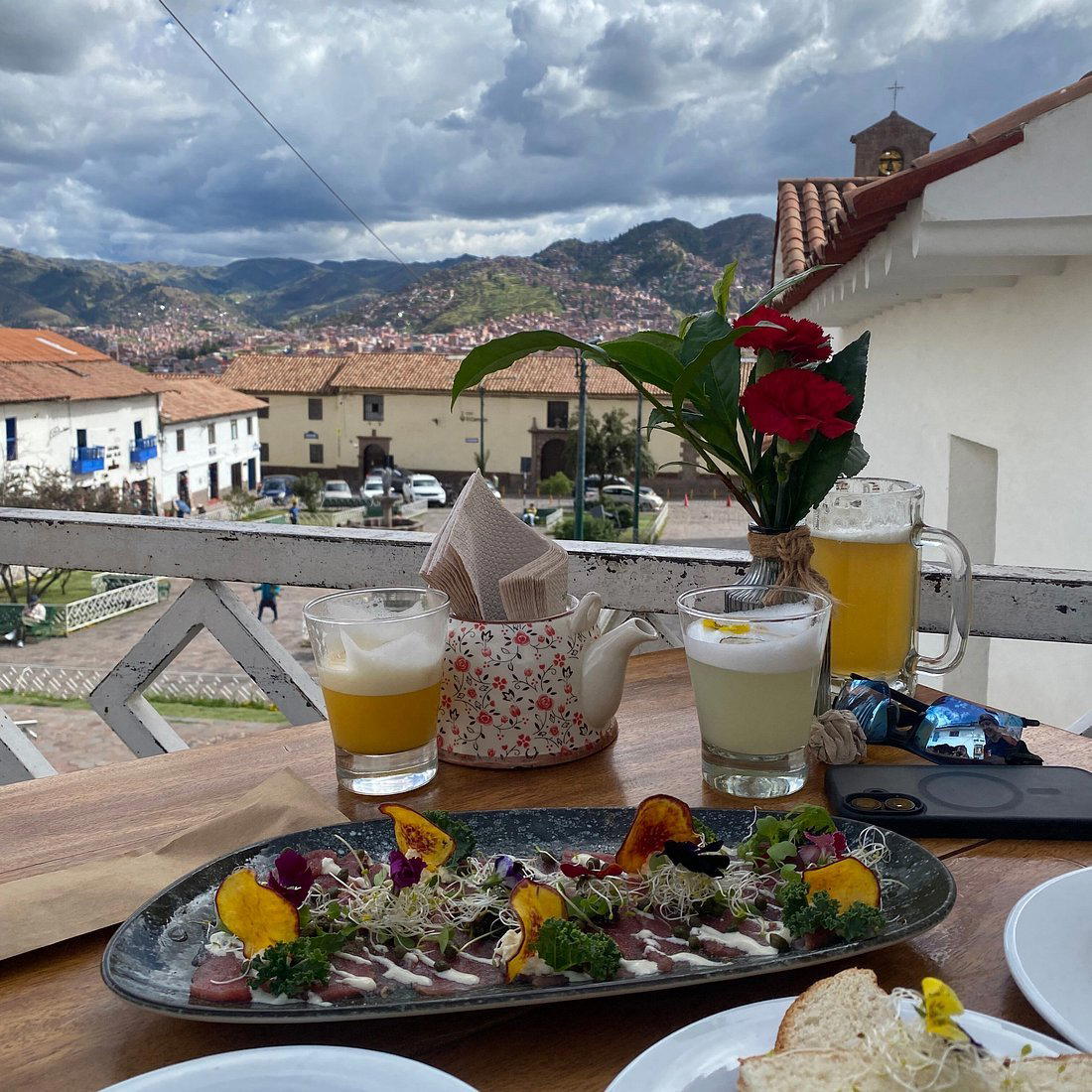
The menu
What to order
- Alpaca Burger
- Butternut Squash Burger
- Trout Ceviche
- Fetuccini with Prawns in Huancaina Sauce
- Aji de Gallina
- Tiradito
San Blas and the Altitude of Andean Fusion
Calle Tandapata climbs steeply through the San Blas quarter, Cusco's oldest artisan district, where colonial whitewash gives way to carved wooden balconies and stone-flagged alleys narrow enough to touch both walls. The neighbourhood sits above the Plaza de Armas at roughly 3,400 metres, and the thinness of the air at that altitude is the first thing any visitor registers. It is also, quietly, one of the more interesting places in the city to eat. The restaurants that have chosen San Blas over the tourist-dense streets around the main square tend to be smaller, more deliberate in format, and more directly connected to the ingredient culture that defines the Sacred Valley corridor running north from the city.
Intillay Peruvian Fusion Food occupies that San Blas register. The address at C. Tandapata 917 places it away from the high-volume dining zones, in a part of the city where the clientele is more mixed and the pace slower. The name itself draws on Quechua roots, "Inti" being the Incan sun deity, a reference that situates the kitchen in a longer cultural conversation rather than a purely contemporary one.
The Broader Wave This Kitchen Belongs To
To understand what Intillay is doing, it helps to map the movement it belongs to. Peruvian cuisine has spent the last two decades building an international reputation centred on a specific argument: that the country's biodiversity, its potato varieties alone numbering in the thousands, its chile spectrum from aji amarillo to rocoto, its coastal, highland, and Amazonian ecosystems in relative proximity, constitutes a culinary resource with no regional parallel in South America. Central Restaurante in Lima built a globally recognised program on exactly that ecological logic, and Mil Centro in Moray, situated in the Sacred Valley itself at over 3,500 metres, extended the argument into high-altitude agriculture and pre-Columbian farming systems.
Cusco sits at the centre of that geography. The city is not Lima, and it does not compete on the same terms as the capital's fine-dining circuit. What Cusco has instead is proximity to origin: the markets at San Pedro hold varieties of corn, potato, and dried chile that are difficult to source outside the Andean highlands, and the Sacred Valley farms within an hour's drive supply chefs who know how to ask for them. The fusion approach that venues like Intillay represent is less about importing international technique and more about applying contemporary method to ingredients that have been cultivated at altitude for centuries.
This is the context that separates the better Cusco fusion operations from the ones that simply plate Peruvian classics with a European garnish. Across the city's mid-range and upper-mid dining tier, restaurants including Campo Cocina Andina, KUSHKA Restaurant, and Chicha Cusco each take a different angle on Andean ingredients, some leaning toward traditional comfort, others toward a more structured contemporary format. Intillay's "fusion" positioning suggests the latter orientation: an attempt to hold Andean material and outside technique in the same kitchen without flattening either.
Cusco's Fusion Tier: What the Category Means Here
The term "fusion" carries different weight in Cusco than it does in, say, the tasting-menu circuits of New York, where restaurants like Le Bernardin or Atomix have defined what cross-cultural technique can look like at high price points and high precision. In Cusco, fusion more often describes a practical negotiation between what the local market produces, what international visitors expect to find on a plate, and what the city's chefs have absorbed from travel or training elsewhere in Peru.
That negotiation, when handled well, produces food that is more interesting than either strict Andean tradition or generic international bistro cooking. The Peruvian kitchen has the advantage of a flavour architecture, the acids from citrus and ceviche tradition, the heat from regional chiles, the starch base from potato and corn, that holds international borrowings without losing identity. Venues in this space, across Cusco and in the broader Sacred Valley orbit including Mapacho Craft Beer Restaurant in Urubamba and Inti House in Aguas Calientes, each represent a point on that spectrum.
Cusco's dining scene also encompasses more traditional expressions worth knowing alongside the fusion tier. Casa Cusqueña and Hanz Gastronomique offer different reference points for how the city frames its food, and LIMO Cocina Peruana & Pisco Bar in Cusco brings the pisco bar dimension that is central to how Peruvian restaurants construct a full evening. For regional context beyond Cusco, La Nueva Palomino in Yanahuara District in Arequipa and Insumo Rooftop in Miraflores in Lima both illustrate how the national conversation shifts across geography. The Bistrot Bastille in Ica District and El Rey in Oxapampa and Marañón Province in Maranon extend the map further into Peru's regional diversity, each representing a distinct ecosystem and culinary register.
Planning Your Visit
Intillay sits on Calle Tandapata 917 in San Blas, reachable on foot from the Plaza de Armas in roughly ten to fifteen minutes, though the uphill gradient at altitude makes the walk more demanding than the distance suggests. The quarter is leading approached mid-morning or late afternoon when foot traffic is lighter and the light on the stone facades is better. No booking contact details are currently listed in public records, so arriving in person to check availability or asking your accommodation to make contact on your behalf is the practical approach. As with most San Blas restaurants, the format is likely small, which means early arrival in the dinner window is advisable during the high season months of June through August when Cusco operates at or above capacity. For a fuller picture of where Intillay sits relative to the city's wider dining options, the Our full Cuzco restaurants guide maps the scene by neighbourhood and format.
Frequently asked questions
Where is Intillay Peruvian Fusion Food in Cuzco?
Intillay Peruvian Fusion Food is located at C. Tandapata 917, Cusco 08000, Peru, Cuzco.
Is Intillay Peruvian Fusion Food a good option for dining at altitude in Cusco?
At roughly 3,400 metres above sea level, Cusco itself is the altitude consideration, not the restaurant's elevation within the city. San Blas, where Intillay sits on Calle Tandapata 917, is one of the hillier quarters, requiring a moderately steep ten-to-fifteen minute walk from Plaza de Armas. Visitors in the first day or two of acclimatisation may find lighter Andean dishes, which a fusion kitchen in this tradition typically offers alongside heavier preparations, easier to manage than rich coastal-style courses.
What's the best thing to order at Intillay Peruvian Fusion Food?
The kitchen at Calle Tandapata 917 works within the Andean-fusion tradition, which means expect dishes that pair highland staples, native potato varieties, chilli peppers, and altitude-grown grains, with contemporary plating and technique. Dishes that signal how a kitchen understands that tradition are usually the safest order: look for preparations that foreground Cusco-region ingredients rather than leaning on coastal ceviche conventions.
How far ahead should I plan for Intillay Peruvian Fusion Food?
Cusco's San Blas quarter draws consistent foot traffic from visitors to the city, particularly during the May-to-October dry season when tourist numbers in the region peak. For a venue on Calle Tandapata 917 in that neighbourhood, same-day walk-ins can be hit-or-miss in high season. Arriving early in the evening or visiting on a weekday gives you the best chance without advance booking, though checking current availability through the venue directly is advisable.
What do critics highlight about Intillay Peruvian Fusion Food?
The restaurant occupies a category, Andean-fusion in San Blas, that has attracted growing editorial attention as Cusco develops a more defined dining identity beyond tourist-circuit staples. Its position in that movement, on Calle Tandapata in Peru's most historically significant artisan quarter, gives it contextual weight that tends to attract food-focused travel writers covering the country's regional cuisine scene.
How does Intillay Peruvian Fusion Food handle allergies?
No documented allergen policy is available for Intillay. Peruvian fusion kitchens in Cusco typically work with nuts, shellfish, and gluten-containing grains in sauces and marinades, so communicating dietary restrictions directly to staff before ordering is essential. Given that no phone number or website is currently listed, arriving with written notes in Spanish describing your allergy is the most reliable approach at Calle Tandapata 917.
A Pricing-First Comparison
Comparable venues nearby, for context on price, style, and recognition.
| Venue | Cuisine | Price | Notes |
|---|---|---|---|
| Intillay Peruvian Fusion FoodThis venue (the venue you are viewing) | Peruvian Fusion | $20–30 | Not listed |
| Yaku Restaurant | Modern Peruvian Fusion | $20–30 | Centro Histórico, Modern Peruvian Fusion |
| Hanz Gastronomique | Peruvian-Andean-Japanese Fusion | $30–50 | Plaza de Armas, Peruvian-Andean-Japanese Fusion |
| Organika Restaurant | Organic Peruvian Farm-to-Table | $20–30 | San Blas, Organic Peruvian Farm-to-Table |
| Chicha Cusco | Modern Peruvian | $20–30 | Centro de Cusco, Modern Peruvian Regional |
| KUSHKA Restaurant | Modern Peruvian | $10–20 | Plaza Regocijo, Modern Peruvian |
Continue exploring
More in Cusco
Restaurants in Cusco
All restaurants in Cusco →
Bars in Cusco
Browse all →
Details
- Cozy
- Scenic
- Intimate
- Date Night
- Special Occasion
- Casual Hangout
- Terrace
- Open Kitchen
- Organic
- Local Sourcing
- Mountain
- Street Scene
- A La Carte
- Vegetarian Friendly
- Gluten Free Options
- Vegan Options
Current opening hours
- Monday
- 8 AM–10 PM
- Tuesday
- 8 AM–10 PM
- Wednesday
- 8 AM–10 PM
- Thursday
- 8 AM–10 PM
- Friday
- 8 AM–10 PM
- Saturday
- 8 AM–10 PM
- Sunday
- 8 AM–10 PM
Hours can change for holidays and private events. Hours as of .
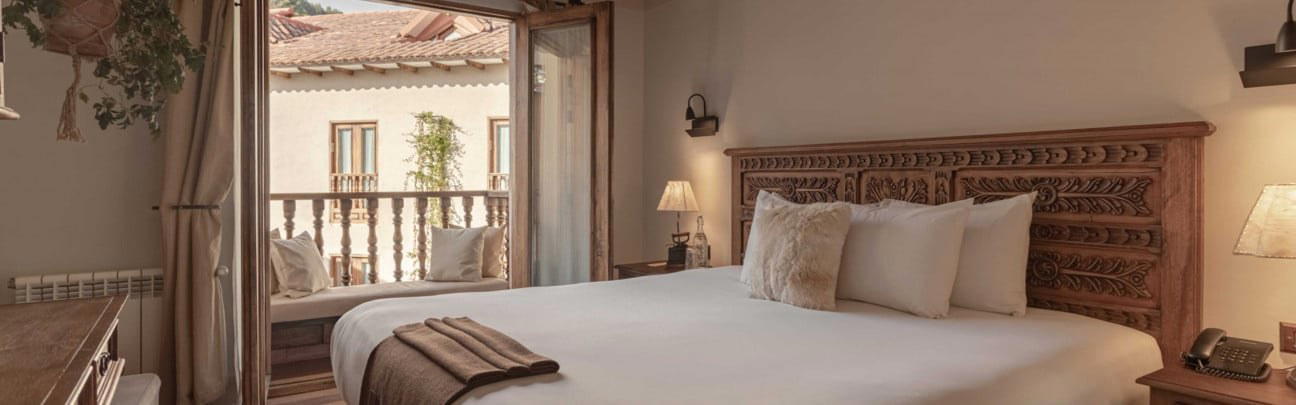
Cozy and inviting atmosphere with chill vibes, beautiful presentation, and relaxing balcony overlooking mountains and city.