Our verdict
El Rey sits on Jr. Mullembruck in Oxapampa, a Peruvian highland town in the Pasco region whose German and Austrian settler heritage shapes local food culture in ways most of Peru's restaurant circuit ignores. The surrounding cloud forest and agricultural valleys supply ingredients that rarely reach Lima menus, making Oxapampa a legitimate stop for anyone tracing where Peruvian produce actually begins.

Pearl is the En Primeur Club membership app, where members save venues, book tables and use the concierge.
The menu
What to order
- Ceviche
Where Peruvian Ingredients Begin
Oxapampa occupies an unusual position in Peru's food geography. Sitting at roughly 1,800 metres in the Pasco region, east of the Andes and on the edge of the Amazon basin, the town sits in a transitional zone where highland agriculture meets cloud-forest biodiversity. That combination produces ingredients that rarely travel far: chonta palm hearts harvested from wild stands, regional coffee varieties grown in the surrounding valleys, freshwater fish from rivers that feed the Amazon system, and subtropical fruits that don't survive the journey to Lima's wholesale markets. For a kitchen working in Oxapampa, the sourcing question isn't where to find something interesting, it's which of the available materials to prioritise. El Rey, on Jr. Mullembruck 717, operates inside that context.
The broader pattern across Peru's regional dining scene has shifted considerably over the past two decades. Lima's internationally recognised restaurants Astrid & Gastón in Lima and the produce-archaeology approach visible at Mil Centro in Moray, built their reputations partly by redirecting attention to Peru's regional ingredient diversity. That critical mass created an audience aware that the country's most interesting food materials often exist far from the capital. Towns like Oxapampa benefit from that awareness even when they operate quietly within it.
The Oxapampa Context
Oxapampa's food culture carries a specific historical layer that most Peruvian highland towns don't share. German and Austrian settlers arrived in the region in the mid-nineteenth century, and their descendants remain visible in local surnames, architecture, and food traditions. That European agricultural imprint sits alongside indigenous Yánesha food practices and the broader Peruvian highland pantry, producing a local food identity that is genuinely layered rather than simply Andean. Dairy production in the region is strong by Peruvian standards, livestock farming reflects Central European influences, and the subtropical climate enables crops that the higher altitudes of Cusco or Huaraz cannot support.
Restaurants elsewhere in Peru's interior have made ingredient sourcing their primary editorial claim. Campo Cocina Andina in Cuzco operates in this vein, and Cirqa in Arequipa frames its menu around southern highland produce. Oxapampa's version of that argument is different because the ingredient base is different: the proximity to the Amazon basin introduces a range of materials that strictly Andean kitchens don't access. A kitchen here can plausibly reference Amazonian fish, cloud-forest botanicals, and highland dairy within the same meal, which represents a sourcing range that Lima's best-resourced restaurants actively seek to import or replicate.
Approaching El Rey
Jr. Mullembruck is a central street in Oxapampa's compact town grid, and the address places El Rey within the walkable core of a town that most visitors reach after a five-to-six hour drive from Lima via the central highway, or via the faster but still demanding route through La Oroya and Huancayo. Oxapampa itself has no commercial airport; arrival is overland, which immediately filters the visitor profile toward travellers with a deliberate reason to be there. That self-selecting quality is relevant: the dining audience in Oxapampa is not passing through. People who eat here are either local or have made a specific decision to come to the region. That changes the atmosphere of a dining room in ways that are difficult to manufacture in a city.
The town's German-heritage architecture gives the central streets a visual character that reads as genuinely unusual by Peruvian standards, timber-frame construction, pitched roofs, and painted facades that reference Central European vernacular rather than colonial Spanish. Walking to an address on Jr. Mullembruck involves passing through that environment, which functions as context before you arrive. For travellers who have come from Lima's Miraflores dining circuit, where restaurants like Costanera 700 and Osaka Nikkei in San Isidro represent the polished urban standard, the shift in register is immediate and considerable.
Ingredient Provenance in a Regional Kitchen
The sourcing advantage of a kitchen in Oxapampa is structural, not incidental. Lima's leading restaurants spend considerable resources sourcing from Peru's interior, trout from Puno, purple corn from the valleys, Amazonian fish from suppliers who have built cold-chain logistics specifically to serve the capital's restaurant industry. A kitchen in Oxapampa doesn't require that infrastructure for local ingredients because the supply chain is short by default. The cloud forest begins where the town's agricultural edge ends. River fish arrive without the handling that degrades freshness over long transport. Dairy from local farms reaches a kitchen within hours rather than days.
That structural proximity doesn't guarantee quality, it creates the conditions for quality, which a kitchen then has to use well. The comparison is instructive: remote-location restaurants that have built reputations on ingredient provenance, from small Amazonian dining experiences like those documented aboard Delfin Amazon Cruises in Iquitos to coastal operations like Navegante in Punta Hermosa, demonstrate that proximity to source creates a different baseline product, but the execution still determines the result. Regional kitchens that handle that advantage well occupy a specific tier: not competing with Lima's tasting-menu restaurants on technique or international visibility, but offering something those restaurants cannot replicate without importing the geography itself.
For a broader picture of where El Rey fits within Oxapampa's dining options, our full Oxapampa restaurants guide covers the town's food scene in more detail alongside regional context from across the Pasco region.
Planning Your Visit
Given Oxapampa's position as a smaller regional town with a self-contained visitor economy, the sensible approach is to plan contact on arrival or through local accommodation, which will typically have current information on operating days and any reservation requirements. The overland journey from Lima is the primary logistical consideration: most travellers allocate at least two nights in the Oxapampa area to make the trip worthwhile. The Chanchamayo and Oxapampa valleys together make a logical circuit, and the region's ecotourism infrastructure has grown enough to support itineraries that combine dining, nature, and cultural visits. Travellers comparing Peru's regional dining options more broadly might weigh Oxapampa against other interior destinations covered in our guides, including Calima in Huaraz and Mapacho Craft Beer Restaurant in Urubamba, each of which represents a distinct regional food identity.
Frequently asked questions
What kind of setting is El Rey?
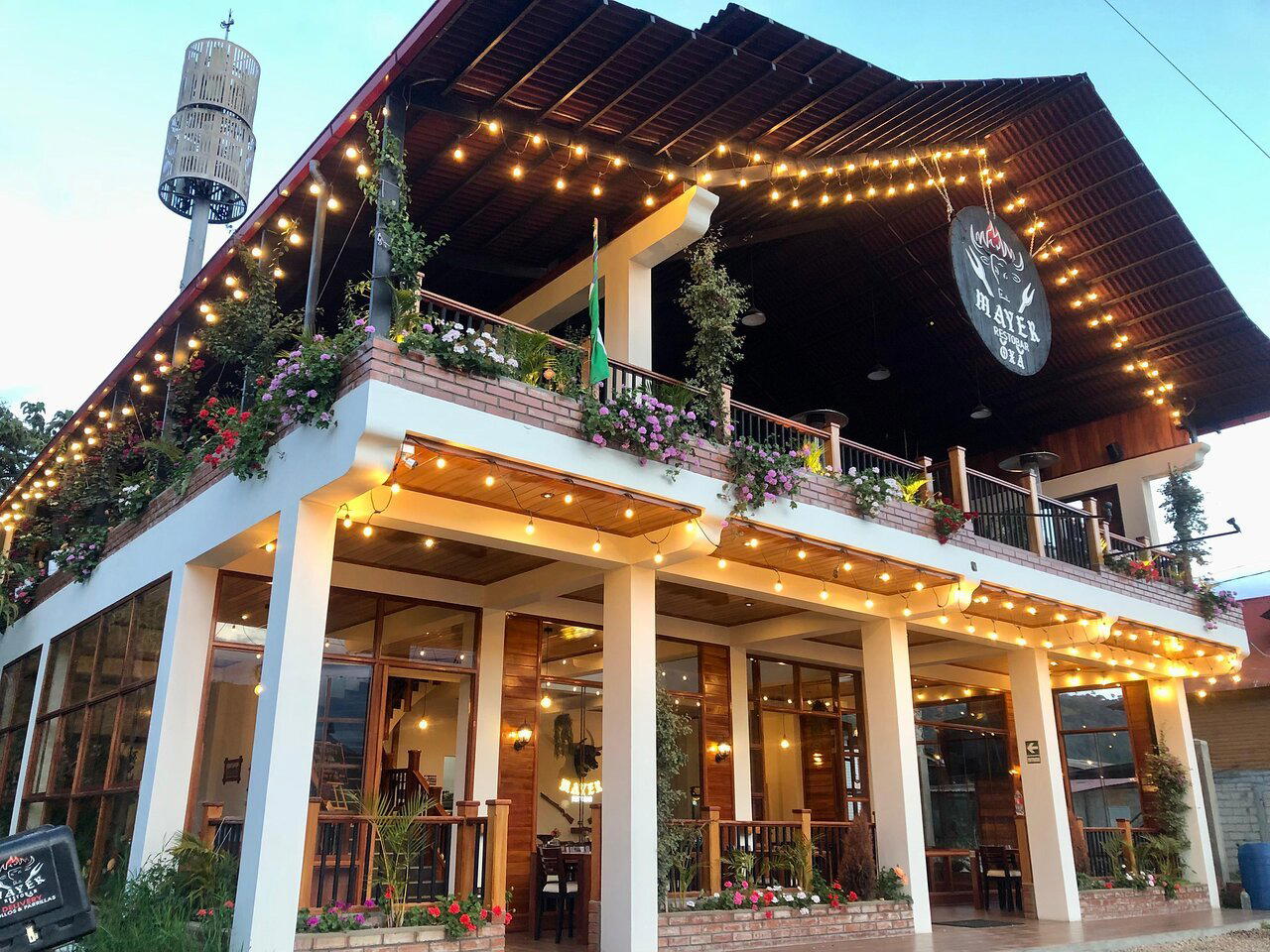
El Rey sits on Jr. Mullembruck 717, within the walkable core of Oxapampa at roughly 1,800 metres on the eastern Andean slope. The town is small and unhurried, and the address places El Rey squarely in its compact centre rather than on the outskirts. Expect a regional character consistent with Oxapampa's mix of Peruvian highland culture and its documented German-Austrian settler heritage.
Is El Rey a good base for exploring Oxapampa's food culture, given the town's German settler heritage?
Oxapampa is one of the few Peruvian highland towns with a documented history of German and Austrian settlement, which has shaped local food culture in ways distinct from surrounding Andean towns. El Rey's address on Jr. Mullembruck places it in the town centre where that cultural overlap is most visible.
What do people recommend at El Rey?
What is clear from the venue's location in Oxapampa is that kitchens here have structural access to ingredients that Lima restaurants source at considerable cost and effort. Asking staff what is freshest or most local on arrival is likely to be the most reliable guide.
What part of town is El Rey in?
El Rey is located at Jr. Mullembruck 717, Oxapampa 19230, Peru, Oxapampa.
How far ahead should I plan for El Rey?
Oxapampa draws a relatively small flow of international visitors compared to Lima or Cusco, which may reduce pressure on availability, but that should not be assumed. check the venue's official channels before travel, particularly if visiting around regional festivals or public holidays in Pasco.
Comparison Snapshot
| Venue | Cuisine | Price | Awards | Notes |
|---|---|---|---|---|
| El ReyThis venue (the venue you are viewing) | Peruvian Cevicheria | Not listed | Not listed | Not listed |
| Astrid & Gastón | Modern Peruvian Fine Dining | $100–150 | World's 50 Best #81 · La Liste Top Restaurants | Modern Peruvian |
| Kjolle | Modern Peruvian Fine Dining | $300–500 | World's 50 Best #9 · La Liste Top Restaurants | Modern Peruvian |
| Mayta | Modern Peruvian Fine Dining | $200–300 | World's 50 Best #39 · La Liste Top Restaurants | Peruvian Modern |
| Mérito | Modern Venezuelan-Peruvian Fusion | $50–100 | World's 50 Best #26 · La Liste Top Restaurants | Venezuelan/Fusion |
| Cicciolina | Italian-Peruvian Fusion | $30–50 | Not listed | Peruvian |
Details
- Casual Hangout
- A La Carte