Our verdict
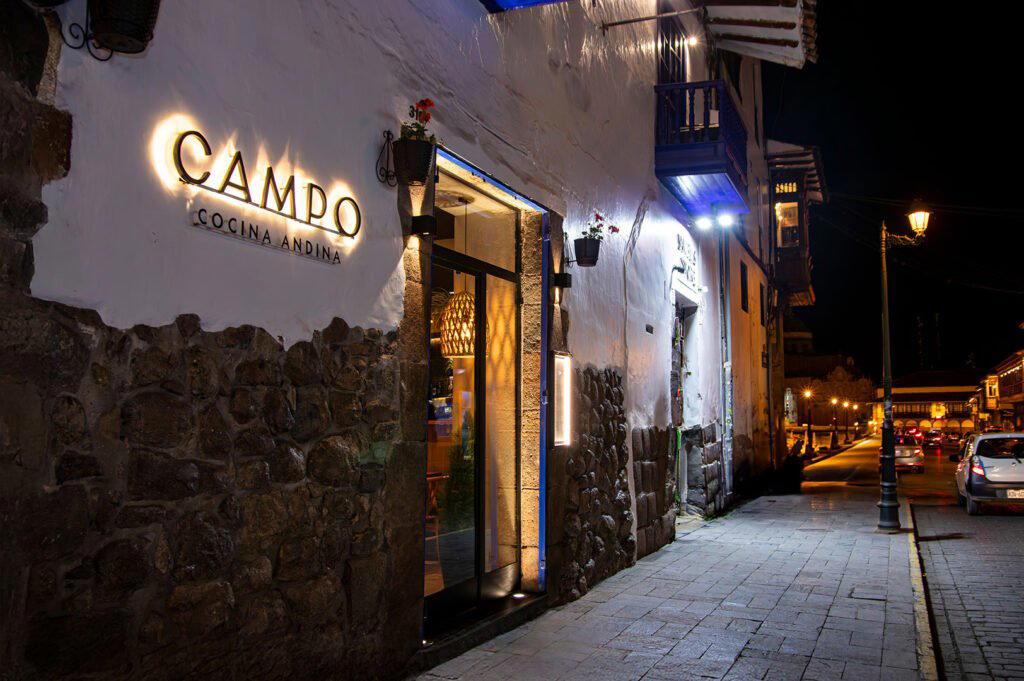
On Calle Plateros, one of Cusco's busiest pedestrian corridors, Campo Cocina Andina works with the ingredient logic of the Andean highlands: native potato varieties, Andean grains, and produce shaped by altitude rather than proximity to a port. The kitchen sits in a city where pre-Columbian foodways are being recovered as seriously as colonial architecture is being preserved.

Pearl is the En Primeur Club membership app, where members save venues, book tables and use the concierge.
The menu
What to order
- Cuy al horno
- Oven-roasted trout
- Alpaca skewers
- Oxtail croquettes
Where the Altitude Is an Ingredient
Calle Plateros runs from the Plaza de Armas toward San Blas, threading past silver shops, hostels, and restaurants that serve everything from ceviche to pizza to travellers whose attention span rarely extends beyond the next Inca ruin. The more considered dining on this street asks a different question: what did this land produce before globalised supply chains arrived, and what does it still produce at 3,400 metres above sea level? Campo Cocina Andina, at number 310, operates inside that question. The address places it at the centre of Cusco's tourist economy, but the sourcing logic pulls in the opposite direction, toward the Sacred Valley, the altiplano, and the microcultures of the Andean highlands.
Cusco's restaurant scene has developed a distinct internal hierarchy over the past decade. At one end, high-concept Andean kitchens have attracted international attention, with Mil Centro in Moray representing the most ambitious end of altitude-driven gastronomy in the region. At the other end, tourist-facing restaurants on the main squares cycle through generic pan-Latin menus with little connection to local agriculture. The middle tier, where Campo Cocina Andina operates, is the most interesting: places with genuine ingredient sourcing and a clear Andean orientation, but without the research-lab apparatus or the reservation difficulty of the showpiece kitchens. For comparison, Chicha Cusco has long anchored the mid-to-upper end of this spectrum, while Casa Cusqueña and KUSHKA Restaurant each represent different interpretations of what Andean cooking means in a city still defining its own fine-dining identity.
The Logic of Andean Sourcing
Peru's culinary recovery of its pre-Columbian ingredient base is one of the more serious food movements of the past two decades. It is not a trend in the fashion-week sense. It is an agricultural and cultural reclamation: hundreds of native potato varieties catalogued and brought back into circulation, Andean grains like kiwicha and kañiwa given systematic attention, and high-altitude herbs and tubers that had never disappeared from indigenous cooking given restaurant context for the first time. Astrid and Gastón in Lima made the intellectual case for this decades ago, and Virgilio Martínez's work extended it into something approaching biodiversity documentation. What those Lima kitchens established is now being practised at smaller scale across Cusco's mid-tier dining.
The key sourcing fact about Cusco is geographic rather than culinary. The Sacred Valley, running northeast from the city toward Machu Picchu, provides a range of microclimates within a short distance. Maize grows at the valley floor. Potatoes and quinoa thrive higher up. The altiplano beyond the valley supports a completely different agricultural register. A kitchen in Cusco that takes sourcing seriously can draw on this diversity without the logistics overhead that remote highland restaurants face. This proximity is a structural advantage that distinguishes Cusco-based Andean cooking from, say, the more isolated sourcing challenges faced by producers in El Rey in Oxapampa or the jungle-adjacent kitchens of Delfin Amazon Cruises in Iquitos.
Campo Cocina Andina's name signals its orientation directly: campo means countryside or field, and the Andina designation places it squarely within highland cooking rather than the coastal Nikkei or ceviche traditions that define Lima's international profile. Compare that to the Nikkei approach at Osaka Nikkei in San Isidro or the seafood focus at Costanera 700 in Miraflores, and the regional distinctiveness of a highland-sourced menu in Cusco becomes sharper. This is not a cuisine built around ocean produce or immigrant fusion history. It is built around earth, altitude, and cold.
Cusco's Dining Context and Where Campo Fits
The density of restaurants on Calle Plateros and the surrounding streets creates a particular kind of competition. Most visitors to Cusco arrive jet-lagged from altitude, spending their first day walking slowly and eating conservatively. By day two or three, when acclimatisation allows for more considered choices, the better kitchens earn their audiences. Campo Cocina Andina is positioned for that second-look diner: not a first-night restaurant chosen by proximity, but a considered choice by someone who has oriented themselves in the city and wants Andean specificity rather than generic Peruvian.
Among Cusco restaurants with a serious Andean orientation, Intillay Peruvian Fusion Food and Hanz Gastronomique represent adjacent positions in the market: kitchens that acknowledge international technique while keeping highland ingredients central. The distinction between fusion-oriented Andean cooking and tradition-oriented Andean cooking is not always clean, but it matters for how a kitchen makes sourcing decisions. Tradition-oriented kitchens tend to foreground ingredient identity over technique. The corn tastes like corn from a specific elevation; the potato preparation respects the tuber's natural starch behaviour rather than subordinating it to a French method.
Internationally, the closest conceptual peer work happens at restaurants like Lazy Bear in San Francisco, where place-based sourcing and communal format intersect, or at the opposite end of the formality register, Le Bernardin in New York City, where ingredient integrity drives a completely different aesthetic. What connects them is the same underlying principle: the ingredient, not the technique, is the primary subject of the plate. In highland Peru, that principle has a particular moral weight, because it is also an act of agricultural preservation.
Visitors planning a focused Andean dining sequence in Cusco should also consult our full Cuzco restaurants guide and consider extending their itinerary to the Sacred Valley, where restaurants like Mapacho Craft Beer Restaurant in Urubamba demonstrate how valley-floor producers are being brought into the hospitality economy. For those whose Peru itinerary extends into the north, Marañón Province in Maranon illustrates a completely different regional ingredient register. And back in Cusco itself, Cantina Vino Italiano in Cusco shows how thoroughly European dining traditions have taken hold in the city alongside its Andean revival. Cirqa in Arequipa makes a useful comparison point for how southern highland cooking diverges from the Cusco approach, with a different altitude range and a stronger colonial culinary memory.
Planning a Visit
Campo Cocina Andina is located at C. Plateros 310, a short walk from the Plaza de Armas in the city centre. No phone number or website is listed in public records, which makes walk-in visits the most reliable booking method. Given Cusco's peak tourist seasons, which run from May through September around the dry months and Inti Raymi, arriving early for lunch or at the start of dinner service reduces wait times. The altitude remains relevant to every meal in this city: eating and drinking at 3,400 metres requires slower pacing than most visitors initially expect, and kitchens that understand this tend to portion and pace accordingly.
Frequently asked questions
What part of town is Campo Cocina Andina in?
Campo Cocina Andina is located at C. Plateros 310, Cusco 08002, Peru, Cuzco.
Does Campo Cocina Andina in Cusco focus on a specific regional Andean cooking tradition?
Campo Cocina Andina is located at C. Plateros 310 in Cusco, the historic capital of the former Inca empire and the geographic centre of highland Andean cuisine. That location is not incidental: Cusco sits at the crossroads of multiple Andean agricultural zones, giving kitchens here access to ingredients from the altiplano, the Sacred Valley, and the cloud forest transition. No specific regional sub-style is documented for Campo, but cooking in this city inherently draws from the Quechua culinary tradition rather than the coastal Creole or Nikkei currents that define Lima's restaurant scene.
What do regulars order at Campo Cocina Andina?
Campo sits on Calle Plateros in Cusco, a street where kitchens compete hard for repeat custom, so the menu leans on the Andean ingredient base that defines serious Peruvian cooking: native potato varieties, Andean grains, and high-altitude produce.
How hard is it to get a table at Campo Cocina Andina?
No reservation system or booking platform is listed in public records for Campo Cocina Andina at C. Plateros 310. Cusco's tourist season runs roughly May through October, when Calle Plateros restaurants fill quickly by early evening, so arriving before peak dinner service is the practical approach. Outside high season, walk-in availability is generally more reliable.
What's the defining dish or idea at Campo Cocina Andina?
The defining idea is altitude as context: Campo operates in a city at 3,400 metres where the ingredient palette is shaped by Andean ecology rather than coastal or lowland Peru. That means native grains, heritage potato cultivars, and high-altitude proteins that don't appear on most menus below the sierra. The kitchen's commitment to pre-Columbian sourcing places it within the broader Peruvian culinary recovery movement that has been reshaping how the country's food is understood internationally.
How does Campo Cocina Andina handle allergies?
The address is C. Plateros 310, Cusco, and no phone or website is currently listed, which limits advance enquiry options. Guests with serious dietary requirements should plan to communicate directly at the restaurant before ordering.
Is eating at Campo Cocina Andina worth the cost?
No price range is confirmed in the public record for Campo Cocina Andina, so a direct cost-value assessment isn't possible here. What is clear is that the restaurant operates in Cusco's most competitive dining corridor, where kitchens anchored in genuine Andean sourcing occupy a different tier from the tourist-facing menus that dominate the same street. For travellers specifically seeking pre-Columbian ingredient cooking rather than a generic Peruvian menu, the positioning is distinct.
Fast Comparison
Comparable venues nearby, for context on price, style, and recognition.
| Venue | Cuisine | Price | Notes |
|---|---|---|---|
| Campo Cocina AndinaThis venue (the venue you are viewing) | Modern Andean Peruvian | $20–30 | Not listed |
| Senzo | Modern Peruvian Fine Dining | $50–100 | Plaza Nazarenas |
| Chicha Cusco | Modern Peruvian | $20–30 | Centro de Cusco |
| Intillay Peruvian Fusion Food | Peruvian Fusion | $20–30 | San Blas |
| Hanz Gastronomique | Peruvian-Andean-Japanese Fusion | $30–50 | Plaza de Armas |
| MARE RESTAURANT | Modern Peruvian with Mediterranean Influences | $30–50 | Historic Center |
Continue exploring
More in Cusco
Restaurants in Cusco
All restaurants in Cusco →
Bars in Cusco
Browse all →
Details
- Rustic
- Cozy
- Warm
- Family
- Group Dining
- Special Occasion
- Courtyard
- Open Kitchen
- Craft Cocktails
- Local Sourcing
- A La Carte
- Small Plates
- Vegetarian Friendly
Current opening hours
- Monday
- 12–11 PM
- Tuesday
- 12–11 PM
- Wednesday
- 12–11 PM
- Thursday
- 12–11 PM
- Friday
- 12–11 PM
- Saturday
- 12–11 PM
- Sunday
- 12–11 PM
Hours can change for holidays and private events. Hours as of .
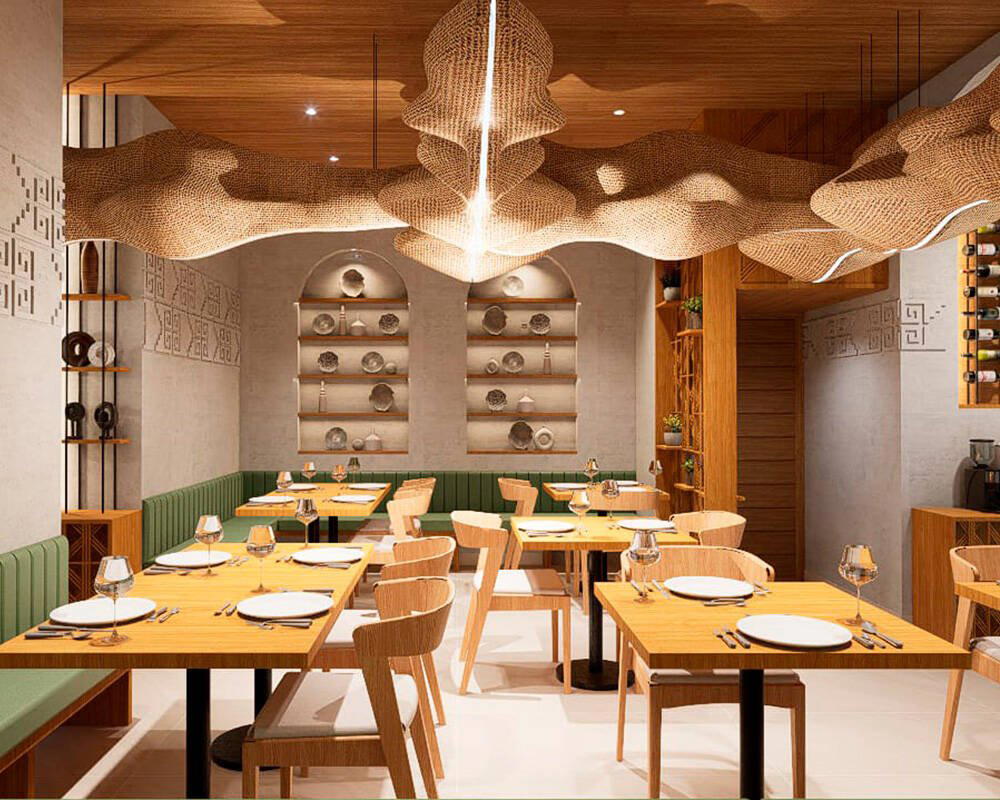
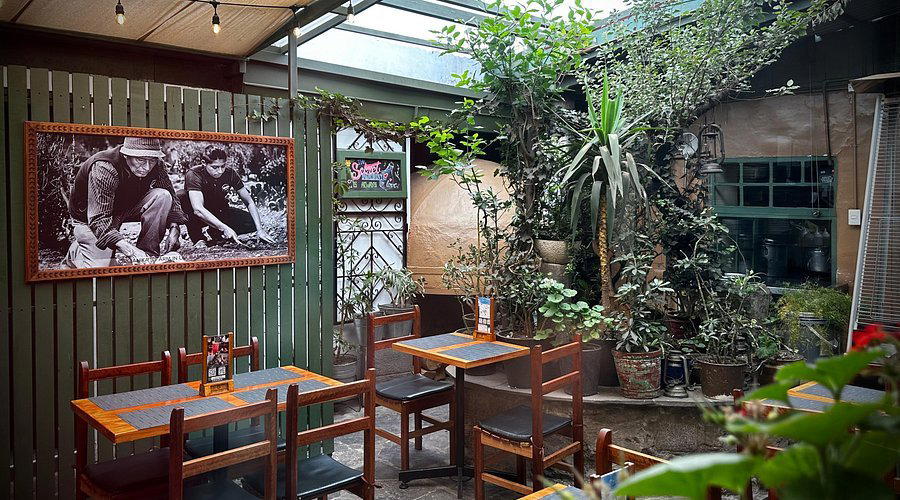
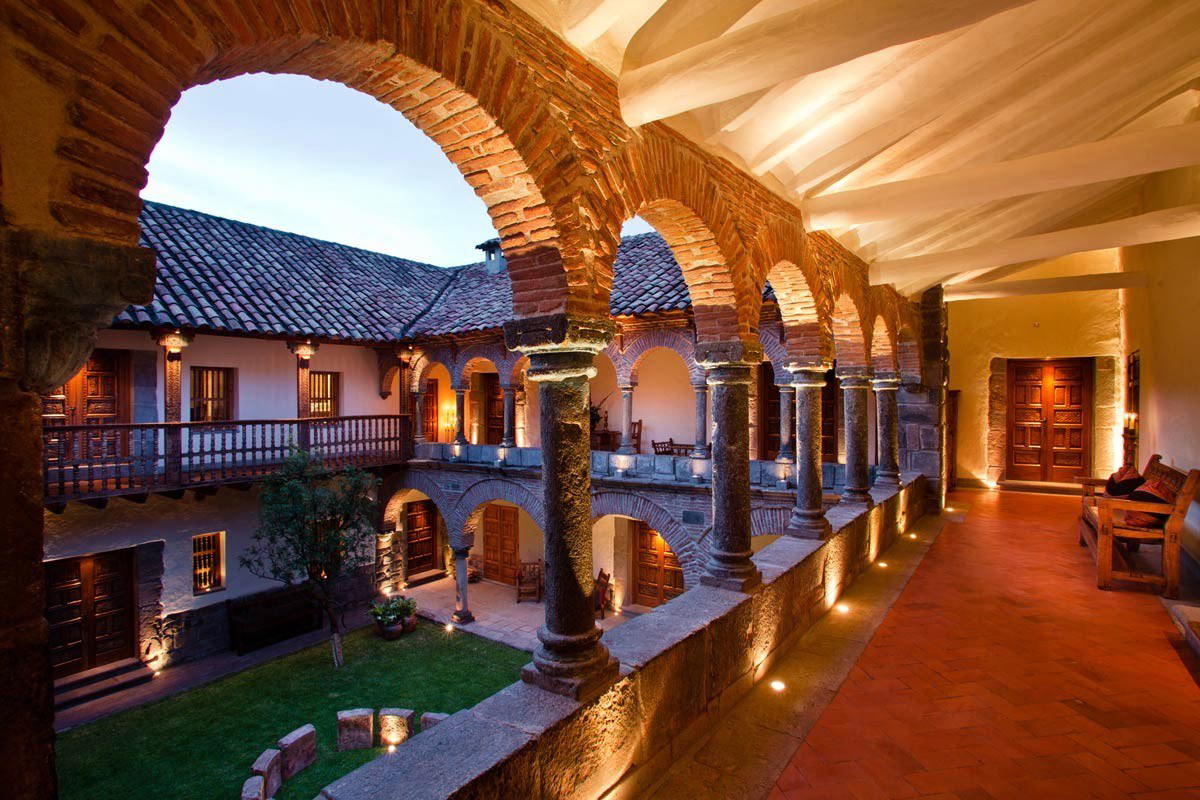
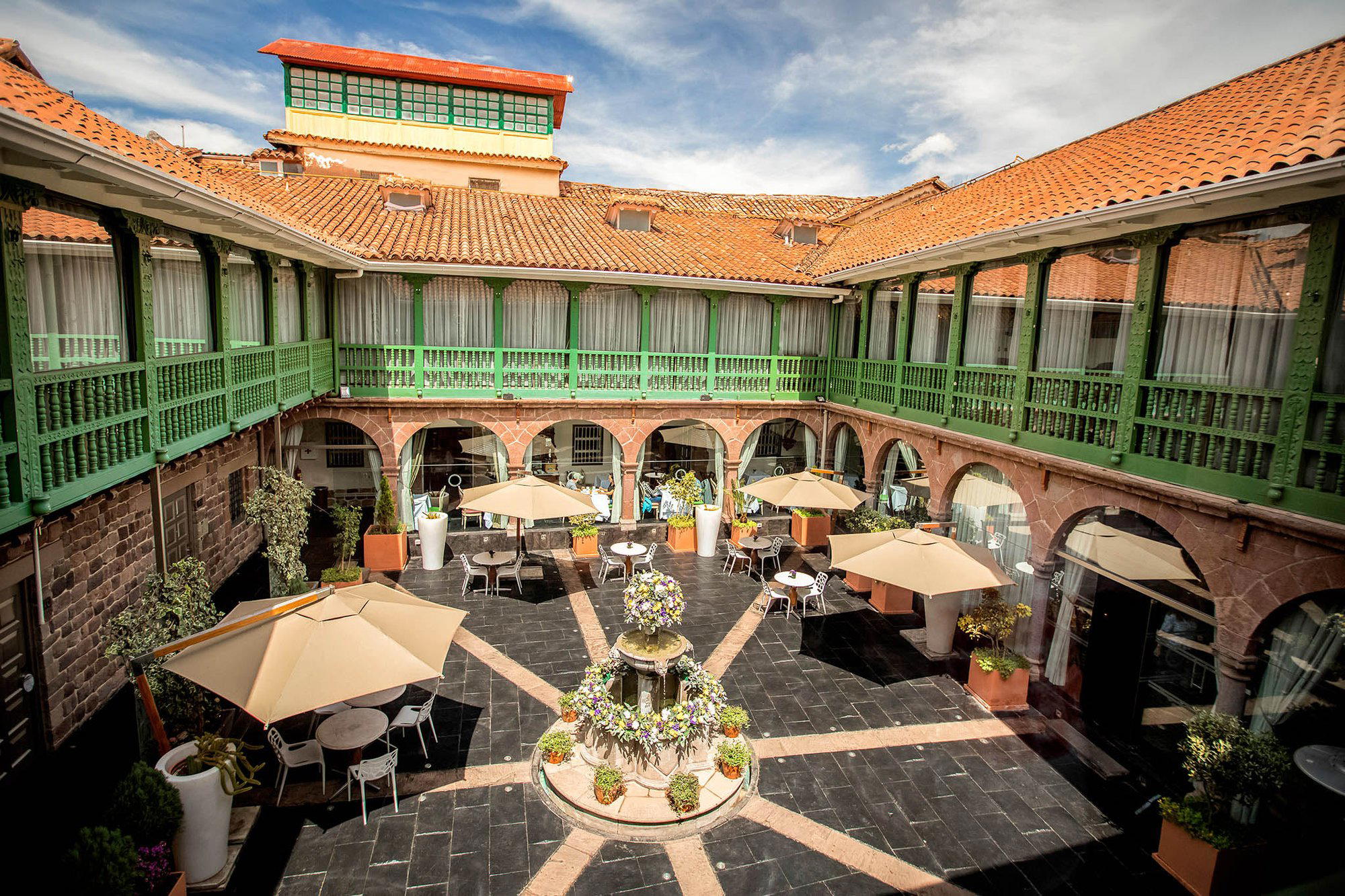
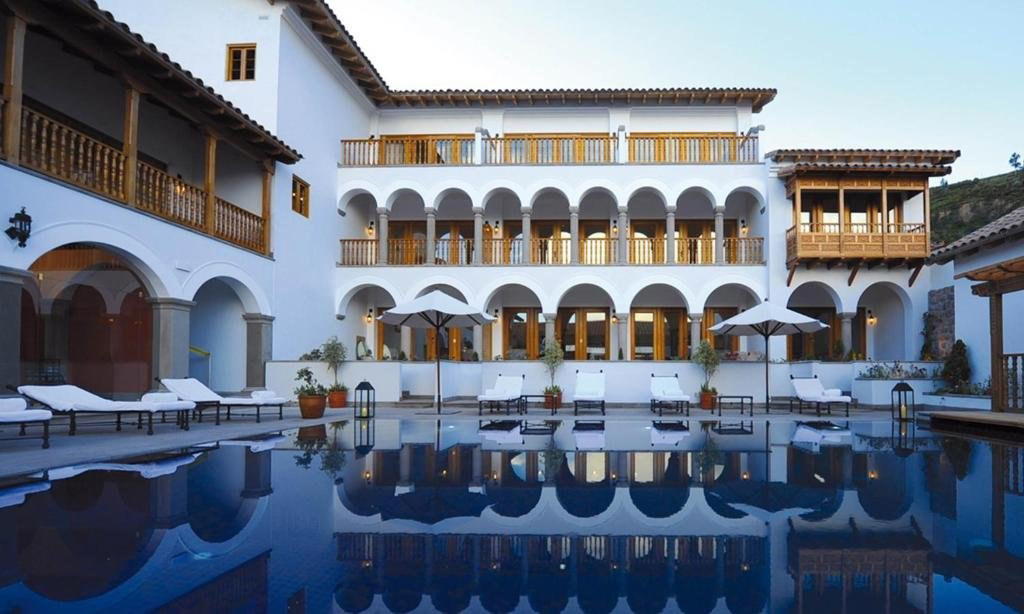
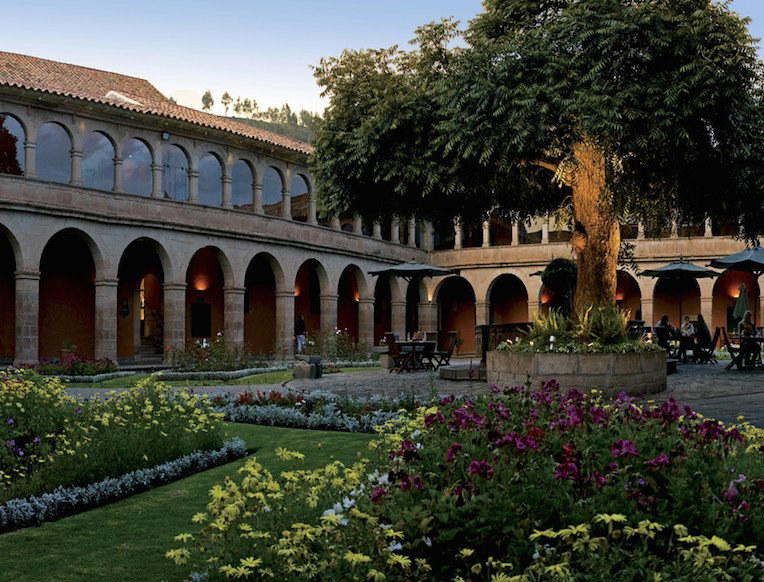
Warm, rustic ambiance with cozy indoor and outdoor courtyard seating.