InselMühle occupies a converted mill complex on Munich's western fringe, where the setting alone separates it from the city's compact fine-dining centre. The address at Von-Kahr-Straße 87 places it decisively outside the Maxvorstadt-Schwabing corridor where most of Munich's awarded kitchens concentrate, making it a deliberate excursion rather than a neighbourhood drop-in.
Pearl is the En Primeur Club membership app — saves, bookings, and concierge access live there. Same editors, same standards.
- Address
- Von-Kahr-Straße 87, 80999 München, Germany
- Phone
- +49498981010
- Website
- insel-muehle.de
- Directions
- Get directions
 Saves & bookings on Pearl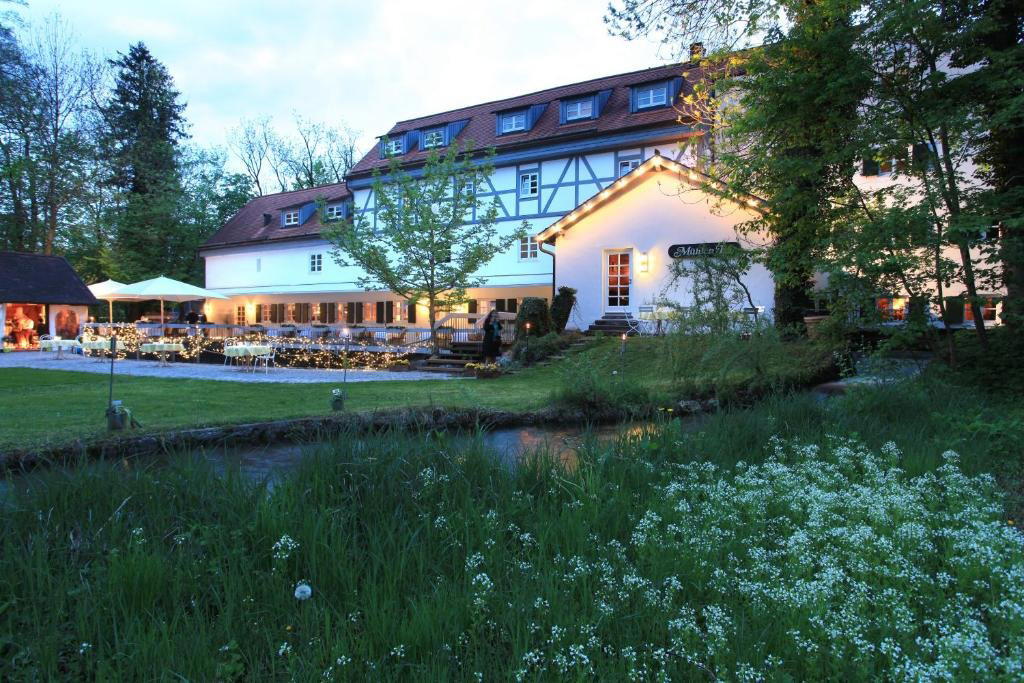
A Mill on Munich's Western Edge
Munich's dining geography follows a fairly predictable arc: addresses cluster around Maxvorstadt, Schwabing, and the historic centre, with outliers appearing only where a destination strong enough to justify the detour has taken root. The western districts, by contrast, tend toward breweries, beer gardens, and the kind of neighbourhood cooking that does not require much explanation. InselMühle, at Von-Kahr-Straße 87 in the 80999 postcode, sits at the edge of that western zone, occupying a converted mill complex that signals, from the moment you arrive, that this will not follow the same script as dinner in a glass-and-steel city-centre room. The approach matters: the mill structure frames the experience before a single plate arrives.
Munich's restaurant culture has bifurcated in recent years. On one side sit the modernist fine-dining rooms that compete directly with Germany's wider Michelin circuit, addresses like Tantris, Atelier, Alois - Dallmayr Fine Dining, and Tohru in der Schreiberei, all operating at the summit tier of the city's price band with tasting menus that reference international technique. On the other side sit places where the room itself carries as much weight as the cooking. InselMühle operates closer to that second register.
The Mill Setting and What It Implies for the Meal
Converted mill buildings tend to impose a particular sequence on a meal: you arrive through a structure that was never designed for hospitality, pass through spaces that retain industrial or agricultural traces, and eventually find yourself in a dining room that either fights the architecture or accepts it. The better examples accept it. In that context, the progression of a dinner at InselMühle is shaped as much by physical movement through the property as by the kitchen's own sequencing decisions. This is a format that Germany does with some consistency, from rural estates in Baden-Württemberg to converted farmsteads in Bavaria, and it places InselMühle in a category where destination-restaurant logic applies: you go specifically, you plan ahead, and the meal is understood as the entire evening rather than one component of a broader city night out.
That logic has parallels elsewhere in the German dining circuit. ES:SENZ in Grassau and Schwarzwaldstube in Baiersbronn both operate on similar destination-first principles, where the removal from urban density is part of the product. Waldhotel Sonnora in Dreis takes that premise further into a hotel-anchored format. InselMühle does not require an overnight stay, but the western Munich location means that most visitors will either arrive by car or account for a meaningful journey from the city centre.
Reading the Meal as a Sequence
At destination restaurants in converted properties, the tasting progression rarely begins at the table. It begins with arrival: the sight lines, the materials, the ambient sound of a structure built for a different purpose. At InselMühle, the mill architecture functions as a kind of first course, establishing the register before the kitchen speaks. This pattern is familiar to anyone who has eaten at estate restaurants across southern Germany or Austria, where the building itself argues for a slower pace and a longer evening.
The kitchen then picks up that tempo. Specific dish descriptions would be speculation. What the destination-restaurant format does indicate, however, is that the sequencing of a meal here is likely to be deliberate and unhurried, with the room's character informing how each stage lands. Contrast that with the tightly engineered progression at JAN in Munich's city centre, where the urban room creates a different kind of pressure and a different expectation of pace. Germany's most technically demanding tasting menus, including those at Aqua in Wolfsburg and Vendôme in Bergisch Gladbach, operate on a different axis entirely, one where precision and density define the arc. InselMühle's mill context suggests a different priority.
Planning the Visit
Von-Kahr-Straße 87 puts InselMühle in the Allach-Untermenzing district, one of Munich's less-trafficked western neighbourhoods. For visitors based in the city centre, this is a 20-to-30-minute drive depending on traffic, or a longer journey by public transport involving the S-Bahn and a walk. The practical implication is that a meal here works well when treated as a dedicated evening excursion rather than a spontaneous addition to a broader city itinerary. Booking ahead is the standard assumption for any restaurant of this type in the German dining circuit, particularly on weekends.
For visitors building a wider Munich dining itinerary, InselMühle fits logically at the beginning or end of a trip rather than in the middle, given the travel time from the centre. The city's more central dining options offer a different density of experience and are more easily combined with other evening plans. Those planning to extend the Germany itinerary beyond Munich will find relevant reference points at Restaurant Haerlin in Hamburg, Schanz in Piesport, Bagatelle in Trier, and Victor's Fine Dining by Christian Bau in Perl for a sense of how Germany's fine-dining circuit distributes across the country. Those extending further, to New York for instance, will find a useful tasting-progression reference at Le Bernardin or the course-by-course rigour at Atomix, and the dessert-forward format at CODA Dessert Dining in Berlin offers a useful point of contrast for anyone thinking about how a meal's final sequence can be treated as the primary event.
Cuisine and Credentials
Comparable venues nearby, for context on price, style, and recognition.
| Venue | Cuisine | Price | Notes |
|---|---|---|---|
| InselMühleThis venue — the venue you are viewing | Traditional Bavarian with Beer Garden | $$$ | Not listed |
| The Lonely Broccoli | Modern Bavarian Steakhouse | $$$ | Freimann |
| Bamberger Haus | Imperial Austrian-German Court Cuisine | $$ | Milbertshofen |
| Zum Franziskaner | Traditional Bavarian | $$ | Lehel |
| IRMI | Modern Munich Kitchen with Bavarian Traditions | $$ | Theresienwiese |
| Wirtshaus Hohenwart | Traditional Bavarian | $$ | Au |
At a Glance
- Rustic
- Cozy
- Scenic
- Casual Hangout
- Group Dining
- Family
- Historic Building
- Terrace
- Waterfront
- Beer Program
- Local Sourcing
- Waterfront
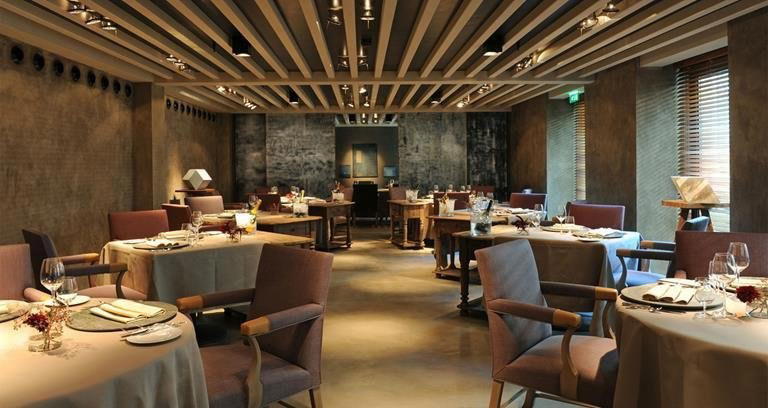
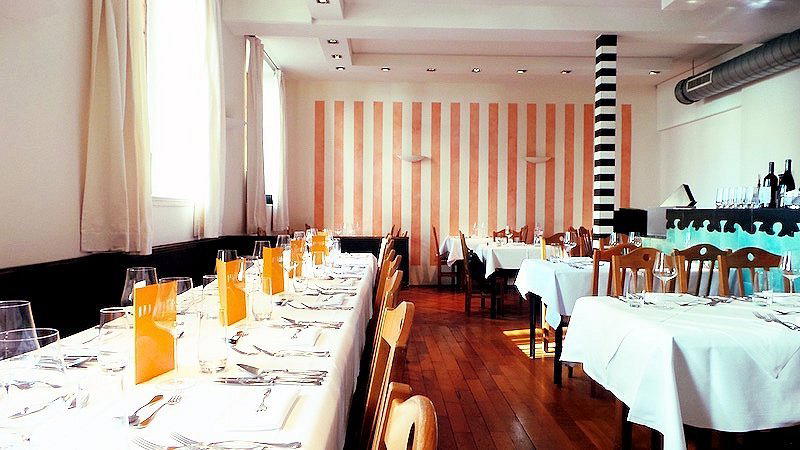
Idyllic beer garden atmosphere by the creek, romantic indoor setting with traditional rustic charm.