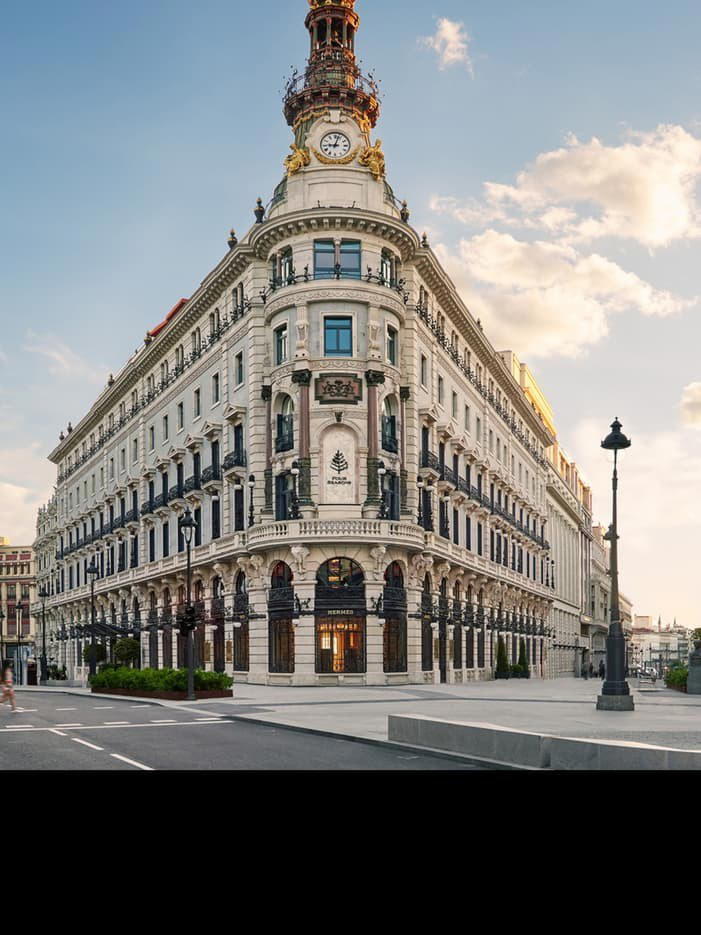
Perched on the seventh floor of a building at the corner of San Bernardo and Gran Vía, Inhala Terraza positions itself in the open-air tier of Madrid dining, where the city's roofline becomes part of the meal. The address places it squarely in the Centro district, a neighbourhood where modern creative cooking and traditional Spanish formats coexist across a dense, competitive dining grid.
Pearl is the En Primeur Club membership app — saves, bookings, and concierge access live there. Same editors, same standards.
- Address
- Restaurante Terraza, C. de San Bernardo, 1, 7ª Planta, Centro, 28013 Madrid, Spain
- Phone
- +34915594931
- Website
- inhalaterraza.com
- Directions
- Get directions
 Saves & bookings on Pearl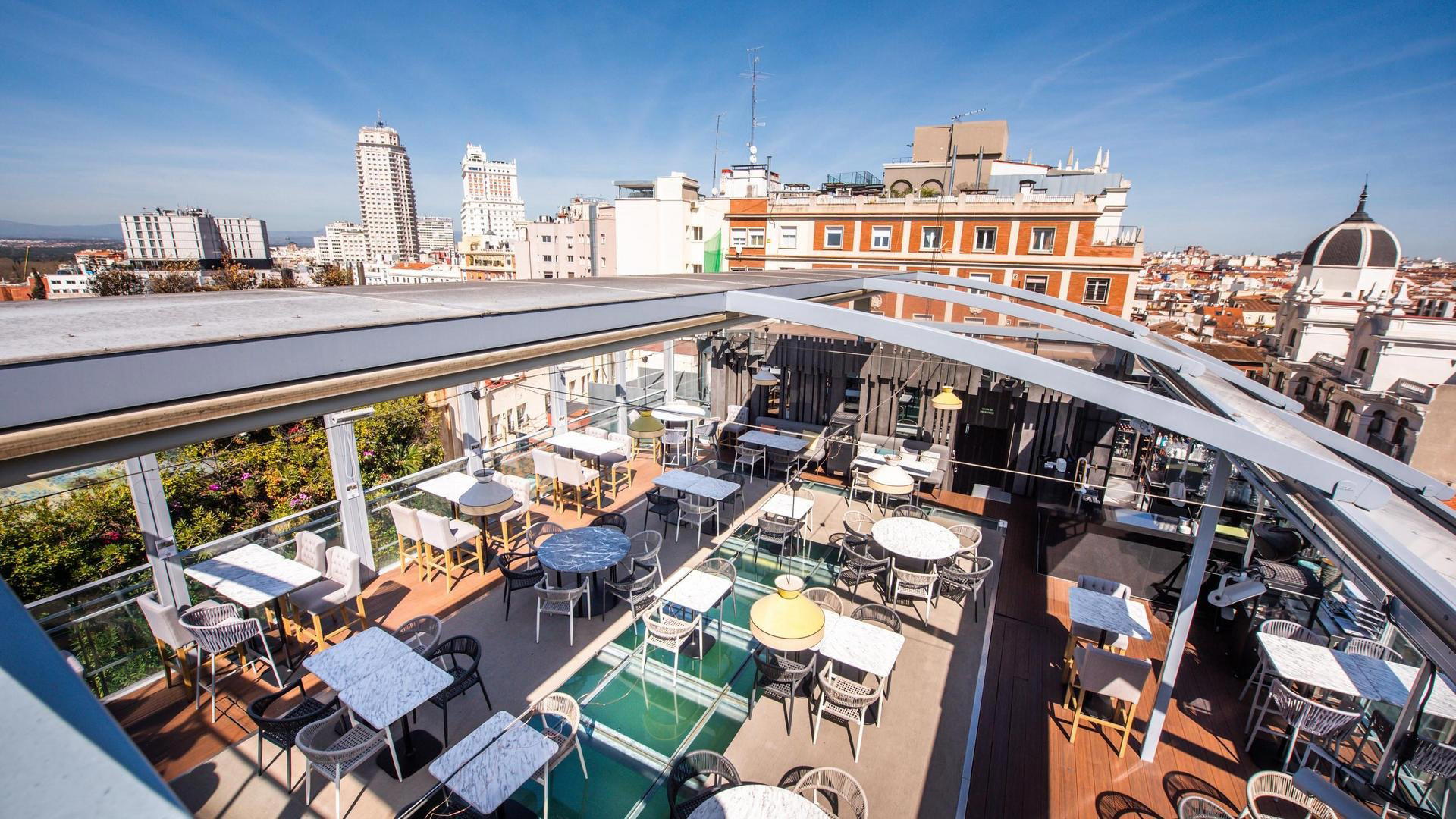
Madrid from the Seventh Floor
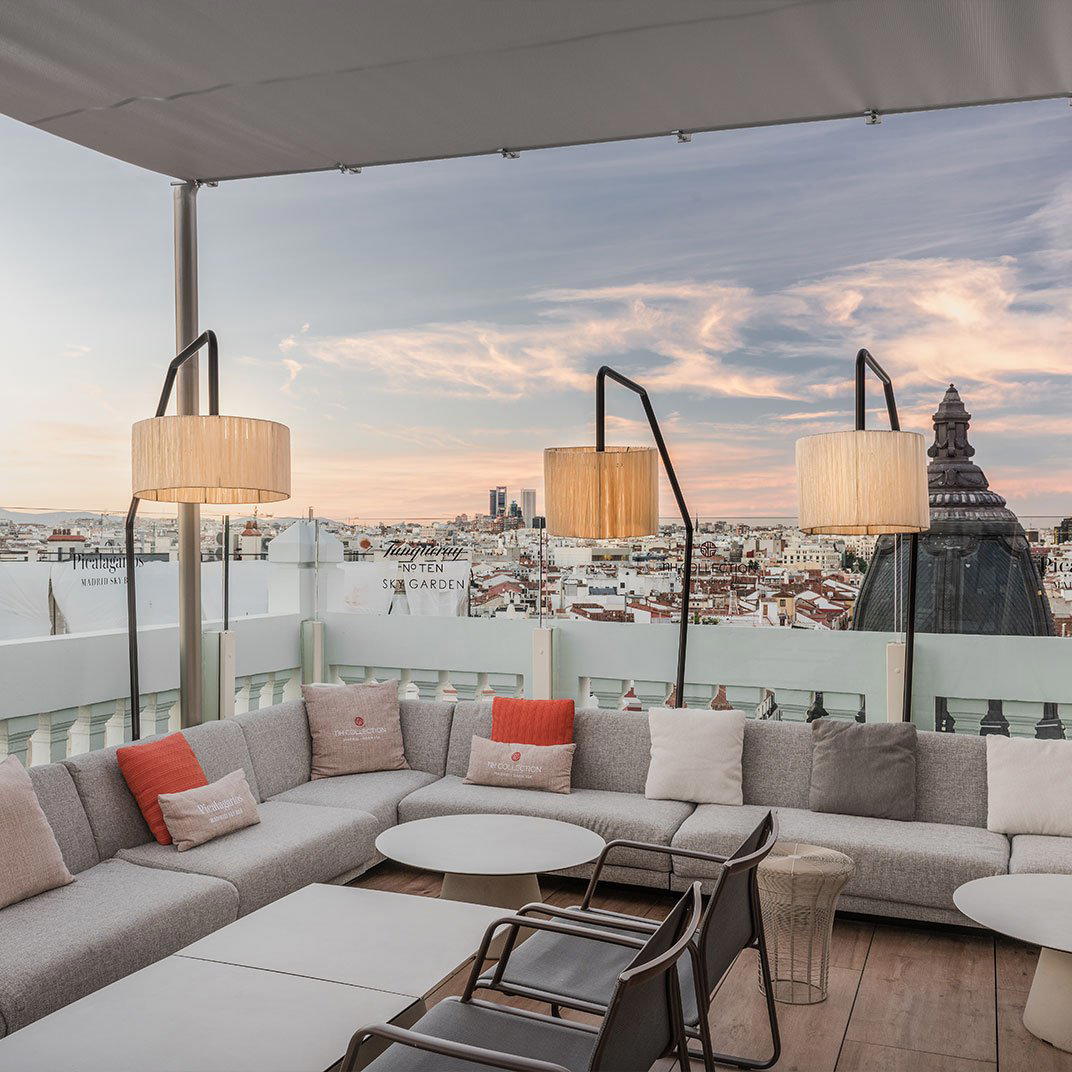
The open-air terrace format has become one of the more contested categories in Madrid dining. As the city's creative restaurant scene has deepened, with multi-course tasting menus now running across formats from casual to ceremonial, a parallel tier has emerged at roof level, where the setting absorbs some of the editorial weight that the kitchen alone might otherwise have to carry. Inhala Terraza, on the seventh floor at Calle de San Bernardo 1, occupies this refined position literally and categorically, with views across the Centro district that situate the meal in the city before a single course arrives.
The Centro address is worth unpacking. San Bernardo runs north from the Gran Vía intersection, a corridor that connects Madrid's commercial core to the university neighbourhood of Malasaña. Dining in this pocket tends toward the convivial and accessible rather than the austere and ceremonial. That neighbourhood character frames what a terrace venue at this address does well: the experience leans into the social register of a Madrid evening, where the aperitivo hour extends, conversations run long, and the city itself is part of the proposition.
How the Menu Reads the Room
Editorial angle that matters most at a terrace venue in this tier is menu architecture: how the kitchen structures its offer around the physical reality of outdoor dining, seasonal variance, and a guest who has arrived partly for the view. In Madrid's most technically demanding tasting-room formats, like DiverXO or DSTAgE, the menu is a closed argument, progressing with internal logic from first course to last. A terrace kitchen operates under different constraints: temperature fluctuation, ambient noise, and guests whose attention divides between the plate and the panorama. Menus that work in this format tend toward a looser, more interruptible structure, with sharing elements, independently satisfying mid-course options, and a drinks program that can anchor a table before food arrives.
Spain's broader fine-dining shift toward modular and sharing formats, visible across the country's most-discussed addresses, has given terrace venues a more credible structural vocabulary than they had a decade ago. Where a rooftop once defaulted to tourist-facing simplicity, the current generation of refined venues in Madrid can draw on the same seasonal, product-led thinking that drives ground-floor kitchens, adapted for the logistical realities of outdoor service. The comparison set for Inhala Terraza is not the Michelin-starred tasting room, where peers include Coque, Deessa, or Paco Roncero, but rather the growing cohort of view-led venues that take their food seriously without demanding the full ritual of a multi-hour tasting sequence.
The Terrace Tier in a City That Dines Late
Madrid's dining rhythm is its own category of context. The city does not fill restaurant tables before nine in the evening, and terrace dining often begins to find its register closer to ten, when the heat of the day has dropped and the city's ambient energy shifts from transactional to social. For a seventh-floor terrace in July or August, that timing is not inconvenient, it is structural: the venue operates at its finest when the light is low and the views carry the weight of a city transitioning into night. Planning a booking for midsummer means accounting for that timing, arriving when the roofline is at its most legible rather than fighting the afternoon glare.
Seasonal calibration matters across the Spanish restaurant calendar. The country's most discussed venues, from El Celler de Can Roca in Girona to Mugaritz in Errenteria to Aponiente in El Puerto de Santa María, close for significant periods and structure their calendars around produce and rest cycles. Terrace venues operate on a different seasonal logic, where the relevant question is not which truffle or which game bird, but whether the roof is open. In Madrid's climate, that means a meaningful season running from late spring through early autumn, with the operational sweet spot between May and October.
Where This Fits in Madrid's Broader Dining Grid
Readers approaching Madrid's restaurant options from outside the city often default to its Michelin bracket as a routing mechanism. That bracket is dense and competitive: the capital's creative dining scene includes addresses that would measure up in any European city, and the comparison pool extends naturally to Spain's wider collection of celebrated kitchens, from Arzak in San Sebastián and Azurmendi in Larrabetzu to Martin Berasategui in Lasarte-Oria, Quique Dacosta in Dénia, Ricard Camarena in València, Atrio in Cáceres, and Cocina Hermanos Torres in Barcelona. Against that backdrop, a terrace venue in the Centro serves a different function in the itinerary: it is the evening that breathes, positioned between the more demanding multi-course commitments.
For visitors building a Madrid dining itinerary across several nights, the terrace format fills the gap between the structured investment of a long tasting menu and the casual stand-up experience of a taberna or tapas bar. It is the middle register of the city's dining week, and in that register, location and atmosphere carry proportionally more weight than in a closed, controlled dining room. The Centro position, close to the Gran Vía axis and walkable from a wide range of accommodation options in the Chueca, Malasaña, and Sol neighbourhoods, adds logistical ease to the evening's calculation. Our full Madrid restaurants guide maps the wider dining grid if you are building across multiple nights.
Planning Your Visit
Because detailed operational data for Inhala Terraza is limited in current circulation, the practical approach is direct contact via the venue's reservation channels. Terrace venues in Madrid's mid-to-upper tier tend to book ahead on weekends and during the summer months more pressingly than their ground-floor counterparts, partly because capacity is genuinely limited by the physical footprint of a seventh-floor roof and partly because the Madrid evening-out market for view dining is active. Arriving without a booking on a Friday evening in July is a reasonable way to test that proposition from the wrong side. The address at Calle de San Bernardo 1, seventh floor, is accessible from the Gran Vía metro station and within a short walk from the Noviciado and Santo Domingo stops on lines 2 and 10 respectively.
How Inhala Terraza Madrid compares with similar nearby venues.
| Venue | Cuisine | Price |
|---|---|---|
| Mawey Taco Bar | Tacos | Not listed |
| Ikigai Flor Baja | Japanese | €€€ |
Continue exploring
More in Madrid
Restaurants in Madrid
Browse all →
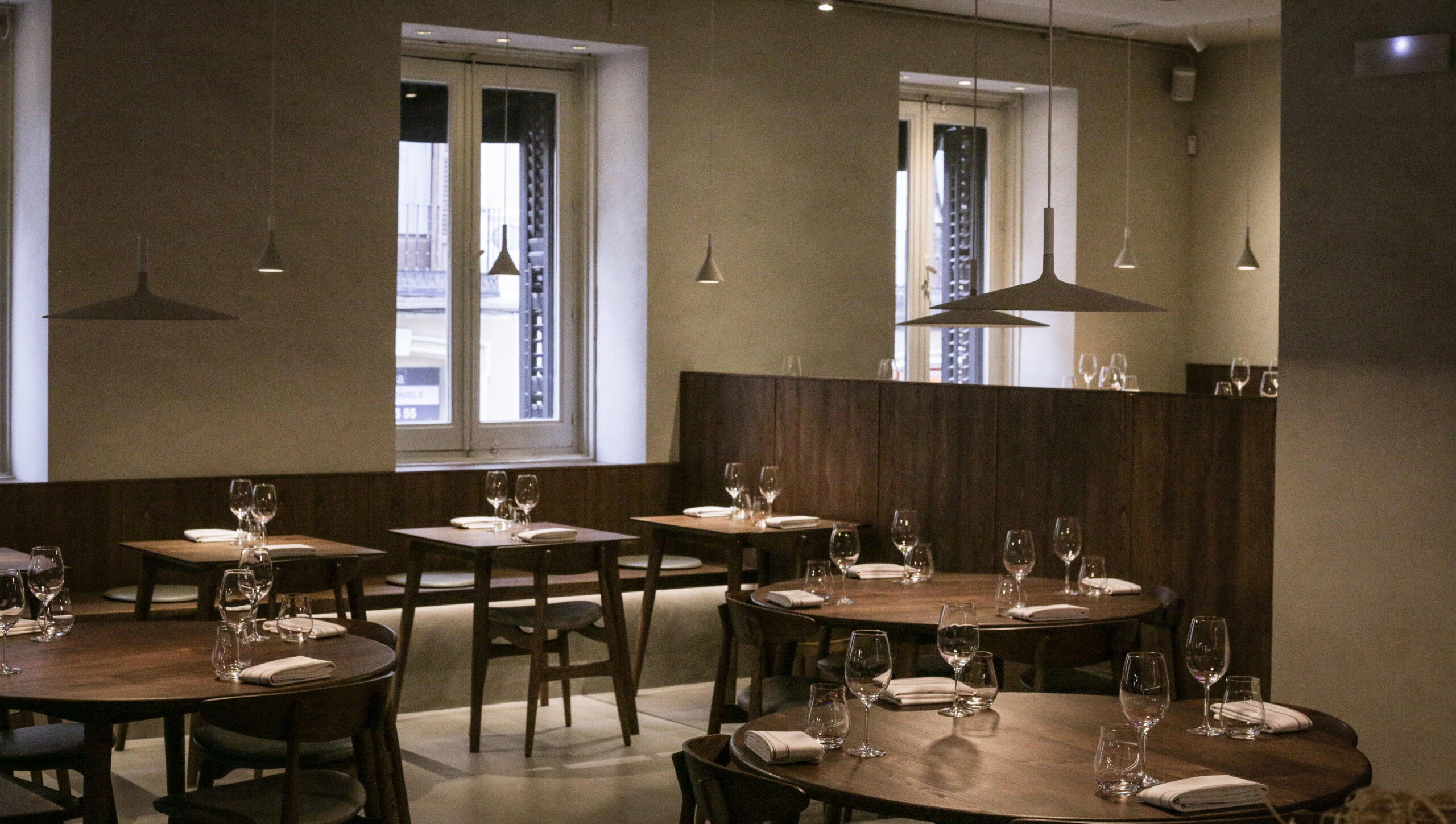
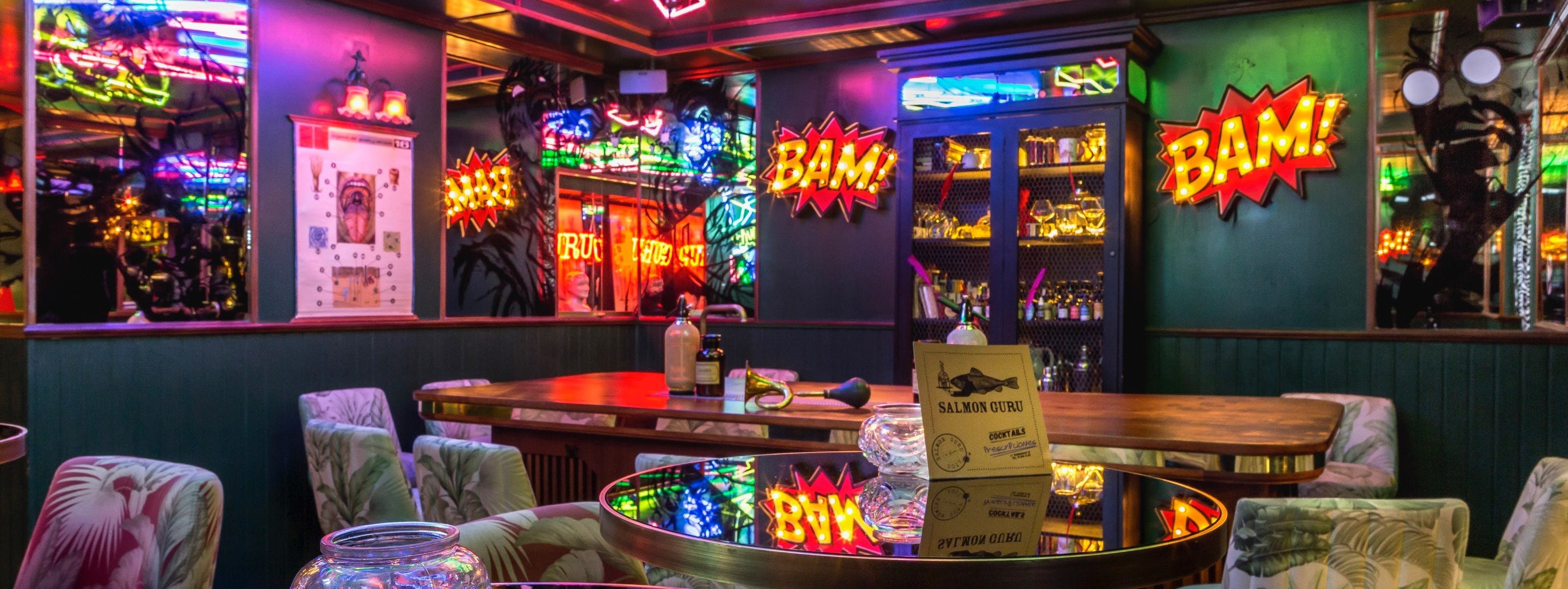
Bars in Madrid
Browse all →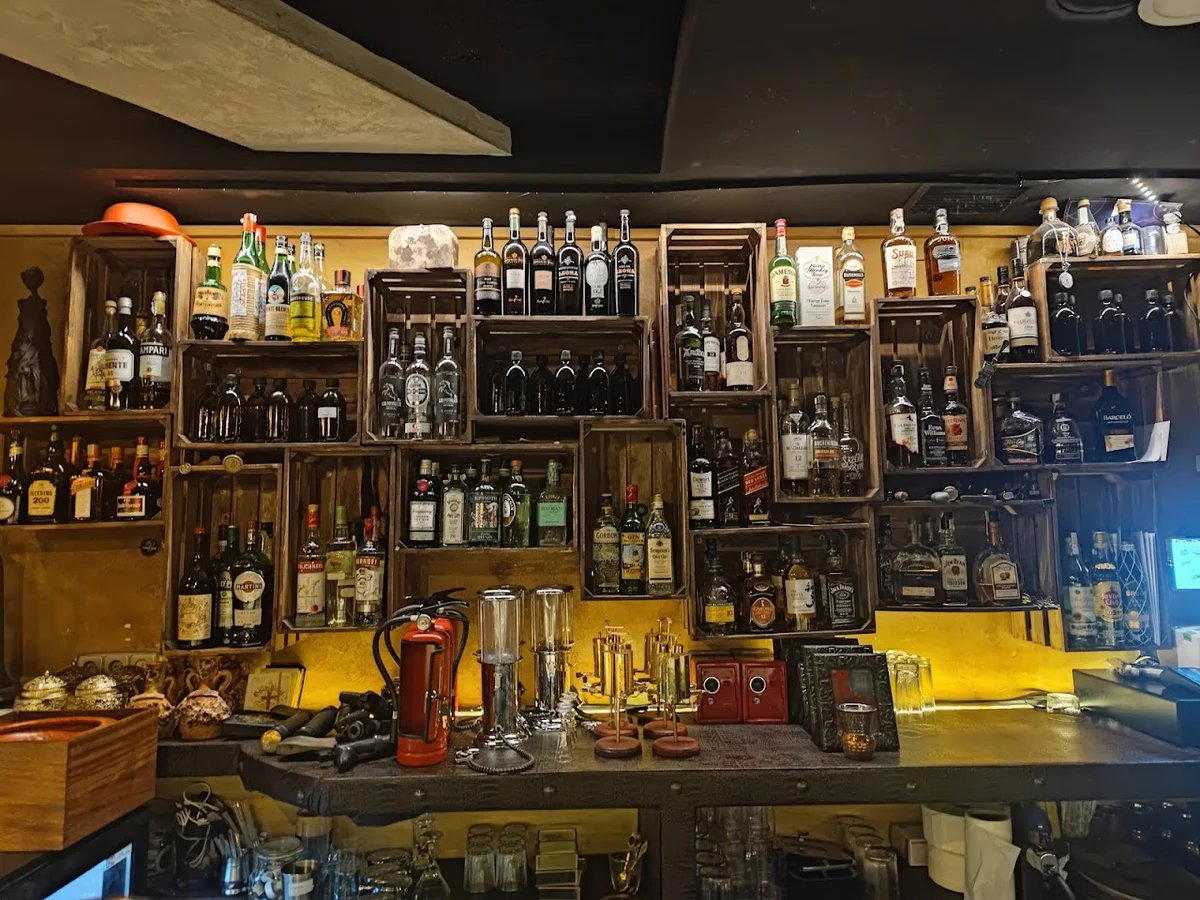
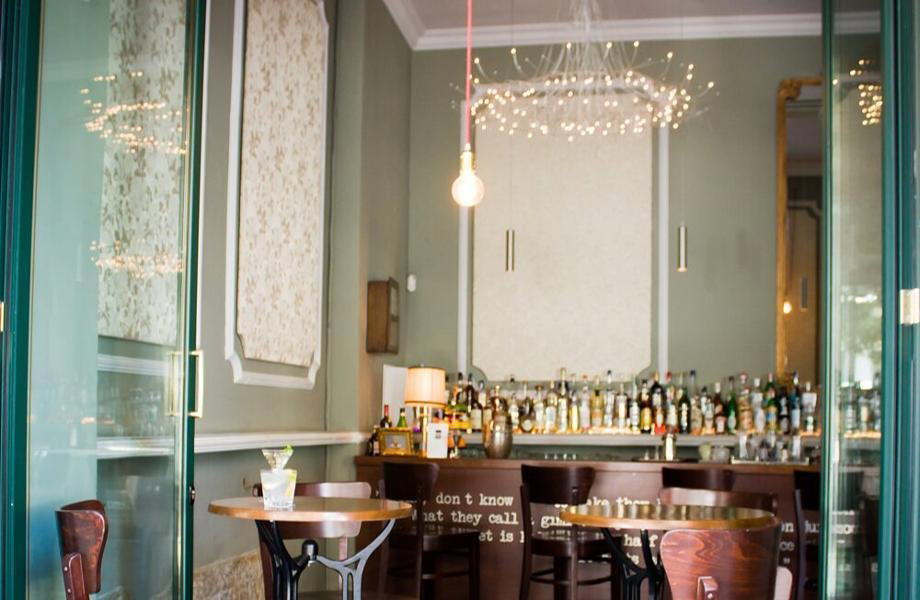
Hotels in Madrid
Browse all →


At a Glance
- Scenic
- Elegant
- Modern
- Sophisticated
- Date Night
- Special Occasion
- Late Night
- Rooftop
- Terrace
- Panoramic View
- Hotel Restaurant
- Craft Cocktails
- Skyline
- Street Scene
Current opening hours
- Monday
- 1 PM–2 AM
- Tuesday
- 1 PM–2 AM
- Wednesday
- 1 PM–2 AM
- Thursday
- 1 PM–2 AM
- Friday
- 1 PM–2 AM
- Saturday
- 1 PM–2 AM
- Sunday
- 1 PM–2 AM
Hours can change for holidays and private events. Last verified .
Urban oasis with airy glazed terrace, vertical garden views, and enclosed lounge, well-suited for sunset drinks and city panoramas.
Know Before You Go
- Getting there
- Restaurante Terraza, C. de San Bernardo, 1, 7ª Planta, Centro, 28013 Madrid, Spain