



2 Michelin Stars · La Liste Top Restaurants · Wine Spectator Best of Award of Excellence
Our verdict
IKIGAI holds two Michelin stars and a 94-point La Liste ranking inside Schloss Elmau, one of Germany's most celebrated resort destinations. Chef Christoph Rainer works across French and Japanese registers, supported by Sommelier Marie-Helen Krebs and a wine list of 1,750 selections reaching deep into Germany, Austria, Italy, and France. Dinner here is a serious proposition in an area better known for Alpine scenery than restaurant culture.

Pearl is the En Primeur Club membership app — saves, bookings, and concierge access live there. Same editors, same standards.
- Address
- In Elmau 2, 82493 Krün, Germany
- Phone
- +49 8823 18880
- Hours
- Mon–Tue ClosedWed–Sat 7–9 PMSun Closed
- Website
- schloss-elmau.de
- Directions
- Get directions
- Booking
- Book on OpenTable
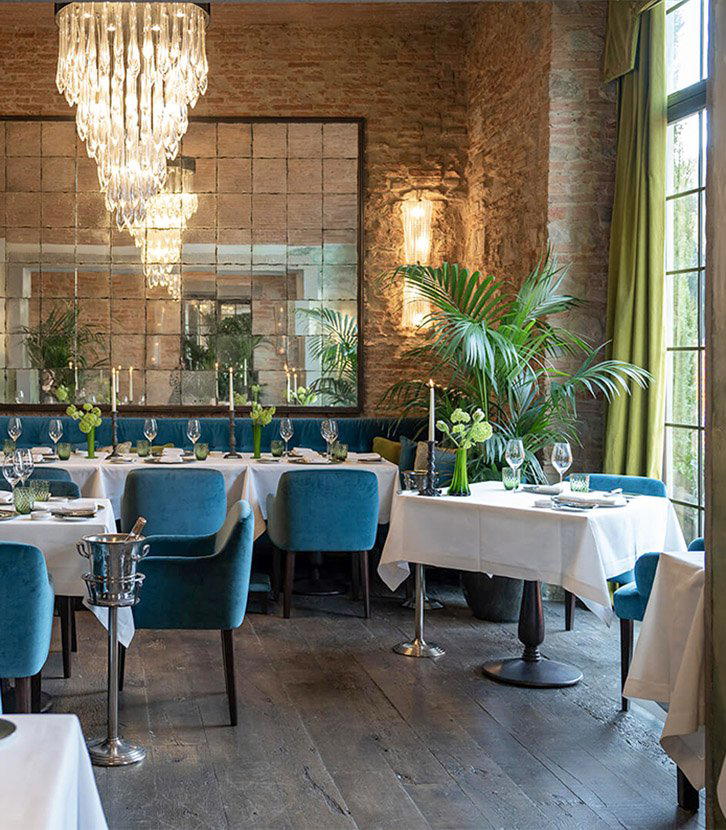
A Mountain Setting That Recalibrates Expectations
The Bavarian Alps have never been Germany's primary draw for serious restaurant culture. That reputation belongs to cities and wine-country towns: Munich's long tradition of refined French cooking, the Schwarzwald kitchens around Baiersbronn where Schwarzwaldstube holds three Michelin stars, the Rhine-Moselle corridor where addresses like Schanz in Piesport and Waldhotel Sonnora in Dreis anchor the region's fine-dining identity. Against that map, Krün is a conspicuous outlier: a small municipality south of Mittenwald, altitude and silence its defining qualities, fine dining not among its obvious credentials.
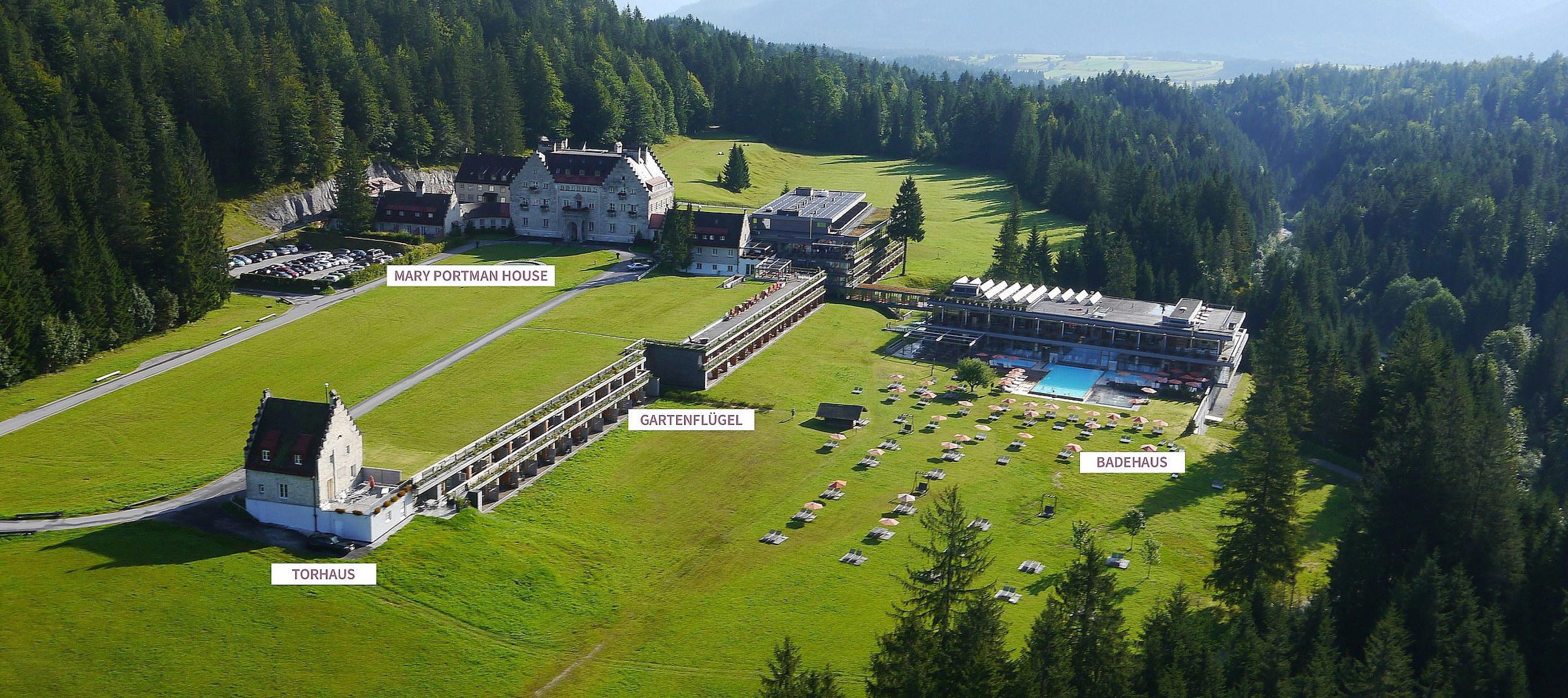
IKIGAI operates inside Schloss Elmau, the cultural resort that has hosted G7 summits and long maintained a position as one of Germany's most deliberately self-contained luxury addresses. The setting arrives before the food does. The approach through the Elmau valley, with the Wetterstein range framing the drive, signals that this is dining at remove from the urban restaurant circuit. That remove is the point. IKIGAI sits at In Elmau 2, 82493 Krün, and the altitude and isolation function less as novelty and more as a kind of editorial statement about what kind of attention the meal is intended to receive.
Two Cuisines, One Coherent Framework
Germany's two-star tier spans a considerable range of ambitions and idioms. CODA Dessert Dining in Berlin occupies the creative-conceptual end. Vendôme in Bergisch Gladbach works a polished modern European register. JAN in Munich represents the city's contemporary fine-dining confidence. What most of these share is a primary culinary grammar: one tradition expressed through a singular kitchen logic.
IKIGAI works differently. The restaurant's declared cuisine runs French and Japanese in combination, a pairing that has become more common across European fine dining over the past decade but remains difficult to execute without one tradition subordinating the other. Chef Christoph Rainer holds the kitchen, and the double designation on the menu reflects a genuine structural commitment rather than surface-level fusion shorthand. French technique and Japanese precision are not easy bedfellows; the former tends toward reduction and richness, the latter toward restraint and delineation. That the kitchen holds two Michelin stars through this synthesis, maintained consecutively in both 2024 and 2025, is the most objective evidence that the balance is being held.
Chef Ignacio Carmona is also associated with the kitchen in IKIGAI's records, pointing to a depth of brigade that supports the complexity of running two culinary idioms at the starred level. The editorial angle here is less about individual chef biography and more about what this Franco-Japanese framework demands of a kitchen team: precise mise en place discipline from both traditions, sourcing logic that can serve both raw preparations and long-cooked French-style proteins, and a service rhythm capable of moving between the two registers without the meal feeling schizophrenic.
The Wine Program as a Structural Argument
At the two-star level, wine programs often function as either afterthought or parallel ambition. At IKIGAI, the cellar is a serious second act. Sommelier and Wine Director Marie-Helen Krebs oversees 1,750 selections backed by an inventory of 17,500 bottles. The geographic focus runs Germany, Austria, Italy, and France, a quartet that maps closely onto the kitchen's European-Japanese dialogue: German Riesling and Austrian white varieties offer the precision and mineral clarity that Japanese-inflected cooking often requires; Burgundy and Italian whites provide the textural richness that French technique invites.
Wine pricing at IKIGAI sits in the top tier, with many bottles exceeding €100, reflecting both the quality of selection and the context of a resort address where cellaring and service infrastructure carry real costs. A corkage fee of €55 applies for those bringing their own bottles. For a resort restaurant, the depth of this list is notable: 17,500 bottles of inventory is a commitment that goes well beyond what most hotel dining rooms maintain and places the wine program closer to the standalone destination-restaurant model.
La Liste, which aggregates global restaurant rankings and review data into a composite score, awarded IKIGAI 91.5 points in 2025 and raised that figure to 94 points in 2026. La Liste scores operate on a 100-point scale, and movement of 2.5 points in a single cycle is material. German peers in the La Liste top tier include Aqua in Wolfsburg, which holds three Michelin stars and represents the upper ceiling of the country's fine-dining recognition. IKIGAI's trajectory, from 91.5 to 94 across consecutive years, suggests a kitchen and front-of-house that are tightening rather than plateauing.
The Resort Context and What It Implies
Dining inside a luxury resort carries specific dynamics that differ from the standalone restaurant model. The audience is partially captive, partially destination-seeking. The kitchen must perform across a wider range of expectations than a city restaurant that self-selects its clientele purely through price and reservation difficulty. Schloss Elmau has historically attracted guests who combine cultural programming with serious expectations around food and wine, which means IKIGAI's room holds a more sophisticated dining public than a typical resort restaurant encounters.
General Manager Lukas Leitz oversees the operation, and owner Dietmar Müller-Elmau's long involvement with Schloss Elmau as a cultural institution gives the property's restaurants a different founding logic than hotel group F&B concepts. The restaurant is not a branded amenity; it is a statement about what the property believes fine dining in this context should be. That distinction matters when considering how the kitchen has been resourced and how consistently it has maintained its recognition over multiple award cycles.
For comparison, the Franco-Japanese synthesis at IKIGAI finds broader international echoes: restaurants like Frantzén in Stockholm and FZN by Björn Frantzén in Dubai have built their identities around exactly this kind of cross-cultural technical ambition.
The restaurant's dinner-only format means it functions as an evening destination rather than an all-day dining resource. For guests staying at Schloss Elmau, the planning is direct in terms of logistics. For those driving from Innsbruck, Munich, or Garmisch-Partenkirchen, the journey into the Elmau valley requires advance reservation and intention: this is not a walk-in proposition at any level. Dinner menus are priced at €€€€, the top tier across all EP Club cost designations, consistent with the kitchen's two-star positioning and the resort's broader price architecture. Those exploring the full range of what Krün and the surrounding region offer can consult our full Krün restaurants guide, our full Krün hotels guide, our full Krün bars guide, our full Krün wineries guide, and our full Krün experiences guide.
In the broader range of German fine dining, addresses like Restaurant Haerlin in Hamburg, Victor's Fine Dining by Christian Bau in Perl, and Bagatelle in Trier each represent distinct regional expressions of the country's top-tier restaurant culture. ES:SENZ in Grassau is the closest geographic peer, another Alpine-adjacent Bavarian address working at the starred level. IKIGAI's distinction within this group is its deliberate fusion of two major culinary traditions and its location inside one of Germany's most culturally weighted resort properties, a combination that makes it difficult to slot neatly into any single peer category.
Planning Your Visit
IKIGAI serves dinner only. Reservations through Schloss Elmau's booking infrastructure are the standard approach for securing a table, and given the property's profile and the restaurant's consecutive two-star status, advance planning is advisable. The address is In Elmau 2, 82493 Krün, reached by road through the Elmau valley south of Klais.
Frequently asked questions
Is IKIGAI a family-friendly restaurant?
What is the atmosphere like at IKIGAI?
What do people recommend at IKIGAI?
Fast Comparison
| Venue | Cuisine | Price | Awards |
|---|---|---|---|
| IKIGAIThis venue — the venue you are viewing | Modern Japanese-European Fusion | $200–300 | 2 Michelin Stars · La Liste Top Restaurants |
| Schwarzwaldstube | French, Classic French | Not listed | Michelin 3 Star |
| Aqua | Contemporary German, Italian/Japanese, Creative | Not listed | Michelin 3 Star |
| CODA Dessert Dining | Creative | Not listed | Michelin 2 Star |
| Tantris | Modern French, French Contemporary | Not listed | Michelin 2 Star |
| Vendôme | Modern European, Creative | Not listed | Michelin 2 Star |
Recognition history
Dated appearances from independent guides and award organizations, with the underlying list record or original source where available.
Michelin 2 Stars
Michelin
La Liste Top Restaurants
La Liste
Falstaff Restaurant - 96 Falstaff Points
Falstaff
Wine Spectator Best of Award of Excellence
Wine Spectator
Full recognition history (8 entries)
La Liste Top Restaurants
La Liste
Michelin 2 Stars
Michelin
Wine Spectator Best of Award of Excellence
Wine Spectator
Michelin 2 Stars
Michelin
Continue exploring
More in Krün
Restaurants in Krün
Browse all →
Bars in Krün
Browse all →
Hotels in Krün
Browse all →

Details
- Sophisticated
- Elegant
- Intimate
- Modern
- Scenic
- Date Night
- Special Occasion
- Chefs Counter
- Extensive Wine List
- Sake Program
- Mountain
- Tasting Menu
- Omakase
- Sake
- Wine
- Vegetarian Friendly
- Vegan Options
Current opening hours
- Monday
- Closed
- Tuesday
- Closed
- Wednesday
- 7–9 PM
- Thursday
- 7–9 PM
- Friday
- 7–9 PM
- Saturday
- 7–9 PM
- Sunday
- Closed
Hours can change for holidays and private events. Last verified .
Refined interior with pared-back design, warm wood tones, elegant tableware, and a sophisticated, harmonious atmosphere.