Ichiran
Ichiran brings its Japanese solo-dining ramen format to Tsim Sha Tsui, occupying space inside The Pinnacle on Minden Avenue. The concept centres on individual booth seating and a tonkotsu broth customisation system that has made the brand a reference point for ramen standardisation across Asia. For visitors moving through Kowloon's dense dining grid, it offers a controlled, repeatable experience distinct from Hong Kong's local noodle tradition.
Pearl is the En Primeur Club membership app — saves, bookings, and concierge access live there. Same editors, same standards.
- Address
- 地庫, B舖, The Pinnacle, Minden Ave, Tsim Sha Tsui, Hong Kong
- Phone
- +85223694218
- Website
- zh-cht.ichiran.com
- Directions
- Get directions
 Saves & bookings on Pearl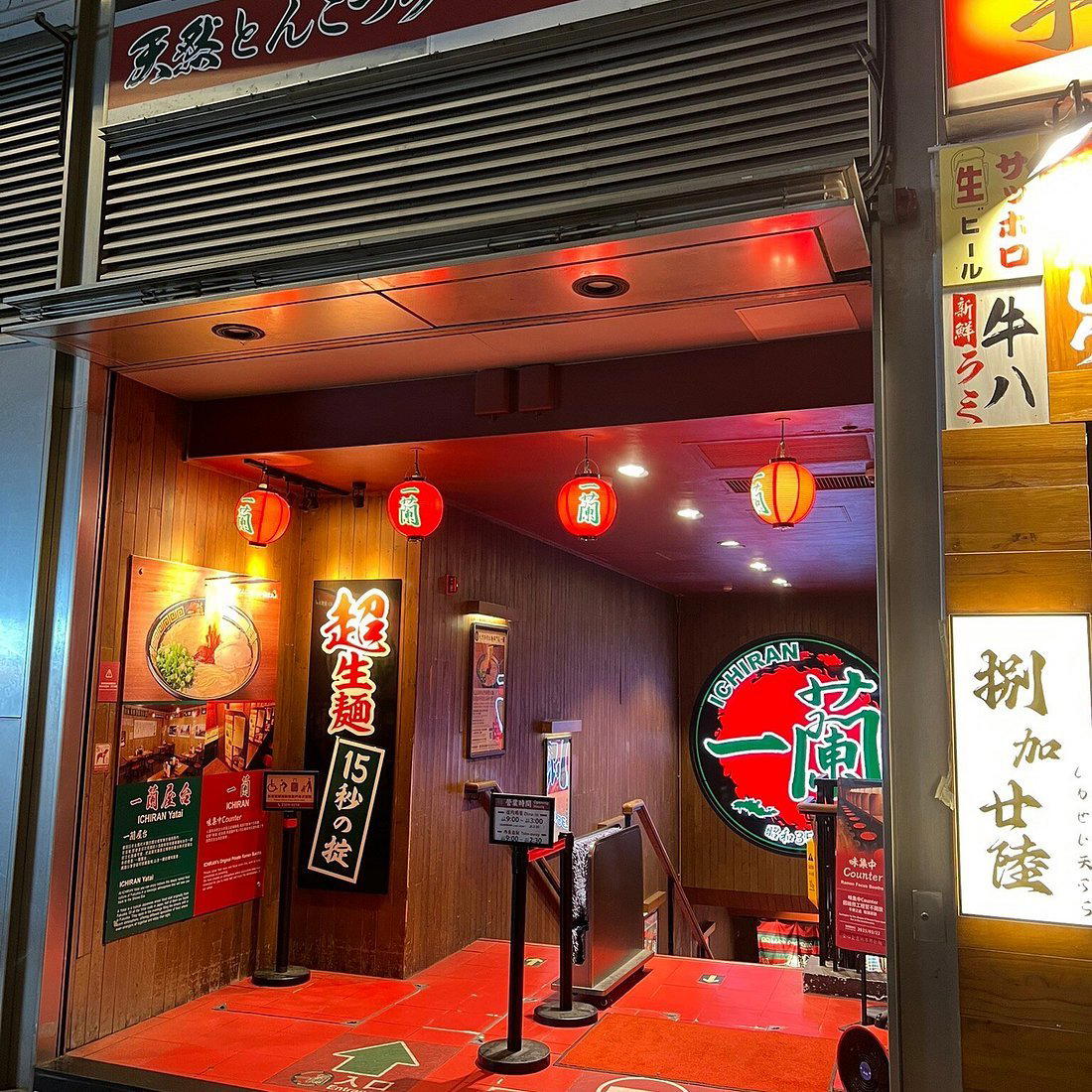
The Booth Culture Behind the Bowl
Ramen in Japan developed largely as a democratic, fast-moving format: counter seating, efficient service, and a focus on broth consistency over tableside ceremony. Ichiran, which originated in Fukuoka, codified a specific variant of that culture, the solo dining booth, and turned it into a replicable system that now operates across Japan, the United States, and several Asian cities including Hong Kong. The Tsim Sha Tsui location on Minden Avenue, inside The Pinnacle, places that Japanese format directly inside one of Kowloon's most internationally trafficked dining corridors, where everything from Cantonese roast meat shops to high-end Indian restaurants competes for the same foot traffic.
The solo booth format deserves explanation because it represents a structural departure from how most Hong Kong diners eat. In a city where round-table Cantonese dining and communal hotpot sessions define much of the restaurant culture, venues like Budaoweng Hotpot Cuisine nearby operate on exactly that shared-table logic, Ichiran's individual partitioned stalls invert the premise entirely. You order alone, eat alone, and communicate with kitchen staff through a small bamboo screen. It is a format designed around concentration on the bowl rather than the table, and in practice it produces a noticeably different register of eating.
Tonkotsu and the Question of Sourcing Discipline
Ichiran's broth is tonkotsu, the pork-bone style associated with Fukuoka's Hakata district, where the collagen-heavy bones are pressure-cooked for hours to produce a milky, viscous base. The brand's commercial reputation rests on consistency: the argument is that each bowl should taste identical regardless of which branch you are in or which staff member prepared it. That ambition raises a genuine sourcing question. Tonkotsu quality depends on pork bone quality, and maintaining standardised flavour profiles across geographically dispersed locations requires either centralised production of key components or strict ingredient specifications applied locally. Ichiran has historically invested in the former approach, controlling its broth base at the production level rather than leaving it to local kitchen discretion.
That sourcing philosophy separates the brand from the fragmented independent ramen shops that dominate the category in both Japan and Hong Kong. Independent operators in cities like Tokyo or Osaka often source pork locally, adjust seasonally, and allow the broth to shift with ingredient availability. Ichiran does the opposite: the bowl is designed to be the same. Whether that discipline reads as a strength or a limitation depends on what you are looking for. If you want a reference-point bowl, a fixed standard against which to measure other tonkotsu, Ichiran provides one with unusual reliability.
Hong Kong's own noodle tradition runs in a different direction entirely. Wonton noodle soup, beef brisket vermicelli, and curry fish ball noodles are the local vernacular, each with their own sourcing debates and regional variations. Shops like Block 18 Doggie's Noodle represent the Kowloon end of that local noodle tradition. Ichiran operates as a counterpoint: a fully imported format that makes no concession to local noodle culture and is not trying to. That clarity of identity is part of what the brand offers.
Where Minden Avenue Sits in Tsim Sha Tsui
Minden Avenue is a short street running off Nathan Road in the heart of Tsim Sha Tsui, surrounded by hotels, boutiques, and a concentration of restaurants that skews international. The Pinnacle building is a commercial address familiar to visitors staying in the area. Reaching the Ichiran location involves no particular navigation challenge: Tsim Sha Tsui MTR station is within walking distance, and the street is well-signed. The neighbourhood also contains a cross-section of cuisines that reflects Kowloon's role as one of Hong Kong's primary visitor corridors, including Carat Fine Indian and Mediterranean Cuisine and Coconut Soup, each pulling from different culinary traditions. Across Hong Kong more broadly, the city supports a full spectrum from neighbourhood-scale local dining, Hoi Tin Garden in Tuen Mun, King Of Soybeans in Wong Tai Sin, to the formal end of the market represented by 8 1/2 Otto e Mezzo Bombana. Ichiran sits in its own category: a branded mid-market format that competes less on creative cooking and more on format consistency and recognisability.
The Customisation System as a Feature
Part of Ichiran's operational identity is the paper order form diners complete before eating. Broth richness, flavour intensity, garlic quantity, spice level, noodle firmness, and other variables are selected individually, creating a nominally personalised bowl within a fixed set of parameters. This system has become a reference point for ramen brands globally, including Korean and Taiwanese chains that adopted similar order-sheet approaches, because it manages customer expectations while maintaining kitchen efficiency. It also provides a social permission structure for solo dining that can otherwise feel awkward in a city like Hong Kong where eating alone is less culturally embedded than in Japan.
For visitors arriving from other stops on a longer Asia itinerary, having just left Seoul, Tokyo, or Taipei, the format provides a familiar anchor. For first-time visitors to Hong Kong who want a controlled entry point before working through the city's more demanding local food culture, it offers orientation without risk. Neither use case is one adventurous way to eat in Tsim Sha Tsui, but both are legitimate. Elsewhere in the city, more demanding dining decisions await: Gaia in Central represents the formal Italian end of the Hong Kong dining spectrum, while Former Jumbo Floating Restaurant in Aberdeen marks a different chapter in the city's dining history entirely. For those moving further into Hong Kong's outer districts, One-ThirtyOne in Tai Po and Lei Garden in Sha Tin offer Cantonese cooking with more local depth. Cross-reference destinations further afield, Le Bernardin and Atomix in New York, for instance, illustrate how different the ambitions of a format-driven chain are from the bespoke tasting counter model.
Planning Your Visit
The Tsim Sha Tsui location is accessible on foot from the MTR, with Minden Avenue a short walk from Nathan Road. Ichiran branches across Asia typically operate without reservations, with queuing managed at the door during peak hours. Visiting during late morning or mid-afternoon generally means shorter waits than dinner service. Hours run daily from 9 AM to 3 AM, and a meal costs about US$15 per person. The restaurant also sits in a part of Tsim Sha Tsui with several other dining options nearby, including Cafe and Habib's Indian and Middle Eastern Food in Kwun Tong for those extending their evening. For island-side alternatives, Gangstas on Lantau and I Love Istanbul in Tsuen Wan each represent the kind of neighbourhood-specific dining that rewards slightly more travel.
Fast Comparison
Comparable venues nearby, for context on price, style, and recognition.
| Venue | Cuisine | Price | Notes |
|---|---|---|---|
| IchiranThis venue — the venue you are viewing | Tonkotsu Ramen | $$ | Not listed |
| Budaoweng Hotpot Cuisine | Chinese Hotpot with Seafood | $$ | Yau Tsim Mong |
| Block 18 Doggie's Noodle | Hong Kong Street Noodles | $ | Yau Tsim Mong |
| Cafe | Classic Hong Kong Cha Chaan Teng | $ | Yau Ma Tei |
| Paper Moon | Authentic Italian with Milanese influences | $$$ | Tsim Sha Tsui |
Continue exploring
More in Yau Tsim Mong
Restaurants in Yau Tsim Mong
Browse all →
Bars in Yau Tsim Mong
Browse all →
At a Glance
- Minimalist
- Intimate
- Solo
- Late Night
- Casual Hangout
- Sake Program
Current opening hours
- Monday
- 9 AM–3 AM
- Tuesday
- 9 AM–3 AM
- Wednesday
- 9 AM–3 AM
- Thursday
- 9 AM–3 AM
- Friday
- 9 AM–3 AM
- Saturday
- 9 AM–3 AM
- Sunday
- 9 AM–3 AM
Hours can change for holidays and private events. Last verified .
Minimalist solo booths with privacy curtains creating an intimate, focused atmosphere for enjoying ramen.