Budaoweng Hotpot Cuisine

Budaoweng Hotpot Cuisine on Jordan Road puts one of China's most communal dining traditions at the centre of the Yau Ma Tei table. The Sino Cheer Plaza address places it squarely in Yau Tsim Mong's dense, working restaurant corridor, where hotpot has long operated as the district's default gathering format.
Pearl is the En Primeur Club membership app — saves, bookings, and concierge access live there. Same editors, same standards.
- Address
- Sino Cheer Plaza, 23-29 Jordan Rd, Yau Ma Tei, Hong Kong
- Phone
- +85235260918
- Website
- bdw.com.hk
- Directions
- Get directions
 Saves & bookings on Pearl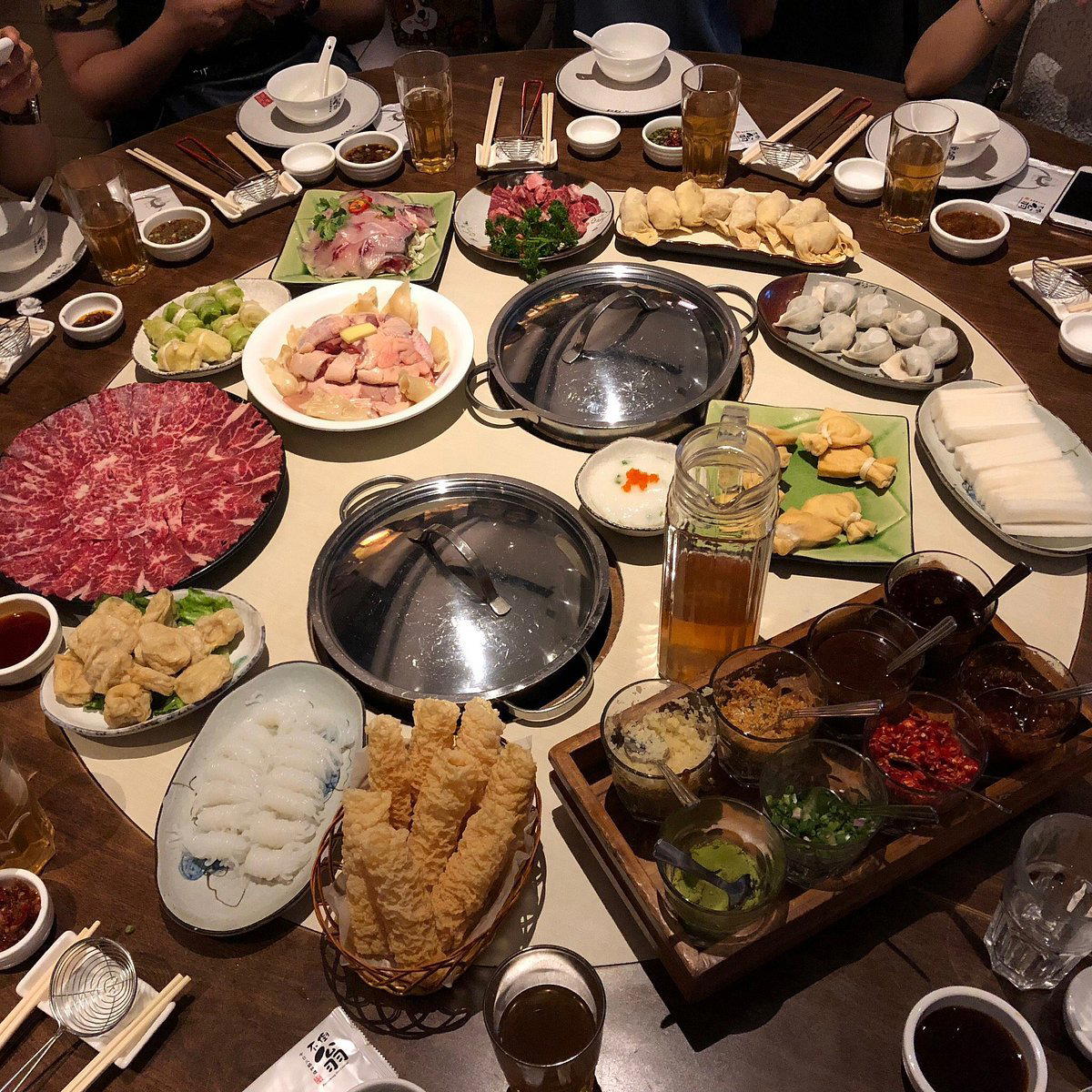
Jordan Road and the Hotpot Tradition in Yau Tsim Mong
Budaoweng Hotpot Cuisine is a Chinese hotpot with seafood restaurant in Yau Ma Tei, Hong Kong, priced at about US$35 per person. Yau Ma Tei and the broader Yau Tsim Mong district have historically been the city's most concentrated zone for Mainland Chinese dining formats, and hotpot, which asks diners to slow down, order communally, and commit to a table for the better part of two hours, suits both the neighbourhood's social fabric and its appetite for regional Chinese cooking. Budaoweng Hotpot Cuisine, located inside Sino Cheer Plaza at 23 to 29 Jordan Road, operates within that tradition rather than against it.
The name itself carries cultural weight. Budaoweng (不倒翁) translates roughly as the tumbler toy, the weighted figure that rights itself every time it is knocked over, a reference embedded in Chinese folk culture and associated with persistence and resilience. That framing, whether decorative or deliberate, signals an operator thinking about identity rather than simply executing a format. It positions the restaurant inside a tier of hotpot houses that take the form seriously as a cultural object, not merely as a high-turnover dining mechanism.
Hotpot as Cultural Infrastructure
Across the Chinese-speaking world, hotpot functions as social infrastructure as much as cuisine. The shared pot, the rotating selection of raw ingredients, the negotiation over broth intensity and dipping sauces, these are rituals that encode hospitality and hierarchy simultaneously. In Hong Kong, where Cantonese barbecue and dim sum have historically dominated the cultural conversation around food, hotpot occupies a parallel but equally serious space. The city's appetite for Sichuan-inflected mala broths expanded sharply over the past decade, driven partly by Mainland tourism patterns and partly by Hong Kong residents' own deepening familiarity with spice-forward regional Chinese cooking.
Yau Tsim Mong sits at the intersection of those currents more than any other Hong Kong district. Its position as a transit zone, dense with hotels, guesthouses, and the Yau Ma Tei and Jordan MTR stations, means its restaurant population has always tracked a broader, more diverse clientele than neighbourhood-only dining rooms in quieter districts. Hotpot works particularly well in this context: it scales naturally from two people to large groups and accommodates multiple dietary preferences within a single table order.
Other operators in the district, including Coconut Soup, take their own approach to broth-centred communal dining, while Carat Fine Indian and Mediterranean Cuisine and Ebeneezer's Kebabs and Pizzeria represent the area's capacity to absorb different culinary traditions within a short radius. Block 18 Doggie's Noodle and Cafe round out a neighbourhood picture in which no single format dominates, but hotpot retains a particular hold as the format of choice for extended group meals.
The Sino Cheer Plaza Setting
Commercial plaza dining in Hong Kong carries its own set of expectations. Sino Cheer Plaza on Jordan Road is a mid-tier commercial building in a stretch that runs between the Jade Market to the north and the busier retail activity around Jordan MTR to the south. Restaurants occupying plaza units in this zone typically trade convenience and accessibility over destination atmosphere: the draw is the cooking and the price point, not the address. That pattern holds across much of Yau Tsim Mong's indoor dining stock.
For hotpot specifically, the physical setting matters less than it might for a tasting-menu counter or a rooftop bar. The format generates its own environment: the condensation on the windows, the rolling boil of the broth, the accumulated tableside clutter of dipping bowls and raw ingredient plates, all of it creates an atmosphere that the room itself need not supply. Hotpot restaurants in commercial plazas across Hong Kong, Chengdu, Chongqing, and Taipei tend to produce the same quality of communal warmth regardless of the building envelope around them.
Where Budaoweng Sits in a Wider Hong Kong Dining Picture
Hong Kong's fine-dining conversation is often dominated by addresses in Central, Wan Chai, and the hotel corridors of Tsim Sha Tsui. Amber in Hong Kong and Le Salon de Thé de Joël Robuchon Hong Kong in Central define one end of that spectrum. AMMO in Central and Western and the now-closed Former Jumbo Floating Restaurant in Aberdeen mark different points on the city's dining geography. Across the harbour, Yau Tsim Mong's restaurant stock operates in a different register: more neighbourhood-facing, less reliant on tourism for its primary audience, and more directly embedded in everyday Hong Kong life.
That positioning is not a disadvantage. Particularly durable restaurants in Hong Kong's history have operated in exactly this mode, generating loyal return traffic through consistency and value rather than through critical recognition or awards cycles. Hotpot, by its nature, rewards repetition: regulars develop preferences for specific broths, specific proteins, specific dipping sauce ratios, and they return to the restaurants that accommodate those preferences reliably.
Beyond Yau Tsim Mong, the pattern of neighbourhood-embedded Chinese dining repeats across Hong Kong's districts. Chin Sik in Tsuen Wan, Lei Garden in Sha Tin, and Hoi Tin Garden in Tuen Mun each anchor their local dining scenes in ways that parallel what Budaoweng Hotpot Cuisine does on Jordan Road. Further afield, King of Soybeans in Wong Tai Sin and Enchanted Garden Restaurant in the Islands extend that picture to the outer districts. The contrast with internationally focused formats like Habib's Indian and Middle Eastern Food in Kwun Tong illustrates how diverse Hong Kong's restaurant ecology is once you move past the headline addresses.
Planning Your Visit
The restaurant is located at Sino Cheer Plaza, 23 to 29 Jordan Road, Yau Ma Tei, Hong Kong. Jordan MTR station on the Tsuen Wan Line is one direct approach, with the restaurant a short walk from Exit A. Current hours are Monday to Sunday, 11 AM to 11 PM, and reservations are recommended.
Cost Snapshot
Comparable venues nearby, for context on price, style, and recognition.
| Venue | Cuisine | Price | Notes |
|---|---|---|---|
| Budaoweng Hotpot CuisineThis venue — the venue you are viewing | Not listed | $$ | Not listed |
| Cafe | Not listed | $ | Yau Ma Tei, Classic Hong Kong Cha Chaan Teng |
| Block 18 Doggie's Noodle | Yau Tsim Mong, Hong Kong Street Noodles | $ | Not listed |
| The Chinese Restaurant | Not listed | $$$ | Yau Tsim Mong, Traditional Hong Kong Dim Sum |
| Carat Fine Indian and Mediterranean Cuisine | Not listed | $$ | Tsim Sha Tsui, Fine Indian and Mediterranean Cuisine |
| Paper Moon | Not listed | $$$ | Tsim Sha Tsui, Authentic Italian with Milanese influences |
Recognition history
Dated appearances from independent guides and award organizations, with the underlying list record or original source where available.
Opinionated About Dining Casual in Asia Highly Recommended
Opinionated About Dining
Continue exploring
More in Yau Tsim Mong
Restaurants in Yau Tsim Mong
Browse all →
Bars in Yau Tsim Mong
Browse all →


At a Glance
- Lively
- Group Dining
- Casual Hangout
- Panoramic View
- Skyline
Current opening hours
- Monday
- 11 AM–11 PM
- Tuesday
- 11 AM–11 PM
- Wednesday
- 11 AM–11 PM
- Thursday
- 11 AM–11 PM
- Friday
- 11 AM–11 PM
- Saturday
- 11 AM–11 PM
- Sunday
- 11 AM–11 PM
Hours can change for holidays and private events. Last verified .