
Tabelog 100 #13
Our verdict
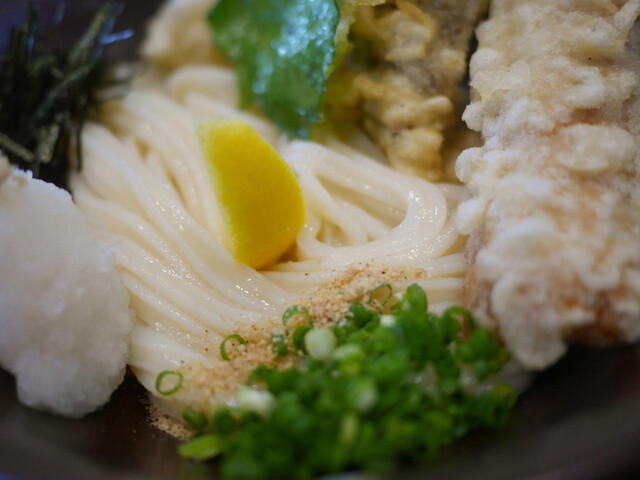
Honkaku Teuchi-Udon Taiga is a compact Fushimi udon shop selected for Tabelog 100 Udon WEST 2024, with a modest JPY 1,000–1,999 spend and a no-reservations format. The draw is not Kyoto ceremony but everyday noodle craft: hand-made udon, curry udon, tempura, sake and shochu in a 15-seat house-restaurant setting near Fujinomori.

Pearl is the En Primeur Club membership app, where members save venues, book tables and use the concierge.
The menu
What to order
- Kitsune Udon
- Curry Udon
- Tempura Udon
- Cold udon with Kyoto-style dashi
Kyoto’s dining rhythm changes once temple-and-kaiseki itineraries give way to lunch counters, neighborhood noodle rooms and small casual restaurants. Honkaku Teuchi-Udon Taiga belongs to that second Kyoto: a practical, focused udon address where the appeal rests on wheat noodles, broth, heat and timing. The point is not theatrical luxury, but a disciplined specialist format at everyday scale.
Kyoto visitors often read the city through kaiseki, wagashi and tea, yet udon has its own western Japan grammar. Firm noodles, restrained dashi, curry-udon comfort and tempura technique can share the same casual category, allowing serious noodle shops to stay low-spend while drawing attention usually reserved for tasting menus. Tabelog Hyakumeiten recognition in 2024 places Taiga in a competitive udon frame, not as a tourist novelty but within Japan’s specialist noodle conversation.
Hand-made udon in a city better known for ceremony
Kyoto’s noodle culture rewards understatement. In soba rooms, that may mean spare presentation and buckwheat aroma; in udon shops, the noodle’s chew carries much of the argument. Taiga’s listed categories show a classic three-part structure: udon, curry udon and tempura. Plainer bowls test noodle texture and broth balance; curry udon tests how wheat holds under weight; tempura adds frying as a second craft, not a garnish.
The editorial interest is where regional method meets local appetite. Udon is not imported luxury technique, but a craft language that has traveled across prefectures and been adapted through different dashi preferences, flour choices and service speeds. Kyoto’s version sits quieter than louder urban food circuits or noodle-pilgrimage culture elsewhere in Japan. At this level, novelty matters less than control: keeping texture, broth and frying aligned through service.
Recognition from a user-review platform with a dedicated udon list therefore carries weight. Global rankings often overlook everyday noodle formats, while Tabelog’s Hyakumeiten lists reflect local intensity and repeat custom. A 3.73 score is meaningful in Japan’s conservative rating culture, where high scores are hard to build and specialist addresses compete with larger, more visible restaurants.
For a broader Kyoto itinerary, Taiga belongs beside more formal and casual references rather than alone. Abbesses, GYUKATSU Kyoto Katsugyu Fushimi Inari, Inari Futaba, Teuchi Soba Sushi Imafuku and eight show Kyoto eating split across contemporary dining, regional staples and casual traditions. The better comparison is not price alone, but how much technique a place compresses into a limited format.
Kyoto gives the meal its proper scale
Kyoto changes the stakes. In a city famous for ceremony, simple meals can become itinerary trophies; here, udon stays closer to local routine. The format asks for less performative reverence than the city’s most formal dining rooms. The meal works when the guest accepts a focused specialist proposition and less ceremony in exchange for attention to noodles and broth.
Taiga sits in the specialist udon category rather than the broad-menu one. That shapes the experience: the appeal is concentrated, the decision is category-led and the value comes from a narrow craft focus. It also explains why serious udon shops can feel more important than their price suggests. Low spend does not mean low interest when the category has local credibility.
Within the Kyoto comparison set, the position is clear. Teuchi Soba Sushi Imafuku, eight and Inari Futaba show other ways casual or specialist dining can read in the city, while GYUKATSU Kyoto Katsugyu Fushimi Inari points toward another focused specialty format. Taiga’s lane is narrower: a Kyoto udon specialist with Tabelog Hyakumeiten recognition, useful for travelers seeking the city’s daily food culture without reducing Kyoto to shrine-between snacks.
Kyoto planning also benefits from category switching. A serious udon lunch pairs naturally with another evening register: restaurants, bars, hotels, wineries or cultural programming. For wider planning, use Our full Kyoto restaurants guide, Our full Kyoto hotels guide, Our full Kyoto bars guide, Our full Kyoto wineries guide and Our full Kyoto experiences guide.
How to read the format before going
The practical read is simple: Taiga is a modestly priced Kyoto udon specialist, with Tabelog-listed dinner and lunch budgets of JPY 1,000 - JPY 1,999. Those facts shape the decision. It suits travelers who can build a day around a focused noodle meal in Kyoto, not squeeze it between overplanned appointments. It is less suited to anyone treating a small specialist meal as guaranteed without flexibility.
The appeal is specific, not generic hospitality language. The listed categories are udon, curry udon and tempura, and the recognition comes from Tabelog’s 2024 udon-focused Hyakumeiten selection. That combination tells you to expect a narrow craft proposition rather than a broad menu built for every possible preference.
Payment, access and service expectations should be approached with the same respect given to many small Japanese dining rooms. Modest prices do not make the experience casual in the careless sense. In a city where luxury dining often requires months of planning, an udon shop of this caliber offers another discipline: arrive ready, respect the room’s limits and let the craft carry the meal.
For readers mapping Japanese casual dining beyond Kyoto, the lesson travels. Specialist formats can be modestly priced while carrying serious technique, and other dining rooms across Japan and abroad show how focused Japanese formats read differently depending on place. Taiga is valuable because it keeps the form close to its local Kyoto scale.
Frequently asked questions
Is Honkaku Teuchi-Udon Taiga more mid-range or high-end?
Pricing at Honkaku Teuchi-Udon Taiga is listed as JPY 1,000 - JPY 1,999 for both lunch and dinner.
Where is Honkaku Teuchi-Udon Taiga located?
Kyoto.
When can I go to Honkaku Teuchi-Udon Taiga?
Specific opening hours are not provided here, so check current details before going.
What makes Honkaku Teuchi-Udon Taiga worth seeking out?
The draw is its focused udon format in Kyoto, backed by Tabelog Hyakumeiten 2024 recognition and a 3.73 score. The listed categories are udon, curry udon and tempura.
Can Honkaku Teuchi-Udon Taiga adjust for dietary needs?
The menu categories are centered on udon, curry udon and tempura, so diners with restrictions should plan around a focused offer rather than assuming broad substitutions.
A Pricing-First Comparison
Comparable venues by cuisine and price in the same metro.
| Venue | Cuisine | Price | Awards | Notes |
|---|---|---|---|---|
| Honkaku Teuchi-Udon TaigaThis venue (the venue you are viewing) | Handmade Sanuki-style Udon | $10–20 | Tabelog 100 #13 | Not listed |
| Takagi Coffee Ten Takatsuji honten | Not listed | Not listed | Tabelog 100 | Shimogyō, Japanese kissaten & coffee shop |
| Miyoshiya | Japanese Traditional Sweets | Not listed | Tabelog 100 #52 | Higashiyama, Japanese Traditional Sweets |
| Kyoto Kuriya | Traditional Kyoto wagashi and chestnut sweets | Not listed | Tabelog 100 #59 | Nakagyō, Traditional Kyoto wagashi and chestnut sweets |
| Seikou Udoku | Soupless Tantanmen Ramen | $10–20 | Tabelog 100 #19 | Uji, Japanese Mazesoba |
| Ramen Jiro Kyoto ten | Jiro-style ramen | $10–20 | Tabelog 100 #70 | Sakyō, Jiro-style ramen |
Recognition history
Dated appearances from independent guides and award organizations, with the underlying list record or original source where available.
Tabelog 100 #13 · No. 13
Tabelog · Tabelog 100 - Udon - WEST - 2024
Continue exploring
More in Kyoto
Restaurants in Kyoto
All restaurants in Kyoto →
Bars in Kyoto
All bars in Kyoto →

Hotels in Kyoto
All hotels in Kyoto →

Wineries in Kyoto
Browse all →
Details
- Cozy
- Lively
- Classic
- Solo
- Family
- Casual Hangout
- Standalone
- Local Sourcing
- A La Carte
- Counter Dining
Current opening hours
- Monday
- Closed
- Tuesday
- Closed
- Wednesday
- Closed
- Thursday
- 11 AM–2 PM
- Friday
- 11 AM–2 PM
- Saturday
- 11 AM–2 PM
- Sunday
- 11 AM–2 PM
Hours can change for holidays and private events. Hours as of .
A compact 15-seat local spot with counter and a few small tables, casual and energetic during its short opening hours; the focus is on watching fresh hand‑made udon and carefully crafted dashi rather than decor, giving it a warm, lived‑in neighborhood feel.