

Michelin Plate · Falstaff Restaurant - 96 Falstaff Points
Our verdict
At Bergwiesenglück in See, Hermann's Jagdstube operates on a strict pre-order model: eight courses built entirely from game hunted by the chef himself. With just four tables and a floor-to-ceiling mountain panorama, the format sits at the intersection of Alpine hunting tradition and considered fine dining. Unusual cuts, chamois brain, black grouse liver, deer tongue, define a menu unavailable anywhere else in the region on these terms.

Pearl is the En Primeur Club membership app, where members save venues, book tables and use the concierge.

The menu
What to order
- Black grouse liver
- Chamois brain
- Deer bone marrow
- Deer tongue
Where the Hunt Defines the Menu
In the Austrian Alps, the relationship between the kitchen and the forest has always been practical before it was fashionable. Game has fed mountain communities through winters for centuries, and the traditions of the hunt, what to take, when to take it, how to use the whole animal, predate any conversation about nose-to-tail cooking by generations. Hermann's Jagdstube, set within the chalet hotel Bergwiesenglück in See, Tyrol, operates inside that tradition with unusual rigour: every piece of meat on the eight-course set menu comes from animals the chef has hunted personally. This is not a sourcing story retrofitted to a menu, it is the menu's foundational logic.
Fine dining in Austria's mountain resorts has developed two broad identities. One follows the international alpine luxury circuit, with technically polished tasting menus that could credibly be served in Courchevel or Zermatt. The other stays closer to the land, drawing on regional hunting, foraging, and dairy traditions to produce something that reads as genuinely local rather than regionally flavoured. Griggeler Stuba in Lech and Gourmetrestaurant Tannenhof in Sankt Anton am Arlberg both sit within that broader Arlberg-adjacent fine dining scene. Hermann's Jagdstube operates in a smaller, more specific register still: the hunting provenance is not background colour but structural constraint. If the chef hasn't hunted it, it doesn't appear.
The Room and the Format
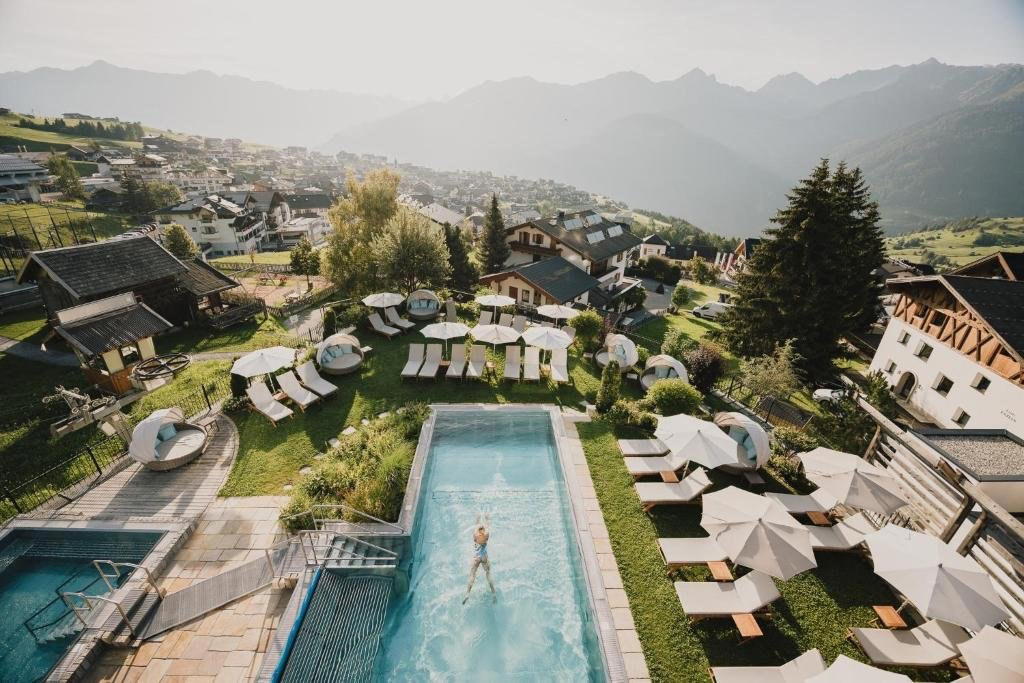
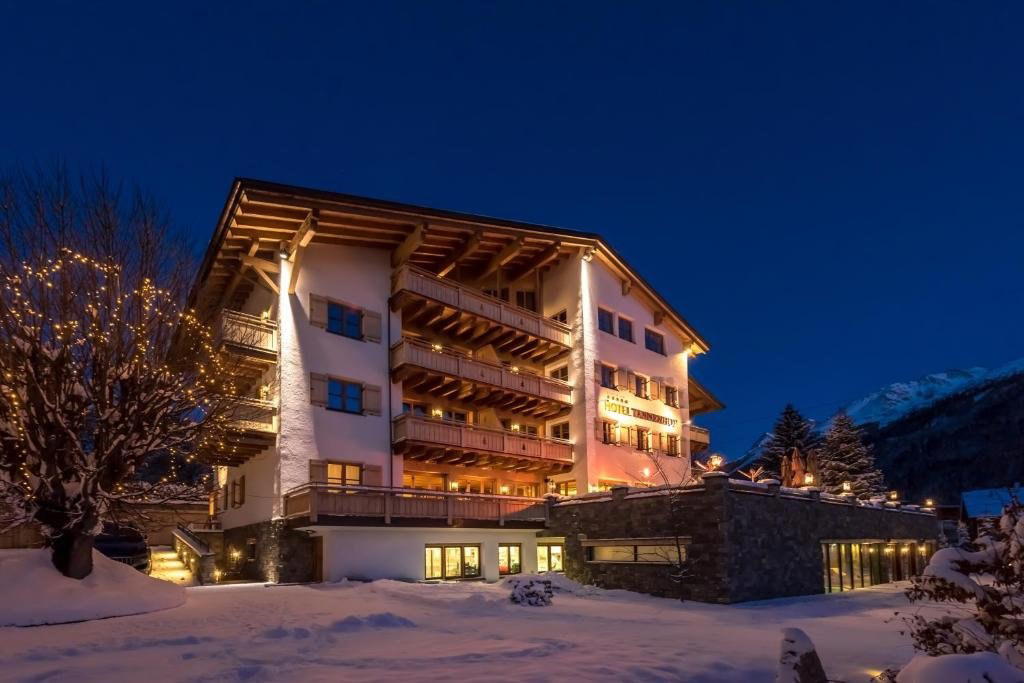
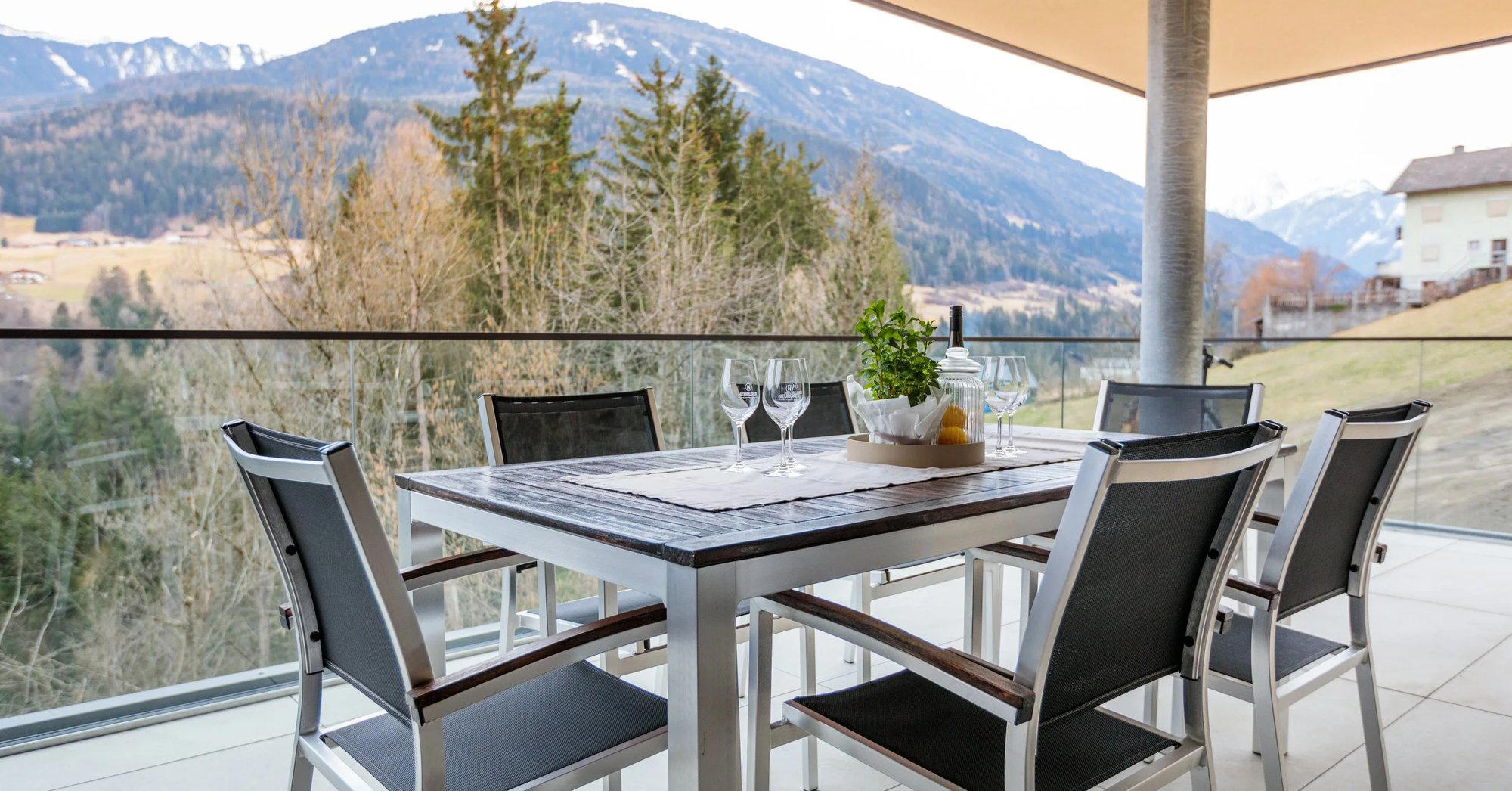
Approaching Bergwiesenglück, the scale makes an immediate argument for restraint. This is chalet hotel territory, not a resort tower, and the restaurant inside reflects that: four tables, warm wood joinery, clean lines that read as modern Alpine rather than rustic kitsch. The floor-to-ceiling glass façade opens the room toward the terrace and the mountain ridge beyond, so the landscape that produces the menu is visible from your seat. At four tables, the dining room functions less as a restaurant in the conventional sense and more as an extended private dinner, the ratio of kitchen attention to covers is correspondingly high.
The format requires forward planning. The game-based set menu is available only on pre-order, which means the decision to eat here has to be made before arrival in See, not on a whim mid-ski-week. That pre-order structure also shapes the experience: the kitchen is cooking to confirmed numbers rather than an open service, and the menu can be calibrated accordingly. Wine pairings are available alongside the set, the list draws on both regional Austrian producers and international classics, and the pairing option is the more considered way to work through eight courses of this density.
The Sourcing Logic Behind Unusual Cuts
The ingredient sourcing framework at Hermann's Jagdstube produces a menu that reads differently from most alpine game restaurants precisely because it is limited to what the hunter-chef can personally supply. Black grouse liver, chamois brain, deer bone marrow, deer tongue: these are not exotic flourishes added for effect. They are the natural consequence of using the whole animal when you are also the person responsible for the hunt. In commercial game cookery, secondary cuts and offal are often the first to disappear from the menu because they require additional skill and because sourcing consistency is harder to guarantee. Here, those pressures work differently, the constraint is not supply chain variability but the hunt itself, and the commitment to whole-animal use follows directly.
It is a different proposition from sourcing relationships with named farms or hunters, however close those relationships might be. The traceability is absolute because the chain has no intermediary step. For context, Austria's broader fine dining scene at Steirereck im Stadtpark in Vienna or Ikarus in Salzburg operates at the top of the country's technical and creative hierarchy, with sourcing relationships that are sophisticated and well-documented. Hermann's Jagdstube does not compete in that tier, the ambition is narrower and more specific, but the sourcing model is arguably more direct than anything those kitchens can claim.
The approach also connects to a broader Austrian tradition of taking game cooking seriously as a discipline in its own right. Obauer in Werfen and Landhaus Bacher in Mautern an der Donau both represent long-established Austrian culinary institutions that treat regional produce with similar seriousness, though across a broader pantry. Kräuterreich by Vitus Winkler in Sankt Veit im Pongau takes an analogous hyper-local sourcing approach through foraged herbs and alpine plants. Hermann's Jagdstube's contribution to that lineage is to apply the same discipline specifically to game.
Planning a Visit
See sits in the Paznaun valley in Tyrol, and Bergwiesenglück operates as a chalet hotel rather than a standalone restaurant destination, which means the most natural context for a visit is a stay at the property. The pre-order requirement for the game set menu means guests should confirm their interest when booking accommodation or well in advance of the intended dinner date, this is not a reservation that can be made on arrival. Service is described as friendly and personal, consistent with a room of four tables where the atmosphere is closer to a well-run private dining room than a formal restaurant floor. The wine list covers regional and international options, with structured pairings available if you want the kitchen's own reading of the menu. For visitors building a wider picture of the region's dining, Stüva in Ischgl and Schwarzer Adler in Hall in Tirol both represent strong Tyrolean fine dining options within reasonable range. See our full See restaurants guide, See hotels guide, See bars guide, See wineries guide, and See experiences guide for further context on the destination. Beyond Austria, the broader conversation about chef-hunter sourcing models connects to institutions like Le Bernardin in New York City, where the relationship between kitchen identity and raw ingredient provenance is similarly foundational, and to Emeril's in New Orleans, where regional sourcing shaped a restaurant's character from the outset. The comparison is imperfect but the underlying question, how directly can a kitchen control what it cooks? is the same. Hermann's Jagdstube answers it more literally than most. Further Tyrolean perspectives can be found at Restaurant 141 by Joachim Jaud in Mieming and Ois in Neufelden.
Frequently asked questions
Is Hermann's Jagdstube okay with children?
The format is calibrated for adult diners with a specific interest in game cookery. The eight-course pre-order menu features offal and secondary cuts, black grouse liver, chamois brain, deer tongue, in a four-table room where the experience is deliberate and unhurried. Younger children, or those unfamiliar with nose-to-tail eating, are likely to find little traction here.
How would you describe the vibe at Hermann's Jagdstube?
Private and considered. Four tables inside a chalet hotel in the Paznaun valley, with warm wood, clean alpine lines, and a floor-to-ceiling glass façade facing the terrace and mountains. The service is described as friendly and laid-back with a personal touch, closer to a host's table than a formal dining room.
What's Hermann's Jagdstube known for in terms of accolades?
Hermann's Jagdstube has received recognition including: The exclusive little restaurant in the luxe chalet hotel Bergwiesenglück promises a very special culinary experience. If you pre-order it, they serve a game-based set menu, comprising eight small courses made using meat solely from animals ….
What's the signature dish at Hermann's Jagdstube?
There is no single dish: the eight-course game set menu, pre-ordered in advance, functions as the complete proposition. The defining element is sourcing, every animal on the menu is hunted by the chef himself, which produces courses like deer bone marrow, chamois brain, and black grouse liver that rarely appear elsewhere on alpine menus.
How do I find Hermann's Jagdstube?
Hermann's Jagdstube is located at Neder 400, See.
Quick Comparison
Comparable venues nearby, for context on price, style, and recognition.
| Venue | Cuisine | Price | Awards | Notes |
|---|---|---|---|---|
| Hermann's JagdstubeThis venue (the venue you are viewing) | Alpine Game Tasting Menu | Not listed | Michelin Plate · Falstaff Restaurant - 96 Falstaff Points | Not listed |
| Hermanns Kitchen | Alpine Game Tasting Menu | Not listed | Michelin Plate · Falstaff Restaurant - 96 Falstaff Points | See |
| Wälder Stube 1840 | Modern Alpine Fine Dining | $150–200 | Michelin Plate · Falstaff Restaurant - 93 Falstaff Points | Hittisau |
| Panorama Restaurant Postblick | Contemporary Alpine & Austrian Fine Dining | $100–150 | Relais Chateaux Award | Lech am Arlberg |
| Hotel Sonnenburg | Alpine Austrian with Creative Vegan Options | $100–150 | Not listed | Oberlech, Lech am Arlberg |
| Lechtaler Stube | Classic Austrian with Regional Influences | Not listed | Michelin Plate · Falstaff Restaurant - 95 Falstaff Points | Oberlech |
Recognition history
Dated appearances from independent guides and award organizations, with the underlying list record or original source where available.
Michelin Plate
Michelin · 2026 Michelin Plate
Falstaff Restaurant - 96 Falstaff Points
Falstaff
Continue exploring
More in See
Restaurants in See
All restaurants in See →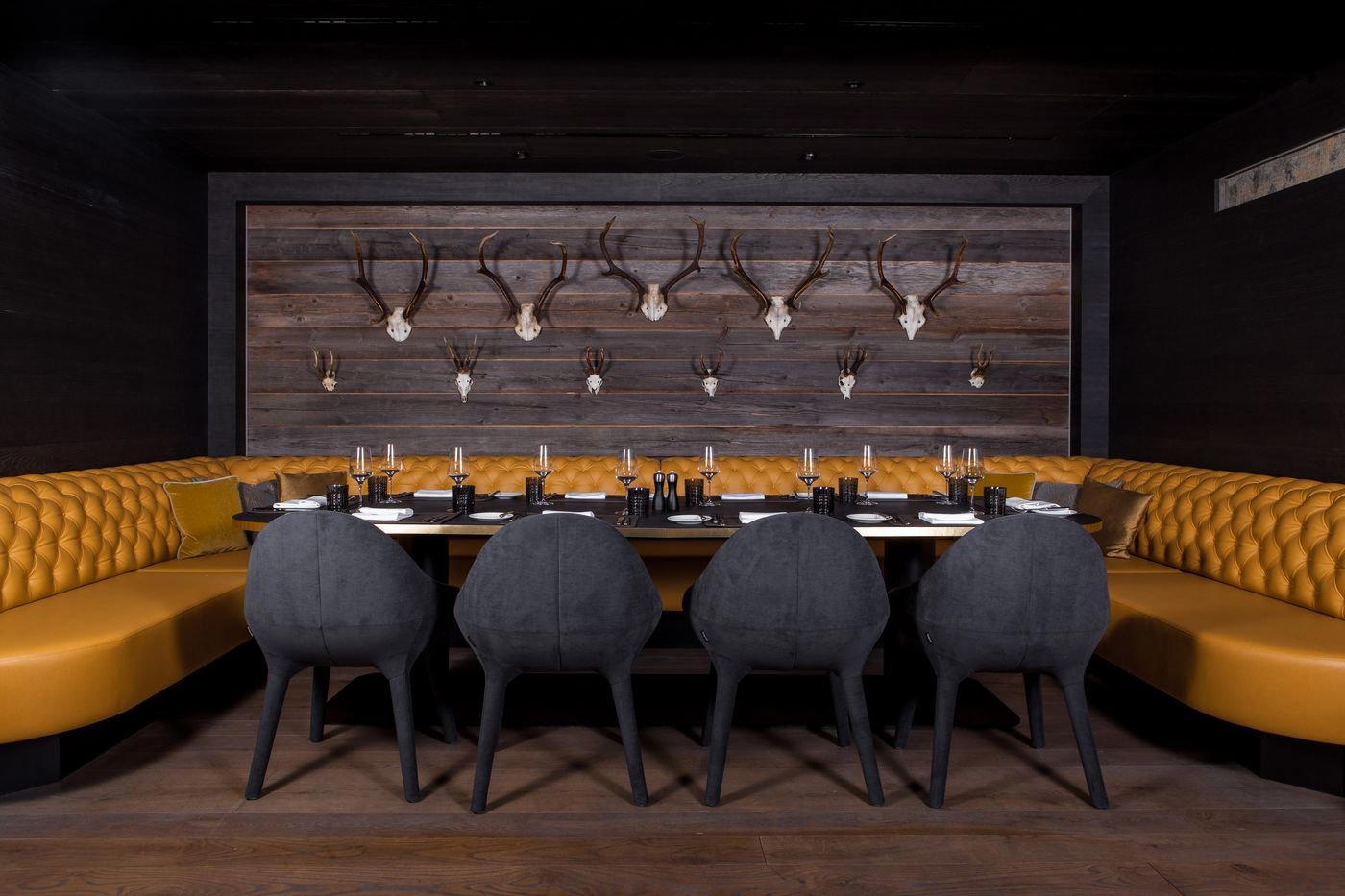
Bars in See
Browse all →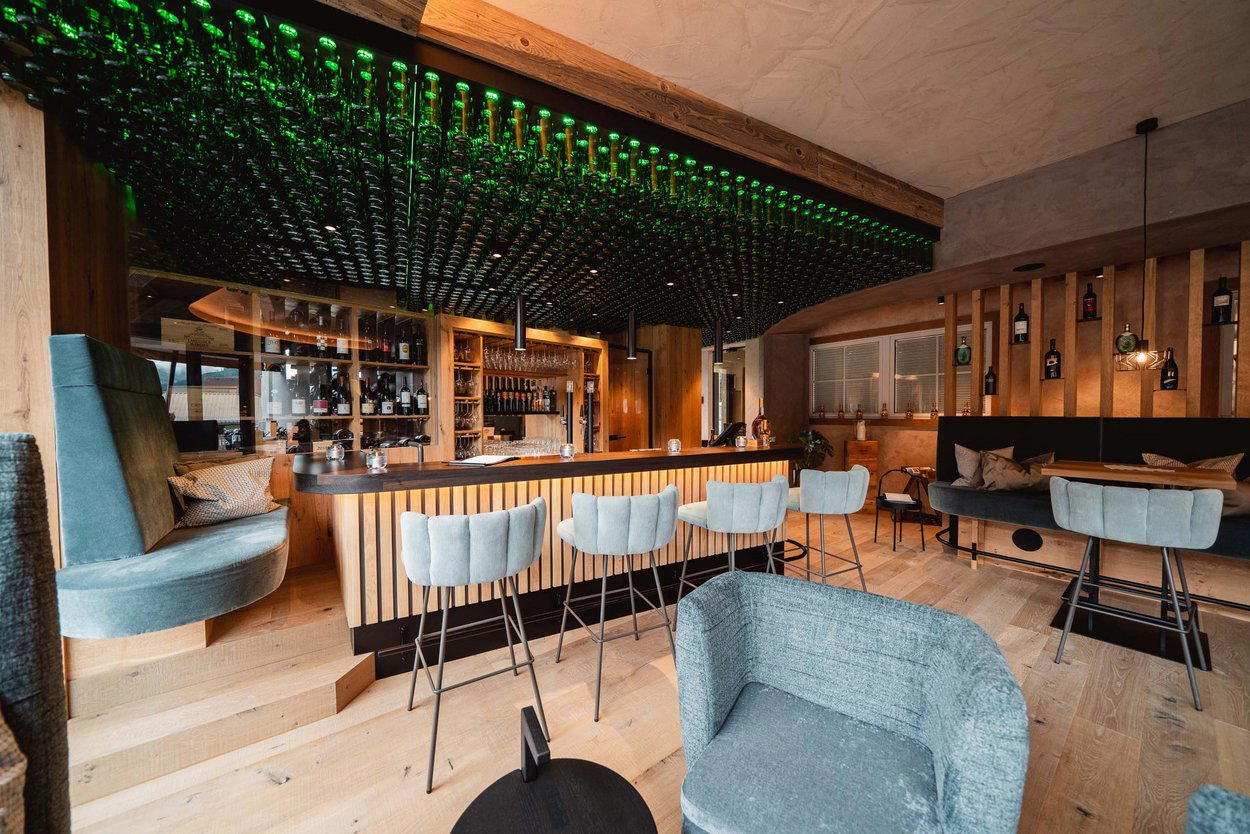

Details
- Elegant
- Intimate
- Scenic
- Modern
- Sophisticated
- Special Occasion
- Celebration
- Date Night
- Open Kitchen
- Panoramic View
- Hotel Restaurant
- Terrace
- Private Dining
- Extensive Wine List
- Local Sourcing
- Sustainable
- Mountain
- Set Menu
- Tasting Menu
- Regional Wines
- International Wines
Warm wood and clean lines create a chic, modern Alpine interior with floor-to-ceiling glass affording mountain and terrace views.