Hotel Tannenhof


2 Michelin Keys · Small Luxury Hotels of the World Member
Originally built in the 1920s and reconstructed in 2011, Hotel Tannenhof occupies the sunniest position in St. Anton am Arlberg with just seven suites, a dedicated spa, and a restaurant serving creative Alpine cuisine. The property sits at the upper end of the Arlberg's accommodation hierarchy, drawing guests who arrive by private helicopter and depart by Maserati transfer. It is a property where historic social cachet and contemporary design coexist within an exceptionally small footprint.

Pearl is the En Primeur Club membership app — saves, bookings, and concierge access live there. Same editors, same standards.
- Address
- Nassereinerstraße 98, 6580 St. Anton am Arlberg
- Phone
- +43 5446 30311
- Website
- hoteltannenhof.net
- Directions
- Get directions
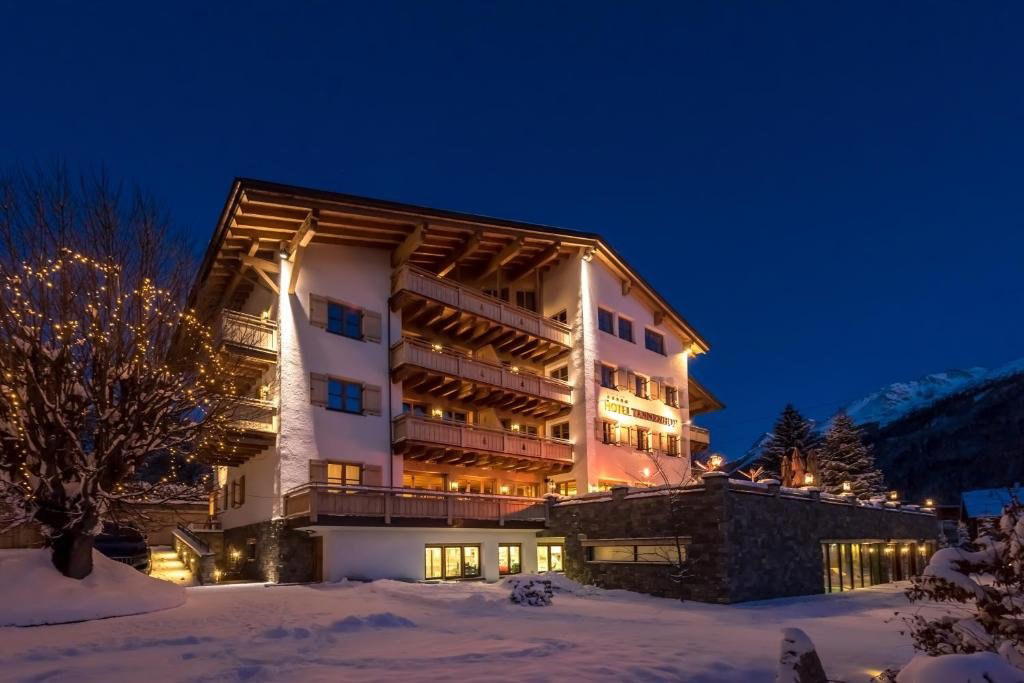
The approach to St. Anton am Arlberg sets expectations immediately. The town sits at the eastern gateway of the Arlberg pass, a location that has made it one of Europe's most consequential ski destinations since the early twentieth century. The village's architectural character runs from sturdy Tyrolean farmhouse forms to the kind of discreet, high-specification lodging that signals serious money without advertising it. Hotel Tannenhof, at Nassereinerstraße 98, occupies what its long history identifies as the sunniest plot in town, a geographic fact that shapes how the building reads across the valley. On clear winter days, light falls on its facade while neighbouring properties remain in mountain shadow, and that orientation was almost certainly a deliberate choice by whoever selected the original site in the 1920s.
A Century of Reconstruction
In alpine hospitality, the phrase "historic hotel" tends to mean one of two things: a property preserved with period authenticity at the cost of modern comfort, or one that has traded on its past while quietly updating back-of-house infrastructure. Hotel Tannenhof belongs to neither category. A thorough, piece-by-piece reconstruction completed in 2011 produced interiors that read as contemporary rather than preserved, while the building's footprint and social position in St. Anton remained intact. This is a significant distinction. Reconstruction at this scale, where a property is effectively rebuilt rather than renovated, is a choice that requires confidence in the underlying location and reputation. The Tannenhof had both.
The property's original social function is well documented. During the interwar decades, when St. Anton was cementing its reputation as a ski destination for European and transatlantic elites, the Tannenhof was a gathering point after the slopes closed. That social role, the post-ski salon rather than simply the bedroom, shaped the property's identity in ways that a direct hotel could not replicate. The 2011 reconstruction did not erase that history; it reframed it within a contemporary physical envelope. Among Austrian alpine properties that have undergone comparable transformations, the parallel that comes to mind most readily is the shift toward intimate, high-specification formats that also defines places like Hotel Almhof Schneider in Lech, where heritage and considered modernisation operate in the same register.
Seven Suites and the Logic of Scarcity
The post-2011 Tannenhof contains seven suites. That number is not incidental. Across the premium alpine tier in Austria, the smallest properties tend to command the highest per-night rates and the most advance booking lead time, because scarcity at this specification level functions as a form of quality control. With seven suites, the operation can maintain standards that a larger footprint would dilute. For comparison, Rosewood Schloss Fuschl in Hof bei Salzburg operates at a larger scale as a castle-conversion property, while Hotel Sacher Wien in Vienna anchors the historic-grand-hotel format with a far larger room count. The Tannenhof sits in a different bracket entirely: intimate by design, positioned closer to the private-chalet model than the full-service resort.
Planning around this requires early commitment. A seven-suite property in one of Austria's most in-demand ski towns will exhaust its peak-season availability well ahead of the winter season. Guests who intend to align their stay with St. Anton's high-traffic weeks, the Christmas-New Year period and the February school holiday window in particular, should treat booking as a logistical priority rather than a late consideration. The property's location at Nassereinerstraße 98 places it within the town's main fabric without requiring significant transfers to the ski infrastructure. For those arriving from further afield, the heliport transfer to a Maserati collection is a documented arrival option, and it signals clearly how the property positions itself within St. Anton's premium tier.
Design Philosophy After Reconstruction
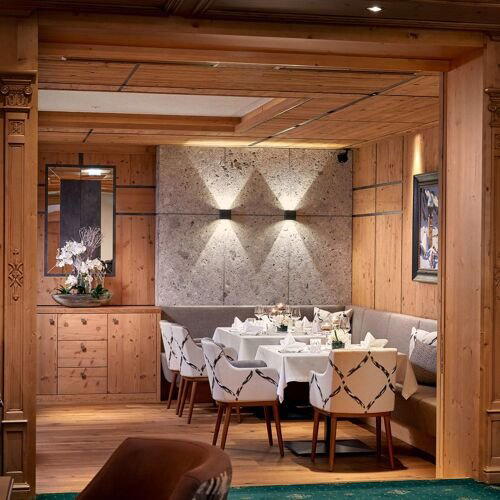
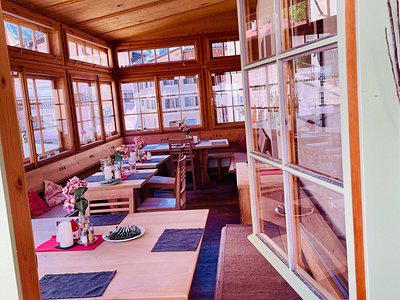
The 2011 reconstruction raises a question that applies to all alpine heritage properties attempting modernisation: how much of the original should survive, and in what form? At the Tannenhof, the answer appears to have prioritised contemporary interior finish over period reproduction. The result is a property described consistently as warm in atmosphere without relying on rustic Tyrolean cliché, the heavy dark timber and mounted antler aesthetic that dominates less considered alpine interiors. This is the harder editorial achievement. Tyrolean vernacular is genuinely compelling as a design language, but it requires precise calibration to avoid sliding into themed hospitality. Properties that get the balance right, where alpine materiality reads as considered rather than costumed, are fewer than the marketing language of the sector suggests.
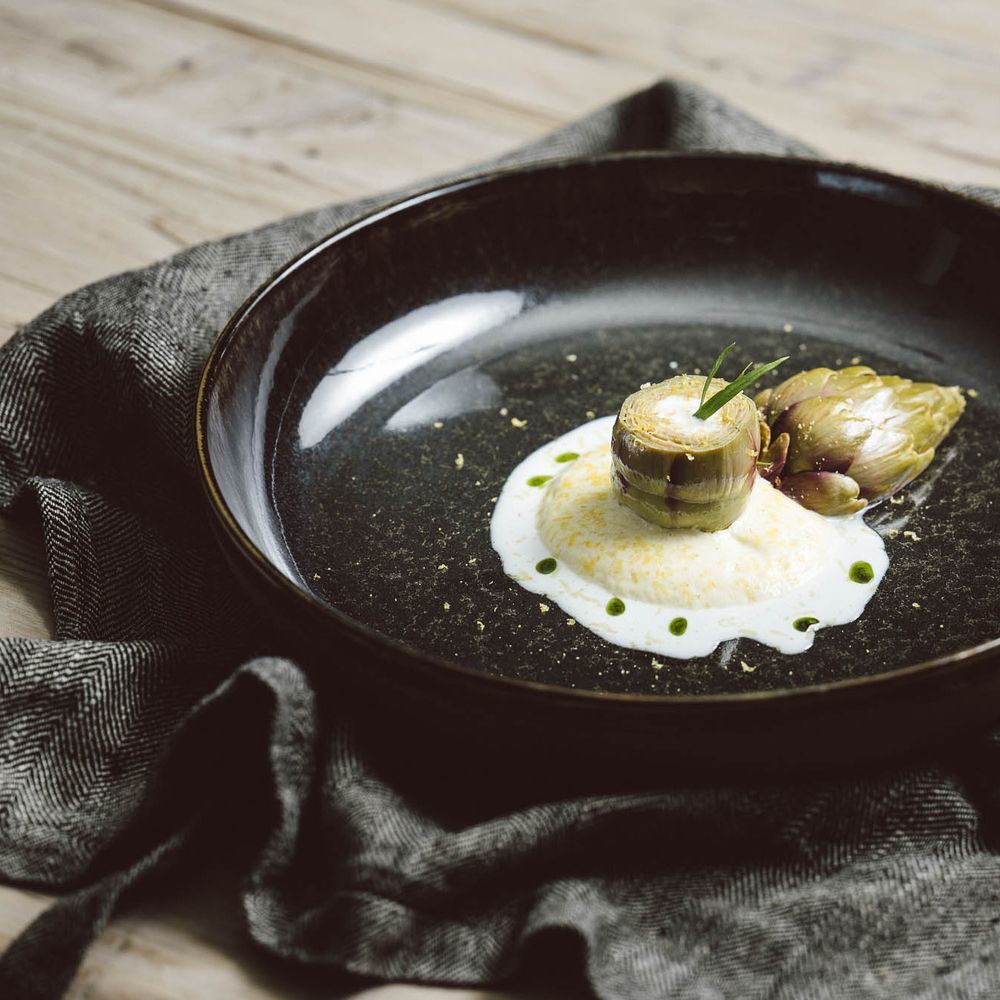
The spa and the gastronomic restaurant complete the three-part offer that the Tannenhof now deploys. The restaurant's described approach, creative Alpine cuisine, places it within a culinary direction that has defined Austria's better hotel dining for the past decade. This is not traditional Tyrolean cooking preserved in amber, but a kitchen that uses regional ingredients and alpine reference points as a starting position rather than a constraint. Austria's alpine hotel dining scene has moved steadily in this direction, with properties across Vorarlberg and Tyrol finding that the creative-regional framing allows more flexibility in sourcing and technique while retaining a legible sense of place. Our full St. Anton am Arlberg guide maps where the Tannenhof's restaurant sits relative to the town's broader dining options.
Where This Sits in the Austrian Alpine Tier
St. Anton competes directly with Lech, Zürs, and Kitzbühel for the top tier of Austrian winter travel spend. Each town has a different social character: Lech traditionally draws a quieter, older-money clientele, while Kitzbühel, anchored by properties like Grand Tirolia Kitzbühel, has a more event-driven energy around the Hahnenkamm race weekend. St. Anton's identity sits between these poles, combining serious skiing credentials with a village energy that the other two towns manage more carefully. The Tannenhof does not operate as a party hotel, and its seven-suite format makes a volume-driven atmosphere structurally impossible. It occupies the quieter, more controlled end of St. Anton's spectrum.
For guests considering comparable alpine formats across Austria, the reference points are instructive. Alpen-Wellness Resort Hochfirst in Obergurgl and LEADING Hotel Hochgurgl occupy higher-altitude positions in Ötztal with different design propositions. DAS EDELWEISS in Grossarl and Naturhotel Waldklause in Längenfeld represent the wellness-led alpine format at varying scales. None of these map directly onto the Tannenhof's historic-property-with-seven-suites model, which is precisely the point.
Planning Your Stay
The Tannenhof does not publish room availability in the standard online booking infrastructure visible to the broader market, which itself functions as a signal about how the property manages its guest relationships. Arrival by private helicopter, with a Maserati transfer from the St. Anton heliport, is a documented option for guests who want to compress travel friction at both ends of a winter stay. The seven suites, spa access, and in-house restaurant mean that once inside, the property sustains a self-contained experience without requiring guests to move through the town for their primary needs.
At-a-Glance Comparison
Comparable venues nearby, for context on price, style, and recognition.
| Venue | Cuisine | Price | Awards | Notes |
|---|---|---|---|---|
| Hotel TannenhofThis venue — the venue you are viewing | Contemporary luxury alpine boutique with heritage roots; meticulously reconstructed century-old building combining traditional Tyrolean design elements with modern sophistication. | $1,000–1,500 | 2 Michelin Keys · Small Luxury Hotels of the World Member | Not listed |
| Hotel Gletscherblick | upscale country-house style with traditional Alpine architecture and modern touches | $300–500 | Michelin Selected | St. Jakob |
| Ullrhaus - St. Anton | Modern alpine design hotel with Nordic influences. | $300–500 | 1 Michelin Key | St. Anton am Arlberg |
| Arpuria - hidden luxury mountain home | Hidden luxury mountain home | Not listed | Michelin Selected | St. Anton Am Arlberg |
| Severins – The Alpine Retreat | Contemporary Alpine luxury combining traditional Tyrolean heritage with modern design; positioned as an exclusive boutique retreat for informed travelers seeking both mountain adventure and refined relaxation. | $750–1,000 | 2 Michelin Keys · La Liste Top Hotels | Stubenbach, Lech am Arlberg |
| Naturhotel Waldklause | Sustainable nature-integrated design with organic curves and wooden architecture | Not listed | 2 Michelin Keys · La Liste Top Hotels | Längenfeld |
Recognition history
Dated appearances from independent guides and award organizations, with the underlying list record or original source where available.
Michelin 2 Keys
Michelin
Small Luxury Hotels of the World Member
Small Luxury Hotels of the World
Full recognition history (3 entries)
Michelin 2 Keys
Michelin
Continue exploring
More in St. Anton Am Arlberg
Hotels in St. Anton Am Arlberg
Browse all →
Bars in St. Anton Am Arlberg
Browse all →


Restaurants in St. Anton Am Arlberg
Browse all →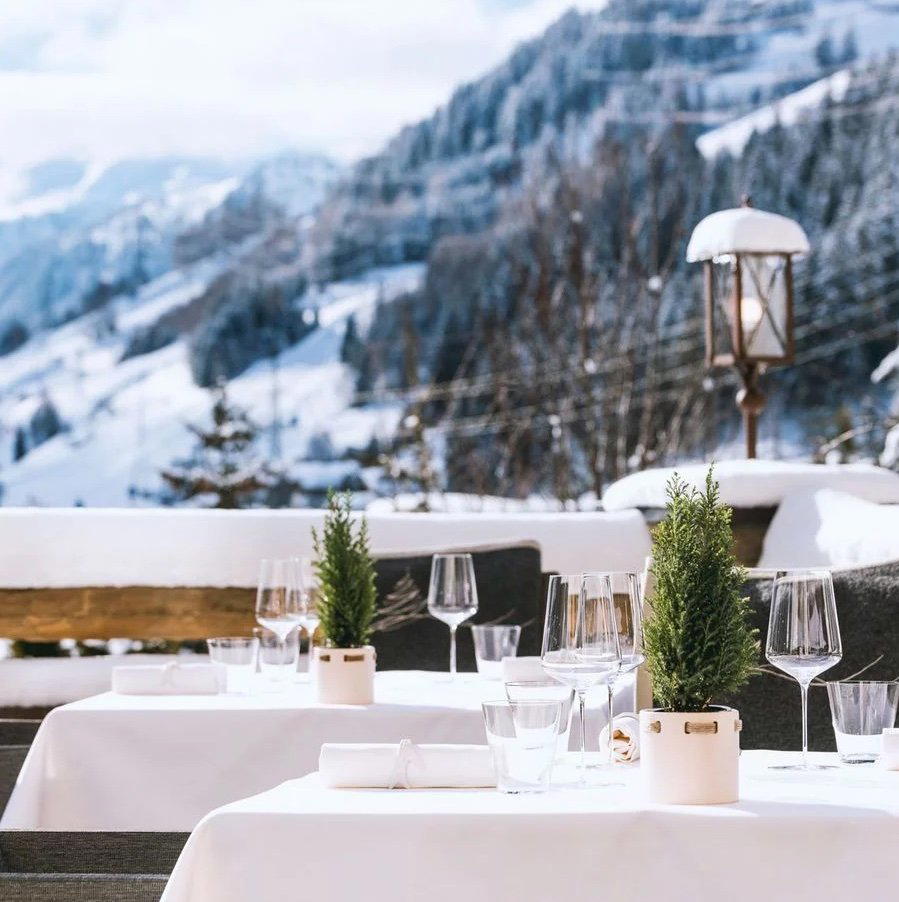
Wineries in St. Anton Am Arlberg
Browse all →
Details
- Elegant
- Romantic
- Quiet
- Sophisticated
- Scenic
- Honeymoon
- Romantic Getaway
- Wellness Retreat
- Anniversary
- Celebration
- Ski In Ski Out
- Destination Spa
- Panoramic View
- Private Dining
- Terrace
- Historic Building
- Garden
- Wi Fi
- Pool
- Spa
- Fitness Center
- Room Service
- Concierge
- Valet Parking
- EV Charging
- Sauna
- Restaurant
- Bar
- Mountain
- Garden
- Wheelchair Accessible
- Elevator
- Accessible Restroom
Warm, intimate luxury with contemporary interiors featuring fireplaces, natural wood accents, and soft lighting; guests describe it as a serene mountain refuge with polished attention to detail and personalized service.