Helling 7

On the post-industrial northern bank of Amsterdam's IJ waterfront, Helling 7 occupies a former shipyard building at Tt. Melissaweg 57 with a view that few dining rooms in the city can match. Chefs Carl Gast, Dirk Mooren, and Steve Kost run a kitchen where vegetables hold as much weight as protein, earning recognition from the We're Smart community for their plant-forward approach.
Pearl is the En Primeur Club membership app — saves, bookings, and concierge access live there. Same editors, same standards.
- Address
- tt. Melissaweg 57, 1033 SP Amsterdam, Netherlands
- Phone
- +31 20 227 9850
- Website
- helling7.nl
- Directions
- Get directions
 Saves & bookings on Pearl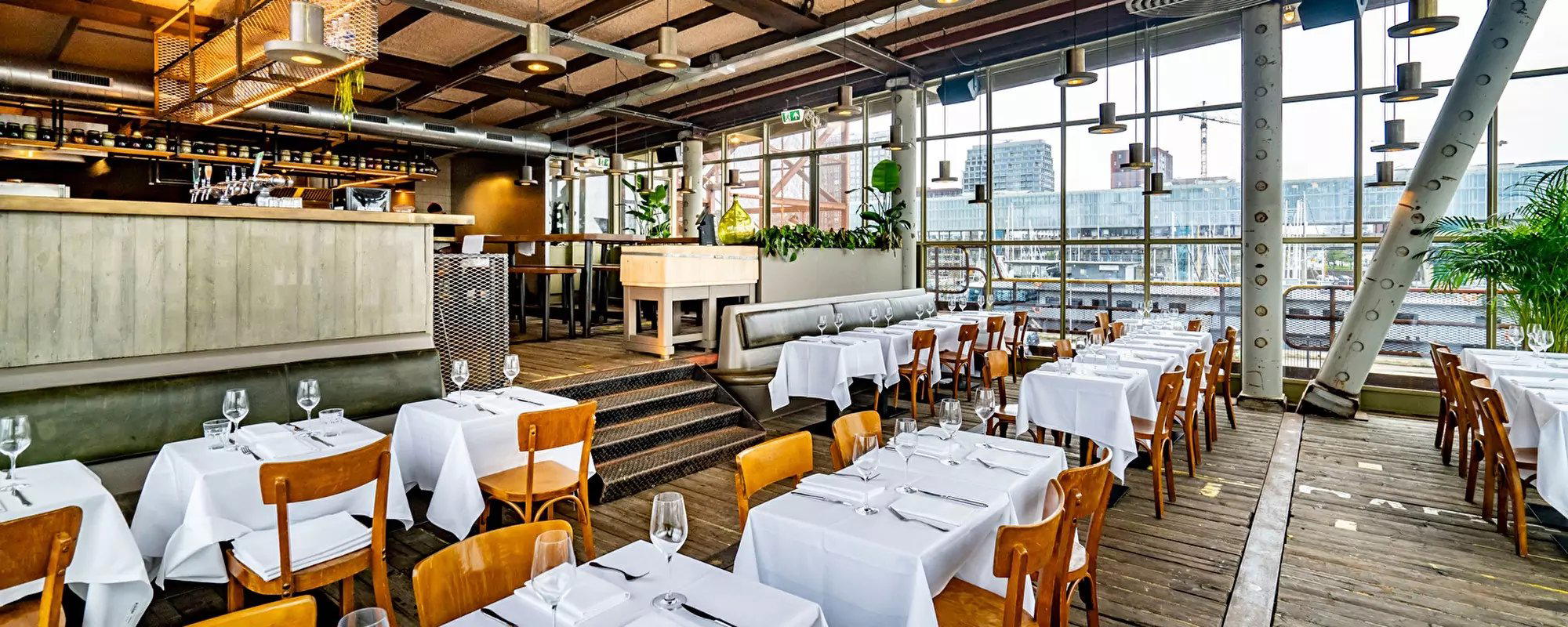
A Shipyard Transformed: What the North Bank Says About Amsterdam Dining Now
Amsterdam's restaurant energy has been moving north of the IJ for years, and the trajectory tells you something about how the city thinks about food and space. Where the Canal Ring rewards heritage and density, Amsterdam-Noord rewards scale and reinvention. Former shipyard buildings, dry docks, and industrial warehouses have been claimed by studios, galleries, and, increasingly, restaurants that could not exist in the compressed geography of the old city centre. Helling 7 is a restaurant in Amsterdam at Tt. Melissaweg 57, serving Modern European Wood-Fired Grill cooking at a price tier of about $75 per person.
Arriving at NDSM by the free GVB ferry from Centraal Station already separates the evening from a conventional canal-side dinner. The crossing takes roughly fifteen minutes, and the approach to the wharf from the water gives you the industrial skeleton of the neighbourhood in one long view. By the time you reach the restaurant, the setting has done considerable work on your frame of mind. This is the sensory logic of Helling 7 before the kitchen is even involved.
The View as a Design Element
In Amsterdam's densest restaurant tier, the creative tasting-menu rooms like Ciel Bleu, Spectrum, and Vinkeles, the physical environment tends to be intimate and curated inward. Canal houses and hotel dining rooms create a particular kind of enclosure. Helling 7 works in a different register. The warehouse format opens outward rather than folding inward, and the waterfront orientation means that the light changes across a meal in a way that compressed city-centre rooms do not permit. Early autumn evenings, when the sun drops late and low across the IJ, are particularly worth timing a reservation around: the quality of that light through industrial-scale glazing is part of what the restaurant's setting offers.
This is not incidental. In the broader conversation about what Amsterdam-Noord adds to the city's dining map, the capacity to build a room around a large, honest view is a real point of differentiation. Bolenius, in the Zuidas business district, uses its own greenhouse-and-garden setting as a comparable atmospheric anchor. The restaurant deploys the waterfront in much the same structural way, as a setting that gives the meal context the interior alone could not provide.
Vegetables at the Centre, Not the Margin
Dutch fine dining has long been anchored in protein-led classical technique, but a younger tier of kitchens has been repositioning vegetables from garnish to protagonist over the past decade. Chefs Carl Gast, Dirk Mooren, and Steve Kost at the restaurant work within that current. The restaurant is recognized for the way vegetables are treated as primary rather than supplementary.
This places the restaurant in a meaningful comparable set within Amsterdam. At the higher price tier, restaurants like Bistro de la Mer remain classically anchored in seafood. At the more approachable end, places like De Kas built their identity on greenhouse-to-table produce years before the phrase became a marketing staple. The restaurant occupies a position between those registers: serious about vegetables in a way that resonates with specialist communities, but not a narrowly ideological kitchen. There is something for a broader table, including guests who are not committed plant-forward eaters.
For context on what vegetable-centred ambition looks like at the highest level in the Netherlands, De Librije in Zwolle and Aan de Poel in Amstelveen represent what sustained technical investment looks like from the outside. The restaurant is operating at a different scale and with a different personality, but the direction of travel is comparable in its seriousness about Dutch produce.
The Atmosphere in Practice
Industrial dining rooms carry particular acoustic risks. Hard surfaces, high ceilings, and concrete or steel construction can produce the kind of noise level that makes conversation effortful. The shipyard context at the restaurant means these are real considerations, and the character of an evening here is shaped partly by the room's physical properties rather than just the food. This is not a criticism so much as a description of what a certain kind of post-industrial space delivers: energy and scale in exchange for the hushed intimacy of a smaller room. For a celebratory group meal or a dinner where atmosphere and views take priority alongside the food, that trade-off reads as a feature.
The NDSM Wharf district itself operates on a different urban rhythm from the Canal Ring. The area is active with creative and cultural programming, events, exhibitions, and markets run through much of the year, which means that arriving early or staying after dinner gives the evening a different texture than a more conventional restaurant district would. For visitors building a broader Amsterdam itinerary, the experiences and bars of Amsterdam-Noord are worth mapping alongside a restaurant reservation rather than treating the dinner as a standalone detour.
Planning a Visit
The address at Tt. Melissaweg 57, 1033 SP Amsterdam places the restaurant in the NDSM Wharf, reachable via the free NDSM ferry from Amsterdam Centraal. The ferry runs regularly throughout the evening. Booking ahead is advisable, particularly for weekend evenings and during the summer and early autumn months. Those planning to explore the broader Dutch dining scene beyond Amsterdam will find further reference points at 't Nonnetje in Harderwijk, De Bokkedoorns in Overveen, Brut172 in Reijmerstok, and De Groene Lantaarn in Staphorst, each representing a different facet of serious cooking outside the capital.
Same-City Peers
Comparable venues nearby, for context on price, style, and recognition.
| Venue | Cuisine | Price | Notes |
|---|---|---|---|
| Helling 7This venue — the venue you are viewing | Modern European Wood-Fired Grill | $$$ | Not listed |
| Lotti's Restaurant & Bar | Modern European Brasserie with Latin Influences | $$$ | Felix Meritisbuurt |
| Graham's Kitchen | Modern European with British Twist | $$$ | Hemonybuurt |
| Café Binnenvisser | Modern European Bistro | $$ | Da Costabuurt Noord |
| Toscanini | Authentic Seasonal Italian | $$$ | Anjeliersbuurt Noord |
| Bureau | Modern European Bistro | $$ | Riekerpolder |
Recognition history
Dated appearances from independent guides and award organizations, with the underlying list record or original source where available.
We're Smart World 3 Radishes
We're Smart World
Continue exploring
More in Amsterdam
Restaurants in Amsterdam
Browse all →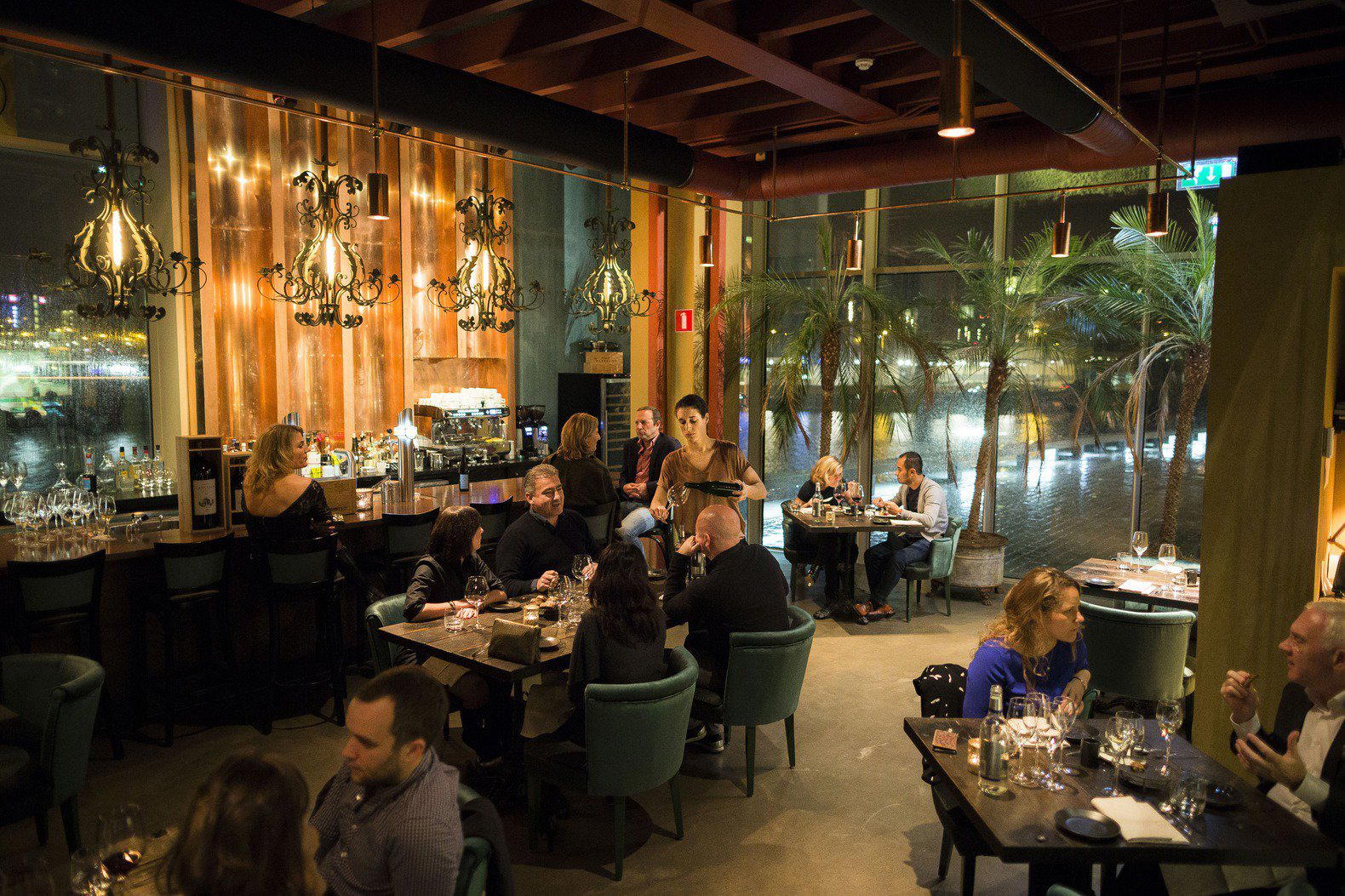
Bars in Amsterdam
Browse all →
Hotels in Amsterdam
Browse all →
Wineries in Amsterdam
Browse all →
At a Glance
- Industrial
- Trendy
- Cozy
- Elegant
- Scenic
- Date Night
- Business Dinner
- Group Dining
- Special Occasion
- Open Kitchen
- Terrace
- Waterfront
- Extensive Wine List
- Local Sourcing
- Sustainable
- Waterfront
- Skyline
Current opening hours
- Monday
- 5 PM–1 AM
- Tuesday
- 5 PM–1 AM
- Wednesday
- 5 PM–1 AM
- Thursday
- 5 PM–1 AM
- Friday
- 5 PM–1 AM
- Saturday
- 12 PM–1 AM
- Sunday
- 12 PM–1 AM
Hours can change for holidays and private events. Last verified .
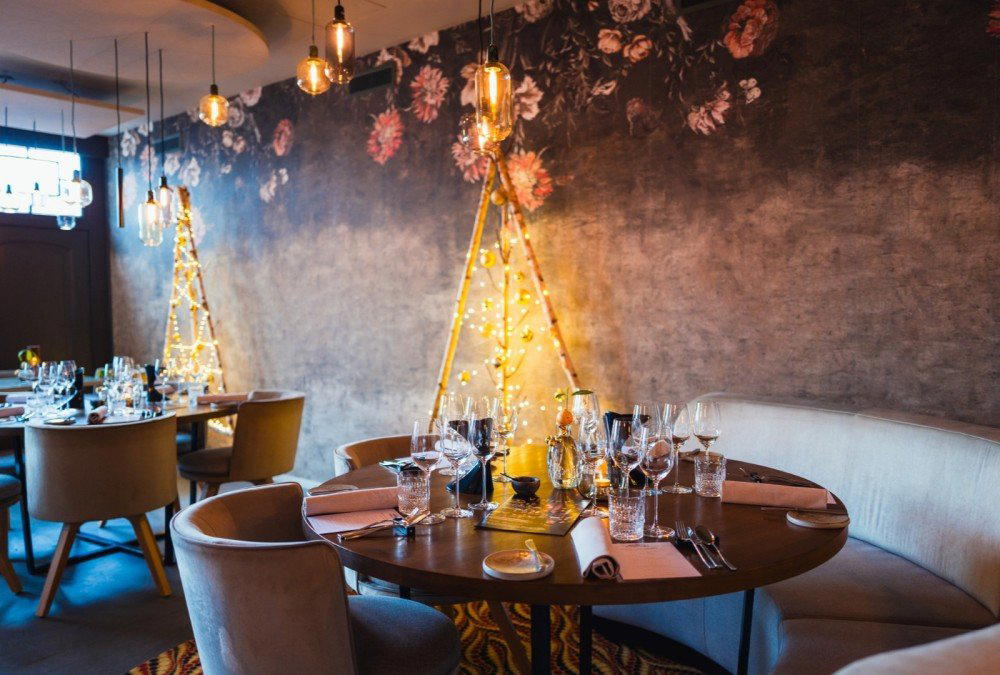
Industrial chic with recycled materials, twinkling dockyard lights, flickering candles, and panoramic harbor views creating a magical atmosphere.