Our verdict
Tokyo's kakigori specialists occupy a distinct tier in the city's dessert culture, where shaved ice becomes a considered craft medium. Hana Goori Kakigori sits within that tradition, drawing on seasonal ingredients and refined technique to position itself among the capital's more serious kakigori addresses. For visitors calibrating their Tokyo itinerary, it represents a purposeful stop in a category the city has made its own.

Pearl is the En Primeur Club membership app — saves, bookings, and concierge access live there. Same editors, same standards.
- Address
- Tokyo, Japan
- Directions
- Get directions
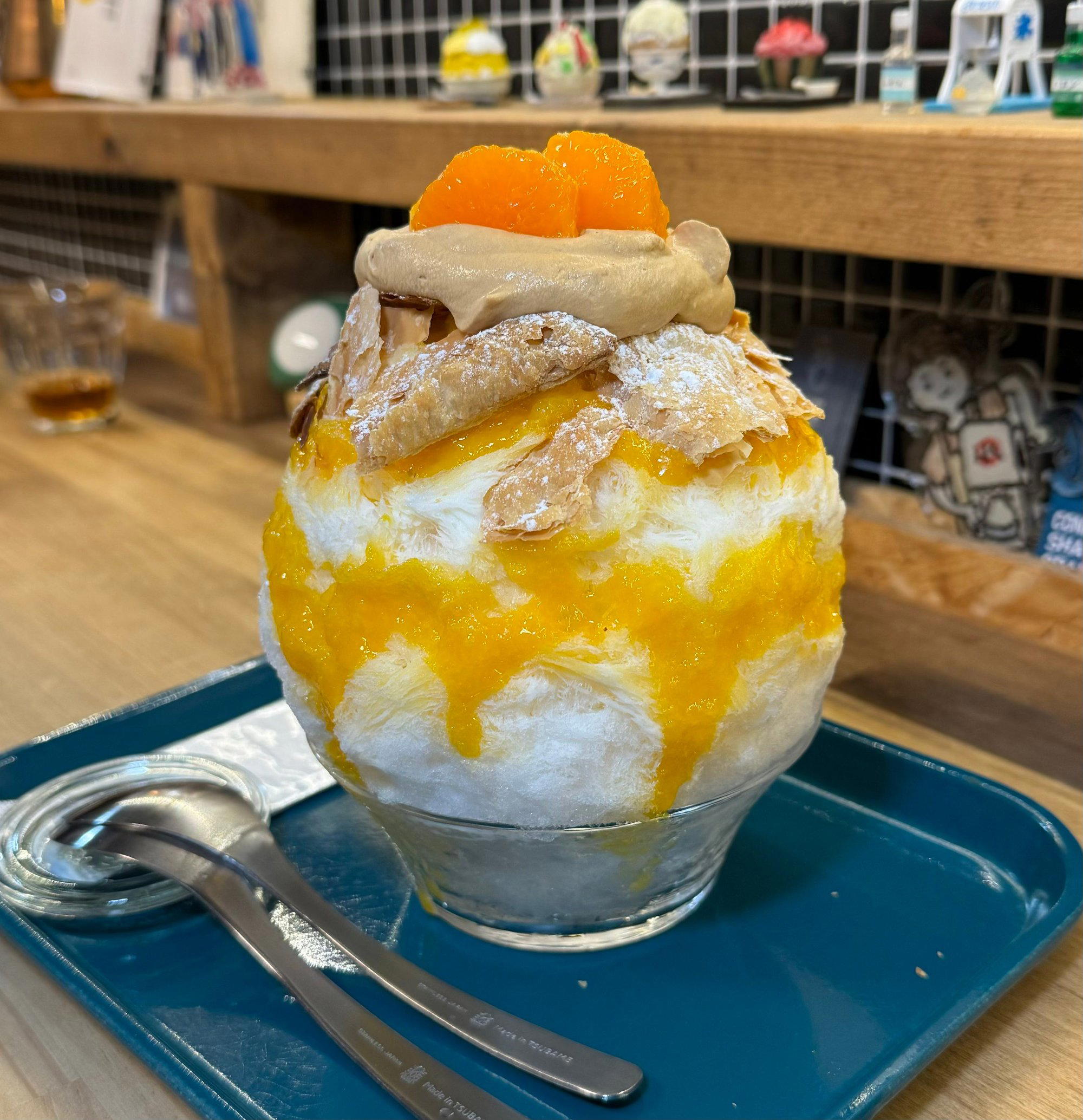
Shaved Ice as Architecture: Tokyo's Kakigori Tradition and Where Hana Goori Kakigori Fits
There is a particular quality of light inside Tokyo's better kakigori counters in midsummer: bowls arrive at the pass looking less like dessert and more like sculpture, each layered construction of finely shaved ice holding its form for long enough that the presentation feels intentional rather than accidental. This is not a new Japanese craft, but it is one that Tokyo has refined in recent years into something approaching a genre of its own, distinct from the roadside kakigori of festival stalls and convenience stores. Hana Goori Kakigori belongs to this more considered tier of the city's shaved-ice culture, where the ice texture, syrup sourcing, and structural composition of each bowl carry the same weight that plating decisions carry at a kaiseki counter.
That framing matters when you are deciding where Hana Goori Kakigori fits in a Tokyo visit. The city's dining infrastructure runs from the rarefied omakase rooms of Harutaka and the kaiseki discipline of RyuGin down through mid-market neighbourhood restaurants, and its dessert culture is just as stratified. Kakigori has its own internal hierarchy, and the specialist shops that treat the form with genuine craft seriousness occupy a smaller, more deliberate tier than the general dessert cafes surrounding them. Hana Goori Kakigori operates in that specialist register.
The Physical Container: Space, Seating, and the Architecture of the Bowl
Tokyo's premium kakigori shops tend to be compact: seating counts rarely climb above thirty, and many operate closer to a counter-and-few-table format that keeps the pace between kitchen and guest tight enough to serve ice at the right temperature and texture. The physical intimacy is not incidental. Kakigori at this level is a time-sensitive product, and the spatial arrangement of a good kakigori shop is designed around that constraint. A bowl served across a long dining room at the wrong moment becomes ordinary; one placed in front of a guest within the correct window holds its structural detail and temperature gradient in the way the kitchen intended.
This emphasis on physical format connects to a broader pattern in Tokyo's craft dessert culture, where the space is calibrated to the product rather than built around seating maximization. The same logic governs the tight counter formats at high-end sushi shops like Harutaka, where seat count is a deliberate quality control mechanism, and it applies equally in the kakigori tier. Hana Goori Kakigori's design approach reflects this discipline: the emphasis on controlled volume and focused service mirrors what the city's more serious dessert operators have understood about their product's physical demands.
For context on how Japan's broader fine-dining scene treats space as a structural argument, the kaiseki room at Gion Sasaki in Kyoto and the intimate counter at akordu in Nara both demonstrate the same principle: physical scale is a signal, not just a logistical reality.
Where Kakigori Sits in Tokyo's Dessert Hierarchy
It is worth mapping Hana Goori Kakigori against the broader dessert ecology of the capital. Tokyo maintains a serious pastry and wagashi culture alongside its kakigori tradition, and the city's leading practitioners in each category draw on seasonal Japanese ingredients with the same precision that savory chefs apply to their sourcing. Kakigori specialists at the premium end typically work with natural ice (sometimes from specific mountain or spring sources), fruit syrups made from single-prefecture produce, and structural elements like anko, condensed milk, or matcha that act as counterweights to the cold. The bowl becomes a composition with temperature dynamics, textural layers, and flavor sequencing built in.
This level of craft puts the better Tokyo kakigori shops in interesting conversation with the city's restaurant scene more broadly. Venues like L'Effervescence and Sézanne apply French technique to Japanese seasonal produce; the leading kakigori makers do something adjacent, applying a Japanese craft logic to an ingredient set that changes month by month. The comparison is not exact, but the sensibility — restraint, seasonality, precision — overlaps.
Outside Tokyo, Japan's regional dining culture shows the same seriousness about ingredient provenance and technique. HAJIME in Osaka and Goh in Fukuoka each represent their cities' commitment to this disciplined approach. Hana Goori Kakigori sits within a national tradition that treats craft food seriously across every register, not just at the Michelin table level.
Planning Your Visit: Practical Considerations
Kakigori in Tokyo is strongly seasonal in its primary form, with the peak window running through summer, though a number of specialist shops now operate year-round with winter menus built around warmer-textured ice and different syrup profiles. Visiting outside peak summer means shorter queues but a different menu logic; visiting in July or August means the full seasonal range but wait times that can run thirty to sixty minutes at established shops without reservations.
For Tokyo visitors constructing a longer itinerary around the city's food culture, the EP Club's full Tokyo restaurants guide maps the broader landscape by category, neighbourhood, and price tier. Kakigori sits within the city's afternoon and post-lunch rhythm rather than at formal meal times, which means it integrates naturally into a day that includes a lunch reservation at somewhere like Crony and an evening omakase booking. The category rewards purposeful planning rather than spontaneous decision-making, particularly at shops where the seasonal menu changes and demand peaks sharply.
For international reference points, Tokyo's craft kakigori scene occupies a similar cultural position to the tasting-menu dessert courses at Le Bernardin in New York City or the precision plating at Atomix, products where the visual and textural architecture is as deliberate as the flavor. The comparison stretches across category lines, but the underlying craft seriousness is consistent.
Venue Comparison: Kakigori and Peer Tokyo Dessert Formats
| Venue / Format | Category | Price Tier | Booking Required | Seasonal Window |
|---|---|---|---|---|
| Hana Goori Kakigori | Kakigori Specialist | Low-mid | Walk-in typical; check current policy | Peak: summer; some year-round |
| Harutaka | Omakase Sushi | ¥¥¥¥ | Advance booking essential | Year-round |
| RyuGin | Kaiseki | ¥¥¥¥ | Advance booking essential | Year-round |
| Crony | Innovative French | ¥¥¥¥ | Advance booking essential | Year-round |
Frequently asked questions
How does Hana Goori Kakigori compare to other kakigori shops in Tokyo, and what sets the format apart from standard shaved ice?
Tokyo's premium kakigori circuit — which includes shops in Aoyama, Yanaka, and Shinjuku — distinguishes itself from convenience-store or festival shaved ice through two variables: ice block quality and syrup craft. Purpose-frozen blocks shaved on Japanese-made machines produce a finer, more layered texture than crushed ice, and natural-ingredient syrups replace synthetic concentrates. Hana Goori Kakigori operates within this specialist tier in Tokyo, where the gap between serious shops and casual vendors is measurable in both texture and ingredient sourcing.
What do people recommend at Hana Goori Kakigori?
At specialist kakigori shops in Tokyo, the seasonal signature bowls draw the most attention — layered constructions built around single-origin fruit syrups or matcha bases, served in a format that prioritises ice texture above all else. The syrup selection tends to rotate with the growing season, so what leads the menu in July differs from what appears in September. Asking staff what arrived most recently is the standard approach at counters of this type in the city.
Should I book Hana Goori Kakigori in advance?
Tokyo's established kakigori specialists typically operate on a walk-in basis rather than a reservations system. At peak summer periods — July and August especially — waits of thirty to sixty minutes are common at well-regarded shops. Arriving at opening or after the immediate lunch window tends to reduce queuing time meaningfully.
What makes Hana Goori Kakigori worth seeking out?
The argument for specialist kakigori shops in Tokyo rests on the craft applied to what many visitors assume is a simple street dessert. At this level, ice texture, syrup concentration, and layering order are treated with the same precision a pastry kitchen would give to plated desserts. Hana Goori Kakigori sits within that serious end of Tokyo's kakigori scene, where the bowl is a considered construction rather than a cooling afterthought.
Can Hana Goori Kakigori handle vegetarian requests?
Kakigori is plant-forward as a base format: shaved ice with fruit or tea-derived syrups presents no vegetarian obstacle. Supporting elements such as condensed milk, anko (sweet red bean paste), or mochi are also vegetarian in standard preparation. Visitors with stricter dietary requirements — vegan or allergen-specific — should confirm individual components with staff, as recipes vary by shop.
Is Hana Goori Kakigori overpriced or worth every penny?
Kakigori at serious Tokyo specialists sits at a modest price point relative to the city's formal dining tiers — well below the ¥¥¥¥ bracket occupied by kaiseki or high-end sushi counters. A single bowl at a premium kakigori shop in Tokyo typically falls in the ¥1,000–¥2,000 range, though elaborately constructed seasonal offerings can exceed that. The spend-to-craft ratio at this level of kakigori shop consistently favours the visitor.
When should I go to Hana Goori Kakigori?
The primary kakigori season in Tokyo runs from early summer through early autumn, with July and August representing the peak period for both seasonal ingredient availability and street-level demand. A number of specialist shops now operate year-round, extending into winter with warm accompaniments or cold-weather syrup profiles. For the fullest seasonal menu, a summer visit remains the most productive window.
The Short List
Comparable venues nearby, for context on price, style, and recognition.
| Venue | Cuisine | Price | Awards | Notes |
|---|---|---|---|---|
| Hana Goori KakigoriThis venue — the venue you are viewing | Japanese Kakigori (Shaved Ice) | $20–30 | Not listed | Not listed |
| Anpuku Ikebukuro ten | Creative Udon / Japanese Izakaya | $20–30 | Tabelog 100 #65 | Toshima, Creative Udon / Japanese Izakaya |
| Yashima | Traditional Unagi (eel) restaurant | $30–50 | Tabelog 100 #10 | Taitō, Traditional Unagi (eel) restaurant |
| Shinsen Horumon Sambyakuya | Japanese Yakiniku & Horumon | $50–100 | Tabelog 100 #47 | Shibuya, Japanese Yakiniku & Horumon |
| Gavial | European-style Japanese curry | $10–20 | Tabelog 100 #49 | Chiyoda, European-style Japanese curry |
| いこま寿司 | Traditional Edomae Sushi | $10–20 | Not listed | Setagaya (Umegaoka), Traditional Edomae Sushi |













Details
- Casual Hangout
- A La Carte