
Tabelog 100 #86
Our verdict
Gyusuji Curry Chiisana Curry Ya belongs to Tokyo’s small-counter curry tradition: brief lunch service, counter pacing, and a narrow focus on curry and curry udon rather than a sprawling menu. Its Tabelog Curry TOKYO 100 selections in 2023 and 2024 place it in a serious local category, while the Okubo setting keeps the experience tied to everyday Tokyo rather than destination dining theatre.

Pearl is the En Primeur Club membership app, where members save venues, book tables and use the concierge.
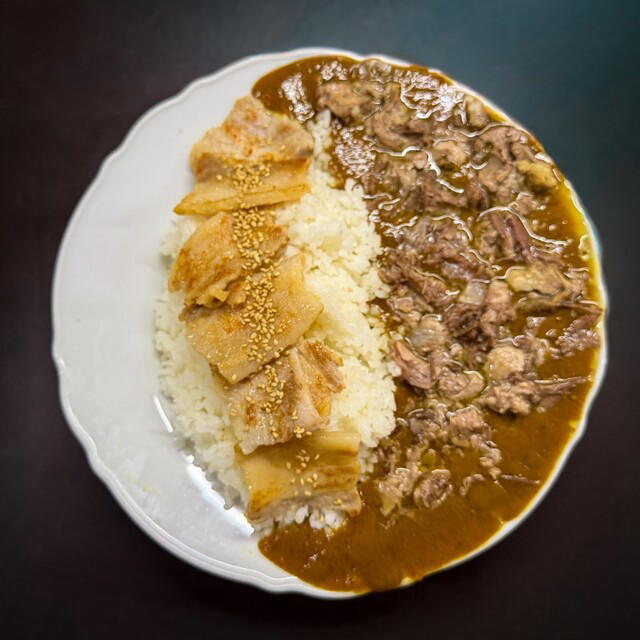
The menu
What to order
- Gyusuji (beef tendon) curry
- Katsu curry
- Curry udon
Tokyo compresses dining into short blocks: quick lunch rooms, commuter meals, and small specialist shops where the meal is often measured in minutes rather than courses. Gyusuji Curry Chiisana Curry Ya fits that broader grammar: focused on curry and curry udon, and best approached with purpose, directness, and attention to the food rather than ceremony. In Tokyo, that restraint often says more than a long menu.
Japanese curry sits apart from luxury sushi counters and kaiseki rooms. It is weekday, railway-station, student, and salaryman food, but Tokyo’s serious curry culture has turned informality into a field of specialists. Some places lean into spice blends and broader curry references; others favor thicker Japanese-style comfort; newer shops cross into adjacent formats such as curry udon. The point is repetition, concentration, and a house style legible after one plate, not grandeur.
A compact Tokyo curry stop, curry udon on the same axis, and a Tokyo lunch rhythm
The compact specialist-shop format shapes the meal. Solo diners and pairs often make practical sense in this kind of Tokyo setting, turnover can be part of the rhythm, and lingering may not be the point. This is not a long tasting-sequence room; it belongs to Tokyo’s focused everyday dining tradition, where efficiency and clarity define the experience.
Curry and curry udon sit close in the Japanese canon but ask for different attention. Rice curry is about sauce, grain, and pace; curry udon shifts the appetite toward broth, wheat, and slurp. Keeping both under one roof signals practical specialization rather than menu sprawl: narrow enough to feel disciplined, not so narrow it becomes a single-item stunt.
The Tabelog Curry TOKYO 100 selection in 2024 is the useful trust signal, alongside a listed Tabelog score of 3.75. Tabelog category lists matter in Tokyo curry because the city has a dense field of affordable specialists, many with local followings. A place can be inexpensive and still compete seriously; recognition here is less about luxury cues than consistency inside a crowded everyday genre.
Against peers, the position is clear. SPICY CURRY Roka and Spicy Curry House Hangetsu belong to the same wider Tokyo curry conversation, while FISH Shinjuku ten shows another way the city treats casual specialist dining. Gyusuji Curry Chiisana Curry Ya occupies the tighter, everyday end without leaving the specialist conversation, which is why it reads as a Tokyo lunch decision rather than a special-occasion plan.
The etiquette is speed, focus, and respect for the room
The ritual is practical, not theatrical. Tokyo curry dining is often a choreography of small gestures: decide promptly, keep belongings compact, avoid turning a short meal into a meeting, and follow the shop’s rhythm. The room is shared space; the curry is personal, and the experience works best when diners treat it that way.
That etiquette explains why the venue differs from a conversation-led restaurant. Its appeal is compression: focused category, everyday specialist energy, and a pace suited to Tokyo’s working-day traffic. Travellers used to Tokyo’s reservation-led dining may find the informality refreshing, but it has rules. Small specialist shops reward diners who understand that access is not possession of the room.
The city sharpens the context. Tokyo is layered, multilingual, and food-dense rather than defined only by polished hotel-dining zones. Beyond the famous formal rooms, the city also holds Japanese lunch spots, curry shops, and casual specialists serving neighbourhood routines rather than tourist itineraries. For the city’s wider dining range, Our full Tokyo restaurants guide maps the spectrum from everyday rooms to formal rooms, while nearby and adjacent dining shows how quickly Tokyo shifts format by neighbourhood.
Within curry, the better comparison is specialist versus generalist, not fine dining versus casual dining. Other Tokyo curry venues offer further reference points, while the wider Japanese map shows how curry is interpreted differently by region, commute pattern, and local habit. These comparisons matter because curry in Japan is not a single style: different cities and suburbs all interpret it through different habits of spice, portion, and pace.
Know Before You Go
- Dining style: Curry and curry udon in a focused Tokyo specialist setting, better suited to a direct meal than a large, leisurely dining plan.
- Recognition: Selected for Tabelog Curry TOKYO 100 in 2024, with a listed Tabelog score of 3.75.
- Service rhythm: Compact and focused; plan around a quick meal rather than a long table session.
- Payment culture: Treat this as a small Tokyo specialist and arrive prepared for a low-friction transaction.
- Room etiquette: Keep the meal moving and respect the shared, compact dining space.
- Tokyo context: Tokyo rewards focused eating plans; pair the meal with other city wandering rather than a cross-city detour built around a single plate.
For a wider Tokyo itinerary, keep categories separate. Other everyday dining traditions explain different versions of the city’s compact food culture, while broader Tokyo hotel, bar, winery, and experience guides help separate where to sleep, drink, and spend time between meals. Beyond Tokyo, the same editorial lens can be applied generically to casual specialists, restaurants, cafe formats, and sake bars in other cities without confusing them with this particular curry stop.
The critical read is simple: Gyusuji Curry Chiisana Curry Ya is not translating Tokyo curry into luxury language. Its value lies in focused curry and curry udon, the city’s affection for specialist lunch shops, and 2024 recognition inside a competitive curry category. Go for the ritual as much as the bowl: arrive ready, eat with attention, and let the room keep moving.
Frequently asked questions
What's the address for Gyusuji Curry Chiisana Curry Ya?
Tokyo.
What does dinner at Gyusuji Curry Chiisana Curry Ya typically cost?
Pricing at Gyusuji Curry Chiisana Curry Ya is listed as - JPY 999.
What days is Gyusuji Curry Chiisana Curry Ya closed?
Specific closing days are not provided in the source information for Gyusuji Curry Chiisana Curry Ya.
What is Gyusuji Curry Chiisana Curry Ya known for?
Gyusuji Curry Chiisana Curry Ya is known for curry and curry udon in Tokyo.
Similar Picks
Comparable venues at similar price and category levels.
| Venue | Cuisine | Price | Awards | Notes |
|---|---|---|---|---|
| Gyusuji Curry Chiisana Curry YaThis venue (the venue you are viewing) | Japanese Beef Tendon Curry & Curry Udon | $1–10 | Tabelog 100 #86 | Not listed |
| SPICY CURRY Roka | Innovative Spice Curry with Taiwanese Influences | $10–20 | Tabelog Bronze #374 | Curry, Taiwanese, JPY 1,000 - JPY 1,999 JPY 1,000 - JPY 1,999 |
| Spicy Curry House Hangetsu | Indian Curry | Not listed | Tabelog 100 #63 | JPY 1,000 - JPY 1,999 |
| Harukor Ainu Restaurant | Ainu Indigenous Cuisine | $20–30 | Not listed | Not listed |
| FISH Shinjuku ten | Japanese curry house | $10–20 | Tabelog 100 #3 | JPY 2,000 - JPY 2,999 JPY 1,000 - JPY 1,999 |
| Rokkasen Otakibashi Street store | Premium Wagyu Yakiniku All-You-Can-Eat | $100–150 | Not listed | Not listed |
Recognition history
Dated appearances from independent guides and award organizations, with the underlying list record or original source where available.
Tabelog 100 #86 · No. 86
Tabelog · Tabelog 100 - Curry - TOKYO - 2024
Continue exploring
More in Tokyo
Restaurants in Tokyo
All restaurants in Tokyo →




Bars in Tokyo
All bars in Tokyo →







Details
- Cozy
- Intimate
- Solo
- Family
- Casual Hangout
- After Work
- Standalone
- A La Carte
- Counter Dining
Current opening hours
- Monday
- 11 AM–2:30 PM
- Tuesday
- 11 AM–2:30 PM
- Wednesday
- 11 AM–2:30 PM
- Thursday
- 11 AM–2:30 PM
- Friday
- 11 AM–2:30 PM
- Saturday
- Closed
- Sunday
- Closed
Hours can change for holidays and private events. Hours as of .
A small, non-smoking counter shop with a relaxed, low-key atmosphere; guests sit side-by-side at the counter in a simple, cozy space suited to solo diners and casual visits rather than long, lingering meals.