
Opened in June 2023, SPICY CURRY Roka operates from a basement counter in Hyakunincho, Shinjuku, with six seats, a reservation-only format, and a Tabelog score of 3.94 that placed it among the Tabelog Curry Tokyo Top 100 in 2024 and earned a Tabelog Award Bronze in 2026. The curry here crosses South Asian spice logic with Taiwanese culinary influence, all at a price point under JPY 2,000 per head.
Pearl is the En Primeur Club membership app — saves, bookings, and concierge access live there. Same editors, same standards.
- Address
- 新宿タウンプラザBF-J, 地下1階, 1 Chome-24-8 Hyakunincho, Shinjuku City, Tokyo 169-0073, Japan
- Phone
- +81 3-3367-7111
- Website
- twitter.com
- Directions
- Get directions
 Saves & bookings on Pearl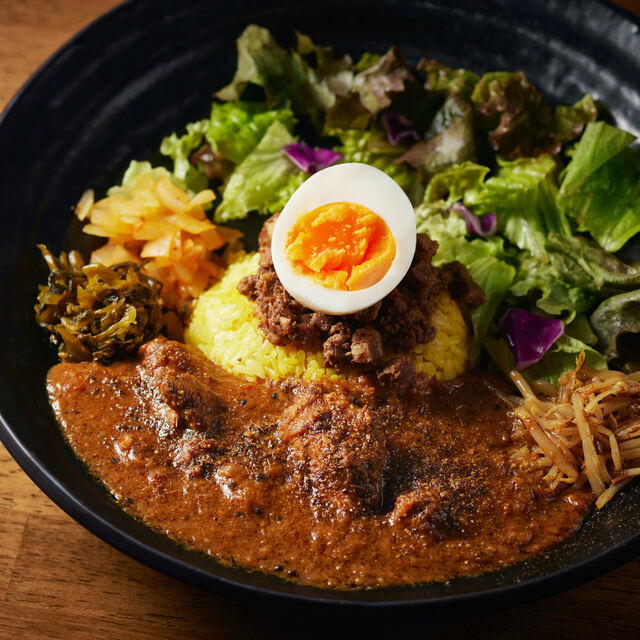
A Six-Seat Counter in Hyakunincho
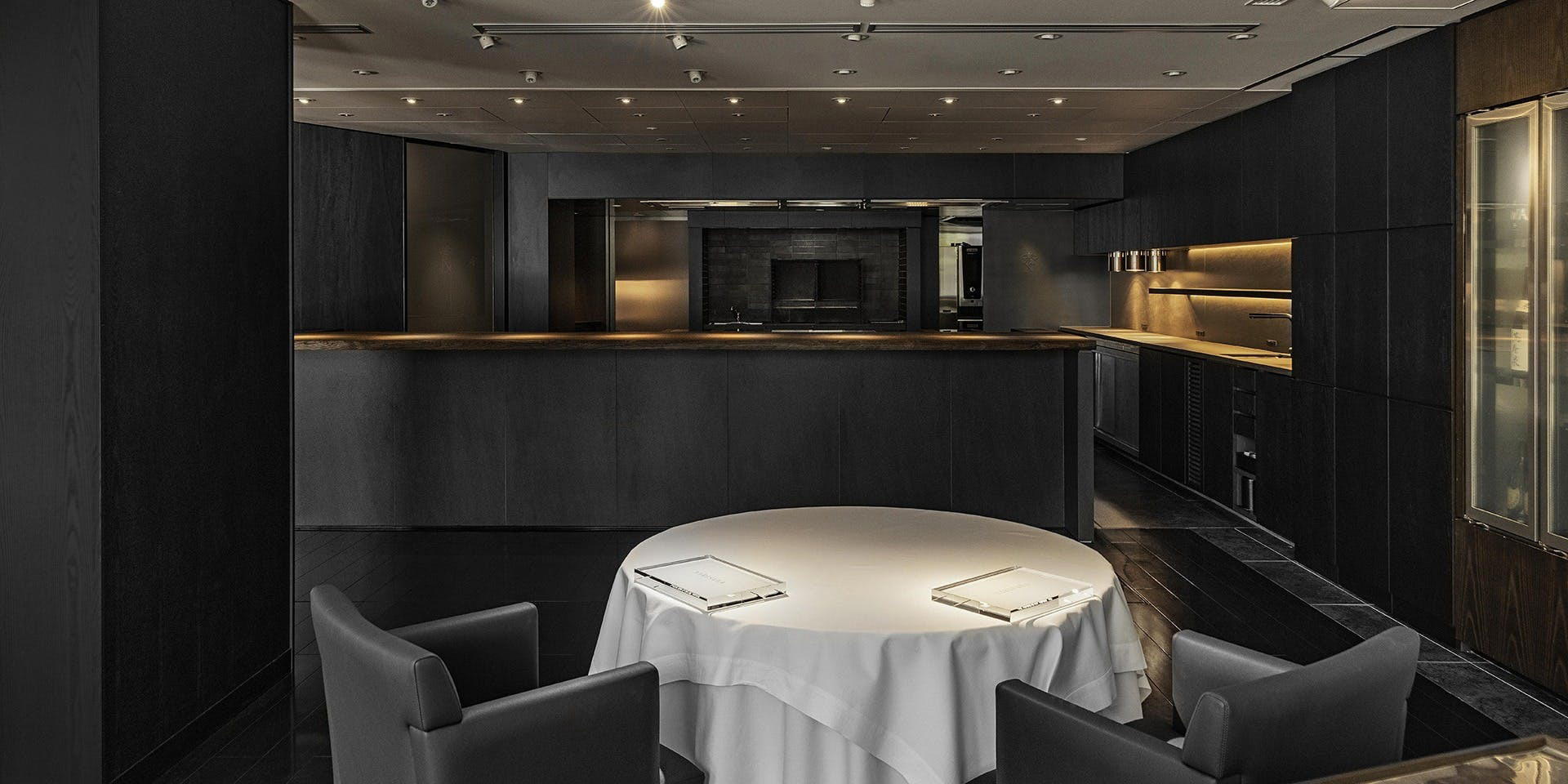
Tokyo’s curry scene has expanded well beyond the old categories of Japanese house curry and imported South Asian or Indian restaurant formats. Over the past decade, a wave of specialist curry counters has emerged that treat spice-building with the same methodical seriousness applied to ramen broth or dashi construction. These counters tend to be small, reservation-only, and positioned at price points that make serious cooking accessible far below the levels set by fine dining. SPICY CURRY Roka, which opened on 7 June 2023 in the basement of Shinjuku Town Plaza in Hyakunincho, sits squarely inside that movement. The counter holds six seats. Nothing more, nothing less.
The neighbourhood frames the experience before the food does. Hyakunincho sits just north of Shin-Okubo, one of Tokyo’s most documented corridors for pan-Asian food culture, where Korean, Chinese, and Southeast Asian culinary traditions have accumulated over decades. That multicultural density shapes what serious operators in the area choose to cook. At Roka, the menu carries a Taiwanese categorisation alongside the curry designation, a combination that reflects the broader Shin-Okubo corridor’s appetite for culinary crossover rather than strict regional purity.
The Ritual of the Counter
In Tokyo’s specialist restaurant culture, the reservation ritual is itself a form of editorial filtering. At SPICY CURRY Roka, all six seats require a reservation, and bookings are not made online through an open platform. Instead, telephone reservation windows open at 9:30 AM for lunch service and at 4:00 PM for dinner service. A representative may record the reservation on behalf of a group. This system, which demands active intent and real-time engagement, is characteristic of counters where the operator controls volume as a matter of craft discipline rather than commercial convenience.
The session format reinforces that discipline. Monday and Wednesday run lunch only, from 11:00 to 15:00. Tuesday and Thursday split into lunch (11:00 to 14:00) and an evening window (17:00 to 19:30). From April 2025, Fridays joined the permanent closure days alongside Saturday, Sunday, and public holidays. The result is a weekly operating schedule of roughly four days, with total covers across all sessions limited by the six-seat counter. Roka’s Tabelog listing explicitly flags the occasion as “solo dining friendly,” a designation recommended by many reviewers, which fits the counter format and the focused, individual experience it produces.
Cash is the only mechanism that works here. Credit cards, electronic money, and QR code payments are all declined. Japan’s cashless infrastructure is widespread in 2025, but a segment of precision-driven small counters have retained cash-only policies as a practical boundary against transaction overhead and as a cultural signal about the nature of the exchange. Arriving prepared is part of the ritual.
Spice Architecture and the Taiwanese Dimension
Tokyo’s leading curry counters are generally categorised by their spice philosophy: some work from South Indian frameworks, others build on Sri Lankan or Pakistani layering traditions, and a smaller cohort develops hybrid systems that draw on the owner’s personal research rather than a single geographic reference. Roka’s Tabelog description references daily research into spice as the operational foundation of what ends up in the bowl. The Taiwanese classification alongside curry is not decorative. Taiwan’s own culinary identity absorbs Japanese, Chinese Hokkien, and Southeast Asian threads, and that layering logic appears to inform how Roka positions its flavour architecture relative to straightforwardly Indian-derived curry operations.
At a budget of JPY 1,000 to JPY 1,999 per head for both lunch and dinner, Roka operates in the lowest price tier of Tabelog-recognised serious restaurants. Compare that against the price bands of Tokyo’s celebrated fine dining counters: Harutaka, RyuGin, L’Effervescence, and Sézanne all operate at the summit of the city’s price structure. Crony represents the innovative mid-range. Roka, sitting below all of these, demonstrates a distinct principle in Tokyo’s restaurant ecosystem: award recognition through Tabelog does not require a high price point, and the city’s most rigorous reviewers apply equal scrutiny to a six-seat basement counter as to a tasting menu room.
Award Standing in Context
Roka’s Tabelog score of 3.94 earned it selection for the Tabelog Curry Tokyo Top 100 in 2024 and a Tabelog Award Bronze in 2026 (ranked 374th overall in the Bronze group). Tabelog’s scoring system is weighted heavily toward reviewer volume and consistency rather than a single critical visit, making a 3.94 at under two years of operation a meaningful signal. The Tabelog 100 designation for Tokyo curry is a category-specific list that reflects sustained reviewer consensus across the city’s densely competitive curry sector. Tokyo has more curry specialists per square kilometre in its central wards than most international cities have in their entire dining inventories, which makes the Top 100 selection less automatic than it might appear for a newcomer.
For readers tracking the wider Japan dining scene, the same evaluative seriousness applies across cities. HAJIME in Osaka, Gion Sasaki in Kyoto, akordu in Nara, Goh in Fukuoka, 1000 in Yokohama, and 6 in Okinawa each reflect how Japan’s regional dining culture sustains the same precision orientation across formats and price tiers.
Getting There and Planning Your Visit
The restaurant sits in the basement of Shinjuku Town Plaza at 1 Chome-24-8 Hyakunincho, Shinjuku City. By rail, one direct approach is a one-minute walk from the south exit of Okubo Station on the JR Chuo and Sobu local lines. Shin-Okubo Station on the JR Yamanote Line is a five-minute walk from the east exit, and Seibu Shinjuku Station on the Seibu Shinjuku Line is a four-minute walk from the north exit. The basement location and tight operating hours mean that arriving without a confirmed reservation is not a viable strategy.
Reservations: Required for all seats; telephone only (+81-3-3367-7111); lunch window opens at 9:30 AM, dinner window at 4:00 PM. Budget: JPY 1,000 to JPY 1,999 per head at both lunch and dinner. Payment: Cash only; no cards, no electronic money, no QR codes. Seats: Six counter seats. Operating days: Monday and Wednesday (lunch only), Tuesday and Thursday (lunch and dinner); closed Friday, Saturday, Sunday, and public holidays from April 2025. Smoking: Non-smoking throughout. Parking: Not available. Verify current hours and any temporary closures via the restaurant’s official social media accounts before visiting, as hours are subject to change.
For further Tokyo planning, see our full Tokyo restaurants guide, our full Tokyo hotels guide, our full Tokyo bars guide, our full Tokyo wineries guide, and our full Tokyo experiences guide. For international comparison on the counter-dining format, Le Bernardin in New York City and Atomix in New York City represent how the compact, precision-driven format translates into different price and cuisine contexts.
A Credentials Check
Comparable venues nearby, for context on price, style, and recognition.
| Venue | Cuisine | Price | Notes |
|---|---|---|---|
| SPICY CURRY RokaThis venue — the venue you are viewing | Innovative Spice Curry with Taiwanese Influences | $$ | Not listed |
| Raa Menya Shima | Modern Shoyu Ramen | $$ | Shibuya |
| Tonkatsu Aoki | Traditional Tonkatsu | $$ | Ōta |
| Japanese Soba Noodles Tsuta (Japanese Soba Noodles 蔦) | Michelin-Starred Shoyu Soba Ramen | $$ | Yoyogi-Uehara |
| 鮨・四季創作 心陽 (こはる) | Fresh Sushi & Seafood Bowls | $$ | Harajuku / Kita-Sando |
| Enseigne d'angle Harajuku ten | Classic Japanese kissaten & coffeehouse | $$ | Shibuya |
Recognition history
Dated appearances from independent guides and award organizations, with the underlying list record or original source where available.
Tabelog Bronze #374
Tabelog
Tabelog 100 #83 · No. 83
Tabelog · Tabelog 100 - Curry - TOKYO - 2024










At a Glance
- Well Known
- Energetic
- Solo
- Casual Hangout
- Chefs Counter
- Open Kitchen
Current opening hours
- Monday
- 11 AM–3 PM
- Tuesday
- 11 AM–2 PM, 5–7:30 PM
- Wednesday
- 11 AM–3 PM
- Thursday
- 11 AM–2 PM, 5–7:30 PM
- Friday
- Closed
- Saturday
- Closed
- Sunday
- Closed
Hours can change for holidays and private events. Last verified .
Intimate counter-only space with stylish, relaxing atmosphere; 6-9 seats at a narrow counter creating a focused, energetic dining experience.