
A compact Kobe dumpling address in Sannomiya’s Center Plaza orbit, Gyoza-ya Manen Sannomiya ten (1 gou ten) belongs to the city’s low-cost, high-turnover Chinese-Japanese drinking-food tradition. Its Tabelog 100 Dumplings selections in 2019, 2021, and 2024 give the small-format room a credible place in Japan’s gyoza conversation rather than just the local snack circuit.
Pearl is the En Primeur Club membership app — saves, bookings, and concierge access live there. Same editors, same standards.
- Address
- Japan, 〒650-0021 Hyogo, Kobe, Chuo Ward, Sannomiyacho, 2 Chome−11−1 センタープラザ西館1F
- Phone
- +81 78-331-1838
- Website
- manen.stores.jp
- Directions
- Get directions
 Saves & bookings on Pearl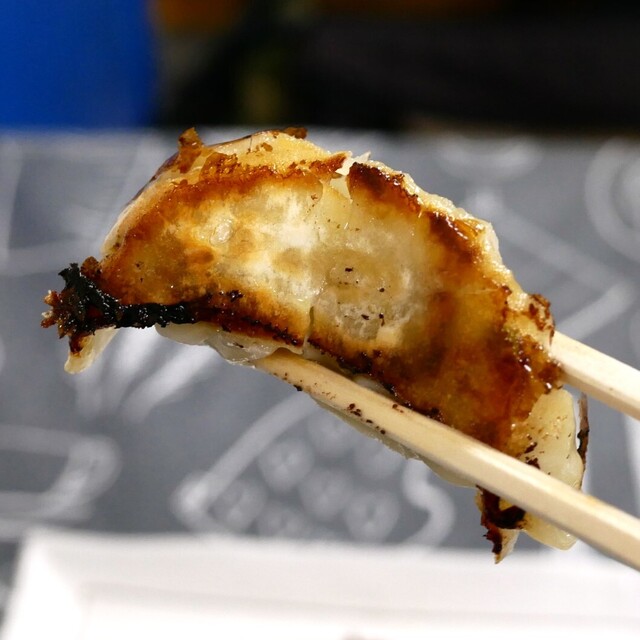
The approach is pure Sannomiya: station-side shopping arcades, basement-level appetite, and small restaurants built for speed rather than ceremony. Kobe’s casual dining culture has always been sharper than its polished port-city image suggests. Behind the beef houses, coffee rooms, and hotel dining rooms sits another grammar of eating: dumplings, beer, smoke, table chatter, and bills that keep the evening moving.
That is the useful frame for Gyoza-ya Manen Sannomiya ten (1 gou ten). It is not trying to compete with Kobe’s formal steak rooms or destination tasting menus. It sits in the city’s democratic dumpling lane, where the measure is repeatability: a tight menu category, a room calibrated for groups of friends, and enough local recognition to separate it from the interchangeable gyoza shops around the rail hub.
Kobe gyoza as value dining, not consolation dining
Gyoza in Japan often functions as the anti-splurge: quick, sociable, and better judged across several plates than through a single showpiece dish. In Kobe, that role matters because the city’s luxury food identity is dominated by beef. Visitors often arrive with teppanyaki in mind, then miss the more ordinary pleasure of Sannomiya after dark, when Chinese-Japanese counters and compact dining rooms carry the neighbourhood’s real weeknight rhythm.
The reputation here rests on dumplings and Chinese cooking rather than chef mythology. The trust signal is measurable: selection for Tabelog 100 Dumplings in 2019, 2021, and 2024, with a Tabelog score of 3.54. In Japan’s user-review ecosystem, that kind of category-specific recognition matters more for a gyoza specialist than broad luxury awards would. It places the room inside a national dumpling conversation while leaving its identity rooted in Kobe’s casual dining economy.
Within the immediate Sannomiya field, the comparison is useful. Gyoza Senmon Ten Akaman Sannomiya ten and Gyoza no Mise Hyotan Sannomiya ten operate in the same inexpensive dumpling band, which means the decision is less about luxury and more about format, crowd, and how much weight a diner gives to category recognition. S.B.DINER-KOBE sits in a similar casual spending tier but answers a different craving. Banshu Jizake Hino moves into a higher evening budget, where sake-led dining changes the pace. Sandayahonten Steak House - Daimaru Kobe belongs to the beef-centric Kobe narrative altogether. Against that spread, Manen’s case is clear: a specialist dumpling stop with third-party recognition, not a compromise meal between bigger reservations.
A small-room format built for groups and fast decisions
The room’s scale explains much of the experience. Thirty-two table seats make it neither a counter-only squeeze nor a large dining hall, and private use is available for parties in the 20-to-50 range. That matters in Kobe, where small restaurants often split between solitary counter dining and banquet-style rooms. This format lands in the middle: useful for friends, quick meals, and nights when the table is the point as much as the order.
Take-out adds another clue to the restaurant’s role. Dumpling specialists with take-out service are part of the everyday infrastructure of Japanese cities, not just places for travellers chasing lists. The presence of an open terrace and smoking allowed also mark the address as casual and adult rather than polished-family dining. None of that diminishes the food proposition. It clarifies it. This is a place to read through category confidence, social use, and price discipline, not through the language of destination fine dining.
The payment setup reinforces the low-friction, old-school register culture common to small Japanese restaurants: cash planning matters because credit cards, electronic money, and QR code payments are not accepted. That single detail changes the visitor’s experience more than any florid description could. The value proposition works only when diners arrive prepared, order within the restaurant’s natural rhythm, and treat it as part of a Sannomiya night rather than a formal reservation centerpiece.
Where it fits in a Kobe food itinerary
For travellers building a Kobe itinerary, the smart move is to avoid treating the city as a single-dish destination. Beef is central, but it is not the whole story. A balanced plan might place dumplings in Sannomiya alongside coffee culture, sake bars, and one formal meat meal. For that broader view, Our full Kobe restaurants guide is the natural starting point, with Our full Kobe hotels guide, Our full Kobe bars guide, Our full Kobe wineries guide, and Our full Kobe experiences guide filling in the rest of the trip.
Kobe’s range becomes clearer when Manen is read beside other city addresses rather than isolated as a venue profile. Beef-focused itineraries can compare the heavier spend and ceremony at Aburi Niku Kobo Wakkoku Shinkobe ten and Aburi Niku Kobo Wakkoqu Kitano Sakamoto Ten. A slower daytime register sits at Akaneya Coffee Ten. More casual city eating can run through Akari or Ali's Halal Kitchen. The point is not to rank them together; it is to understand Kobe as a city where modest specialists and higher-spend rooms coexist within a short urban radius.
For readers comparing Japanese casual formats beyond Kobe, useful contrasts include -Grilled beef Sukiyaki- KAMAKURA TANUKIAN 鎌倉 たぬき庵 in Kamakura. 鮪と炭火焼き うお炭 秋葉原店 in Tokyo.cafe in Osaka.know in Kumamoto, (Shoku) Vietnam in Kawasaki, and [Curry Senmon Ten] Maruyama Kyoju. in Sapporo. Across the Pacific, Jōdo Saké Bar in Los Angeles and Onigiri Time in Pasadena show how Japanese drinking and snack formats translate abroad. Manen’s appeal is narrower and more local: a Kobe dumpling room where the cost stays low, the recognition is category-specific, and the experience makes the strongest sense as part of Sannomiya’s evening circuit.
Reputation Context
Nearby venues at a similar price tier for orientation.
| Venue | Cuisine | Price | Notes |
|---|---|---|---|
| Gyoza-ya Manen Sannomiya ten ( 1 gou ten )This venue — the venue you are viewing | Chinese dumpling house | $ | Not listed |
| Juntoku | Traditional Cantonese restaurant | $$ | Chūō |
| Fuji | Okonomiyaki (Japanese savory pancakes) | $ | Chūō |
| Gyoza Senmon Ten Shoun | Gyoza and ramen shop | $ | Chūō |
| Mama no Eranda Motomachi Cake Motomachi honten | Classic Kobe cake shop & café | $ | Chūō |
| Kobe Turkish Rice | Japanese Yoshoku Turkish Rice | $ | Hyōgo |
Recognition history
Dated appearances from independent guides and award organizations, with the underlying list record or original source where available.
Tabelog 100 #19 · No. 19
Tabelog · Tabelog 100 - Dumplings - 2024
Continue exploring
More in Kobe
Restaurants in Kobe
Browse all →
Bars in Kobe
Browse all →



Hotels in Kobe
Browse all →


At a Glance
- Lively
- Cozy
- Casual Hangout
- After Work
- Late Night
- Solo
- Standalone
- Open Kitchen
- Beer Program
- Street Scene
Current opening hours
- Monday
- 5–10:30 PM
- Tuesday
- 5–10:30 PM
- Wednesday
- 5–10:30 PM
- Thursday
- 5–10:30 PM
- Friday
- 5–10:30 PM
- Saturday
- 5–10:30 PM
- Sunday
- 5–10:30 PM
Hours can change for holidays and private events. Last verified .
Compact 12‑seat shop with counter-style seating, simple decor and an open, bustling feel; guests describe it as a casual, energetic spot for gyoza and beer rather than a lingering meal destination.