
Our verdict
Gyoza Lou in Shibuya's Jingumae addresses the single-item focus that defines Tokyo's most disciplined casual counters. Ranked 25th, 43rd, and 57th on Opinionated About Dining's Casual Japan list across three consecutive years, the spot draws consistent critical attention for its gyoza-only format. Open daily from 11:30 am, it sits inside a neighbourhood where serious eating spans every price bracket.

Pearl is the En Primeur Club membership app, where members save venues, book tables and use the concierge.
The menu
What to order
- Pan-fried pork gyoza
- Steamed gyoza garlic chives
- Cucumber miso
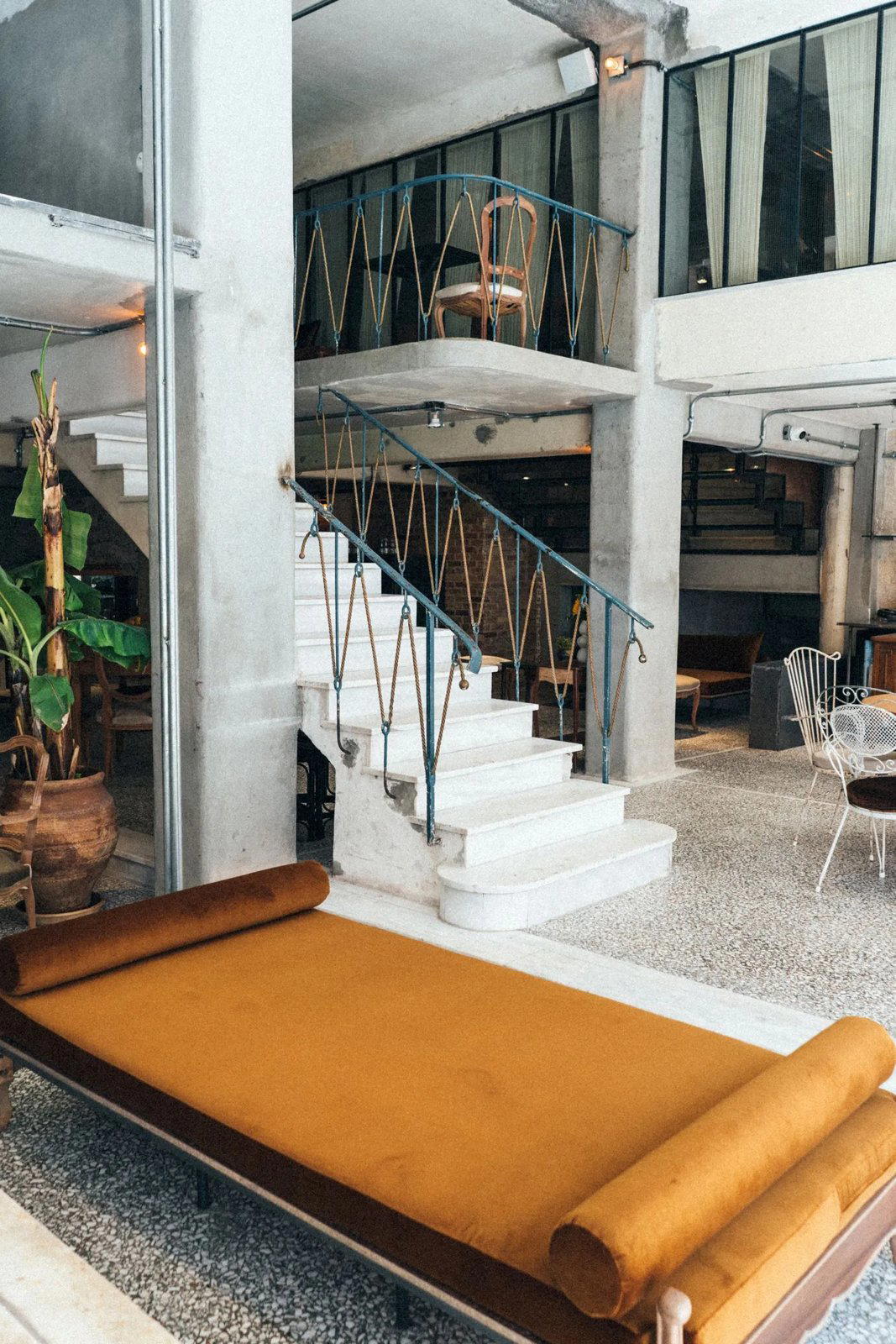
A Room Built Around One Thing
The most honest dining spaces in Tokyo tend to announce their purpose from the doorway. Gyoza Lou, on a Jingumae side street in Shibuya, does exactly that. The physical environment is calibrated around a single product: gyoza. There is no elaborate mise-en-scene, no theatrical plating station visible from a counter seat, none of the architectural ceremony that surrounds the city's kaiseki rooms or the hushed reverence of its leading sushi bars. The room communicates repetition and focus, the kind of space that makes sense only when the kitchen behind it is doing one thing at a high level of consistency across hundreds of covers a week.
This matters because the design of a casual specialist in Tokyo is itself an editorial statement. Cities like Tokyo have perfected the art of the single-discipline restaurant: ramen shops that run the same bowl for decades, tempura counters that serve nothing but, tonkatsu houses where the only variable is the cut. Gyoza Lou belongs to this tradition. The spatial logic follows the culinary logic: there is nothing here to distract from what arrives on the plate.
Jingumae and the Question of Neighbourhood Fit
The address, 6 Chome-2-4 Jingumae, places Gyoza Lou in one of Tokyo's most densely layered eating districts. Shibuya's Jingumae stretch runs from the fashion-forward streets near Harajuku station down through quieter residential lanes that have accumulated serious dining over decades. This is a neighbourhood where the competition on any given block can include high-ticket tasting menus alongside the kind of counter operations that open at 11:30 am and close whenever the product runs out.
That context is worth holding. Jingumae diners are not a captive audience. They have access to Michelin-starred French in nearby Minami-Aoyama, creative kaiseki a short taxi ride south, and the full hierarchy of Tokyo's premium restaurant scene. The fact that Gyoza Lou draws critical attention in this environment, appearing on Opinionated About Dining's Casual Japan list for three consecutive years, suggests the product holds up against serious neighbourhood competition, not just within its own category.
For readers building a wider Tokyo itinerary, the neighbourhood connects naturally to several of the city's more formally ambitious restaurants. L'Effervescence and Sézanne represent the three-Michelin-star French tier that anchors the city's upper bracket. RyuGin operates in the kaiseki register at the same level. Crony sits one tier below on the Michelin scale but draws a crowd that moves fluidly between high-format and casual eating. Gyoza Lou occupies a different register entirely, but it exists on the same map.
The OAD Signal and What It Means for a Casual Specialist
Opinionated About Dining runs a specific list for casual dining in Japan, separate from its fine dining rankings, and that separation is meaningful. The casual list rewards consistency, discipline, and product clarity over innovation, technique spectacle, or presentation. A restaurant that appears on it three times in consecutive years, ranked 25th in 2023, 43rd in 2024, and 57th in 2025, has done something more durable than landing on a single year's trending list. Movement within the rankings across years reflects the competitive density of Japanese casual dining rather than any decline in quality; the list itself expands and contracts as critics add and reassess entries.
The other venues ranked near Gyoza Lou tend to share the same design logic: specialist formats, high-repetition kitchens, rooms that are built for throughput rather than lingering. Ranking in that company means the gyoza here is being evaluated against the leading bowls, buns, and dumplings in Japan, not against the standards of a more generalist restaurant category.
Gyoza in Tokyo: The Category Context
Gyoza in Japan sits at an interesting intersection of Chinese origin and Japanese adaptation. The Japanese gyoza canon, which developed substantially through post-war Chinese immigration and street food culture, diverged from its Chinese counterparts in specific ways: thinner skins, a higher ratio of cabbage to pork in many regional styles, and the pan-fried yaki-gyoza format becoming dominant over the boiled or steamed versions more common in China. Tokyo's gyoza scene has further evolved to include specialists focused on sourcing, skin thickness ratios, and the geometry of the fold itself.
A single-item restaurant in this category is not simplifying its task. It is concentrating it. The chef structure at Gyoza Lou is listed as various, which in the context of a high-throughput specialist operation typically signals a kitchen built around a replicable standard rather than a single named talent. This is how Tokyo's leading single-item operations often work: the product consistency depends on the system, not on who happens to be folding that shift.
For comparison, the city's premium dining tier approaches consistency through entirely different means. Harutaka operates at a three-Michelin-star level where the chef's individual judgment drives each service. Gyoza Lou operates at the opposite structural pole, where the kitchen system is the product. Both approaches, when executed at a high level, produce the kind of consistency that earns repeat critical attention.
Tokyo in a Wider Japanese Frame
Casual dining in Japan is not a secondary category. Some of the country's most technically serious food arrives in rooms that seat under twenty people on stools, charge under 2,000 yen a head, and run out of product by mid-afternoon. The OAD Casual Japan list is competitive precisely because the country's food culture does not reserve seriousness for formal settings.
Readers building trips that extend beyond Tokyo will find that the casual discipline on display at a place like Gyoza Lou has parallels across Japan's major cities. Goh in Fukuoka operates in a different register, as does Gion Sasaki in Kyoto and HAJIME in Osaka, but each reflects the same national tendency toward product discipline over generalism. akordu in Nara and 1000 in Yokohama extend the picture further, as does 6 in Okinawa at the southern edge of the Japanese archipelago.
For those travelling between Japan and other markets, the contrast with New York is instructive. Le Bernardin and Atomix represent the American premium tier, where format and theatre carry significant weight in how a restaurant is judged. The Japanese casual specialist model has no equivalent in that system, which is part of why visiting one, even a gyoza counter, reads as a distinct cultural experience for Western travellers.
Planning a Visit
Gyoza Lou opens daily at 11:30 am and runs service through to 9:10 pm, seven days a week. The Jingumae address in Shibuya is accessible from Harajuku station on the Yamanote Line or Meiji-Jingumae station on the Tokyo Metro Chiyoda and Fukutoshin lines. Arriving during off-peak hours, mid-afternoon on weekdays, typically means shorter waits than the lunch and early dinner rushes.
For the full scope of what Tokyo's dining and hospitality scene offers across formats and price tiers, see our full Tokyo restaurants guide, our full Tokyo hotels guide, our full Tokyo bars guide, our full Tokyo wineries guide, and our full Tokyo experiences guide.
Quick reference:
Frequently asked questions
Is Gyoza Lou good for families?
The single-item format and casual counter setup keep the experience straightforward for families comfortable with a high-turnover room. There is no complex menu to navigate, which removes one common friction point. Gyoza Lou's consistent OAD Casual Japan rankings, #25 in 2023, #43 in 2024, #57 in 2025, reflect a kitchen focused on quality at volume rather than ceremony.
Is Gyoza Lou better for a quiet night or a lively one?
The format points toward energy. Gyoza Lou operates as a casual specialist in Jingumae, Shibuya, with daily service running from 11:30am to 9:10pm, a schedule designed for throughput, not lingering. Expect a room that runs at pace during peak hours, consistent with how Tokyo's single-item gyoza counters operate.
What kind of recognition has Gyoza Lou received?
Gyoza Lou has received recognition including: Opinionated About Dining Casual in Japan Ranked #57 (2025); Opinionated About Dining Casual in Japan Ranked #43 (2024); Opinionated About Dining Casual in Japan Ranked #25 (2023).
What's the best thing to order at Gyoza Lou?
Gyoza Lou operates as a gyoza specialist, so the kitchen's entire focus sits on one dish. In Tokyo's single-item counter tradition, that concentration is a statement of intent rather than a limitation. Three consecutive years on the OAD Casual Japan list, peaking at #25 in 2023, confirm the format is working at a level peers take seriously.
What days is Gyoza Lou closed?
Hours at Gyoza Lou: Hours: Monday 11:30 am–9:10 pm Tuesday 11:30 am–9:10 pm Wednesday 11:30 am–9:10 pm Thursday 11:30 am–9:10 pm Friday 11:30 am–9:10 pm Saturday 11:30 am–9:10 pm Sunday 11:30 am–9:10 pm.
Peers Worth Knowing
| Venue | Cuisine | Price | Awards | Notes |
|---|---|---|---|---|
| Gyoza LouThis venue (the venue you are viewing) | Tokyo Gyoza Dumpling House | $10–20 | Not listed | Not listed |
| Harutaka | Edo-Style Omakase Sushi | $200–300 | 3 Michelin Stars · World's 50 Best #76 | Sushi |
| RyuGin | Modern Kaiseki | $500+ | 3 Michelin Stars · World's 50 Best #41 | Kaiseki, Japanese |
| L'Effervescence | Modern French with Japanese Influences | $200–300 | 3 Michelin Stars · World's 50 Best #69 | French |
| HOMMAGE | Modern French with Japanese Influences | $150–200 | 2 Michelin Stars · World's 50 Best #78 | Innovtive French, French |
| MAZ | Innovative Peruvian-Japanese Fusion | $150–200 | 2 Michelin Stars · World's 50 Best #28 | Innovative |
Recognition history
Dated appearances from independent guides and award organizations, with the underlying list record or original source where available.
Opinionated About Dining Casual in Japan Ranked #123
Opinionated About Dining
Full recognition history (4 entries)
Opinionated About Dining Casual in Japan Ranked #57
Opinionated About Dining
Opinionated About Dining Casual in Japan Ranked #43
Opinionated About Dining
Opinionated About Dining Casual in Japan Ranked #25
Opinionated About Dining
Continue exploring
More in Tokyo
More from Chef Various
Browse all →
Restaurants in Tokyo
All restaurants in Tokyo →




Bars in Tokyo
All bars in Tokyo →




Details
- Lively
- Casual
- Casual Hangout
- After Work
- Open Kitchen
- Beer Program
- A La Carte
- Small Plates
Current opening hours
- Monday
- 11:30 AM–9:30 PM
- Tuesday
- 11:30 AM–9:30 PM
- Wednesday
- 11:30 AM–9:30 PM
- Thursday
- 11:30 AM–9:30 PM
- Friday
- 11:30 AM–9:30 PM
- Saturday
- 11:30 AM–9:30 PM
- Sunday
- 11:30 AM–9:30 PM
Hours can change for holidays and private events. Hours as of .
Casual, greasy open kitchen with steam and aromas, counter seating for watching the action, lively tourist spot.