Gudumi Pork BBQ
Gudumi Pork BBQ sits in Seogwipo's Bomok-dong district, where Jeju's black pork tradition meets neighbourhood-level dining without the tourist polish of the island's more prominent grill houses. The format here is grounded in the BBQ conventions that define southern Jeju eating, table-side charcoal, pork sourced from the island's volcanic terrain, and a pace set by the meal rather than the kitchen.
Pearl is the En Primeur Club membership app — saves, bookings, and concierge access live there. Same editors, same standards.
- Address
- South Korea, Jeju-do, Seogwipo-si, í¹ë³ìì¹ë, Bomok-dong, 1289-2 KR
- Phone
- +82647627004
- Website
- catchtable.net
- Directions
- Get directions
 Saves & bookings on Pearl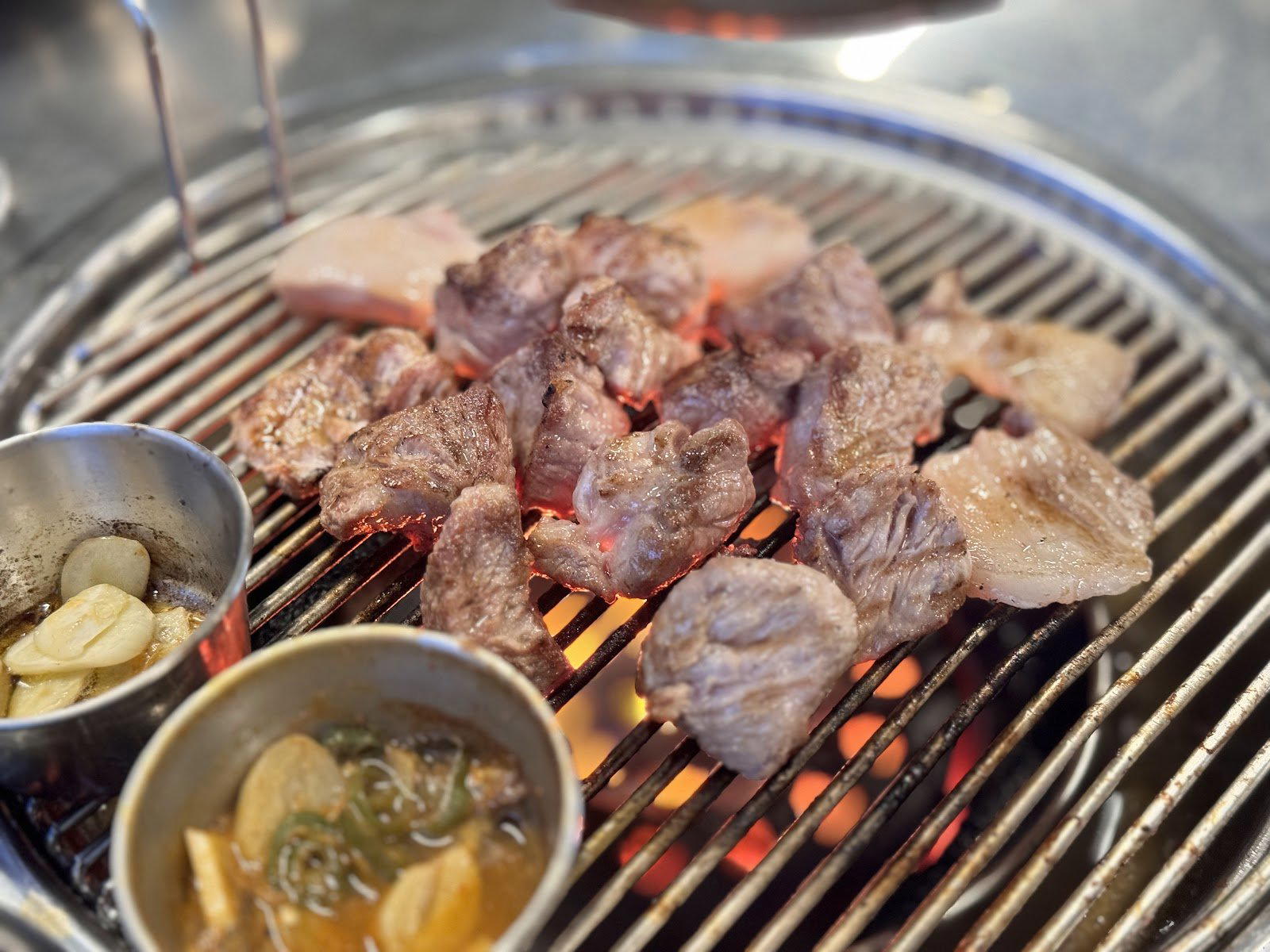
Jeju's Black Pork Tradition and Why Seogwipo Is Where It Makes Most Sense
Jeju Island's black pork has earned a status in Korean food culture that other regional specialties rarely reach. The Jeju black pig, a heritage breed raised on the island's volcanic soil and fed on local grains, produces pork with a distinct fat distribution and flavour profile that differs materially from the commodity pork served at most mainland Korean BBQ chains. The tradition of eating it grilled, in thick-cut slices over charcoal, with little more than salted sesame oil, garlic, and fermented side dishes, is not a marketing position, it is how this ingredient has been eaten on the island for generations. Seogwipo, on Jeju's southern coast, has a denser concentration of these heritage BBQ houses than Jeju City to the north, and its neighbourhood grill spots tend to operate for a local clientele rather than a tour-bus one. Gudumi Pork BBQ is a casual Jeju White Pork BBQ restaurant in Bomok-dong, Seogwipo, with. It sits within that local-facing tier.
Gudumi's address in Bomok-dong places it a step removed from that tourist circuit, which changes the nature of who eats there and how the kitchen sets its rhythm.
What Sourcing Looks Like When the Ingredient Is the Point
Across Jeju, the quality argument for black pork rests almost entirely on provenance. The Jeju black pig population is controlled, breeding and raising this heritage breed takes longer than commercial breeds, and the supply from certified farms on the island is finite. At the neighbourhood BBQ level, which is where Gudumi operates, the relationship between sourcing and price is direct: grill houses that use genuine Jeju black pig charge accordingly, and those that do not will often signal the difference through cuts, fat quality, and the frankness of their menu language. Visitors who have eaten Jeju black pork at certified specialist grill houses generally describe a noticeably different fat cap and texture compared to the standard samgyeopsal available across South Korea.
The ingredient argument for Jeju pork is also geographic. Local producers, particularly those working with heritage breeds, have made this provenance a formal part of their business identity. This is the same mechanism that gives Wagyu its regional credibility or that places Iberian black pig ham in a distinct category from commodity charcuterie. The sourcing story at places like Gudumi is not decorative; it is the structural reason the dining proposition exists at all.
The Format and the Meal
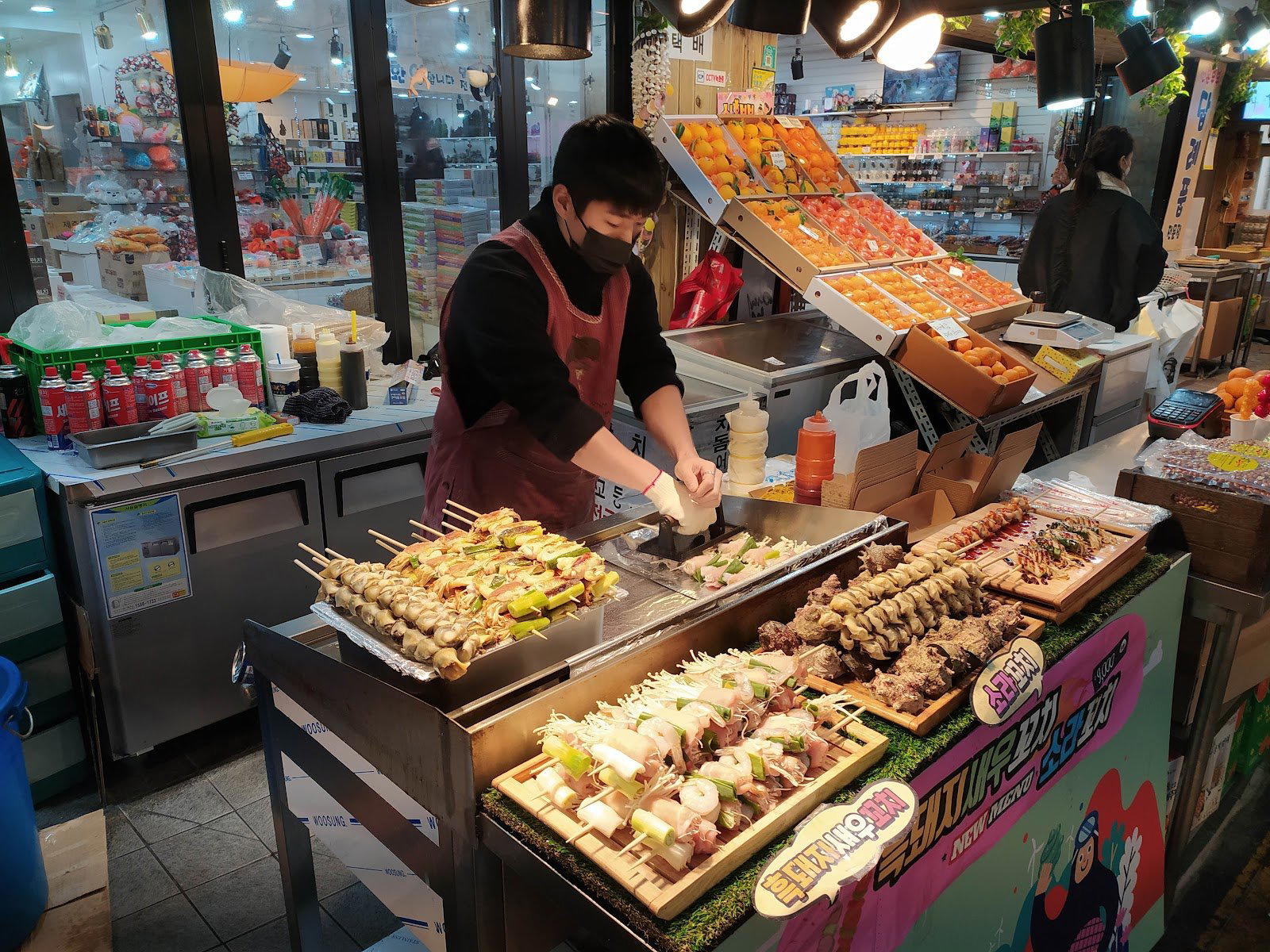
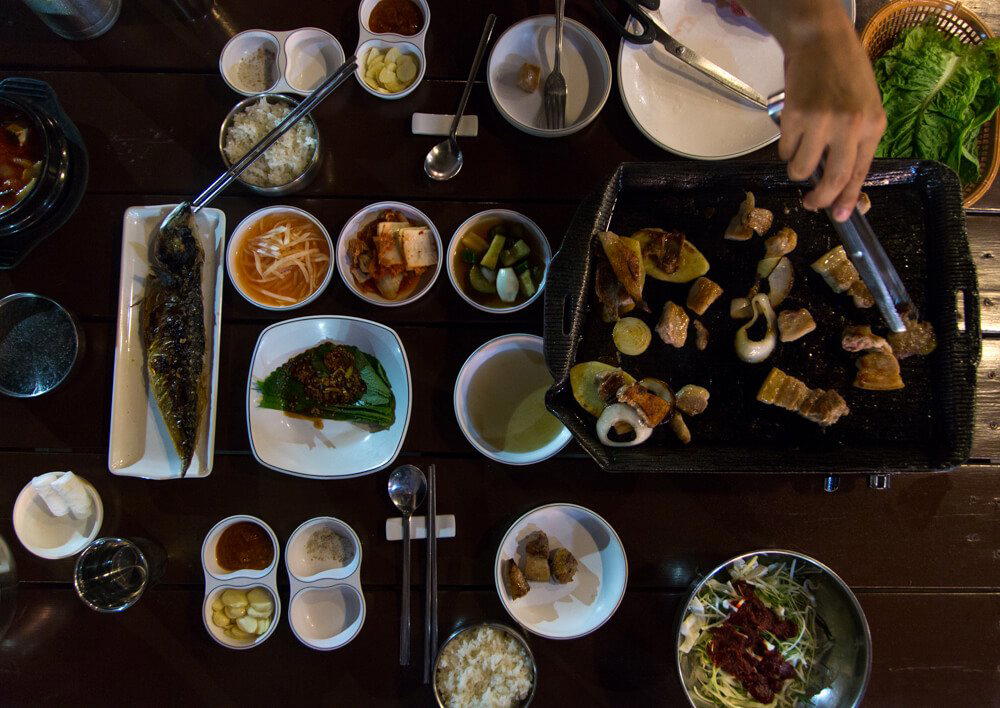
Korean BBQ at the neighbourhood grill level operates on a format logic that is almost entirely non-negotiable: raw meat arrives tableside, the grill is managed by staff or the diner depending on the house, and the meal moves at a pace determined by the cook rather than the clock. Banchan, the array of small side dishes, arrives in quantity, and the interaction between fatty pork, sharp kimchi, and steamed rice is the template from which the meal rarely departs. What changes between a tourist-facing venue and a neighbourhood grill house like Gudumi is primarily the level of English support, the degree of menu translation, and the ambient register of the room. At Bomok-dong spots, the room tends to be smaller, louder with a local crowd, and less styled for the Instagram frame than venues closer to the waterfront or market strip. That is not a criticism; it is a description of where the meal prioritises its energy.
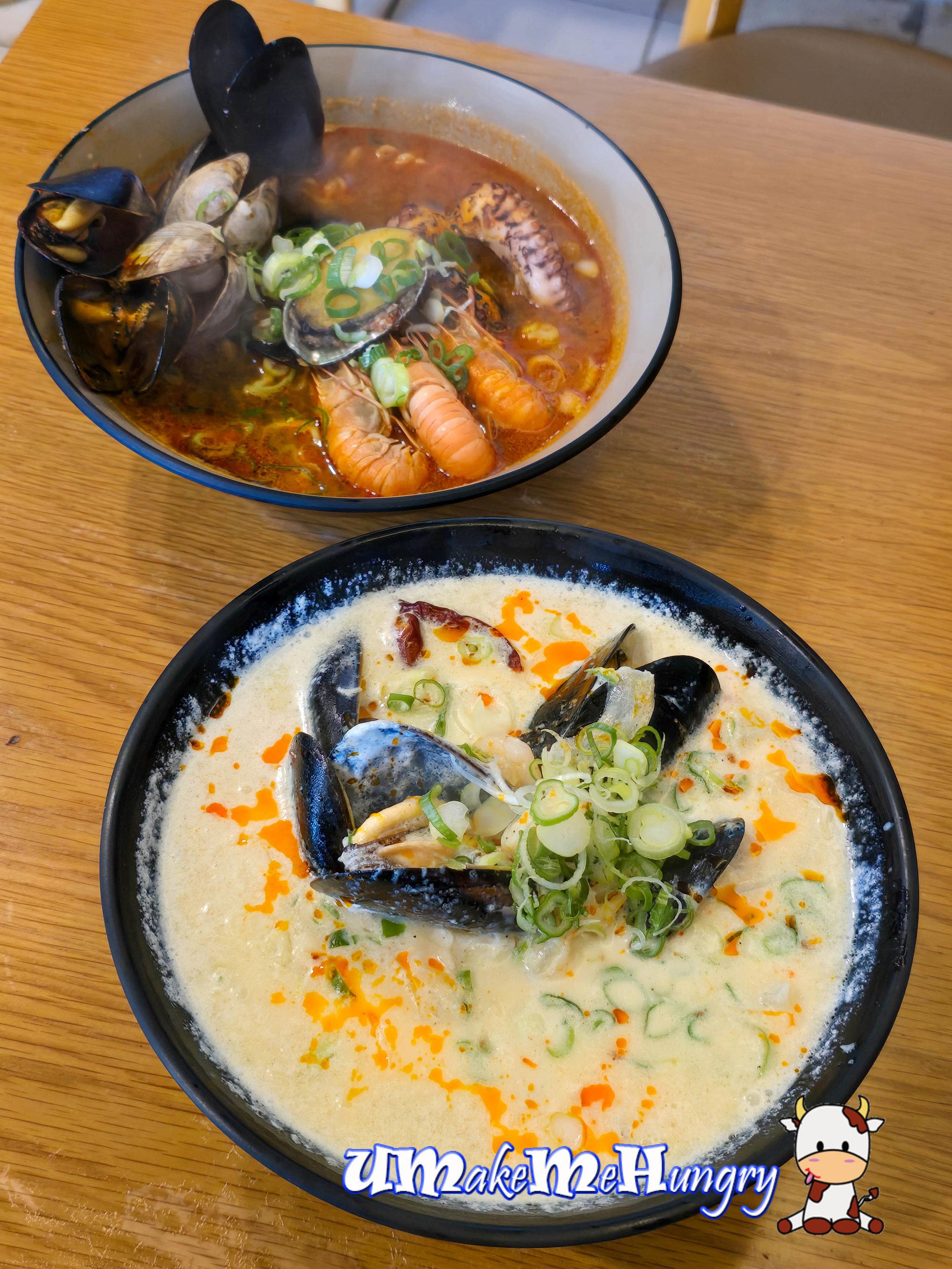
Visitors planning a broader Seogwipo eating itinerary who want to move beyond the BBQ format will find useful contrast at Jejugot Seogwipo Haemul Ramyeon and at Pasta Studio Jeju. The Jeju Island Grill sits in a peer category to Gudumi for direct BBQ comparison.
Placing Jeju BBQ Within a Wider Korean Dining Conversation
Korean dining has become more visible internationally than it did a decade ago. Restaurants like Mingles in Seoul operate at the fine-dining tier, earning Michelin recognition for applying Korean ingredient logic to tasting-menu formats. In Busan, Mori represents a different kind of ambition. Jeju's heritage grill houses occupy a separate register entirely, they are not upward-mobile in that sense, and they are not trying to be. Their authority comes from continuity with an ingredient tradition that does not require tasting-menu architecture to make its point. That distinction matters for setting expectations: Gudumi Pork BBQ is not making a chef-driven or concept-driven argument. It is participating in a regional food tradition where the product itself carries the editorial weight.
For comparison points within the Korean BBQ format more broadly, Gobojeong Galbi in Suwon and Doosoogobang in Suwon represent the mainland galbi tradition, which centres on beef rib rather than pork, and the contrast in regional identity is instructive. Back on Jeju, 88 Dwaeji in Jeju City operates in a similar neighbourhood-grill register for those spending time in the northern part of the island. For a different dining register on Jeju itself, Badang Lounge sits at the drinks-and-casual end, and Hinode in Seogwipo offers a Japanese-inflected alternative. Further afield, Hwangnam Bread in Gyeongju and Gyeongju Wonjo Kongguk illustrate how deeply regional South Korean food identity runs at every price tier, a pattern that Jeju's black pork grill houses exemplify in their own way.
Planning a Visit
Gudumi Pork BBQ is located in Bomok-dong, Seogwipo, in the southern part of Jeju Island. The Bomok-dong area sits outside the main tourist corridors, which means transport by rental car or taxi is the practical approach for most visitors arriving from Jeju City or the island's central resort belt. The restaurant is walk-in friendly. Given that the meal format is pork-centric and anchored in a charcoal BBQ tradition, visitors with dietary restrictions should confirm options on arrival.
Quick Comparison
Comparable venues nearby, for context on price, style, and recognition.
| Venue | Cuisine | Price | Notes |
|---|---|---|---|
| Gudumi Pork BBQThis venue — the venue you are viewing | Jeju White Pork BBQ | $$ | Not listed |
| Jeju Korea black pork BBQ Nammaene Seogwipo Maeil Olle Market | Jeju Black Pork BBQ | $$ | Seogwipo |
| Jeju Island Grill | Korean BBQ Grill | $$ | Taepyeong-ro |
| Jejugot Seogwipo Haemul Ramyeon | Jeju Seafood Ramyeon | $$ | Seogwipo-si |
| 국수바다 | 제주 고기국수 전문 | $ | 중문 |
| 삼보식당 | 제주 해산물 전문 | $$ | 서귀동 |

At a Glance
- Industrial
- Modern
- Group Dining
- Casual Hangout
- Open Kitchen
- Local Sourcing
Current opening hours
- Monday
- 4–9:30 PM
- Tuesday
- Closed
- Wednesday
- 4–9:30 PM
- Thursday
- 4–9:30 PM
- Friday
- 4–9:30 PM
- Saturday
- 4–9:30 PM
- Sunday
- 4–9:30 PM
Hours can change for holidays and private events. Last verified .
Industrial-chic interior with smooth service.