Jejugot Seogwipo Haemul Ramyeon
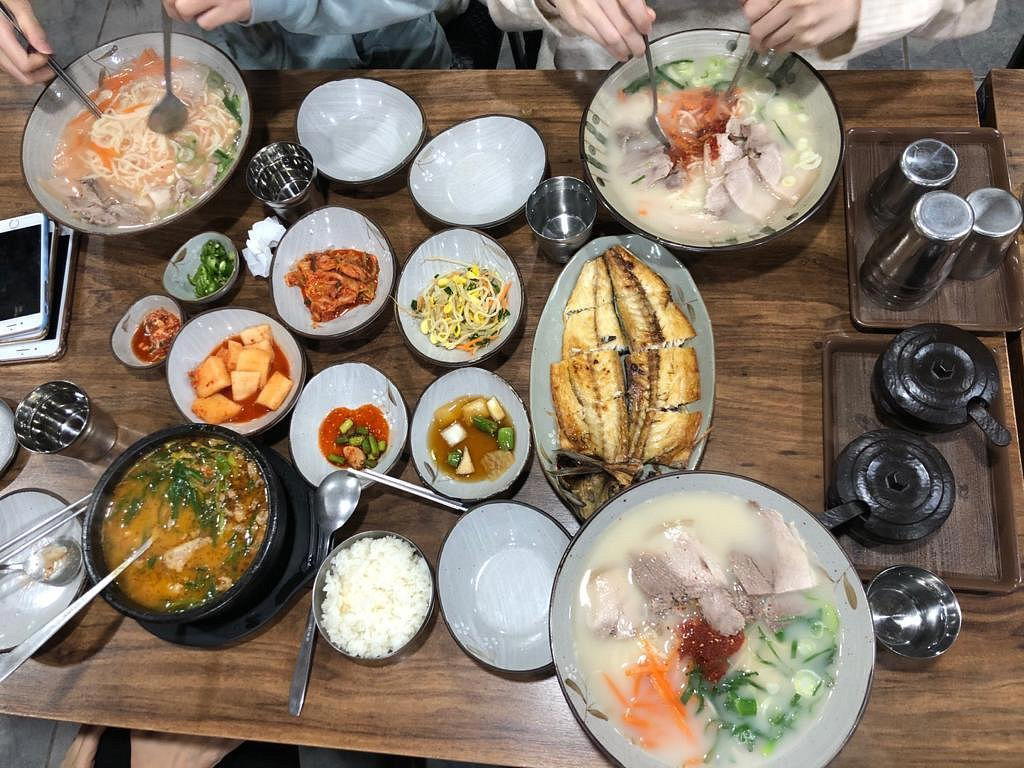
Jejugot Seogwipo Haemul Ramyeon sits in Seogwipo's everyday dining circuit, where seafood-forward ramyeon is a category staple rather than a novelty. The address on Chilsimni-ro 214beon-gil places it in the southern edge of Jeju Island, where proximity to the coast shapes what ends up in the broth. For visitors eating their way through the island, this is where local habit and seafood abundance intersect.
Pearl is the En Primeur Club membership app — saves, bookings, and concierge access live there. Same editors, same standards.
- Address
- 36 Chilsimni-ro 214beon-gil, í¹ë³ìì¹ë, Seogwipo-si, Jeju-do, South Korea
- Phone
- +821054883780
- Website
- catchtable.net
- Directions
- Get directions
 Saves & bookings on Pearl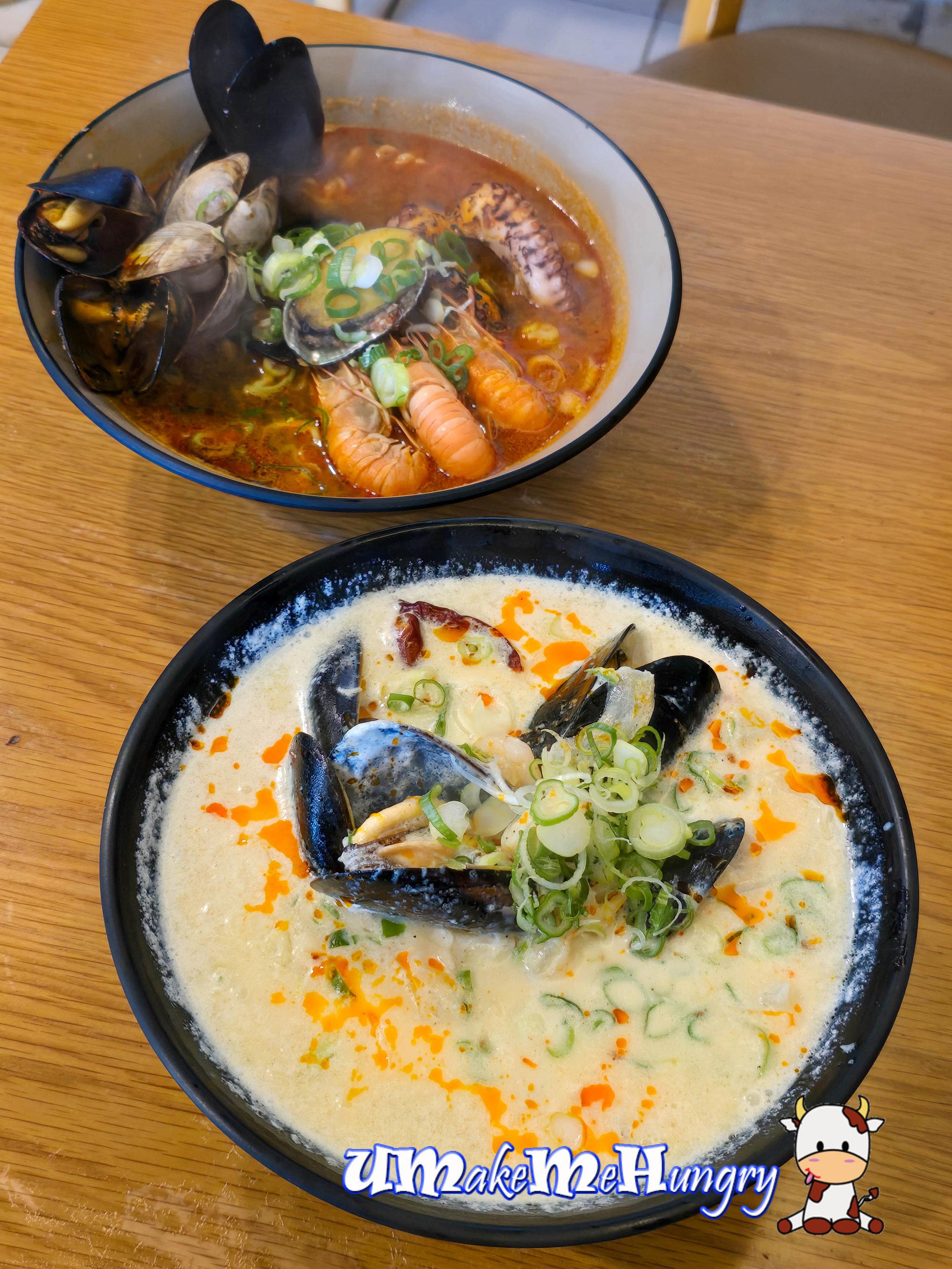
Seogwipo's Seafood Ramyeon Tradition
Ramyeon in South Korea occupies a spectrum that runs from convenience-store instant noodles to deeply constructed broth-based bowls that draw on decades of regional technique. On Jeju Island, that spectrum bends sharply toward the sea. The island's fishing culture, anchored by the haenyeo diving tradition and a coastline that produces abundant shellfish, abalone, and sea cucumber, has pushed local noodle houses toward broth built on marine stock rather than the pork-heavy bases common on the mainland. Seogwipo, the island's second city and the southern gateway to the coast, is where this style concentrates most visibly in everyday dining. Jejugot Seogwipo Haemul Ramyeon, addressed at 36 Chilsimni-ro 214beon-gil in the Cheongcheon district, sits inside that local tradition rather than above it.
What the Menu Architecture Reveals
Haemul ramyeon, seafood ramyeon, is not a hybrid or a fusion gesture in the Jeju context. It is the default register. When a restaurant names itself after the dish, as Jejugot does, the menu is almost certainly structured around variations on that single category: different seafood loads, different heat calibrations, different broth concentrations. This is a different logic from the multi-concept Korean restaurant, where the menu performs range. Here, depth replaces breadth. The kitchen's credential is its broth, not its variety, and the diner's decision is typically how spicy, how rich, and how heavily the bowl is loaded with shellfish or other coastal catch.
That kind of focused menu structure is common across Jeju's mid-tier dining circuit, where specialists rather than generalists dominate the spots locals return to repeatedly. Compare this to the format at places like Black Pork BBQ or Gudumi Pork BBQ in the same city, where the menu is similarly disciplined around a single protein category, in those cases, Jeju's celebrated heukdwaeji (black pork). Jejugot occupies the seafood noodle slot in that local taxonomy, which tells you something about how Seogwipo's dining circuit is organized: by specialization, not by scale or ambition signals.
Broth, Seafood, and the Logic of Place
Jeju's fishing villages have historically operated independently from mainland Korean supply chains. What comes out of the water around the island's southern coast, sea mustard, turban shells, surf clams, the occasional fresh squid, tends to move quickly into local kitchens rather than north to Seoul's wholesale markets. That supply proximity shapes the economics and the flavour profile of restaurants like this one. Broth built on same-day shellfish stock behaves differently from stock built on dried ingredients: it is lighter, more mineral, less deeply layered but more immediate. This is the cooking logic behind Jeju's leading haemul ramyeon, not complexity for its own sake, but freshness used as a flavour argument.
The city's position on the southern coast, near Cheonjiyeon Falls and Seogwipo Maeil Olle Market, means it draws a more settled, repeat-visitor crowd than the busier northern resort corridor around Jeju City. That affects what local restaurants build toward: reliability and consistency over novelty.
Where This Sits in Seogwipo's Eating Scene
Seogwipo's restaurant circuit splits broadly between tourist-facing establishments along the main waterfront and neighbourhood-oriented spots on residential side streets. Chilsimni-ro 214beon-gil leans toward the latter. This is not a strip designed for first-time visitors looking for the obvious, and that positioning is actually informative: it suggests a place that survives on repeat custom from local residents and returning visitors rather than foot-traffic conversion. In Korean dining culture, that is often a more reliable quality signal than location on a tourist drag.
The Jeju dining scene, taken in aggregate, has attracted serious attention from the Korean food press and from travellers benchmarking against Seoul's restaurant output. Seoul's fine-dining tier, anchored by places like Mingles in Seoul, operates on an entirely different register, as does the kind of technically precise seafood work seen at Mori in Busan. Jejugot is not in that conversation. It operates in a more immediate, less formal register that Korean diners recognize as jeongsik-adjacent comfort eating: direct, ingredient-honest, and priced for regular return visits rather than occasion dining.
Elsewhere on the island, the Maeil Olle Market strip supports similar casual seafood-forward formats. Jeju Korea black pork BBQ Nammaene Seogwipo Maeil Olle Market represents the pork-centric parallel in that market ecosystem. Jeju Island Grill works a broader grill-oriented format in the same city. For contrast in a completely different register, Pasta Studio Jeju signals the newer wave of non-Korean concepts finding a foothold in Seogwipo's evolving dining scene.
Planning a Visit
Seogwipo is most accessible from Jeju City by car along the island's southern expressway, a drive that takes roughly 40 minutes depending on traffic near the resort zones. The Chilsimni-ro 214beon-gil address is in a residential quarter, so arriving by car or taxi is the practical option, the area is not a natural walking destination from central Seogwipo. The venue is walk-in friendly. Jejugot is open daily from 10:00 AM to 5:30 PM.
For visitors building a wider Seogwipo itinerary, cross-referencing with spots like Hinode (히노데) in 서귀포시 or Badang Lounge in Jeju can add range across meal occasions.
Accolades, Compared
Comparable venues nearby, for context on price, style, and recognition.
| Venue | Cuisine | Price | Notes |
|---|---|---|---|
| Jejugot Seogwipo Haemul RamyeonThis venue — the venue you are viewing | Jeju Seafood Ramyeon | $$ | Not listed |
| Black Pork BBQ | Jeju Black Pork BBQ | $$ | Seogwipo-si |
| 삼보식당 | 제주 해산물 전문 | $$ | 서귀동 |
| Jeju Island Grill | Korean BBQ Grill | $$ | Taepyeong-ro |
| 더 플라잉 호그 - The Flying Hog | Modern Korean Wood-Fired Grill | $$$ | Seogwipo-si |
| 국수바다 | 제주 고기국수 전문 | $ | 중문 |
At a Glance
- Rustic
- Casual Hangout
- Waterfront
- Local Sourcing
- Waterfront
Current opening hours
- Monday
- 10 AM–5:30 PM
- Tuesday
- 10 AM–5:30 PM
- Wednesday
- 10 AM–5:30 PM
- Thursday
- 10 AM–5:30 PM
- Friday
- 10 AM–5:30 PM
- Saturday
- 10 AM–5:30 PM
- Sunday
- 10 AM–5:30 PM
Hours can change for holidays and private events. Last verified .
Casual eatery overlooking Jeongbang Falls with a fumy atmosphere from cooking.