Jeju Korea black pork BBQ Nammaene Seogwipo Maeil Olle Market
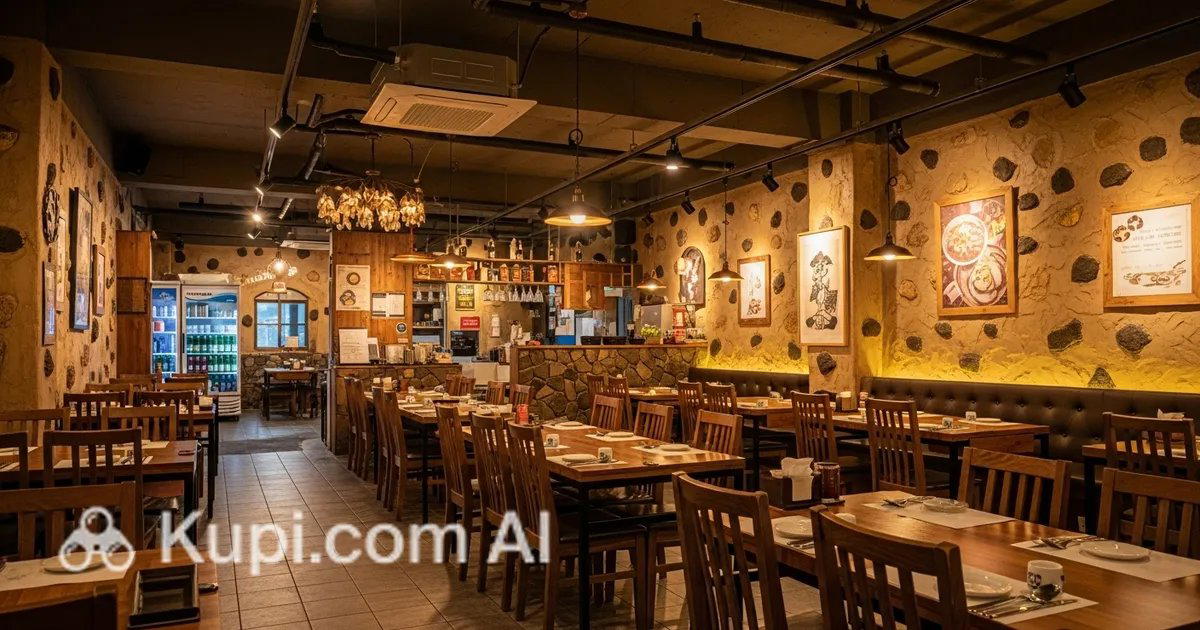
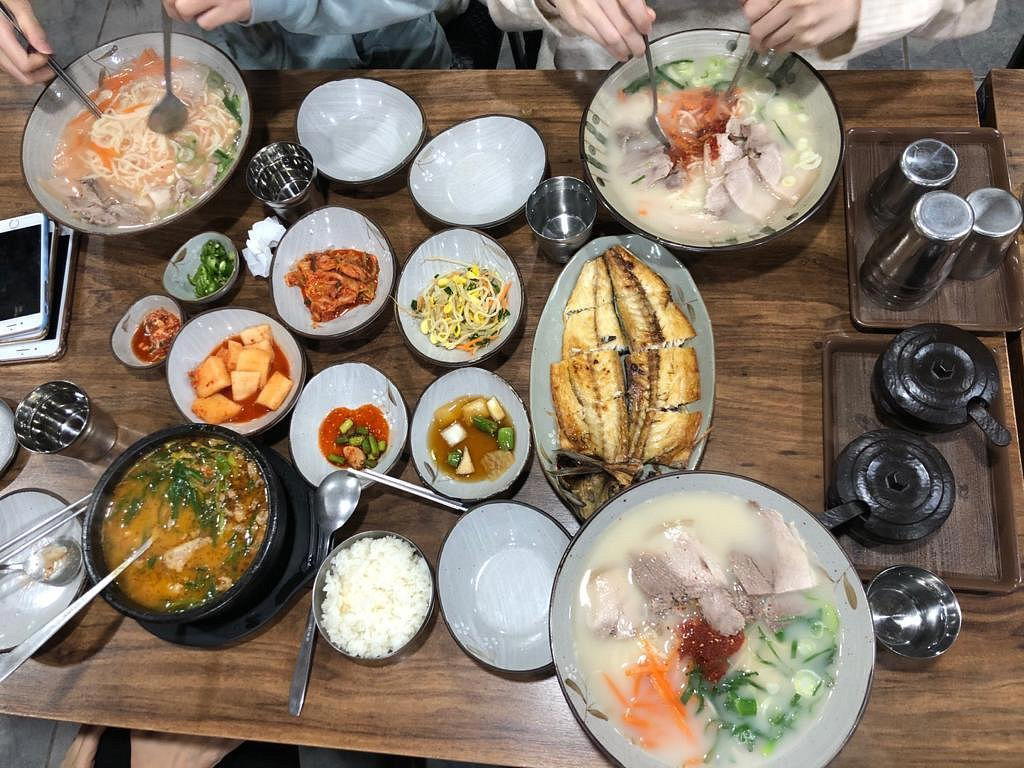
Jeju Korea black pork BBQ Nammaene Seogwipo Maeil Olle Market focuses on Jeju black pork BBQ with casual service, local sourcing, an open kitchen, and a street scene view for dinner.
Pearl is the En Primeur Club membership app — saves, bookings, and concierge access live there. Same editors, same standards.
- Address
- 24-1 Jungjeong-ro 61beon-gil, Seogwi-dong, í¹ë³ìì¹ë, Seogwipo-si, Jeju-do, South Korea
- Phone
- +82647627600
- Website
- app.catchtable.co.kr
- Directions
- Get directions
 Saves & bookings on Pearl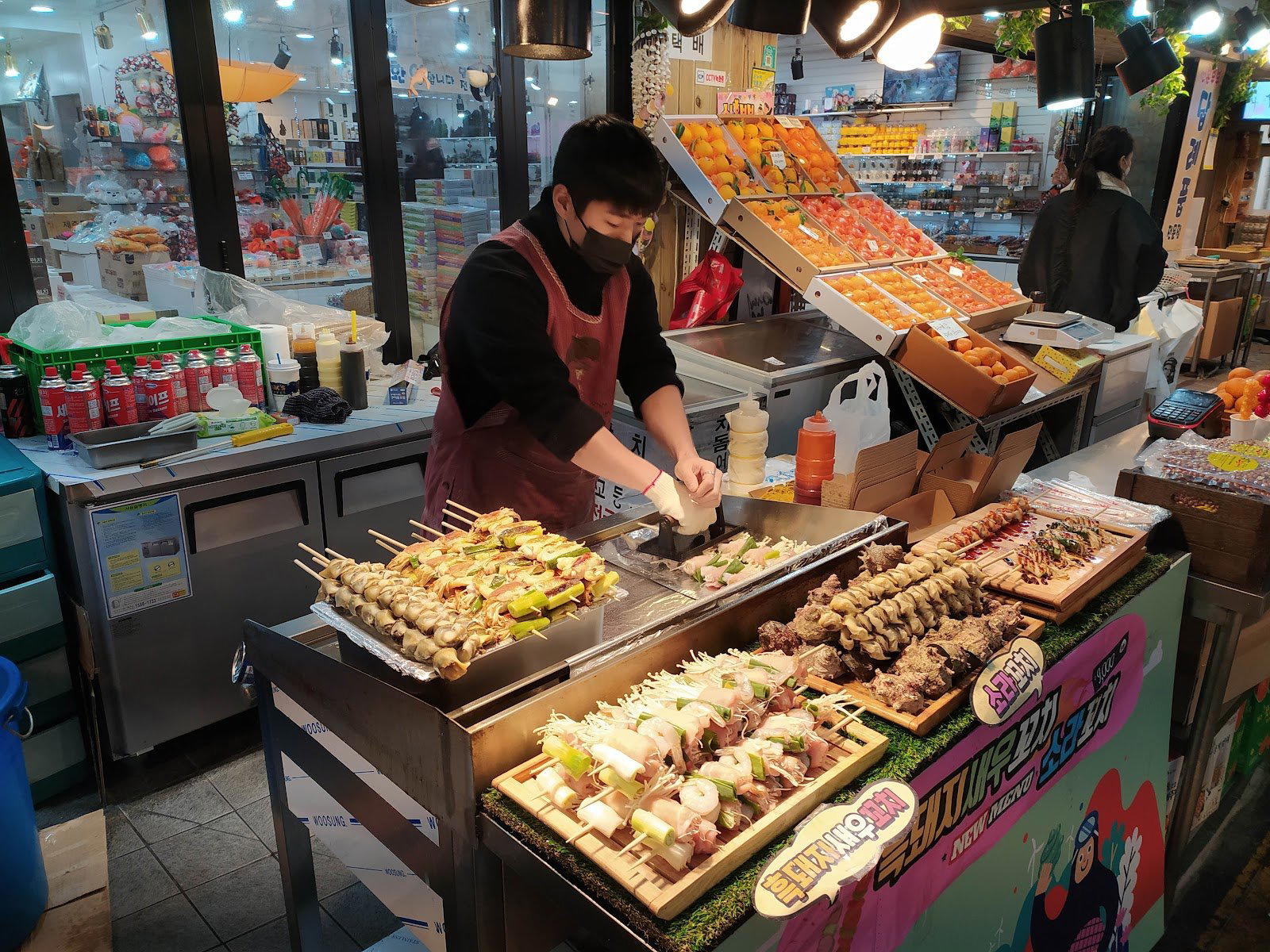
Black Pork at the Market: What Jeju's Most Celebrated Ingredient Looks Like at Street Level
The Maeil Olle Market in Seogwipo runs daily, which already sets it apart from the weekend-only formats common across South Korea's regional markets. Inside, the stalls compress decades of Jeju food culture into a single covered corridor: citrus vendors, haenyeo-caught seafood, and, most conspicuously, the charcoal smoke rising from black pork grills. Nammaene sits within this context, operating as part of the market's eat-in BBQ cluster rather than as a stand-alone restaurant. The format is informal by design: plastic stools, shared tables, and the kind of close-quarters grilling where the cook and the diner are often the same person.
That informality is not incidental. It reflects the way Jeju's black pork BBQ tradition actually functions at the local level, removed from the hotel dining rooms and tourist-facing restaurants that have repackaged the ingredient for international visitors. The Maeil Olle Market version is the workaday version, the one that residents eat on weekday afternoons before catching the bus.
Jeju Black Pork: The Ingredient Behind the Ritual
Jeju's black pork, from the native Jeju black pig, a breed distinct from the commercial white pig raised across the Korean mainland, has become the island's most exported culinary identity. The animal is smaller, darker-fleshed, and carries more intramuscular fat than standard breeds, producing pork with a different texture and a more pronounced flavour when grilled over open heat. That distinction sits at the centre of why the BBQ format suits this particular meat: the high-heat, short-cook method draws out fat without drying the cut, and the direct flame creates the char that defines the experience.
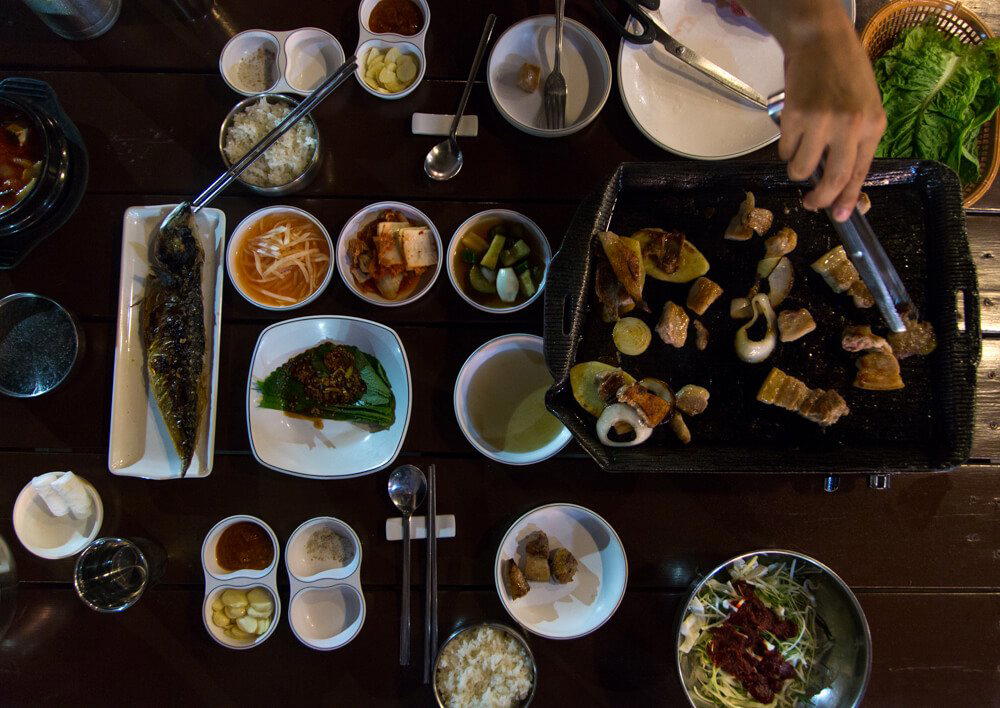
The cultural ritual around Korean BBQ, the shared grill at the table's centre, the communal scissors-and-tongs rotation, the obligatory ssamjang and perilla leaves, applies here as it does across Korea, but the specific ingredient gives Seogwipo's version a regional character that separates it from mainland pork BBQ. Venues like Gudumi Pork BBQ and Jeju Island Grill operate within the same tradition, each placing slightly different emphasis on cut selection and accompaniment. The market stall format at Nammaene compresses that tradition to its most direct expression: pork, grill, heat, repeat.
It is worth understanding that Jeju black pork carries protected regional status in South Korea, which has pushed its price above standard pork and encouraged a secondary market of imitation products on the mainland. Eating it at source, in Seogwipo, is a reliable way to confirm provenance. The Maeil Olle Market's density of competing stalls creates an informal accountability: vendors know their customers are comparing.
Where Nammaene Sits in the Seogwipo Eating Pattern
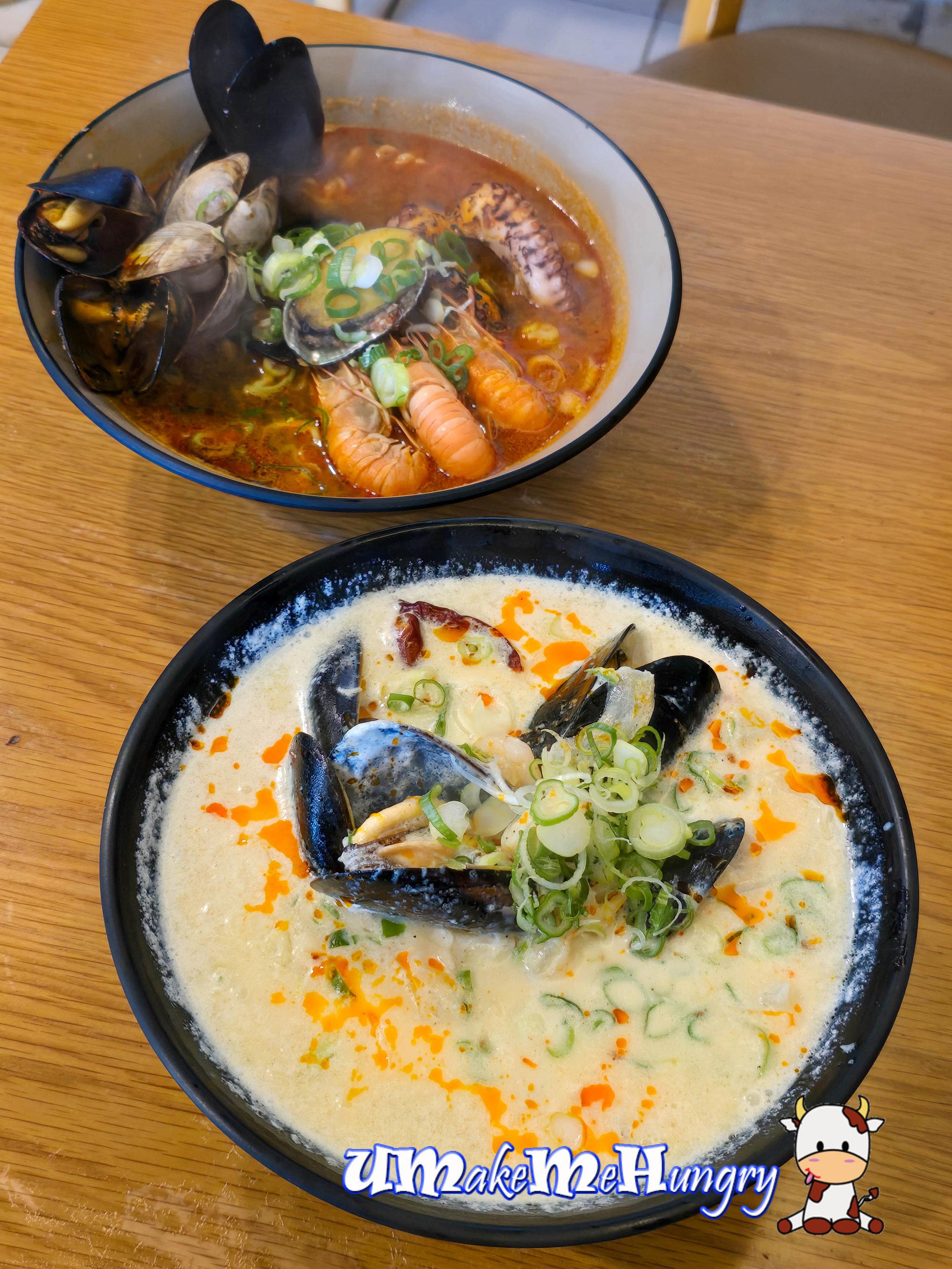
Seogwipo's food scene divides roughly between the harbour-facing seafood restaurants, the sit-down BBQ houses on the main streets, and the market-based eat-in stalls. Nammaene belongs to the third category, which also includes Jejugot Seogwipo Haemul Ramyeon nearby, a representative of Jeju's other dominant street-food tradition: seafood ramyeon built on local catch. The two formats sit within the same market ecosystem but address different meal occasions. The pork BBQ stalls draw lunch and early dinner; the ramyeon counters fill the later gaps.
For visitors building an itinerary around Seogwipo's food culture, the Maeil Olle Market functions as the concentrated single stop. The daily operation, unlike weekend-only alternatives, means access is predictable regardless of which day a visitor arrives. The address places the market in Seogwi-dong, within walking distance of Seogwipo's central area, though
The Maeil Olle Market operates at the opposite register: no reservation system, no printed menu, no wine list. It places the same ingredient tradition in its original social context.
The Format: What to Expect
Market BBQ stalls in South Korea operate on a transactional, efficient model. Cuts are typically priced by weight or by set portion, payment is usually cash-preferred (though card acceptance has expanded at Jeju market stalls broadly), and turnover is fast. The seating is communal rather than private. Korean BBQ at this level is not a slow-dining format: the grill cycle runs in minutes, the banchan arrives pre-set, and the expectation is that you eat, pay, and move on. For those accustomed to the paced omakase format of, say, Le Bernardin in New York City, the register shift is significant. That contrast is precisely the point.
The Maeil Olle Market also contains non-BBQ options for groups with mixed preferences, including the kind of tteok and street snacks that run throughout Korean markets. Pasta Studio Jeju nearby represents the international-leaning alternative for visitors who want variety alongside the traditional formats. Within Jeju's broader restaurant circuit, Badang Lounge in Jeju addresses a different meal occasion entirely. For pork BBQ specifically, 88돼지 in Jeju City offers a comparison point in the island's northern hub.
Those interested in how Korean BBQ culture extends beyond Jeju can reference Gobojeong Galbi in Suwon and Doosoogobang in Suwon for the mainland galbi tradition, or Mori in Busan for how the port city's food culture compares. Regional variation in Korean BBQ is substantial, and eating across multiple cities gives a clearer sense of what is specifically Jeju rather than broadly Korean.
Planning a Visit
The Maeil Olle Market operates daily, which is the single most useful logistical fact for visitors planning around it. Walk-in is the default mode of access. Peak hours for market BBQ across South Korean regional markets typically run from late morning through mid-afternoon and again in the early evening; arriving outside those windows usually means shorter waits and more relaxed seating. Payment preferences at Jeju market stalls have shifted toward accepting card, but carrying cash remains a practical backup. Dress is casual.
Cost and Credentials
Comparable venues nearby, for context on price, style, and recognition.
| Venue | Cuisine | Price | Notes |
|---|---|---|---|
| Jeju Korea black pork BBQ Nammaene Seogwipo Maeil Olle MarketThis venue — the venue you are viewing | Seogwipo, Jeju Black Pork BBQ | $$ | Not listed |
| Gudumi Pork BBQ | Bomok-dong, Jeju White Pork BBQ | $$ | Not listed |
| Jejugot Seogwipo Haemul Ramyeon | Seogwipo-si, Jeju Seafood Ramyeon | $$ | Not listed |
| 삼보식당 | 서귀동, 제주 해산물 전문 | $$ | Not listed |
| Jeju Island Grill | Taepyeong-ro, Korean BBQ Grill | $$ | Not listed |
| 오는정김밥 | Not listed | $ | 동문동 (Dongmun-dong), Traditional Korean Kimbap |
At a Glance
- Lively
- Rustic
- Casual Hangout
- Group Dining
- Open Kitchen
- Local Sourcing
- Street Scene
Current opening hours
- Monday
- 11 AM–10 PM
- Tuesday
- 11 AM–10 PM
- Wednesday
- 11 AM–10 PM
- Thursday
- 11 AM–10 PM
- Friday
- 11 AM–10 PM
- Saturday
- 11 AM–10 PM
- Sunday
- 11 AM–10 PM
Hours can change for holidays and private events. Last verified .
Casual market-side eatery with a lively, traditional atmosphere focused on freshly grilled meats and Korean sides.