
Ginza Kazen belongs to Ginza’s polished Chinese dining tier, where seafood-led cooking, wine service, and small-room discretion matter as much as the label on the cuisine. Its Tabelog Chinese TOKYO 100 selections in 2023, 2024, and 2026 place it among the city’s more closely watched Chinese tables, with a format suited to repeat diners rather than casual drop-ins.
Pearl is the En Primeur Club membership app — saves, bookings, and concierge access live there. Same editors, same standards.
- Address
- Japan, 〒104-0061 Tokyo, Chuo City, Ginza, 6 Chome−3−11 2F
- Phone
- +81 50-3138-5851
- Website
- ginza-kazen.com
 Saves & bookings on Pearl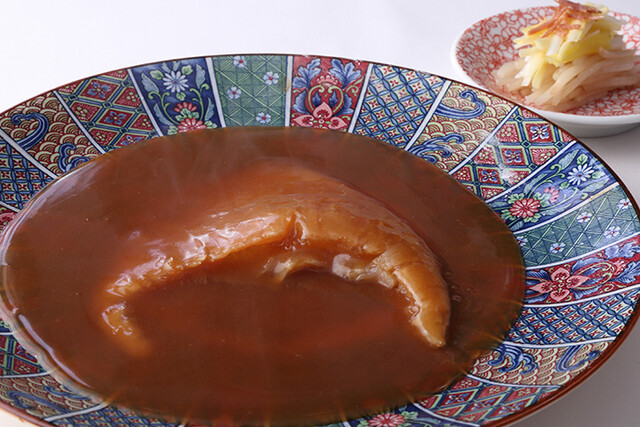
Ginza’s restaurant floors have their own grammar: elevator doors, compact corridors, sudden hush after street-level glare. Here, Chinese dining has moved beyond banquet rooms and neighborhood noodles. Its serious end now borrows from kappo, sushi-counter discipline, and French wine service, creating rooms where regulars return for calibration: precise seafood, pacing that lets a long meal breathe, and privacy that removes the table from Ginza’s evening traffic.
Ginza Kazen fits this modern Tokyo-Chinese pattern. The cuisine is listed as Chinese, dim sum and yum cha, and seafood, but the sharper point is how Ginza has absorbed Chinese cooking into its luxury dining code. Seafood is central; the restaurant is explicitly marked for fish, with shark fin and dried abalone part of its public identity. That separates it from casual Chinese counters and the quick curry-and-rice circuits nearby.
Seafood-led Chinese dining for Ginza regulars
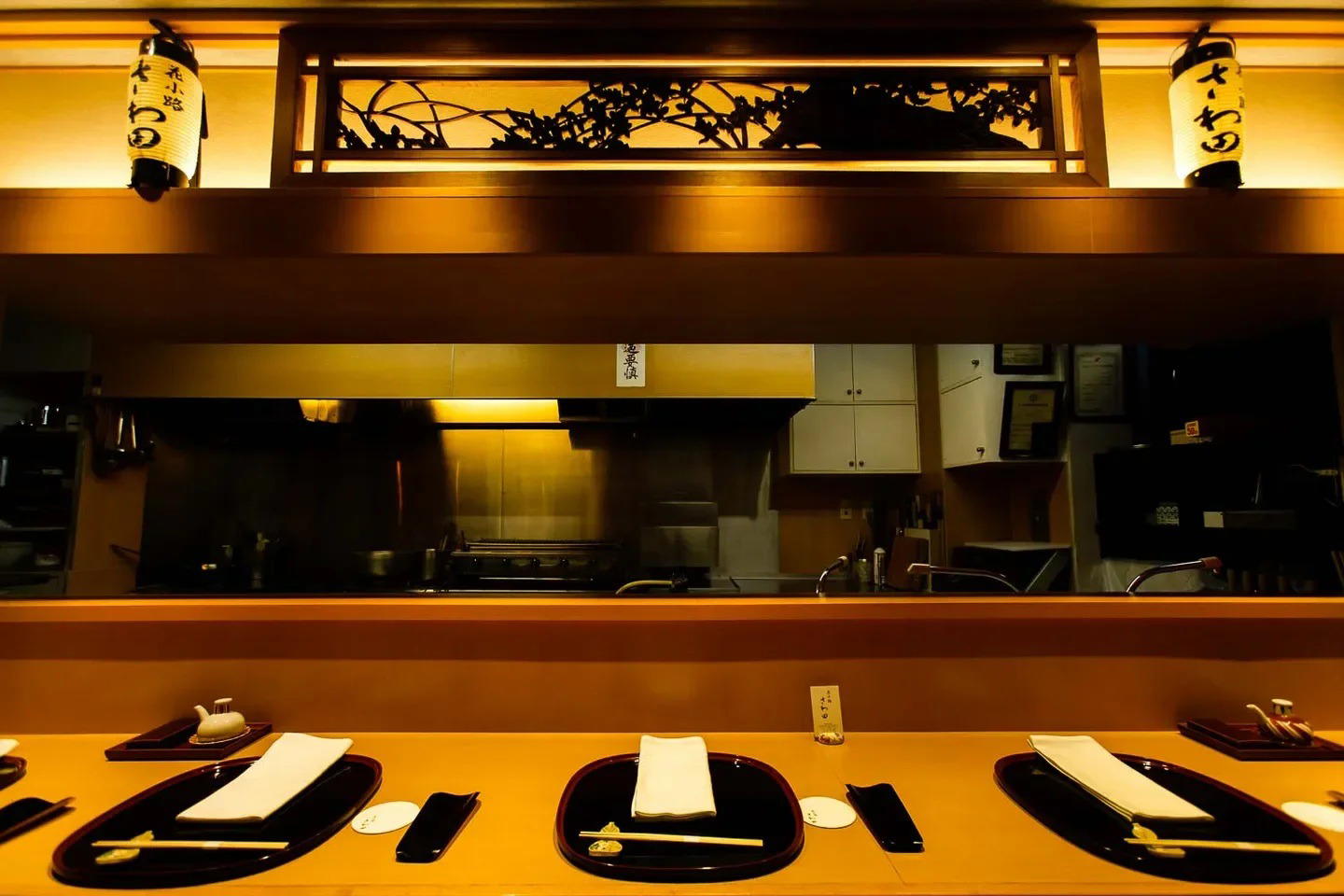
Ginza regulars tend to reward consistency over novelty. With so many high-ticket sushi, tempura, steak, and French rooms nearby, a Chinese restaurant needs a clear reason to enter the rotation. At Ginza Kazen, that reason is seafood-led Chinese cooking in a compact adult room, with private-room options and counter seating giving it more range than a standard banquet-style Chinese restaurant.
The Tabelog Chinese TOKYO 100 selections in 2023, 2024, and 2026 are the clearest public signal. Tabelog’s Hyakumeiten lists matter in Japan because they reward category-specific reputation rather than broad international visibility. Repeated appearance in the Chinese TOKYO 100 means judgment inside a crowded local field, not against generic luxury dining. In Ginza, where address can inflate recognition, repeat selection suggests enough category weight to compare with dedicated Chinese specialists elsewhere in Tokyo.
The room’s scale changes expectations. With 16 seats, it sits closer to Tokyo’s intimate counter culture than to the larger Chinese rooms linked to celebrations and corporate dinners. That frame suits regulars: less performance, more attention to sequence, drink pairing, and table rhythm. A sommelier is listed, wine is emphasized, and BYO is available, signaling guests who may bring bottles or expect the meal to be shaped around them.
Wine angle is not cosmetic. Tokyo’s upper-tier Chinese restaurants increasingly compete on cellar intelligence as well as technique, especially with dried seafood, shellfish, and richer sauces. The old assumption that Chinese dining belongs mainly to beer, Shaoxing wine, or tea has weakened in Ginza’s premium tier. Here, wine service defines the competitive set: not casual dim sum, not default hotel Cantonese, but a smaller room where Chinese seafood can sit beside serious bottles.
How it reads against Ginza's wider dining map
Ginza is useful because contrasts sit within blocks. A lower-spend institution such as DELHI Ginza ten represents the district’s everyday side, while Ginza Sushi Ko Honten belongs to the sushi lineage that shaped global perceptions of the neighborhood. Renge Equriosity Shinbashi, just beyond strict Ginza, points to a more experimental Chinese conversation. Ginza Kazen sits in the middle: more formal and seafood-focused than casual staples, less internationally coded than sushi temples, and more discreet than concept-driven contemporary Chinese rooms.
That position makes the restaurant better understood through returning clientele than first-timer theatre. The draw is not one publicized chef story or named signature plate, but the promise of a meal shaped around premium Chinese seafood, private conversation, and bottle-aware service. In Tokyo, that matters. The city excels at specialist formats; the question is whether a room gives diners a repeatable reason to commit an evening. This one points to diners who know the district and want Chinese cooking with Ginza polish rather than Ginza flash.
The private-room structure reinforces that reading. Options for small groups, plus the ability to use the counter privately for a group, suit business dinners, celebrations, and regular-client meals without the energy of a large dining room. Multilingual staff in English and Chinese widen usefulness for international guests, but the format does not read as tourist-first. The no-young-children policy during service and the request for each diner to order a drink sharpen the adult-dining frame.
For travelers mapping Tokyo meals, the choice is less about checking off a famous name than assigning the right night to the right category. Sushi and kappo often dominate first Tokyo itineraries; Chinese dining in Ginza rewards a second or third evening, when the palate wants depth without another omakase script. Readers building a broader plan can cross-reference Our full Tokyo restaurants guide, then set the meal beside different Tokyo entries such as . 鮪と炭火焼き うお炭 秋葉原店, 12/10 Shinjuku ten, 124. KAGURAZAKA (Yakitori), 2D Cafe, and 3 Chome no Curry Ya San. The contrast clarifies the point: Ginza Kazen is not filling a casual slot, but the polished Chinese-seafood slot in a city where every dining slot has serious competition.
Who should put it in the rotation
This is stronger for diners who understand Ginza’s premium cadence than for those chasing maximal novelty. The repeated Tabelog category selections, seafood emphasis, sommelier availability, and small capacity all point to a controlled room for Chinese cooking with adult pacing and a wine-aware table. It suits a couple or small group wanting privacy, service discipline, and seafood-led Chinese cooking without hotel-restaurant formality.
The practical read is simple: treat it as a planned dinner, not a spontaneous add-on between bars. Ginza Station and Yurakucho place the area within an easy central-Tokyo evening circuit, and the setting suits a night that begins or ends elsewhere in the district. For the rest of that itinerary, use Our full Tokyo bars guide, Our full Tokyo hotels guide, Our full Tokyo experiences guide, and Our full Tokyo wineries guide. Wider Japan planning can stretch the comparison through -Grilled beef Sukiyaki- KAMAKURA TANUKIAN 鎌倉 たぬき庵 in Kamakura,.cafe in Osaka,.know in Kumamoto, (Shoku) Vietnam in Kawasaki, [Curry Senmon Ten] Maruyama Kyoju. in Sapporo, and [ki:] in Kyoto. For transpacific context rather than local comparison, Jōdo Saké Bar in Los Angeles and Onigiri Time in Pasadena show how Japanese dining formats travel differently outside Japan.
How It Stacks Up
Comparable venues for cuisine and category context.
| Venue | Cuisine | Price | Awards | Notes |
|---|---|---|---|---|
| Ginza KazenThis venue — the venue you are viewing | New-style Cantonese fine dining | $$$$ | , | |
| Banraien | Traditional Chinese counter dining | $$$$ | , | Shinagawa |
| 赤坂 桃の木 | Modern Cantonese Chinese | $$$$ | , | Chiyoda |
| の弥七 | Japanese-Chinese Fusion Fine Dining | $$$$ | , | Shinjuku |
| Renge Equriosity Shinbashi | Modern Shanghai Chinese Fine Dining | $$$$ | , | Chūō |
| Kapo Choryumon | Modern Cantonese & Dim Sum in Ginza Six | $$$ | , | Chūō |









At a Glance
- Elegant
- Sophisticated
- Modern
- Intimate
- Business Dinner
- Special Occasion
- Date Night
- Group Dining
- Private Dining
- Standalone
- Design Destination
- Extensive Wine List
- Local Sourcing
- Sustainable Seafood
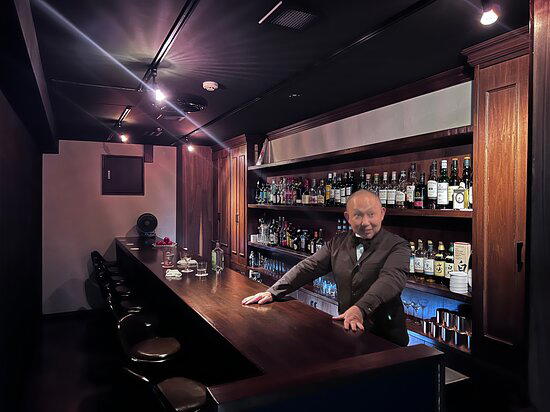
Refined, contemporary Chinese fine-dining room in Ginza with polished service, calm conversation-level noise, and a focus on an elegant multi-course experience built around premium Cantonese specialties.