Michelin Plate
Our verdict
A ryotei-trained owner-chef operates this second-floor Ginza room where traditional kaiseki techniques shape a menu built around seasonal restraint. The Michelin Plate-recognised kitchen is known for konnyaku soba as a closing course and iimushi rice preparations that shift with the season. At the ¥¥¥ price point, it sits below the neighbourhood's three-star bracket while drawing from the same culinary lineage.

Pearl is the En Primeur Club membership app, where members save venues, book tables and use the concierge.
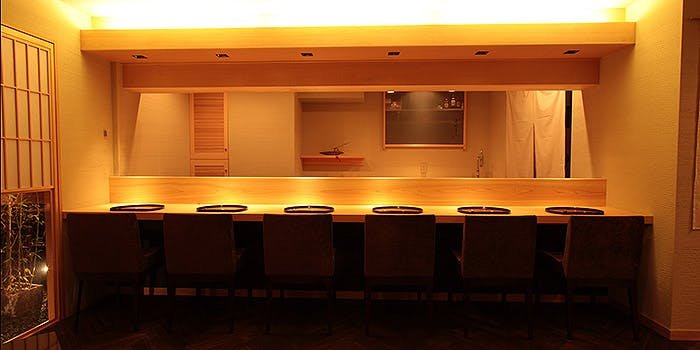
A Second Floor, a Staircase, and the Weight of Ryotei Training
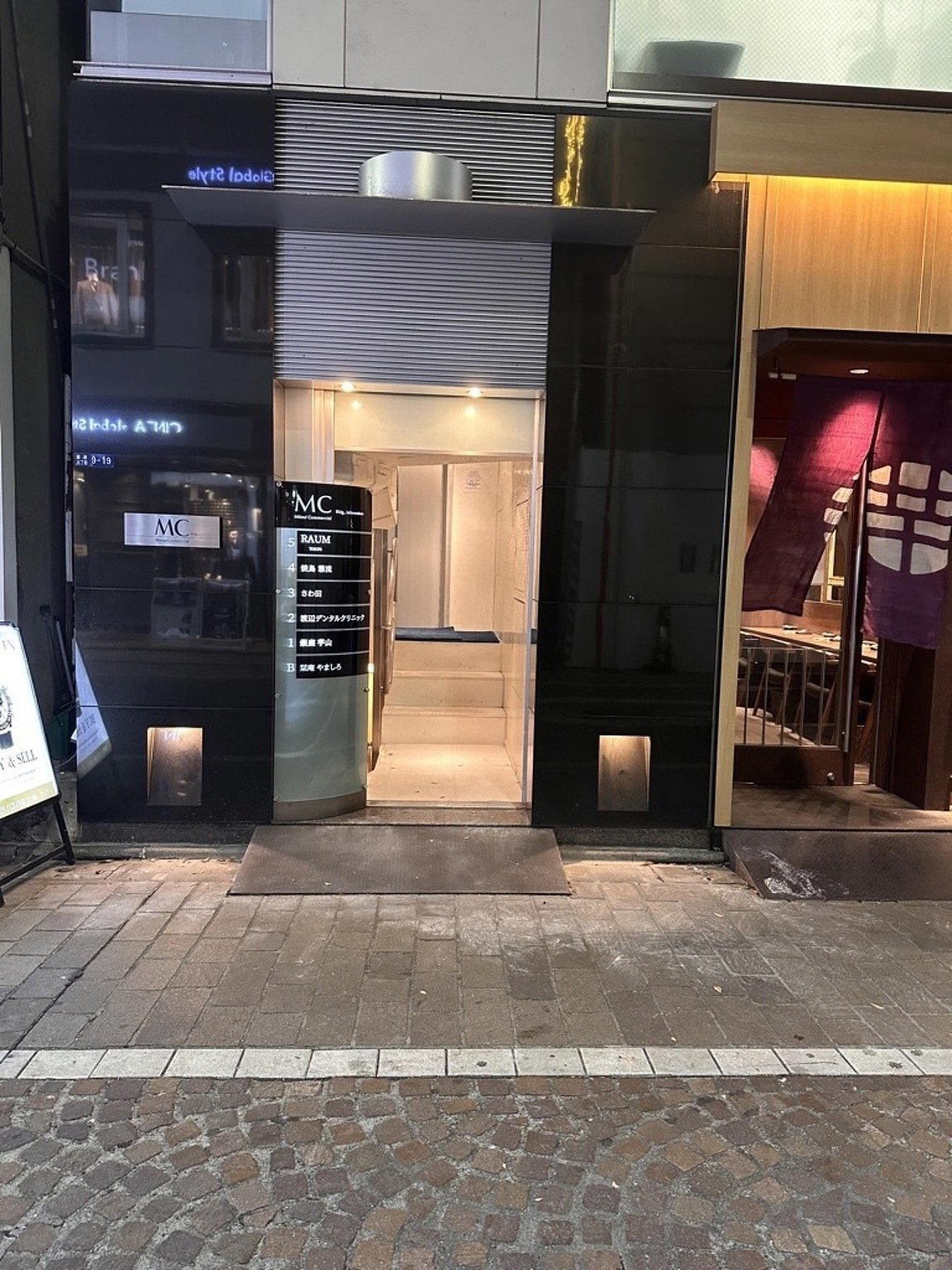
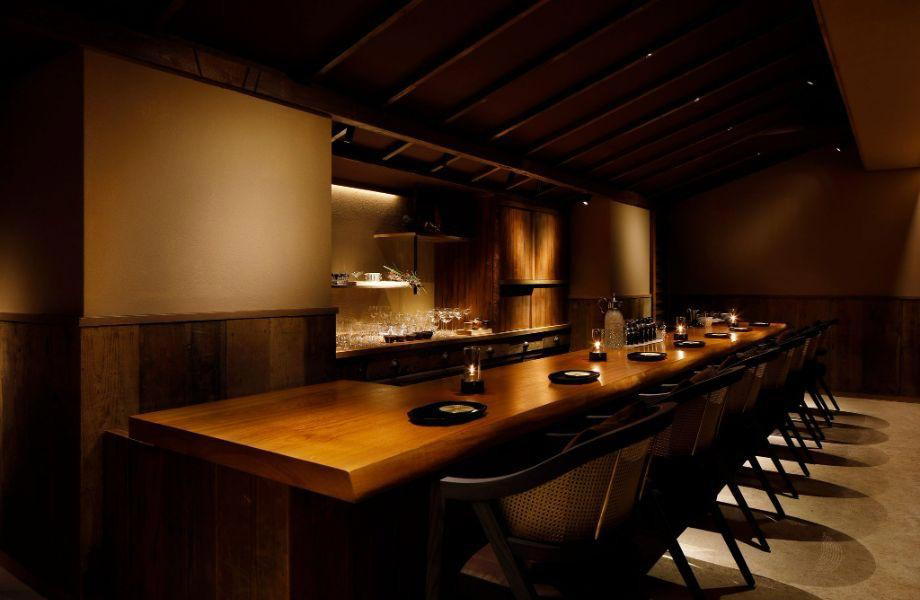
Ginza's dining floors above street level tell a specific story. The neighbourhood has long used upper-floor addresses as a signal of discretion rather than obscurity, serious rooms where the work happens without the theatre of a ground-level frontage. The second floor of the Ishii Kishuyaya Building on Chome 7-6-5 follows that pattern. There is no dramatic entrance, no sommelier waiting at the kerb. You climb the stairs, and the cooking announces itself through what's placed in front of you rather than anything architectural.
Ginza Adachi Naoto holds a Michelin Plate for 2024 and 2025, a recognition that sits in a specific tier of the guide's vocabulary: technically sound, worth a visit, operating with discipline. In a district where Harutaka prices at ¥¥¥¥ against three Michelin stars and RyuGin represents the upper limit of kaiseki ambition at the same bracket, Adachi Naoto occupies the ¥¥¥ position, not a compromise, but a different kind of argument about what traditional Japanese cooking should cost and who it should be for.
The Ryotei Lineage and What It Means at the Table
Japan's ryotei tradition is one of the most demanding apprenticeship structures in professional cooking anywhere. A ryotei is not simply a high-end restaurant; it is a closed, formal institution where technique is transmitted over years through repetition rather than instruction, where the preparation of dashi or the cutting of seasonal vegetables carries the same weight as the finished dish. Chefs who emerge from that system carry its logic with them: nothing on the table is arbitrary, and simplicity is a discipline, not a shortcut.
That lineage shapes everything about what arrives at Adachi Naoto. The appetisers are described as painstakingly prepared, a phrase that, in this context, points to the layering of technique invisible in the final presentation. The kitchen's approach to iimushi, a steamed preparation of mochi rice topped with fish, demonstrates how ryotei training handles seasonal produce: the form stays constant across the year, but the toppings, sea urchin, salmon roe, chestnut, shift with what the season makes available. The dish functions as an amuse-bouche, which places it at the opening of a meal designed to build incrementally, each course calibrated against the one before it.
This is the discipline that separates traditional kaiseki from its contemporary interpretations at places like Den or the French-influenced innovation of Crony. Those rooms work with the kaiseki structure as a starting point and depart from it deliberately. Adachi Naoto does not depart. The form is the point.
The Closing Course: Konnyaku Soba as a Statement
Across Japan, the question of how to close a multi-course meal is answered differently depending on the tradition. The conventional kaiseki close involves rice and pickles, a reset that signals completion. The choice to replace that with konnyaku soba at Adachi Naoto is an editorial decision as much as a culinary one.
Konnyaku, devil's-tongue root, produces a noodle with minimal caloric density and a clean, neutral palate. As a soba substitute, it reads lighter than buckwheat while retaining the form of a noodle course. The stated function is practical: it relieves the fullness that accumulates across a long tasting menu. But the choice also signals a kitchen thinking about the physiology of eating rather than simply the aesthetics of the plate. The meal ends with something that actively works against discomfort rather than adding to it. That's a position, and it's a considered one.
For context on what distinguishes Ginza's kaiseki rooms from those in other neighbourhoods, Kagurazaka Ishikawa and Azabu Kadowaki represent a different register of the same tradition, operating at higher price points and with deeper Michelin recognition. Ginza Fukuju and Myojaku offer alternative framings of Ginza's Japanese dining range. Jingumae Higuchi shifts the geography toward Harajuku while staying within a comparable tradition.
Placing Adachi Naoto in Tokyo's Wider Japanese Dining Context
Tokyo's kaiseki and washoku scene is not a single tier. At the upper end, rooms like RyuGin work with molecular techniques applied to Japanese ingredients, operating at ¥¥¥¥ and carrying three Michelin stars. Below that, the Michelin Plate tier, which also includes numerous omakase counters and specialist washoku rooms across the city, represents kitchens where the cooking is technically sound and the experience is shaped by a clear point of view rather than by spectacle or scale.
The ¥¥¥ price point at Adachi Naoto places it within reach of a wider range of serious diners than the three-star bracket, while the ryotei training behind the kitchen means the technical grounding is comparable. That combination, deep traditional discipline at a mid-tier price, is exactly what makes rooms like this worth attention in a city that can otherwise funnel visitors toward its most decorated addresses by default.
For those planning across Japan rather than just Tokyo, the same tradition of precise seasonal cooking appears in different forms at Gion Sasaki in Kyoto, Isshisoden Nakamura in Kyoto, Kashiwaya Osaka Senriyama in Osaka, and HAJIME in Osaka. Further afield, Goh in Fukuoka, akordu in Nara, 1000 in Yokohama, and 6 in Okinawa each represent distinct regional positions within Japan's broader fine dining conversation.
Planning Your Visit
Adachi Naoto is located on the second floor at 7 Chome-6-5, Ginza, Chuo City, Tokyo. The address is walkable from Ginza Station on the Ginza, Marunouchi, and Hibiya lines. The ¥¥¥ price range places it below the top tier of Ginza kaiseki but above casual washoku. Booking in advance is advisable for a room of this size and recognition level in one of Tokyo's most concentrated dining districts.
| Venue | Cuisine | Price | Michelin | Format |
|---|---|---|---|---|
| Ginza Adachi Naoto | Japanese / Kaiseki | ¥¥¥ | Plate (2025) | Traditional kaiseki, ryotei lineage |
| Harutaka | Sushi | ¥¥¥¥ | 3 Stars | Omakase counter |
| RyuGin | Kaiseki / Japanese | ¥¥¥¥ | 3 Stars | Contemporary kaiseki |
| Den | Innovative Japanese | ¥¥¥ | 2 Stars | Progressive washoku |
| Crony | Innovative French | ¥¥¥¥ | 2 Stars | French-Japanese fusion |
For a broader view of what Tokyo offers across dining, drinking, and lodging, see our full Tokyo restaurants guide, our full Tokyo hotels guide, our full Tokyo bars guide, our full Tokyo wineries guide, and our full Tokyo experiences guide.
Frequently asked questions
What awards or recognition does Ginza Adachi Naoto have?
Ginza Adachi Naoto has received recognition including: This restaurant values traditional techniques honed at a ryotei. The painstakingly prepared appetisers are a must-try. Seasonal iimushi, mochi rice topped with fish and steamed, is served as an amuse-bouche, paired with seasonal tastes such….
What's Ginza Adachi Naoto's location?
Ginza Adachi Naoto is located at Japan, 〒104-0061 Tokyo, Chuo City, Ginza, 7 Chome−6−5 石井紀州屋ビル 2F, Tokyo.
What's the best thing to order at Ginza Adachi Naoto?
The opening amuse-bouche is where the kitchen makes its clearest statement: seasonal iimushi, mochi rice topped with fish and steamed, arrives paired with sea urchin, salmon roe, or chestnut depending on the time of year. These appetisers, shaped by ryotei training, are explicitly cited in the restaurant's Michelin Plate recognition. The full course is the intended format here, not individual dishes.
What cuisine category does Ginza Adachi Naoto fall under?
Is Ginza Adachi Naoto expensive?
Pricing at Ginza Adachi Naoto is listed as ¥¥¥.
Do I need a reservation for Ginza Adachi Naoto?
At a second-floor Ginza address operating at this price tier (¥¥¥) with Michelin recognition, walk-ins are not a realistic option. The room will be small and seatings limited by the multi-course format. Reservations should be arranged in advance; direct contact details are not publicly listed, so booking through a concierge or specialist reservation service is the practical route.
What's the signature at Ginza Adachi Naoto?
The closing course of konnyaku soba, devil's-tongue noodles served in place of the conventional rice finish, is the detail that separates Adachi Naoto from standard kaiseki rooms. It is a deliberate choice rooted in the ryotei tradition: konnyaku is low in calories and historically used to ease digestion after a long, rich meal. That single substitution communicates the kitchen's priorities more precisely than any dish description could.
Comparable Spots, Quickly
A quick peer check to anchor this venue’s price and recognition.
| Venue | Cuisine | Price | Awards | Notes |
|---|---|---|---|---|
| Ginza Adachi NaotoThis venue (the venue you are viewing) | Traditional Kaiseki Omakase | $150–200 | Michelin Plate | Not listed |
| Harutaka | Edo-Style Omakase Sushi | $200–300 | 3 Michelin Stars · World's 50 Best #76 | Sushi |
| RyuGin | Modern Kaiseki | $500+ | 3 Michelin Stars · World's 50 Best #41 | Kaiseki, Japanese |
| L'Effervescence | Modern French with Japanese Influences | $200–300 | 3 Michelin Stars · World's 50 Best #69 | French |
| HOMMAGE | Modern French with Japanese Influences | $150–200 | 2 Michelin Stars · World's 50 Best #78 | Innovtive French, French |
| MAZ | Innovative Peruvian-Japanese Fusion | $150–200 | 2 Michelin Stars · World's 50 Best #28 | Innovative |
Recognition history
Dated appearances from independent guides and award organizations, with the underlying list record or original source where available.
Michelin Plate
Michelin
Full recognition history (3 entries)
Michelin Plate
Michelin
Michelin Plate
Michelin