French Burger serves homemade burgers at 28 Rue Coutellerie in Marseille, with street scene views and a quick-bite format suited to lunch or dinner.
Pearl is the En Primeur Club membership app — saves, bookings, and concierge access live there. Same editors, same standards.
- Address
- 28 Rue Coutellerie, 13002 Marseille, France
- Phone
- +33491520777
- Website
- french-burger.com
- Directions
- Get directions
 Saves & bookings on Pearl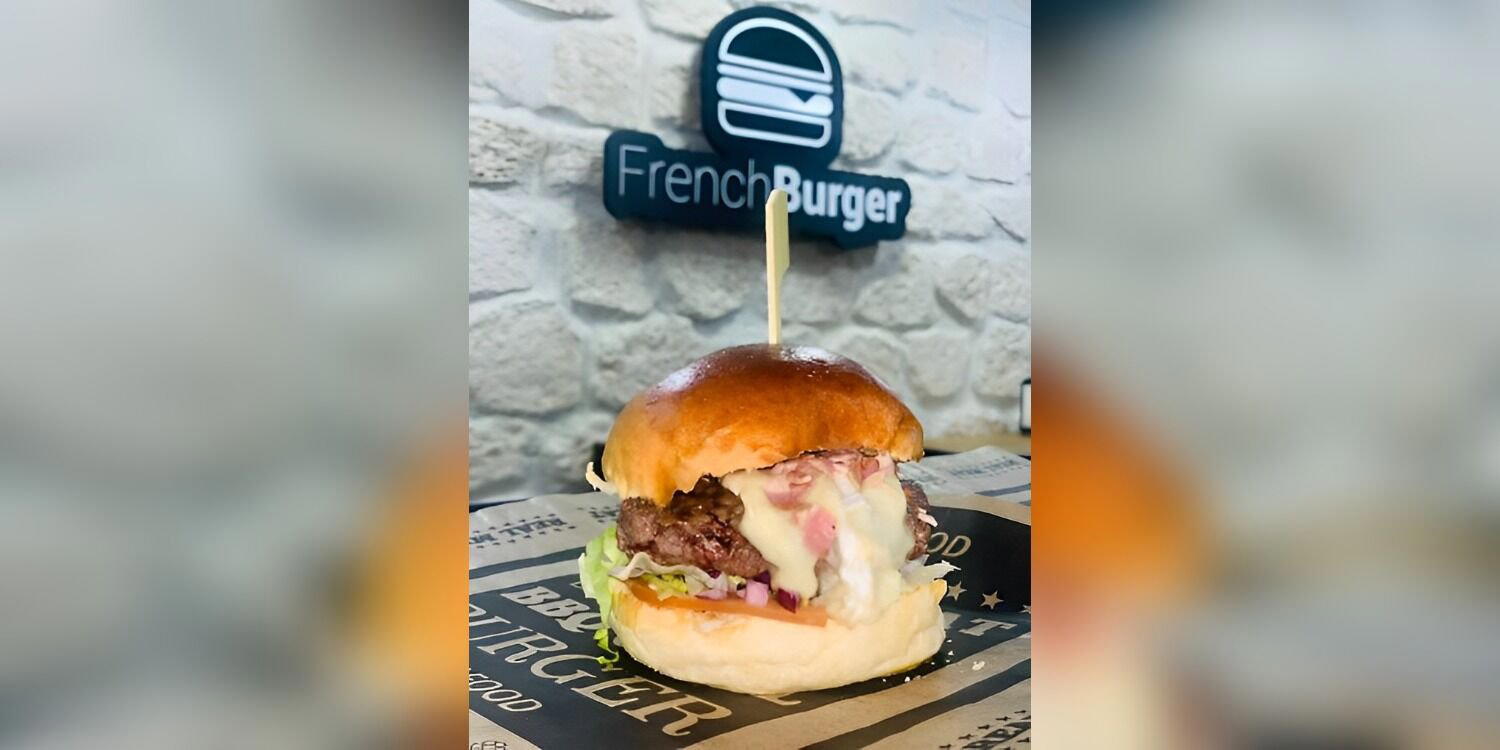
Where the French Burger Fits in Marseille's Eating Hierarchy
French Burger is a restaurant in Marseille serving homemade burgers, with a €15 per-person price point. At the leading end, AM par Alexandre Mazzia and Le Petit Nice represent the city's formal ambitions, with tasting menus priced at €€€€ and Michelin credentials to match. Below that tier sits a broader, more interesting question: how does a city that identifies deeply with bouillabaisse, grilled fish, and market produce absorb formats imported from elsewhere? The burger in France has spent the last fifteen years moving from American imitation to something with its own register, and cities like Marseille, with their proximity to quality ingredients and a cooking culture that takes informality seriously, have been part of that evolution. French Burger, at 28 Rue Coutellerie in the 13002 arrondissement, occupies this middle ground.
Rue Coutellerie and the Character of the 2nd Arrondissement
The address places the restaurant in the area north of the Vieux-Port, a stretch of the city that mixes everyday commerce with neighbourhood restaurants drawing more local than tourist traffic. The 2nd arrondissement lacks the grand-restaurant profile of addresses like Une Table, au Sud or the waterfront prominence of Le Petit Nice, which is precisely what makes it a more representative cross-section of where most Marseillais actually eat. The streets here are utilitarian rather than scenic, which tends to attract operators focused on the food rather than the real estate premium. In a city where neighbourhood loyalty runs deep, an address on Rue Coutellerie signals a specific kind of clientele: local, repeat, value-conscious without being price-driven.
Menu Architecture: What the Burger Format Reveals
The burger, as a menu structure, is one of the more demanding formats to execute with integrity. Unlike a tasting menu, where the kitchen controls sequencing and portion, or a bistro carte, where individual components can carry individual sections, the burger compresses everything into a single object. Bread, protein, sauce, and garnish must function as a coherent unit. In France, the format has attracted serious kitchen attention since the mid-2010s, partly because it allows chefs trained in classical technique to apply that precision to something accessible. The French approach to the burger has generally favoured better sourcing over novelty, with emphasis on bread quality, beef selection, and sauce construction rather than structural gimmicks.
The restaurant, as a name and concept, positions itself squarely within this tradition. The name itself is a statement of intent rather than geography: it signals the application of French culinary priorities to an American form. A kitchen operating under this rubric is likely working with brioche or a close variant, sourcing beef with some attention to fat content and grind, and treating sauce as a construction rather than a condiment. That framework distinguishes it from fast-casual chains and places it in the same informal-but-serious bracket as the better independent burger operations that have emerged across French cities in recent years.
Where French Burger Sits Against Marseille's Broader Dining Options
Marseille's mid-range dining is anchored in Provencal tradition: wood-fired pizza, fresh pasta, grilled fish, and the persistent gravity of bouillabaisse. Operations like Alivetu represent the Mediterranean strand of this, while venues like 1860 Le Palais anchor the more formal end of accessible dining. The restaurant offers something different: a format that is not regionally rooted but is executed with the kind of care that distinguishes it from the category's lower end. It serves a reader who wants something informal, filling, and done well, without committing to either the €€€€ tier or the bouillabaisse circuit.
That positioning is not distinctive to Marseille. Across France's major cities, the premium burger has carved out a durable niche between the Michelin register and fast food. In Paris, the format sits comfortably near addresses like Alléno Paris au Pavillon Ledoyen on the formal end and dozens of independent operators on the informal end. In the Alpine resort circuit, quality casual dining plays a role alongside destinations like Flocons de Sel in Megève. The point is not comparison so much as context: French culinary culture has, over two generations, absorbed the burger as a legitimate format while applying its own standards to it, and that process has produced a coherent category with its own set of expectations.
Globally, the same pattern holds. The burger has attracted serious kitchen attention in markets where culinary standards are high and informal dining is taken as seriously as formal. Venues like Lazy Bear in San Francisco demonstrate how the line between casual and serious can be dissolved when execution is the priority. The French version of this tendency tends to be quieter about it, less concerned with concept and more focused on product.
The Longer French Fine-Dining Tradition as Context
Understanding where informal French dining sits requires some awareness of the tradition behind it. The formal end of French cooking, represented by multi-generational houses like Auberge de l'Ill in Illhaeusern, Bras in Laguiole, and Les Prés d'Eugénie in Eugénie-les-Bains, established a set of standards around sourcing, technique, and presentation that have filtered downward over decades. What the better informal operators in France have absorbed is not the price point or the ceremony, but the underlying insistence on ingredient quality. Paul Bocuse's Auberge du Pont de Collonges, Troisgros, Georges Blanc, and La Table du Castellet all represent a strand of French cooking where region and product are primary. Even Mirazur in Menton and Le Bernardin in New York carry this emphasis on material quality as the foundation of the cooking. The restaurant, at its leading, inherits some fraction of that concern.
Planning a Visit
The restaurant is located at 28 Rue Coutellerie in Marseille's 2nd arrondissement, within walking distance of the Vieux-Port area. The address is in a commercial neighbourhood. The restaurant is walk-in friendly, with casual dress, and it sits at 28 Rue Coutellerie in Marseille's 2nd arrondissement.
A Minimal comparable set
Comparable venues nearby, for context on price, style, and recognition.
| Venue | Cuisine | Price | Notes |
|---|---|---|---|
| French BurgerThis venue — the venue you are viewing | Hotel De Ville, Homemade Burgers | $$ | Not listed |
| Restaurant Femina | Noailles, Algerian Couscous Specialist | $$ | Not listed |
| Chez Jeannot | Not listed | $$ | Endoume, Traditional French Pizza & Seafood |
| Chicoulon | Opera, French Bistronomic | $$ | Not listed |
| La Boîte à Sardine | Chapitre, Mediterranean Seafood Bistro | $$ | Not listed |
| Otto | Not listed | $$ | Saint Giniez, Modern Italian-Mediterranean |
Continue exploring
More in Marseille
Restaurants in Marseille
Browse all →
Bars in Marseille
Browse all →
Hotels in Marseille
Browse all →
At a Glance
- Trendy
- Lively
- Casual Hangout
- Late Night
- Street Scene
Current opening hours
- Monday
- 11 AM–11:30 PM
- Tuesday
- 11 AM–11:30 PM
- Wednesday
- 11 AM–11:30 PM
- Thursday
- 11 AM–11:30 PM
- Friday
- 2–11:30 PM
- Saturday
- 11 AM–11:30 PM
- Sunday
- 11 AM–11:30 PM
Hours can change for holidays and private events. Last verified .
Casual and energetic spot popular for its tasty burgers and take-away, right next to the docks.