Flemming´s sits on Mehringdamm in Kreuzberg, a district whose dining scene has shifted decisively toward ingredient-led cooking over the past decade. The address places it within walking distance of some of Berlin's more serious neighbourhood restaurants, making it a practical reference point for visitors building a multi-stop itinerary across the city's southern dining corridor.
Pearl is the En Primeur Club membership app — saves, bookings, and concierge access live there. Same editors, same standards.
- Address
- Mehringdamm 65, 10961 Berlin, Germany
- Phone
- +4917660357244
- Website
- flemmings-berlin.de
- Directions
- Get directions
 Saves & bookings on Pearl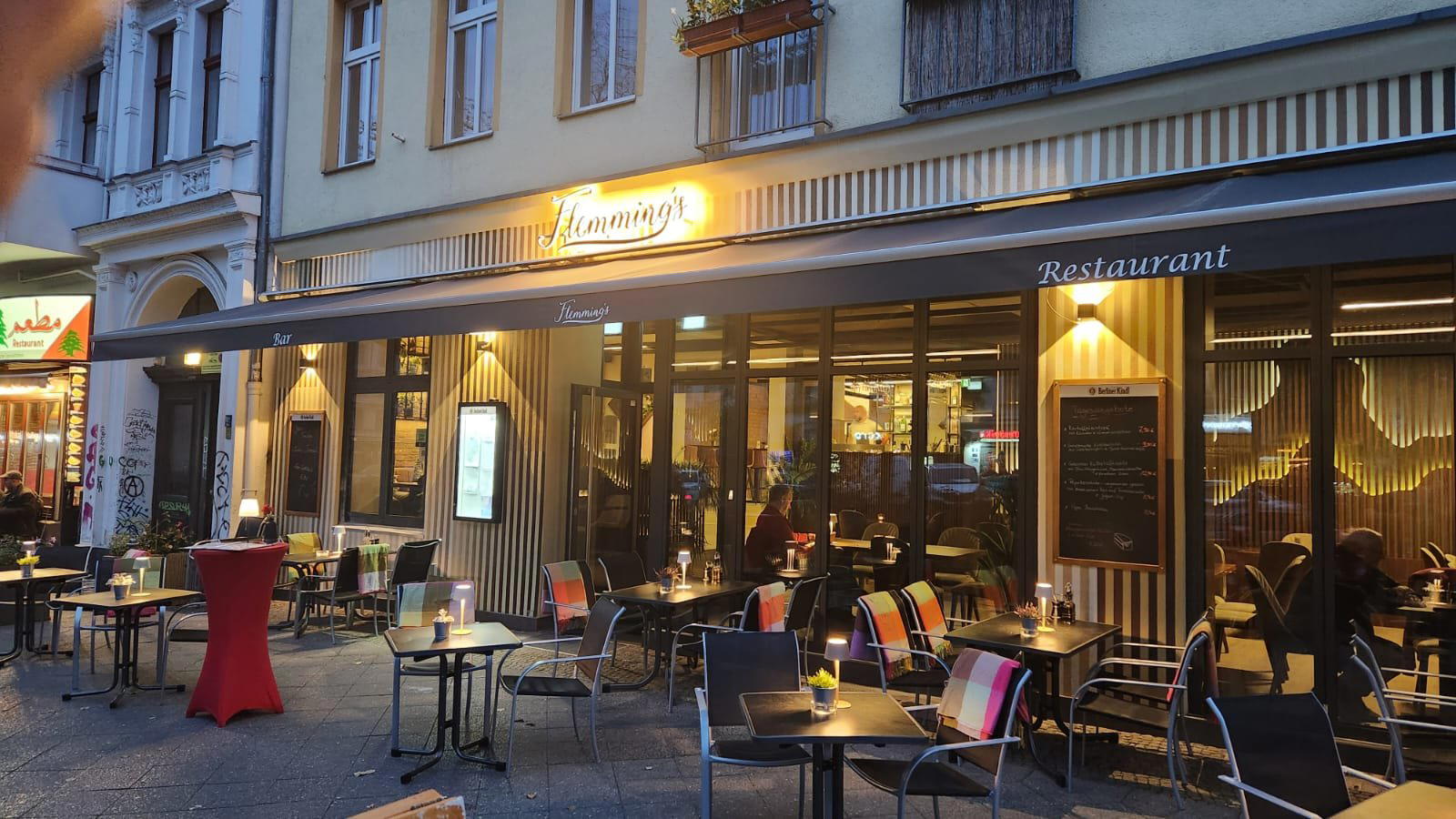
Kreuzberg's Mehringdamm and the Ingredient-Led Shift in Berlin Dining
Berlin's restaurant scene has reorganised itself around a quiet but persistent argument: that sourcing discipline matters more than kitchen theatrics. Flemming´s is a restaurant in Berlin serving German steakhouse cooking with Mediterranean influences, with a casual dress code and reservations recommended. The city's most closely watched openings over the past several years have been defined less by bold concept statements and more by an almost agricultural seriousness about what arrives at the back door each morning. Kreuzberg sits at the middle of this shift, a district that once ran on cheap eats and late hours and has gradually accumulated a tier of restaurants where the produce chain is treated as editorial content in its own right. Mehringdamm, the long arterial road cutting through the neighbourhood's western edge, captures that transition in concentrated form. Flemming´s occupies a position on this stretch, at number 65, that puts it squarely inside one of Berlin's more actively evolving dining corridors.
Where the Food Comes From, and Why Berlin Cares
The ingredient-sourcing argument in German fine dining has moved well beyond the farm-to-table shorthand that exhausted itself a decade ago in other markets. What distinguishes the more serious Berlin addresses now is specificity: named producers, documented supply relationships, seasonal menus that shift on the logic of availability rather than the calendar alone. Venues like Nobelhart & Schmutzig built an entire identity around regional sourcing so strict it became the menu's architecture, not just its backstory. Rutz, working in a different register, has developed wine and food sourcing programs that treat northern German producers as a serious competitive comparable set to better-known European appellations. That broader context matters for understanding what Flemming´s on Mehringdamm is operating alongside, and what a Kreuzberg address now signals to a Berlin diner who has been paying attention.
Restaurants like Schanz in Piesport and Waldhotel Sonnora in Dreis have long anchored their menus in regional supply chains, treating the Moselle and Eifel landscapes as larders with distinct seasonal rhythms. Schwarzwaldstube in Baiersbronn does the same with Black Forest producers. These are restaurants where the sourcing story is not incidental to the menu but generative of it. Berlin, which lacks the direct agricultural hinterland of those regional addresses, compensates through market relationships and the density of specialist suppliers that a capital city attracts. The restaurant, sitting inside that Berlin supply ecosystem, draws on the same network of Brandenburg farmers, northern sea fisheries, and urban specialist producers that defines the city's ingredient-led tier.
The Mehringdamm Address in Context
Kreuzberg has a longer history as a serious dining district than its reputation as a nightlife neighbourhood sometimes suggests. The area around Mehringdamm contains a concentration of independent restaurants that operate at a level of ambition well above the surrounding casual offer. The address at number 65 places the restaurant within a walkable cluster that makes it a practical stop on any itinerary covering Berlin's southern dining corridor. Visitors working through the city's €€€€-tier restaurants will find Kreuzberg increasingly relevant alongside the Mitte and Prenzlauer Berg addresses that traditionally anchored that bracket.
For comparison, FACIL, operating from its Potsdamer Platz hotel setting, and CODA Dessert Dining, which has built one of the more discussed format experiments in the city, both sit in price and ambition brackets that define what the upper register of Berlin restaurant-going currently looks like. Restaurant Tim Raue operates from a Kreuzberg address too, which signals that the neighbourhood has sufficient dining gravity to support destination-level restaurants, not just neighbourhood staples. The restaurant on Mehringdamm occupies this same postcode, which carries weight with Berlin diners who track the city's geographic restaurant distribution.
Berlin in the German Fine Dining Circuit
Berlin's position in Germany's broader fine dining map has always been complicated by the country's decentralised restaurant culture. The highest-concentration Michelin addresses in Germany have traditionally clustered outside the capital: Aqua in Wolfsburg, Vendôme in Bergisch Gladbach, Victor's Fine Dining in Perl, ES:SENZ in Grassau, and JAN in Munich all draw serious diners out of the capital and into regional Germany. Restaurant Haerlin in Hamburg and Bagatelle in Trier serve as reminders that Germany's restaurant ambition is distributed across the country rather than concentrated in Berlin the way Paris anchors France. Berlin has responded to that geographic spread by developing a distinct identity: more experimental, more format-diverse, and increasingly focused on the sourcing credibility that the regional German addresses have always traded on. International comparisons are also relevant: the sourcing discipline visible in Berlin's upper tier parallels what Le Bernardin in New York applies to seafood procurement, or what Lazy Bear in San Francisco applies to its California producer relationships. Sourcing seriousness, at this level, is a city-agnostic signal.
Planning a Visit
Mehringdamm is well served by the U-Bahn, with Mehringdamm station on the U6 and U7 lines placing the address within a short walk of central Berlin connections. The Kreuzberg corridor is most active for dinner from Thursday through Saturday, when the neighbourhood's restaurant concentration draws a mixed crowd of locals and visitors.
| Venue | Neighbourhood | Price Tier | Format | Booking Notes |
|---|---|---|---|---|
| The restaurant | Kreuzberg (Mehringdamm) | Not confirmed | Not confirmed | See below |
| Nobelhart & Schmutzig | Mitte/Kreuzberg border | €€€€ | Counter, set menu | Advance booking advised |
| Rutz | Mitte | €€€€ | Tasting menu | Advance booking advised |
| CODA Dessert Dining | Neukölln | €€€€ | Dessert-led tasting | Advance booking required |
| FACIL | Tiergarten | €€€€ | Tasting menu | Advance booking advised |
For a broader view of where the restaurant fits within Berlin's full restaurant offer,
Nearby-ish Comparables
Comparable venues nearby, for context on price, style, and recognition.
| Venue | Cuisine | Price | Notes |
|---|---|---|---|
| Flemming´sThis venue — the venue you are viewing | German Steakhouse with Mediterranean Influences | $$ | Not listed |
| Lindenbräu am Potsdamer Platz | Bavarian & Berlin Brewery Classics | $$ | Tiergarten |
| Wiener Conditorei Caffeehaus | Viennese Bakery Café | $$ | Grunewald |
| Ratskeller Kopenick | Traditional German | $$ | Köpenick |
| Lokal | Modern German | $$ | Mitte |
| BRLO Charlottenburg | Modern Brewery Gastropub | $$ | Charlottenburg |
Continue exploring
More in Berlin
Restaurants in Berlin
Browse all →
Bars in Berlin
Browse all →
Hotels in Berlin
Browse all →

At a Glance
- Lively
- Cozy
- Brunch
- Casual Hangout
- Local Sourcing
Current opening hours
- Monday
- Closed
- Tuesday
- 9 AM–10 PM
- Wednesday
- 9 AM–10 PM
- Thursday
- 9 AM–10 PM
- Friday
- 9 AM–12 AM
- Saturday
- 9 AM–12 AM
- Sunday
- 9 AM–10 PM
Hours can change for holidays and private events. Last verified .
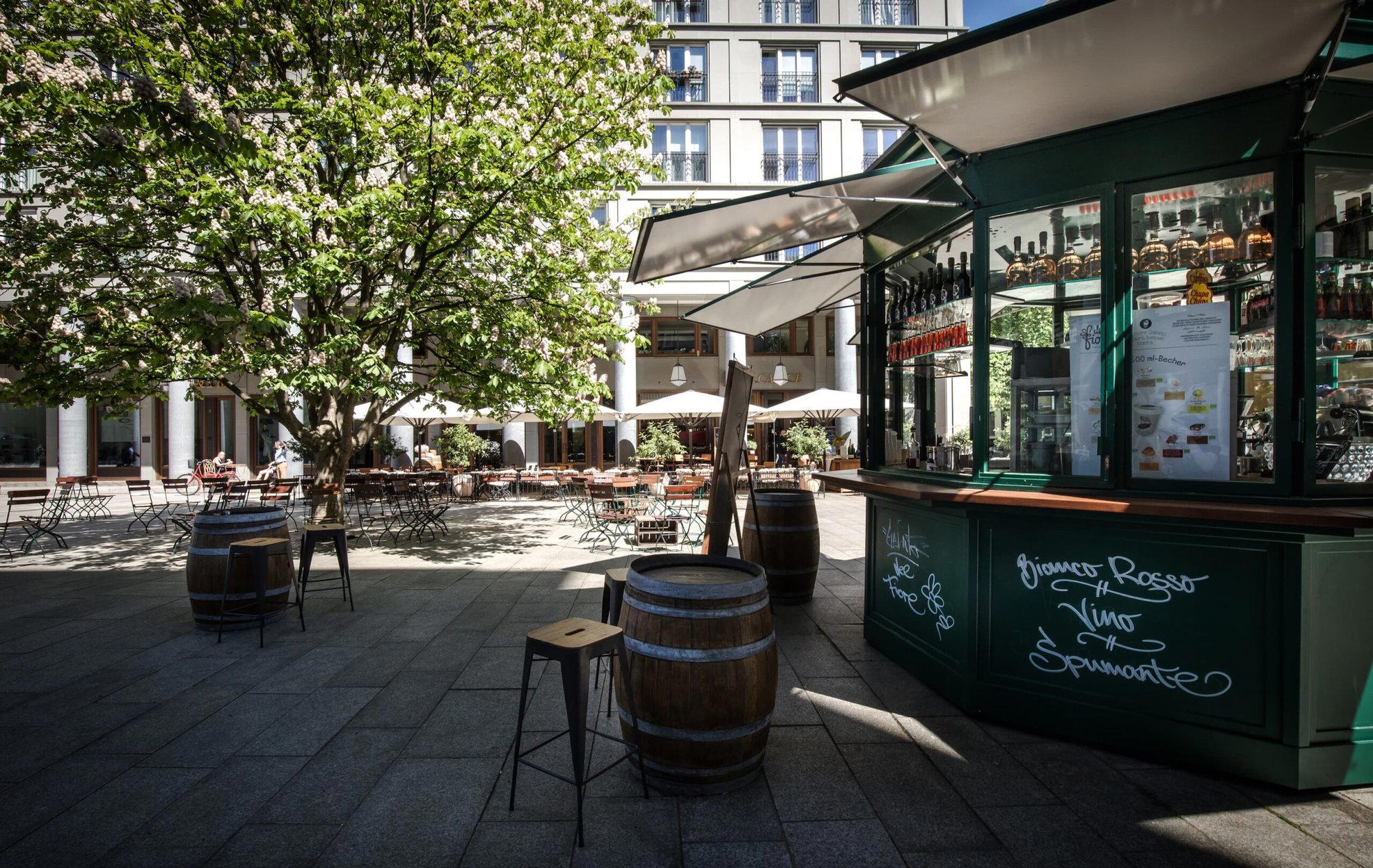
Relaxed and lively atmosphere with indoor and outdoor seating in Berlin's lively Kreuzberg.