Flavorture
Situated on 24th Street NW in Woodley Park, Flavorture occupies a residential stretch of northwest Washington where neighborhood dining has quietly grown more ambitious. With a focus on conscious sourcing and a format that positions it alongside D.C.'s emerging sustainability-minded restaurant tier, it draws visitors who treat eating well and eating responsibly as the same decision.
Pearl is the En Primeur Club membership app — saves, bookings, and concierge access live there. Same editors, same standards.
- Address
- 2609 24th St NW, Woodley Park, DC 20008
- Phone
- +12024504118
- Website
- flavorture.com
- Directions
- Get directions
 Saves & bookings on Pearl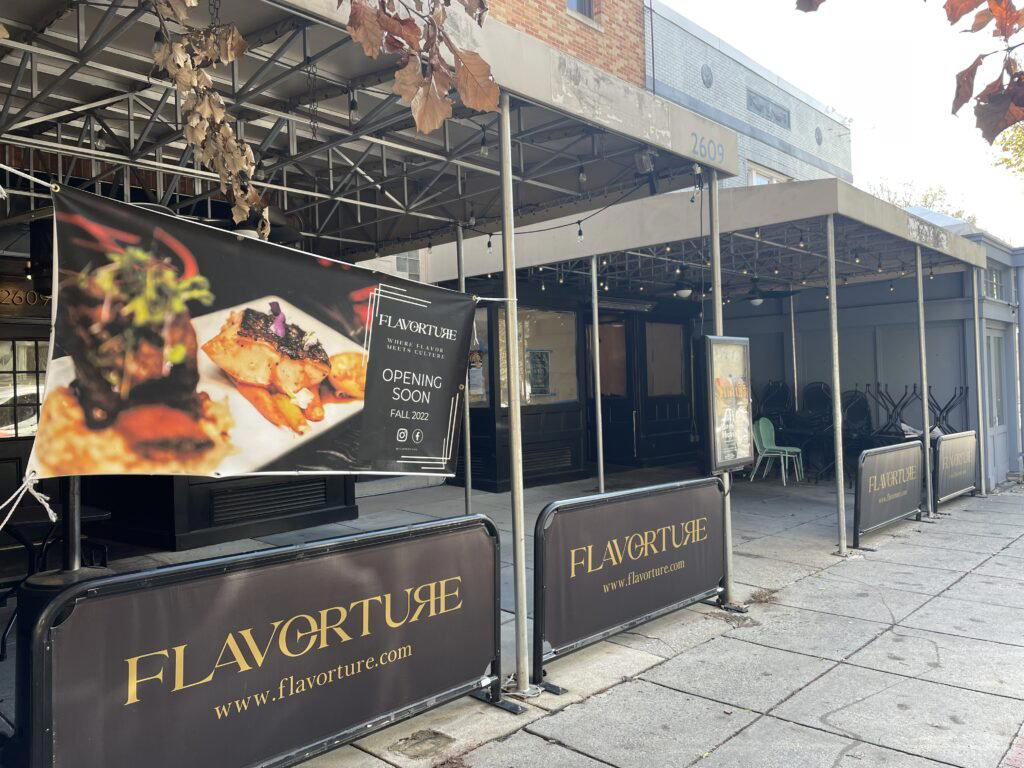
Where Woodley Park Meets Considered Dining
The residential blocks of 24th Street NW in Woodley Park rarely appear on the short list of D.C. dining destinations that out-of-towners plan around. That's precisely what makes the corridor interesting. Away from the Penn Quarter concentrations and the 14th Street density, this stretch of northwest Washington has developed a quieter but increasingly deliberate food culture, one where neighborhood permanence matters and where restaurants tend to answer to repeat locals rather than passing convention traffic. Flavorture is a restaurant in Woodley Park, Washington, D.C. serving Polished American Soul Food at about $40 per person. Flavorture, at 2609 24th St NW, sits inside that pattern.
Washington's dining scene has spent the past decade sorting itself into increasingly distinct tiers. At one end, the tasting-menu counter has grown more formal and internationally competitive, with venues like Jônt and minibar operating at a level that invites comparison with Le Bernardin in New York City or The French Laundry in Napa. At the other end, a more grounded and often more interesting tier has emerged: restaurants that treat ingredient provenance, seasonal constraint, and reduced waste not as marketing language but as operational logic. Flavorture belongs to a conversation happening in that second tier.
The Sustainability Tier in D.C. Dining
The shift toward consciously sourced restaurants in Washington follows a national pattern, but the city has particular reasons to accelerate it. D.C. sits within a day's drive of the Chesapeake watershed, the Shenandoah Valley farm corridor, and the mid-Atlantic's most productive small-scale agricultural land. Restaurants that build sourcing relationships in that geography are working with a genuinely productive pantry, and strong examples among them treat proximity not as a virtue signal but as a quality floor.
Oyster Oyster, one of the more scrutinized sustainable-format restaurants in the city, operates at the $$$ price tier and has drawn consistent editorial attention for its plant-forward approach and waste-reduction discipline. Albi and Causa sit at the $$$$ level and represent how regional and ethnic-rooted cooking can absorb sustainability thinking without losing culinary specificity. These venues collectively define what the serious end of D.C.'s sustainability-conscious dining looks like in practice.
Nationally, the conversation about restaurants built around ethical sourcing and low-waste kitchens has been shaped by a handful of reference points. Blue Hill at Stone Barns in Tarrytown remains one cited American example of farm-to-table as a structural commitment rather than a decorative claim. Single Thread Farm in Healdsburg integrates its own cultivation operation directly into a multi-course format. Smyth in Chicago has demonstrated how urban kitchens can apply the same principles without a farm on-site. These are the benchmarks against which sustainability-oriented restaurants are now quietly measured, regardless of whether they seek that comparison.
International reference points have sharpened expectations further. Atelier Moessmer Norbert Niederkofler in Brunico has made alpine ingredient ethics a central part of its culinary identity in a way that has influenced how European and American chefs talk about what responsible sourcing actually demands at the table level. That standard is now part of the critical vocabulary that serious diners bring to any restaurant making sustainability-adjacent claims.
What This Part of D.C. Offers
Woodley Park is a neighborhood that functions differently from D.C.'s more performance-oriented dining districts. The blocks around the National Zoo and Connecticut Avenue carry a residential weight that shapes how restaurants here operate. Foot traffic is local and repeat; the pressure to perform for first-time visitors is lower; the incentive to build loyalty through consistency is higher. For a restaurant operating in this environment, the audience tends to be attentive in a specific way: these are diners who return, who notice when sourcing shifts, and who hold a kitchen to its stated commitments.
That dynamic has historically produced some of D.C.'s more durable neighborhood restaurants, establishments that accumulate quiet reputations rather than launching with press events. It's a different growth model from the Penn Quarter flagships, and in many respects a more honest one. The neighborhood comparison set here is less about competitive positioning and more about shared sensibility with kitchens in similar residential zones across American cities, places where the dining room connects to the block it's on.
The Broader National Moment
The appetite for ethically framed dining has matured past the point where organic certification or a chalkboard sourcing list satisfies informed diners. What the serious sustainability-oriented restaurant now has to demonstrate is systems thinking: how does the kitchen handle trim, byproduct, and off-cuts? What is the actual relationship with suppliers, and how does it change across seasons? How does the menu absorb the constraint of working with what's available rather than specifying what's convenient?
Restaurants at the sharper end of this practice, venues like Lazy Bear in San Francisco, Providence in Los Angeles, and Addison in San Diego, have shown that environmental consciousness and technical ambition are not in tension. The Inn at Little Washington in Virginia has long maintained its own kitchen garden as part of a sourcing philosophy that has shaped what regional mid-Atlantic fine dining aspires to. Atomix in New York City has demonstrated how a tightly edited format can express ingredient specificity at the highest level without excess or waste. These are the coordinates a sustainability-conscious restaurant in D.C. is implicitly navigating, whether it frames itself that way or not.
Venues like Emeril's in New Orleans provide useful American regional comparisons for understanding how a city's culinary identity absorbs and reflects sustainability thinking over time.
Accolades, Compared
Comparable venues nearby, for context on price, style, and recognition.
| Venue | Cuisine | Price | Notes |
|---|---|---|---|
| FlavortureThis venue — the venue you are viewing | Polished American Soul Food | $$$ | Not listed |
| Kitchen + Kocktails By Kevin Kelley - DC | Polished Southern Soul Food | $$$ | East End |
| Dovetail | Modern Mid-Atlantic American | $$$ | Logan Circle |
| Rewind | American Diner with Latin Influences | $$ | Dupont Circle |
| Cosmos Club | Refined American Fine Dining | $$$$ | Embassy Row |
| Beefsteak | Vegetable-Centric Fast Casual | $$ | Dupont Circle |
Continue exploring
More in Washington DC
Restaurants in Washington DC
Browse all →
Bars in Washington DC
Browse all →
Hotels in Washington DC
Browse all →
At a Glance
- Elegant
- Modern
- Cozy
- Date Night
- Group Dining
- Special Occasion
- Private Dining
- Craft Cocktails
Comfortable atmosphere blending culinary creativity with soul food comfort.