Cosmos Club
The Cosmos Club occupies one of Washington's most storied private club addresses on Massachusetts Avenue NW, where Gilded Age architecture sets the stage for milestone occasions. Membership-based and steeped in a tradition of intellectual distinction, it sits within a comparable set that prizes ceremony and occasion over culinary novelty. For special celebrations in the capital, few settings carry comparable institutional weight.
Pearl is the En Primeur Club membership app — saves, bookings, and concierge access live there. Same editors, same standards.
- Address
- 2121 Massachusetts Ave NW, Washington, DC 20008
- Phone
- +12023877783
- Website
- cosmosclub.org
- Directions
- Get directions
 Saves & bookings on Pearl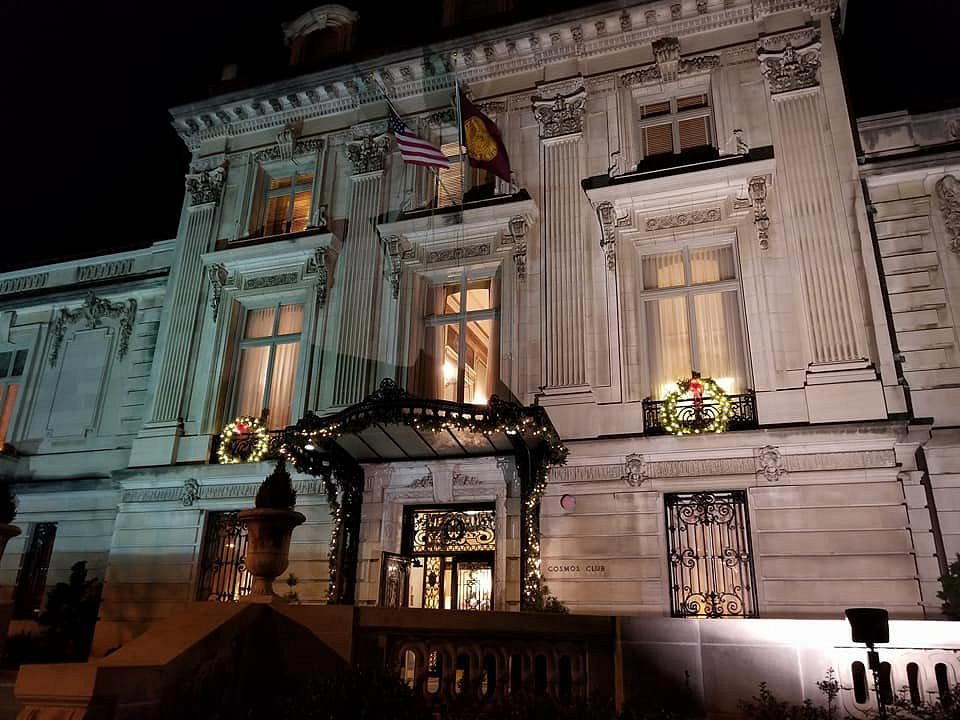
Where Massachusetts Avenue's Architecture Becomes the Occasion
Along the stretch of Massachusetts Avenue NW that Washingtonians call Embassy Row, the built environment does most of the communicating. Embassies, mansions, and private institutions line the boulevard in a procession of Beaux-Arts and Neoclassical facades, each one signaling a particular kind of seriousness. The Cosmos Club, a private members-only restaurant in Washington, D.C. is located at 2121 Massachusetts Ave NW. Before a member steps through its doors, the address alone carries meaning, which is precisely why it functions as one of the capital's most deliberate settings for milestone occasions.
Private clubs in American cities occupy a distinct position in the occasion-dining hierarchy. Unlike a restaurant where a reservation signals intent, membership itself is the threshold. That structure changes the character of a celebration: the space is not shared with strangers booking the same Saturday-night slot, and the formality of the setting is baked into the institution's architecture rather than constructed through interior design choices. For anniversaries, promotions, retirements, or dinners where the weight of the occasion demands a room that already understands ceremony, the private club format delivers something a standard restaurant cannot replicate.
The Club's Position in Washington's Occasion-Dining Tier
Washington's restaurant scene has matured considerably in the past decade, producing a tier of destination dining that now competes with major coastal cities. Venues like Jônt, with its modern French tasting counter, and minibar, José Andrés's molecular flagship, represent the capital's progressive fine-dining edge. Oyster Oyster has brought a sustainability-led New American approach to the conversation, while Causa and Albi anchor serious Peruvian and Middle Eastern traditions respectively at the upper price tier.
The Cosmos Club occupies a different lane from that culinary vanguard. Its comparable set is a different one: institutions where the occasion itself is the primary product, and where the dining experience is inseparable from the setting's historical and social weight. In this it resembles the tradition of great American private dining rooms more than it does the contemporary restaurant circuit. Comparable in spirit, if not geography, to the occasion-first ethos of The Inn at Little Washington, which treats every service as a formal event, the Cosmos Club operates on ceremony as its organizing principle.
Nationally, occasion dining at the highest level takes many different forms. The controlled-environment tasting progression at Atomix in New York City, the farm-to-table ritual at Blue Hill at Stone Barns in Tarrytown, or the precision service model at The French Laundry in Napa all share a commitment to the occasion as structured experience. The restaurant's approach is rooted not in kitchen ambition but in institutional permanence, a different argument for the same result.
The Setting as Occasion Architecture
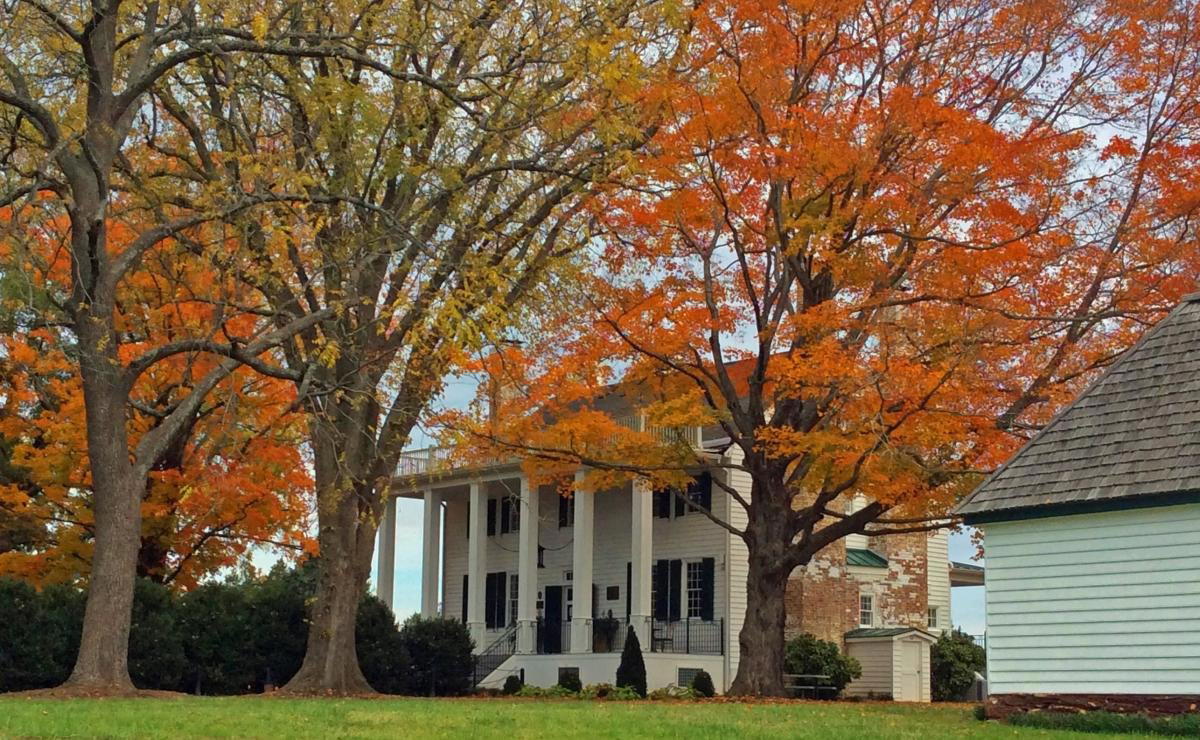
The Townsend House was built in 1901 for Richard Townsend, a railroad and coal fortune heir, and designed in the style of a French Renaissance hôtel particulier. Its ballrooms, reception halls, and formal dining spaces were built for occasions at a scale that private wealth no longer routinely constructs. When the restaurant acquired the property in 1952, it inherited an interior calibrated for ceremony.
That architectural inheritance matters practically for milestone occasions. A dining room designed for Gilded Age entertaining communicates scale and consequence in ways that contemporary restaurant interiors, however well-executed, rarely do. The physical environment functions as a signal to guests before a word is spoken or a plate served, which is why members choose it for moments that require the room to carry some of the meaning.
This dynamic is familiar in America's oldest private club traditions. The dining rooms that survive from the late nineteenth and early twentieth centuries were built at a time when occasion dining was inseparable from architectural performance. Contemporary venues have to construct that sense of occasion through other means: the counter at Le Bernardin does it through decades of critical authority; Lazy Bear in San Francisco does it through communal ritual; Single Thread Farm in Healdsburg does it through a total-environment approach that encompasses lodging and agriculture. The restaurant's architecture does much of that work structurally.
Membership, Access, and the Occasion Economy
Because the restaurant is a private membership institution, access is not a matter of booking a table. Members and their guests are the only diners, which removes the egalitarian friction of the open reservation system but introduces a different kind of barrier. For occasions that require this specific setting, the pathway runs through an existing member relationship.
Washington's private club ecosystem has historically been organized around professional and intellectual credentials. The restaurant was founded in 1878 with a mandate to bring together distinguished scholars, scientists, and public figures, and its membership criteria have remained weighted toward academic, diplomatic, and policy achievement. That profile shapes the character of the dining room: it is a room where careers are marked, not just meals taken. The occasion being celebrated often has professional dimensions, a confirmation, a retirement, a diplomatic milestone, alongside the personal ones.
For those exploring the capital's open dining circuit for comparable occasion weight, the choices are narrower than the restaurant count suggests. Addison in San Diego and Providence in Los Angeles represent the West Coast version of destination occasion dining; Smyth in Chicago and Emeril's in New Orleans anchor their respective cities' milestone-meal traditions. In Washington itself, the gap between the club format and the open restaurant tier is wider than in most American cities, partly because the club tradition here has remained more intact.
Internationally, the private occasion-dining tradition at comparable institutional venues like Atelier Moessmer Norbert Niederkofler in Brunico shows how setting and culinary ambition can converge at the highest level. The restaurant represents a different point on that spectrum, where institutional weight is the primary draw and the building itself provides the occasion architecture.
- Address: 2121 Massachusetts Ave NW, Washington, DC 20008
- Access: Private members and guests only; dining requires a connection to an active member
- Neighbourhood: Embassy Row, Massachusetts Avenue NW corridor
- Leading for: Milestone occasions, formal dinners, and celebrations where institutional setting is a priority
A Tight Comparison
Comparable venues nearby, for context on price, style, and recognition.
| Venue | Cuisine | Price | Notes |
|---|---|---|---|
| Cosmos ClubThis venue — the venue you are viewing | Not listed | $$$$ | Not listed |
| Silver Lyan | Not listed | $$$$ | Penn Quarter, Modern American Cocktail Bar |
| Birch & Barley | Logan Circle, Modern American Gastropub | $$$ | Not listed |
| Cynthia | Near Northeast, Modern American Bistro | $$$ | Not listed |
| Westend Bistro | West End, Modern American Bistro | $$$ | Not listed |
| Equinox - DC | Not listed | $$$$ | Golden Triangle, Contemporary American Fine Dining |
Continue exploring
More in Washington DC
Restaurants in Washington DC
Browse all →
Bars in Washington DC
Browse all →
Hotels in Washington DC
Browse all →
At a Glance
- Elegant
- Sophisticated
- Classic
- Business Dinner
- Special Occasion
- Private Event
- Historic Building
- Private Dining
- Extensive Wine List
- Local Sourcing
Current opening hours
- Monday
- 6 AM–11 PM
- Tuesday
- 6 AM–11 PM
- Wednesday
- 6 AM–11 PM
- Thursday
- 6 AM–11 PM
- Friday
- 6 AM–11 PM
- Saturday
- 6 AM–11 PM
- Sunday
- 6 AM–11 PM
Hours can change for holidays and private events. Last verified .
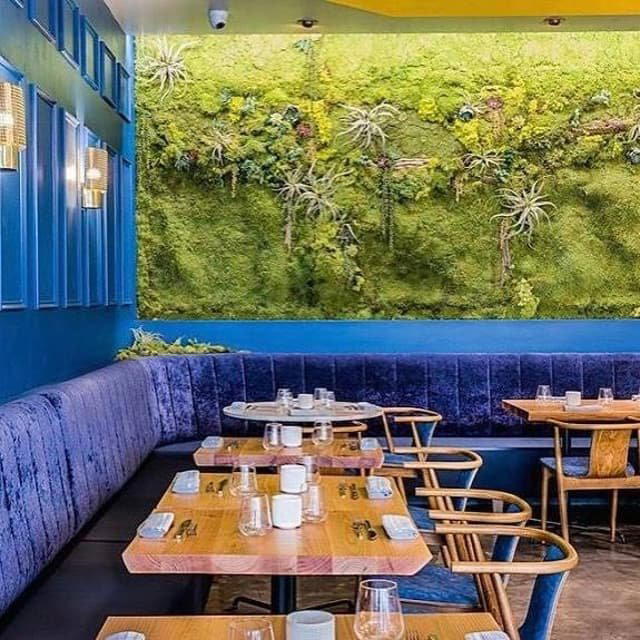
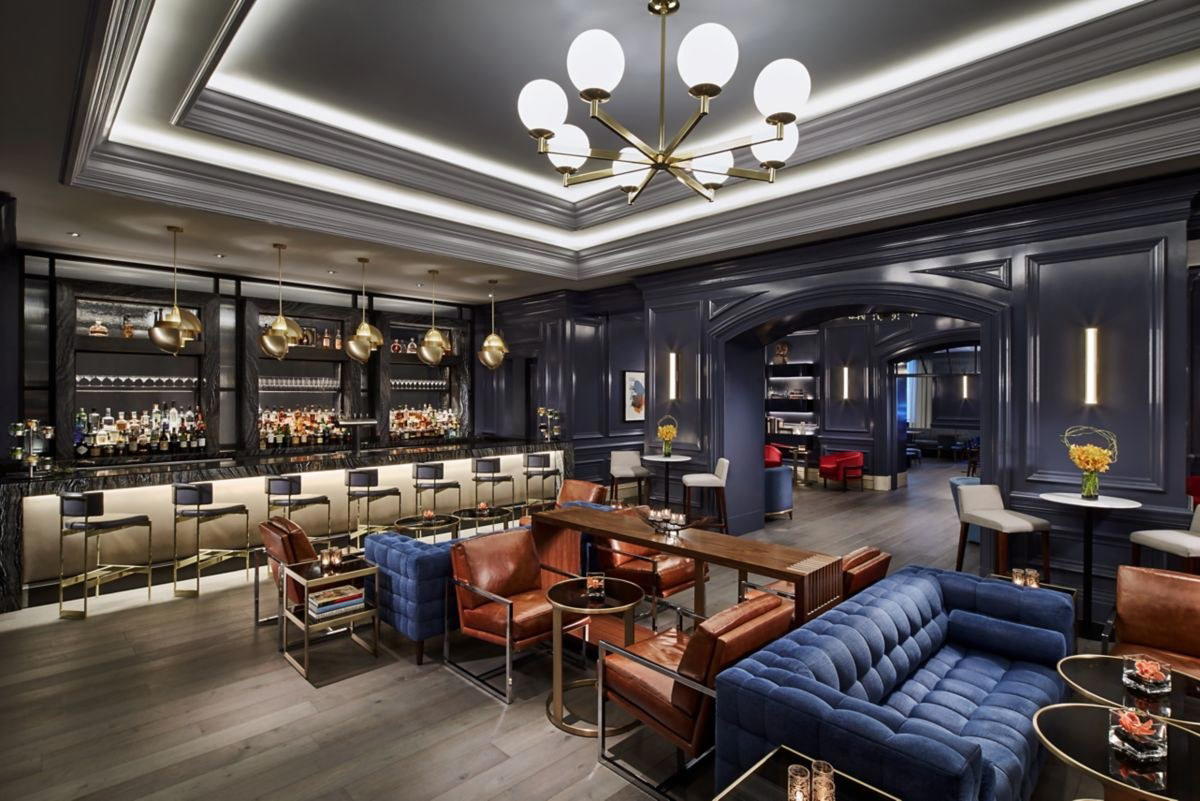
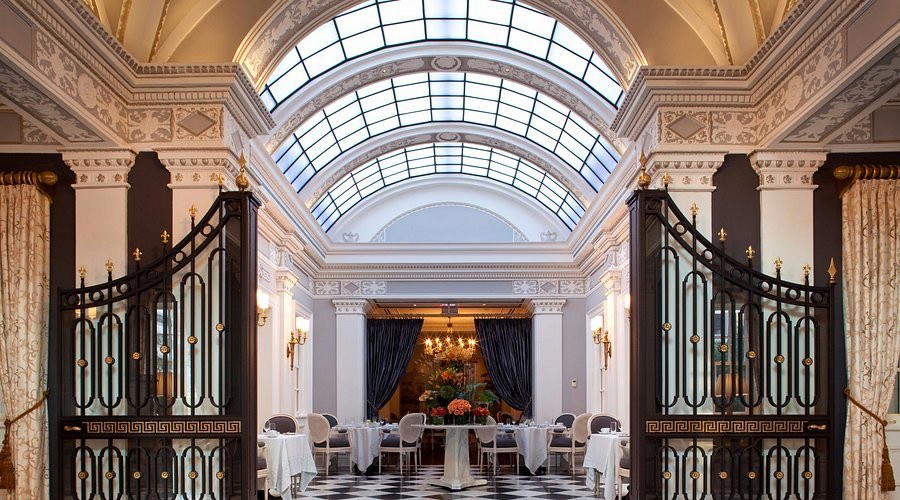
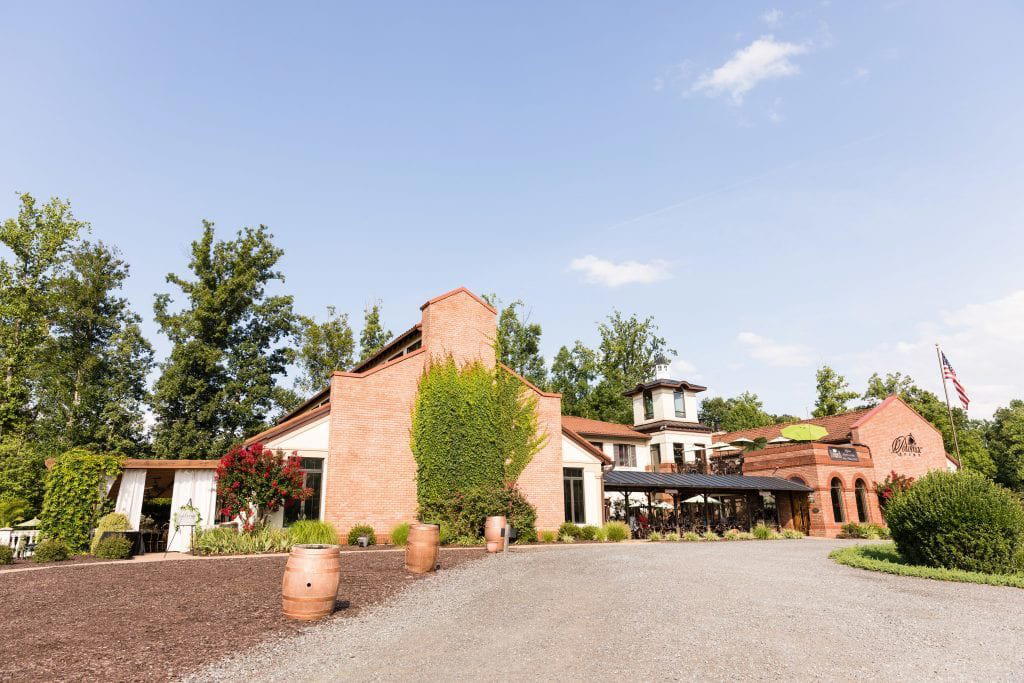
Elegant dining room with sophisticated atmosphere suitable for formal member gatherings and wine tastings.