Our verdict
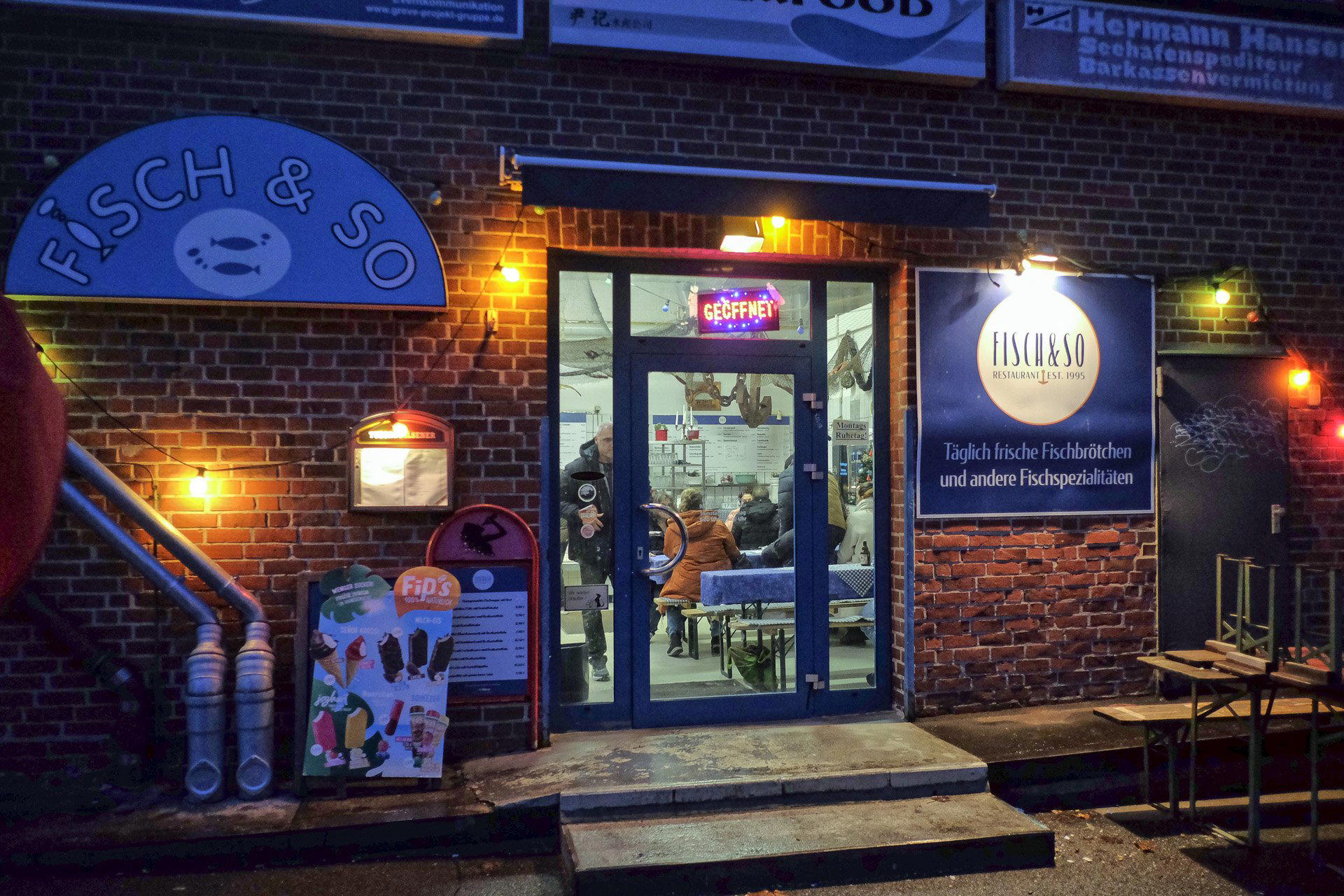
On Große Elbstraße, the stretch of Hamburg's waterfront where working fish trade and upmarket dining have coexisted for generations, Fisch & So occupies a position defined by the harbour itself. The address places it squarely in the Altona fish market corridor, where the case for sourcing honestly and cooking with restraint is made by geography as much as by any kitchen philosophy.

Pearl is the En Primeur Club membership app — saves, bookings, and concierge access live there. Same editors, same standards.
- Address
- Große Elbstraße 117, 22767 Hamburg, Germany
- Phone
- +4949403893109
- Hours
- Mon ClosedTue–Fri 9 AM–5 PMSat–Sun 9 AM–6 PM
- Directions
- Get directions
The menu
What to order
- Fish sandwiches
- Matjes bun
- Salmon bun
- Prawn bun
Where the Elbe Sets the Terms
Große Elbstraße runs parallel to the water in Hamburg's Altona district, and the smell of the river reaches you before any signage does. This is the street where wholesale fish merchants, smoked-eel traders, and white-tablecloth dining rooms have shared square footage for decades, creating a stretch that resists the kind of sanitised food-quarter branding that has overtaken comparable waterfront zones in other northern European cities. Fisch & So sits at number 117, deep enough along the strip that arriving on foot means passing container-handling infrastructure, converted warehouses, and the residual morning activity of a port that still moves real cargo. The context is not decorative — it shapes what a restaurant here can credibly claim to be.
A Harbour Address and What It Demands
Hamburg's relationship with the North Sea and Baltic catch has always been direct. The city's fish markets have operated continuously for centuries, and the Altona wholesale market, just upriver from Fisch & So's address, remains one of the largest in northern Germany. For a restaurant on this street, that proximity is not a branding asset so much as an obligation. Sourcing that could pass as responsible in a city-centre location becomes visible here, where the supply chain is a short walk rather than an abstraction. The strongest fish restaurants on Große Elbstraße have historically made that proximity legible on the plate, offering catches whose provenance is recent and traceable rather than averaged across weekly deliveries.
That standard is increasingly relevant across Hamburg's broader dining scene. At the €€€€ tier, venues like bianc and Lakeside have built reputations partly on the quality of their sourcing frameworks, while The Table Kevin Fehling operates at a creative register where ingredient provenance is woven into the tasting menu's narrative. Fisch & So occupies a different position on that spectrum — closer to the harbour, closer to the catch, and operating in a format where the fish itself, rather than technical elaboration, carries the argument.
The Sustainability Argument Along the Elbstraße
In the past decade, the conversation around sustainable seafood in German dining has moved from niche certification to mainstream expectation. Bodies including the Marine Stewardship Council and Germany's own NABU have pushed traceability higher up the agenda, and restaurants operating in direct proximity to active fish markets have found themselves at the visible edge of that debate. The Altona corridor's identity as a working fish zone means that sourcing decisions made at Fisch & So are not invisible, regulars along the strip know roughly where the day's catch originates and can assess whether a menu reflects the season honestly.
The seasonal dimension matters here more than in almost any other cuisine category. North Sea herring, for instance, follows spawning cycles that shift the quality profile by several weeks across the year; Elbe salmon, once a defining Hamburg product and now subject to strict catch management, appears only when regulation and stock health permit. A kitchen on this stretch that disregards that calendar in favour of year-round menu consistency is operating against the grain of its own address. The more coherent approach, and the one that the stronger Elbstraße addresses have historically taken, is to let availability dictate the card rather than the other way around.
For comparison, some of Germany's most discussed fine-dining kitchens have built sustainability frameworks into their identity at a more structural level. Aqua in Wolfsburg and JAN in Munich both operate with sourcing protocols that extend to supplier relationships and waste management. Schwarzwaldstube in Baiersbronn draws on Black Forest regional supply in a way that makes geography and seasonality inseparable. At ES:SENZ in Grassau and Schanz in Piesport, the sourcing argument is made through regional terroir rather than proximity to a single supply node. Fisch & So's version of that argument is more literal: the North Sea is the terroir, and the harbour is the supply chain made visible.
The Altona Context: What This Neighbourhood Produces
Altona's dining character is distinct from Hamburg's inner city. The Fish Auction Hall, the Sunday market, and the wholesale infrastructure give the neighbourhood a functional identity that the Speicherstadt or HafenCity cannot replicate. Restaurants here do not need to explain their connection to the sea, the sea is self-evident. What distinguishes the serious addresses from the tourist-facing operations is whether the kitchen treats that geography as a working condition or as atmospheric backdrop.
Hamburg's wider fine-dining tier is well-documented. Restaurant Haerlin and 100/200 Kitchen represent the creative end of the city's Michelin-recognised spectrum. Fisch & So operates without that level of formal recognition in the available record, but the address alone places it in a conversation about what Hamburg's harbour identity means at the table. Internationally, the benchmark for serious seafood fine dining remains places like Le Bernardin in New York City, where the kitchen's entire architecture is organised around the fish rather than around any other element. The Hamburg version of that argument is more informal, more rooted in the working-port aesthetic, and priced, most likely, for a broader audience.
Elsewhere in Germany, addresses including Victor's Fine Dining by Christian Bau in Perl, Waldhotel Sonnora in Dreis, and Vendôme in Bergisch Gladbach define what sustained fine-dining ambition looks like over decades. CODA Dessert Dining in Berlin and Bagatelle in Trier demonstrate how format innovation and regional identity can coexist. Atomix in New York City shows what happens when sourcing philosophy and tasting menu rigour are treated as inseparable. Fisch & So's position is less formally defined, but the address places it in a lineage of Hamburg harbour cooking that predates most of those frameworks.
Planning Your Visit
- Address: Große Elbstraße 117, 22767 Hamburg, Germany
- District: Altona, Hamburg, active waterfront strip with working fish-trade infrastructure
- Leading season: Spring and autumn bring the widest range of North Sea seasonal catch; summer weekends see higher foot traffic along the Elbstraße corridor
- Getting there: S-Bahn lines S1/S3 to Königstraße, then a short walk north toward the river; the Elbstraße is also accessible by ferry from the Landungsbrücken piers
- Note: Phone, in, check directly before visiting
For a fuller picture of where Fisch & So sits within Hamburg's dining offer, see our full Hamburg restaurants guide.
Frequently asked questions
What part of town is Fisch & So in?
Fisch & So is located at Große Elbstraße 117, 22767 Hamburg, Germany, Hamburg.
How does Fisch & So's location on Große Elbstraße relate to Hamburg's fish trade history?
Große Elbstraße runs through Altona directly alongside the Elbe, historically the artery connecting Hamburg's port to its fish markets and wholesale operations that have functioned continuously for centuries. Fisch & So at number 117 sits within that same corridor, meaning the supply chain between harbour catch and kitchen counter is shorter here than almost anywhere else in the city. For diners interested in understanding Hamburg's fishing heritage through the plate rather than a museum, this neighbourhood address carries specific weight.
What's the must-try dish at Fisch & So?
At addresses like this one, the fresher whole-fish preparations tend to reflect the harbour's rhythm more honestly than processed or composite dishes.
Do they take walk-ins at Fisch & So?
Given the venue's address at Große Elbstraße 117 in Altona — a stretch that draws both local regulars and visitors to the Fish Auction Hall area — demand on weekends in particular can be high. Contacting the restaurant directly before visiting is the most reliable approach.
What makes Fisch & So worth seeking out?
The address itself is an argument: Große Elbstraße 117 places Fisch & So within Hamburg's working harbour corridor in Altona, a neighbourhood shaped by the city's centuries-old fish trade rather than by restaurant-district renovation. Altona's wholesale infrastructure and Sunday fish market give venues here a supply relationship that inner-city Hamburg cannot replicate. That proximity to source is what separates Elbstraße dining from the broader city offer.
Nearby-ish Comparables
Comparable venues nearby, for context on price, style, and recognition.
| Venue | Cuisine | Price | Notes |
|---|---|---|---|
| Fisch & SoThis venue — the venue you are viewing | Traditional Hamburg Fish Sandwiches | $10–20 | Not listed |
| La Sepia | Portuguese Seafood | $20–30 | Sternschanze |
| Pizzamacherei | Italian Pizza | $10–20 | Neu Lokstedt |
| Moji Sushi | Japanese Sushi | Not listed | Alsterberg |
| UNDERDOCKS | Modern Seafood Street Food | $20–30 | St. Pauli |
| kkokki loves vegan | Vegan Korean Street Food | $10–20 | Sternschanze |