Finkenwerder Elbblick sits in Hamburg's southwestern riverside district, where the Elbe defines both the view and the dining culture. The address at Focksweg 42 places it away from the Innenstadt fine-dining cluster, in a neighbourhood where waterfront character shapes expectations as much as cuisine. For Hamburg diners seeking something outside the city-centre circuit, this is the relevant reference point.
Pearl is the En Primeur Club membership app — saves, bookings, and concierge access live there. Same editors, same standards.
- Address
- Focksweg 42, 21129 Hamburg, Germany
- Phone
- +4949407425191
- Website
- finkenwerder-elbblick.de
- Directions
- Get directions
 Saves & bookings on Pearl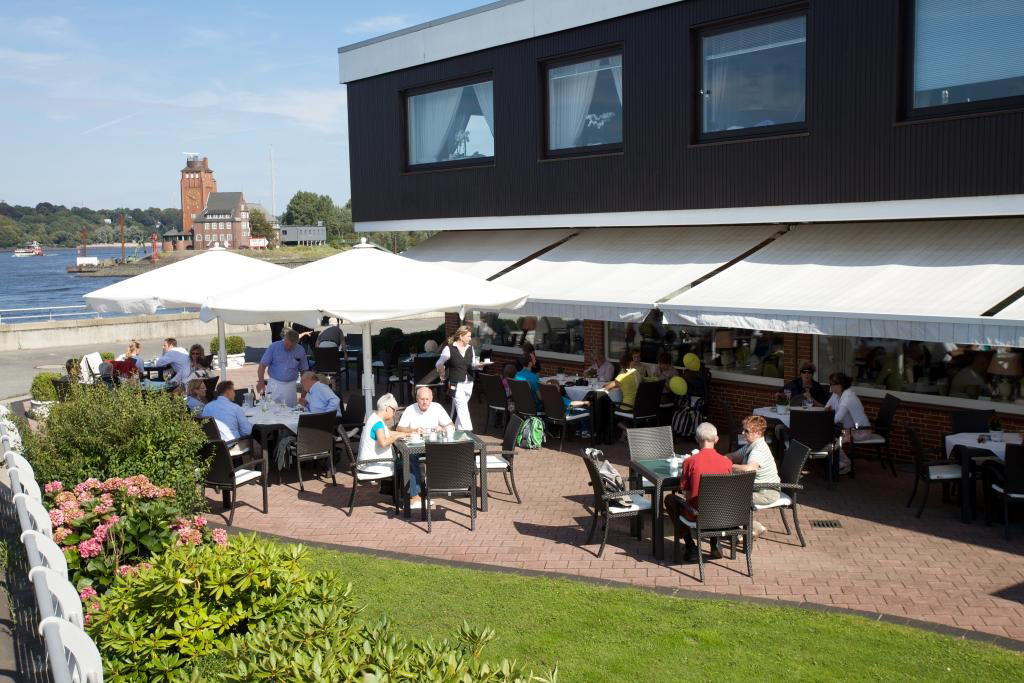
Where the Elbe Sets the Terms
Hamburg's dining scene operates across two distinct geographies. The first is the Innenstadt and HafenCity corridor, where Restaurant Haerlin and The Table Kevin Fehling anchor a concentrated cluster of high-investment, award-tracked restaurants. The second is the waterfront periphery, where the Elbe shapes neighbourhood identity as directly as it shapes the harbour economy. Finkenwerder belongs to that second geography. The address — Focksweg 42, in the 21129 postcode — places it in Hamburg's southwestern riverside district, a working waterfront area that has historically fed the city's appetite for fresh fish and simple, direct cooking rather than formal tasting menus.
Approaching from the city centre, the shift in register is noticeable. The density of central Hamburg gives way to quieter residential streets and the low industrial horizon that lines this stretch of the Elbe. The river is the dominant visual fact, and restaurants in this zone earn their audience through setting and value proposition rather than proximity to the main foot-traffic corridors. That context matters when assessing what Finkenwerder Elbblick is and what a visit here is likely to deliver.
The Wine Dimension in Hamburg's Waterfront Tier
Hamburg has a long-established reputation as a wine city, rooted in centuries of merchant trade through the Freihafen. The city's wine culture runs deeper than its restaurant scene sometimes suggests: private cellars among the old merchant families, specialist importers concentrated around the Speicherstadt, and a consumer base that has historically been more comfortable with Burgundy and Bordeaux than most German cities outside Munich and Düsseldorf. That tradition creates a specific set of expectations when Hamburg diners sit down for a meal, the wine list is never an afterthought.
In the city-centre fine-dining tier, this expectation is met at considerable depth. 100/200 Kitchen and bianc both operate wine programs that sit in deliberate dialogue with their cuisine formats. Lakeside brings a similar seriousness to its cellar. In the waterfront and neighbourhood tier, the wine offer tends to be more functional: a competent selection of German classics and accessible European imports, priced to complement the food rather than to serve as the primary editorial statement of the meal.
What distinguishes the better operators in Hamburg's secondary dining tier is curation discipline, a shorter list with clear point of view outperforms the sprawling, undifferentiated cellar every time. Across Germany, the restaurants that have built sustained critical attention for their wine programs share a commitment to regional specificity: Mosel Riesling from single-vineyard producers, Franken Silvaner, Pinot Noir from the Ahr and Baden, alongside selective European imports that don't simply replicate what is already on every restaurant list. The question worth asking at any Hamburg waterfront restaurant is whether the wine offer reflects the same deliberateness as the kitchen. That standard applies as a useful frame when approaching Finkenwerder Elbblick.
For a deeper comparative read on what wine-serious restaurants look like at Germany's top tier, Schwarzwaldstube in Baiersbronn, Waldhotel Sonnora in Dreis, and Vendôme in Bergisch Gladbach each represent the benchmark against which regional and neighbourhood programs are implicitly measured. Further afield, Victor's Fine Dining by Christian Bau in Perl and Aqua in Wolfsburg demonstrate how wine depth and creative ambition coexist at the highest German level.
The Finkenwerder Culinary Tradition
The name Finkenwerder carries specific culinary meaning in Hamburg. The district gave its name to one of the most recognisable dishes in the city's cooking canon: Finkenwerder Scholle, a plaice preparation with bacon and shrimp that has appeared on Hamburg menus for generations. It is the kind of dish that defines a place more durably than any trend cycle, rooted in the fishing heritage of this stretch of the Elbe and the practical cooking style of a working waterfront community.
That heritage creates a useful frame for what to expect from restaurants in this district. The strongest performers in Hamburg's waterfront dining category tend to hold that local culinary identity in tension with contemporary expectations, not abandoning the regional canon, but executing it with more precision and better sourcing than the casual tourist-facing version. The Elbe's proximity is an asset: access to fresh North Sea catch is logistically easier here than in the city centre, and the leading kitchens in this zone use that advantage directly.
Across Germany, the relationship between regional culinary identity and fine-dining ambition is handled with varying degrees of sophistication. Schanz in Piesport and ES:SENZ in Grassau both demonstrate how deeply regional settings can produce kitchens that engage seriously with local produce without retreating into folklorism. JAN in Munich takes a different route, using Southern German materials through a framework shaped by international technique. The Hamburg waterfront context sits closer to the first model, place-driven, produce-led, with the river as the organising logic.
Hamburg Dining Beyond the City Centre
The concentration of Hamburg's critical dining attention on a small number of celebrated addresses means that the wider restaurant map is underread. For diners willing to move beyond the Innenstadt circuit, the city offers waterfront character that the central cluster cannot replicate. The Elbe, particularly on its southern and western banks, provides a dining environment where the view and the setting do real work, not as a substitute for kitchen quality, but as a genuine element of the experience that changes how a meal reads.
The broader German restaurant scene rewards exploration outside the obvious centres. CODA Dessert Dining in Berlin and Bagatelle in Trier are useful reminders that the country's most interesting restaurant propositions are distributed across cities and regions rather than concentrated in a single capital. For Hamburg specifically, our full Hamburg restaurants guide maps the city's dining geography in detail, including the waterfront tier that the headline addresses don't cover.
International comparisons are useful calibration tools. Le Bernardin in New York City represents the global benchmark for seafood-focused fine dining; Lazy Bear in San Francisco demonstrates how a commitment to place and community can drive a restaurant's identity as powerfully as classical technique. Neither translates directly to the Finkenwerder context, but both illustrate what genuine culinary conviction looks like when a kitchen decides what it is for.
Know Before You Go
Planning Your Visit
- Address: Focksweg 42, 21129 Hamburg, Germany
- District: Finkenwerder, southwestern Hamburg waterfront
- Getting there: The Finkenwerder district sits on the southern bank of the Elbe; the HADAG ferry from Landungsbrücken offers a direct river connection and is the most direct route from central Hamburg
- Booking: Contact details are not currently published; check current listings or walk-in during off-peak hours
- Price tier: Not confirmed; neighbourhood waterfront positioning suggests mid-range alignment, but verify directly
- Comparable Hamburg addresses: Lakeside and bianc for the fine-dining tier; Finkenwerder Elbblick sits in a different, more place-specific register
Cuisine-First Comparison
| Venue | Cuisine | Price | Awards |
|---|---|---|---|
| Finkenwerder ElbblickThis venue — the venue you are viewing | This venue | Not listed | Not listed |
| The Table Kevin Fehling | Creative | €€€€ | Michelin 3 Star |
| bianc | Modern Mediterranean, Mediterranean Cuisine | €€€€ | Michelin 2 Star |
| Lakeside | German Lakeside | €€€€ | Michelin 2 Star |
| Heimatjuwel | German, Creative | €€€ | Michelin 1 Star |
| Landhaus Scherrer | Modern European, Classic Cuisine | €€€€ | Michelin 1 Star |
Continue exploring
More in Hamburg
Restaurants in Hamburg
Browse all →
Bars in Hamburg
Browse all →
Hotels in Hamburg
Browse all →
Wineries in Hamburg
Browse all →
At a Glance
- Scenic
- Cozy
- Date Night
- Family
- Waterfront
- Terrace
- Beer Program
- Waterfront
Current opening hours
- Monday
- Closed
- Tuesday
- Closed
- Wednesday
- 12–9 PM
- Thursday
- 12–9 PM
- Friday
- 12–9 PM
- Saturday
- 12–9 PM
- Sunday
- 12–9 PM
Hours can change for holidays and private events. Last verified .
Relaxed riverside atmosphere with scenic views of passing ships, pleasant terrace seating, and a welcoming vibe enhanced by friendly service.
Know Before You Go
- Getting there
- Focksweg 42, 21129 Hamburg, Germany