Gasthaus an der Alster occupies a prominent address on Ferdinandstraße in Hamburg's city centre, placing it within reach of the Alster waterfront and the dense concentration of dining that defines this part of the city. The venue sits within a Hamburg restaurant scene that ranges from casual harbour-side taverns to three-Michelin-star creative kitchens, making address and concept the two key coordinates for any visitor planning a meal here.
Pearl is the En Primeur Club membership app — saves, bookings, and concierge access live there. Same editors, same standards.
- Address
- Ferdinandstraße 65-67, 20095 Hamburg, Germany
- Phone
- +494940327209
- Website
- gasthaus-anderalster.de
- Directions
- Get directions
 Saves & bookings on Pearl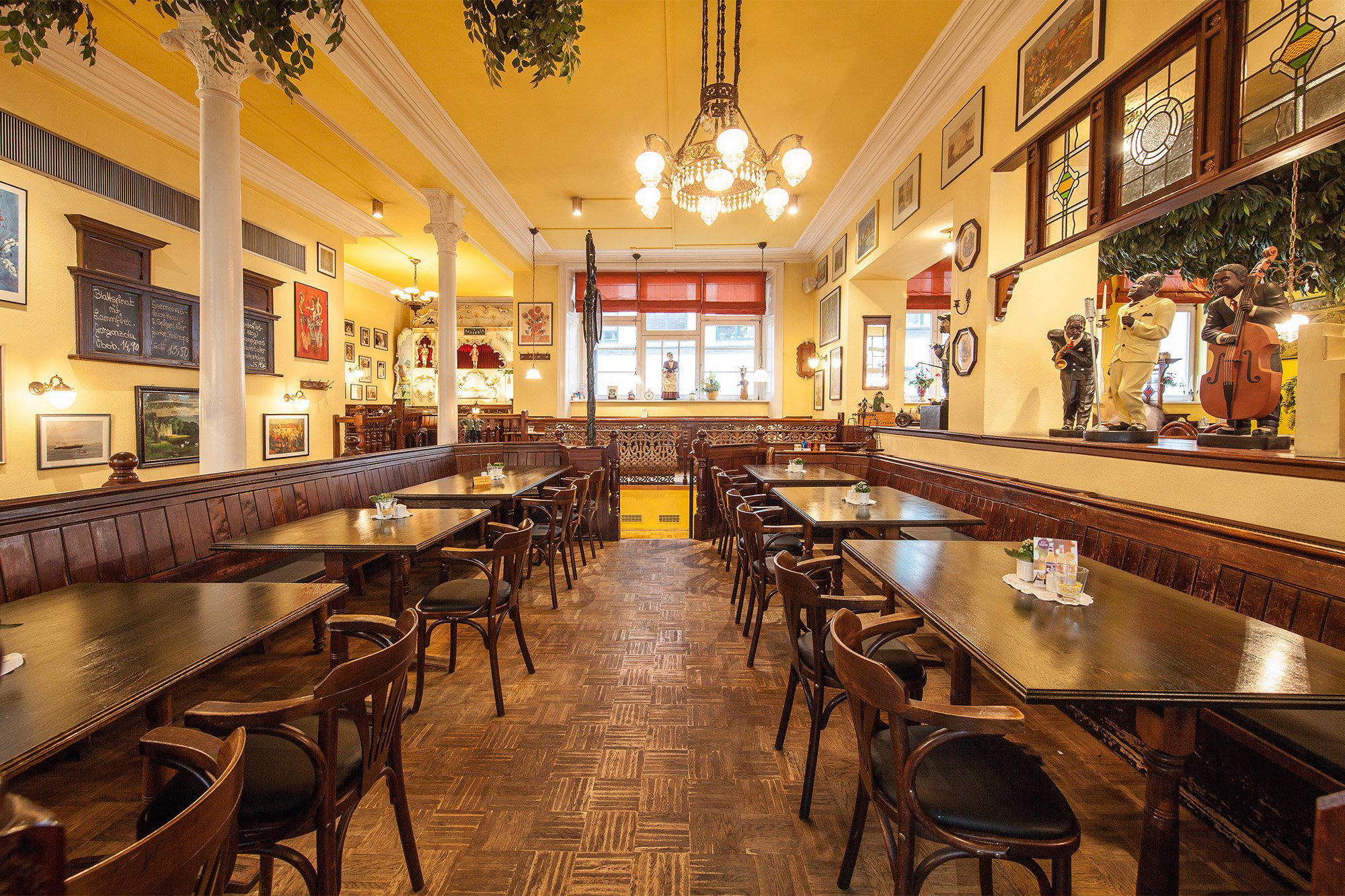
Ferdinandstraße and the Alster Dining Belt
Hamburg's inner-city dining is organised around a few reliable axes. The Alster lakes — Inner Alster and Outer Alster — act as the city's social centre of gravity, and the streets radiating from them carry a higher concentration of restaurants, wine bars, and hotel dining rooms than almost any other district in northern Germany. Ferdinandstraße, where Gasthaus an der Alster holds its address at numbers 65–67, sits in this corridor: close enough to the water to draw the Alster's associated foot traffic, urban enough to compete with the full range of Hamburg's mid-to-upper dining options.
That competitive context matters. Hamburg's restaurant scene has, over the past decade, split into two reasonably distinct tiers. At the leading, venues like Restaurant Haerlin and The Table Kevin Fehling operate at the Michelin-starred level with tasting menus, formal service structures, and price points that price them out of casual consideration. Below that, a broader field of addresses competes on cuisine type, neighbourhood positioning, and what Hamburg residents broadly describe as Gastlichkeit, a genuine hospitality register that sits somewhere between formal service and the warmth of a well-run local. A name like Gasthaus an der Alster signals, through its German-language naming convention, a deliberate alignment with that second register rather than the first.
The Sourcing Logic of Hamburg's Gasthaus Tradition
In northern Germany, the Gasthaus format carries a specific set of expectations around ingredients. Unlike the tasting-menu kitchens at 100/200 Kitchen or the Mediterranean-inflected sourcing at bianc, a traditional Gasthaus draws from a shorter, more regional supply chain: North Sea fish, Schleswig-Holstein dairy and pork, vegetables from the Vierlanden market-garden district south-east of the city, and, in season, game from the surrounding lowland forests. Hamburg's geography, sitting at the mouth of the Elbe with direct access to both the North Sea catch and the agricultural hinterland of Lower Saxony, makes this sourcing logic not merely romantic but practically sound. The city's fish markets and wholesale suppliers at the Großmarkt have historically given Hamburg kitchens access to material that their inland counterparts cannot match on freshness or cost.
This regional sourcing tradition connects Hamburg's Gasthaus category to a broader German pattern. Across the country, addresses that hold to this model, sourcing close, cooking with restraint, pricing for regular rather than occasional use, tend to occupy a position that Michelin-starred restaurants and fast-casual chains both struggle to fill. Venues like Lakeside in Hamburg have demonstrated that the lakeside-and-regional-produce format carries genuine commercial resilience when executed consistently. Gasthaus an der Alster, positioned on Ferdinandstraße, addresses a similar demand from a more urban access point.
How the Alster Address Works in Practice
The logistics of Ferdinandstraße are worth understanding before booking. The street runs through Hamburg's city-centre district, roughly between the Hauptbahnhof to the east and the Binnenalster to the west, making it walkable from both the main rail terminus and the central shopping district around the Jungfernstieg. For visitors arriving by S-Bahn or U-Bahn, Jungfernstieg and Mönckebergstraße stations both place Ferdinandstraße within a short walk. The area operates at a pace distinct from the tourist-heavy Speicherstadt or the bar-dense Schanzenviertel: it is a working commercial district that fills at lunch and again in the early evening, which means the rhythm of a meal here tends to align with business-district timing rather than the later dining hours common in the harbour quarter.
Hamburg's dining scene rewards visitors who treat the city's geography as a tool rather than an afterthought. The Alster belt, where Gasthaus an der Alster sits, is distinct from the creative-kitchen concentration around HafenCity, where addresses like The Table Kevin Fehling operate in a more deliberately destination-focused mode. Choosing a Ferdinandstraße address means choosing the inner-city rhythm: accessible, central, and less dependent on a pilgrimage mentality.
Hamburg in the Context of Germany's Dining Geography
Understanding where Hamburg sits in Germany's restaurant hierarchy adds useful perspective. Germany's highest-concentration Michelin clusters are not in Hamburg but in Baden-Württemberg and the Rhineland, where addresses like Schwarzwaldstube in Baiersbronn, Aqua in Wolfsburg, and Vendôme in Bergisch Gladbach anchor regional fine-dining reputations. Bavaria has its own dense cluster, with JAN in Munich and the Bavarian alpine addresses representing a different sourcing and style tradition entirely. Further afield, Victor's Fine Dining by Christian Bau in Perl, ES:SENZ in Grassau, Schanz in Piesport, Waldhotel Sonnora in Dreis, and Bagatelle in Trier show how Germany's dining ambition extends well beyond the major cities. Hamburg itself has earned Michelin recognition through its starred addresses, but its stronger dining identity arguably sits in the mid-register Gasthaus and bistro category, where northern German produce and a port city's cosmopolitan appetite combine most naturally.
For international travellers who arrive in Hamburg having eaten at, say, Le Bernardin in New York City or Lazy Bear in San Francisco, the Gasthaus format represents a deliberate recalibration: away from technique-forward tasting menus and toward the kind of place where the sourcing story is embedded in the menu's simplicity rather than narrated through a dozen courses. The same traveller curious about CODA Dessert Dining in Berlin's conceptual format will find Gasthaus an der Alster occupies a very different point on the spectrum. Both are valid Hamburg-and-Germany decisions; they are simply answering different questions about what a meal should do.
For a broader view of where Gasthaus an der Alster sits among the city's options, the EP Club Hamburg restaurants guide maps the full range across neighbourhoods and price tiers.
Know Before You Go
Address: Ferdinandstraße 65–67, 20095 Hamburg, Germany
Nearest transit: Jungfernstieg (U1/U2/U4, S1/S2/S3) or Mönckebergstraße (U3), both within walking distance
Dress code: No confirmed policy, city-centre Hamburg business casual is a reasonable baseline
Continue exploring
More in Hamburg
Restaurants in Hamburg
Browse all →
Bars in Hamburg
Browse all →

Hotels in Hamburg
Browse all →
Wineries in Hamburg
Browse all →
At a Glance
- Classic
- Cozy
- Casual Hangout
- Group Dining
- Historic Building
Current opening hours
- Monday
- 11 AM–11 PM
- Tuesday
- 11 AM–11 PM
- Wednesday
- 11 AM–11 PM
- Thursday
- 11 AM–11 PM
- Friday
- 11 AM–11 PM
- Saturday
- 11 AM–11 PM
- Sunday
- 11 AM–11 PM
Hours can change for holidays and private events. Last verified .
Know Before You Go
- Getting there
- Ferdinandstraße 65-67, 20095 Hamburg, Germany