Google: 4.9 · 14 reviews
.png)
Counter-style dining in Nishitenma where French luxury ingredients — caviar, foie gras, truffle — are framed with deliberate restraint rather than flourish. The format places chef and diner in direct conversation, with each course explained in the diner's own language. Empathie builds its identity around the anticipation of seasons, treating that shared waiting as the emotional core of the meal.
 Discover on Pearl
Pearl is the En Primeur Club membership app — saves, bookings, and concierge access live there. Same editors, same standards.
A Counter in Nishitenma Built Around Anticipation
Osaka's Kita Ward has a particular density of serious restaurants. Within a short radius, you can find kaiseki at the level of Taian, French innovation at HAJIME, and the kind of multi-generational Japanese cooking that Kashiwaya Osaka Senriyama represents. Nishitenma, the sub-district where Empathie sits, occupies a quieter corner of that concentration: a neighbourhood of small office buildings, legal firms, and the kind of ground-floor restaurant spaces that require a reason to seek them out. Y's Village 101, the address, does not announce itself loudly. That restraint is consistent with what happens inside.
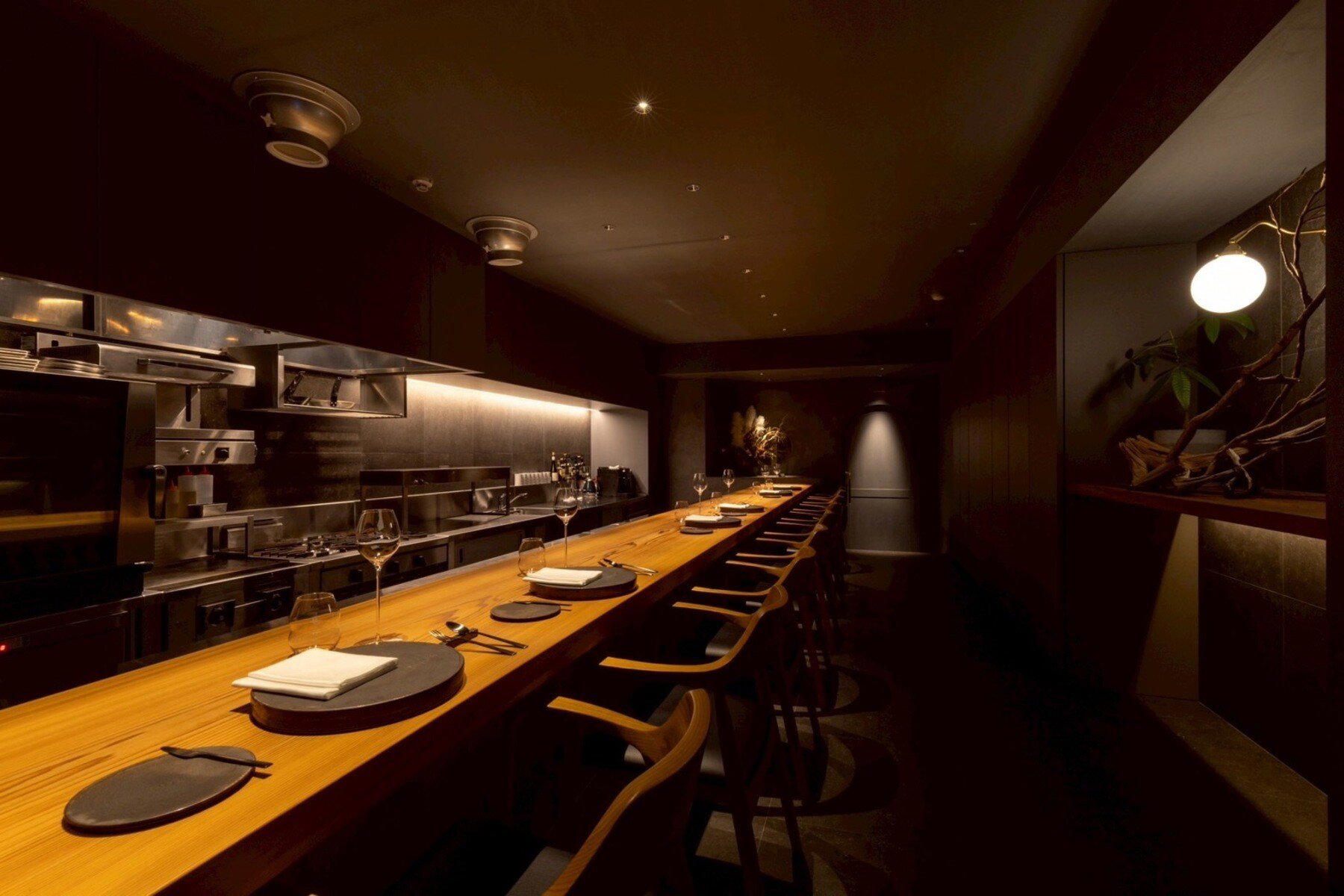
Counter dining in Osaka operates differently from the big-room kaiseki format. At a counter, the physical proximity between preparation and eating collapses the usual theatre of a dining room into something more compressed and immediate. The sounds of the kitchen arrive without mediation. The pace of the meal is set by what you can observe rather than by a service captain's choreography. For a restaurant named after the French word for empathy — a shared emotional state between two people — the counter format is not incidental. It is the delivery mechanism for the restaurant's stated purpose: creating in both chef and diner a mutual anticipation of what the next season will bring.
French Ingredients, Japanese Discipline
The tension that defines a significant number of Osaka's premium restaurants is the same one playing out across Japan's fine dining scene more broadly: how to resolve the pull of French technique and luxury product against the grain of Japanese culinary discipline. Empathie sits at one end of that spectrum. The ingredients are unapologetically French in their reference , caviar, foie gras, truffles appear on the menu , but the philosophy framing them is about restraint, not display. No-nonsense preparation keeps the ingredient at the centre rather than wrapping it in architectural complexity.
This positions Empathie differently from neighbours like La Cime or Fujiya 1935, both of which apply more visible technical invention to their French-inflected menus. At Empathie, the luxury of the ingredient is allowed to carry the dish. Caviar that arrives simply, foie gras without a confected sauce architecture, truffle where the aroma is the point: this is a kitchen that treats restraint as its primary technique rather than as a baseline from which it departs.
Comparable approaches elsewhere in Japan tend to appear in the omakase sushi format, where the ingredient's integrity is structurally protected by the form itself. In a French-leaning context, that same commitment to ingredient primacy requires a different kind of editorial discipline from the kitchen, because French cuisine has centuries of sauce-making and technique-layering to draw from. Choosing not to use those tools is a decision that requires as much confidence as deploying them. Counter-format restaurants in Osaka and beyond, from Harutaka in Tokyo to Gion Sasaki in Kyoto, have demonstrated how sustained proximity between chef and diner reinforces that editorial clarity.
The Sensory Logic of the Counter
What you experience at a counter-format restaurant is determined largely by what you can perceive at close range. The visual field is the pass, the mise en place, the hands of whoever is working. Sound is the low-level activity of a kitchen working at its own rhythm rather than the ambient noise of a full dining room. Smell arrives ahead of each course, which at Empathie , where truffle and foie gras and caviar are among the primary working materials , functions as its own form of sequencing. You register the next course before it is set in front of you.
The language dimension at Empathie is worth noting directly. Counter-style service that conveys the message of each dish in the diner's own language is not a standard feature of fine dining in Osaka, particularly at smaller, independent restaurants where international guests are not the primary audience. The commitment to communication across language barriers at close quarters changes the texture of the meal. A dish explained to you in your own language at a counter, with the person who prepared it a few feet away, produces a different kind of comprehension than a translated menu card or a staff relay. It extends the empathy concept from its seasonal framing into the mechanics of service itself.
This is where Empathie separates itself most clearly from Osaka's broader fine dining spectrum. The kaiseki tradition, represented locally by Taian and Kashiwaya, builds communication into form: the sequence of courses, the seasonal references in presentation, the named preparation styles all carry meaning for an audience already fluent in the language of kaiseki. Empathie is working with a different set of tools , French luxury ingredients, a counter format, direct multilingual explanation , to achieve a similar quality of shared understanding between kitchen and guest. Whether it arrives at the same depth is a question worth asking at the table.
Seasonality as the Restaurant's Through-Line
In Japan, the relationship between cuisine and season is structural rather than decorative. The kaiseki tradition codifies it into a formal sequence. French haute cuisine has its own seasonal vocabulary, but one that travels differently across a global supply chain. At Empathie, the stated intention is that both chef and diner share in the anticipation of each coming season, which frames seasonality not as a sourcing policy but as an emotional condition. The restaurant's name anchors that framing: empathy is a shared state, and what is being shared here is the forward-looking expectation of what the next season's ingredients will make possible.
For a restaurant working with imported French luxury product alongside whatever the Japanese calendar provides, that anticipation is more complex than a purely local seasonal menu. Truffle seasons in Europe arrive at specific moments. Caviar and foie gras have their own rhythms. Aligning those European seasonal signals with the Japanese seasonal frame requires active curation rather than passive sourcing. The result, in practice, is a menu that is tracking multiple seasonal logics simultaneously, which gives it a layered temporal character that a single-origin seasonal menu would not have.
Restaurants across Japan that work in this cross-cultural seasonal register , akordu in Nara, Goh in Fukuoka , tend to make those tensions explicit in the menu. Empathie folds them into the empathy concept itself: the shared anticipation between chef and diner becomes the container in which both the Japanese and French seasonal calendars can coexist.
Placing Empathie in the Osaka Fine Dining Context
Osaka's fine dining scene reads differently from Tokyo's. The city's culinary identity has traditionally been built around eating broadly and well rather than at single ceremonial high points. The concentration of Michelin-starred restaurants in Kita Ward represents one kind of dining behaviour; the street-level culture of Dotonbori and Shinsekai represents another. Empathie belongs to the former category, operating in the premium counter format that has become a recognisable tier of serious dining across Japan, from 1000 in Yokohama to 6 in Okinawa.
Within Osaka specifically, its peer set is the French-leaning independent counter, not the kaiseki establishment or the international hotel fine dining room. That peer set is smaller than it once was , the economics of a small counter running imported luxury ingredients are demanding , which makes each restaurant within it a distinct proposition rather than a variant on a common model. Globally, the closest analogues might be found in the intimate tasting counter format that restaurants like Atomix in New York City have refined, where tight capacity and direct communication between kitchen and guest are the format's defining features rather than its scale.
For travellers building an Osaka itinerary, Empathie sits logically alongside the city's other counter-format specialists. The broader picture, including hotels, bars, and experiences across the city, is covered in our full Osaka restaurants guide, our full Osaka hotels guide, our full Osaka bars guide, our full Osaka wineries guide, and our full Osaka experiences guide. Given the counter format and the restaurant's stated commitment to seasonal sequencing, visiting at the turn of a season , late autumn into winter, when European truffle supply peaks alongside the Japanese seasonal shift , gives the menu its fullest range of reference.
Comparable Options
A short peer table to compare basics side-by-side.
| Venue | Cuisine | Price | Notes |
|---|---|---|---|
| Empathie | This venue | ||
| HAJIME | French, Innovative | ¥¥¥¥ | French, Innovative, ¥¥¥¥ |
| La Cime | French | ¥¥¥¥ | French, ¥¥¥¥ |
| Kashiwaya Osaka Senriyama | Japanese | ¥¥¥ | Japanese, ¥¥¥ |
| Taian | Kaiseki, Japanese | ¥¥¥ | Kaiseki, Japanese, ¥¥¥ |
| Fujiya 1935 | Innovative | ¥¥¥¥ | Innovative, ¥¥¥¥ |
Continue exploring
More in Osaka
Restaurants in Osaka
Browse all →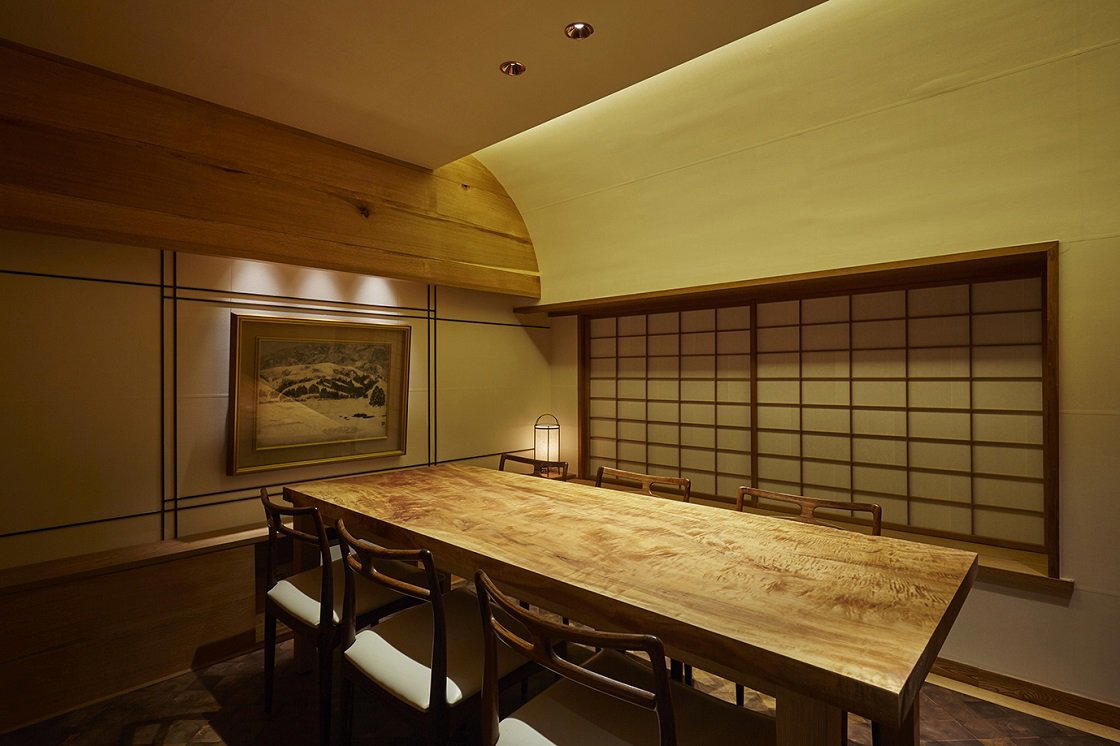

Bars in Osaka
Browse all →



Hotels in Osaka
Browse all →




Wineries in Osaka
Browse all →
At a Glance
- Intimate
- Elegant
- Modern
- Sophisticated
- Minimalist
- Date Night
- Special Occasion
- Chefs Counter
- Open Kitchen
- Sake Program
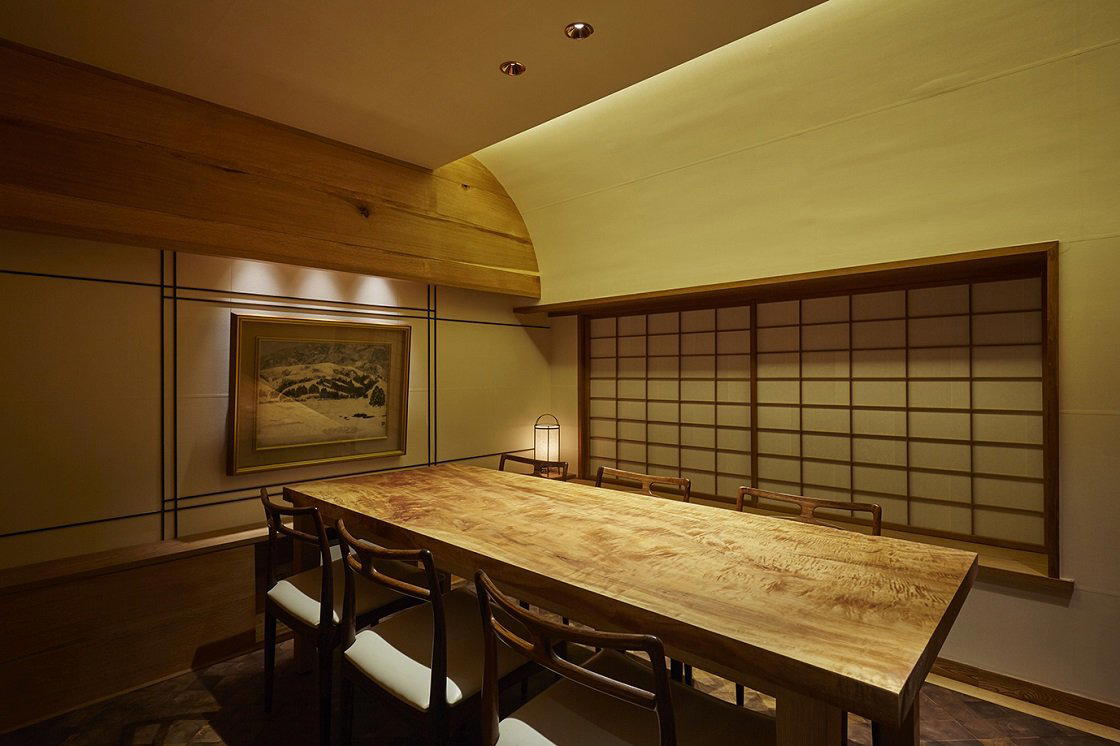
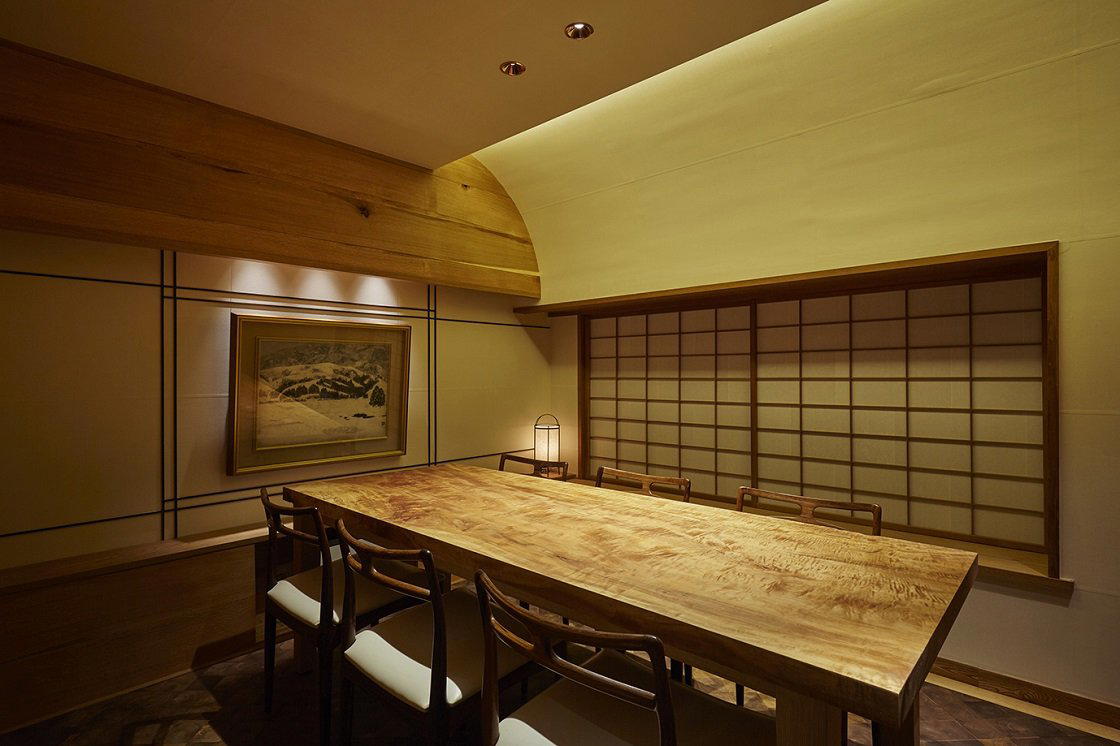
Compact and restrained interior with warm woods, muted textiles, focused task lighting over the counter, low noise levels, and design that keeps attention on the food.