Our verdict
El Brellin occupies a canal-side address on Vicolo Privato Lavandai in Milan's Navigli district, one of the city's most historically layered dining quarters. The setting draws on the area's 15th-century laundry tradition, placing the restaurant inside a tradition of neighbourhood gathering that predates modern restaurant culture. For visitors oriented toward Milanese culinary roots rather than the city's high-modernist tasting-menu circuit, it represents a different register entirely.

Pearl is the En Primeur Club membership app, where members save venues, book tables and use the concierge.

Canal-Side Milan and the Navigli Dining Tradition
Vicolo Privato Lavandai is one of those Milan addresses that requires a second look at the map. The lane runs along the Naviglio Grande canal in the Navigli district, and the building it serves was historically a lavatoi, a covered washing house where laundry was beaten and rinsed in canal water. The 15th-century stone washboards remain, and the covered loggia that once sheltered working women now shelters diners. This is not a stage set built to evoke history: the history is load-bearing.
The Navigli quarter sits in Milan's southwest, a neighbourhood that has moved through industrial decline, bohemian occupation, and gradual gentrification without losing the canal infrastructure that defines it. Dining here reads differently than dining in the centre. The €€€€ modernist counters of the Duomo corridor, venues like Cracco in Galleria or the creative formats at Enrico Bartolini, operate within a language of internationalist fine dining. The Navigli has historically offered something more anchored in Milanese domestic cooking, even when the execution is polished.
What El Brellin Represents in the Navigli Context
El Brellin takes its name from the Milanese dialect word for the washing basin of the lavatoi. That linguistic choice signals intent: this is a venue that has positioned itself within a local cultural tradition rather than against it. In a city where the fine-dining conversation is increasingly led by Andrea Aprea, Seta, and the newer creative formats like Verso Capitaneo, El Brellin occupies a different tier, one defined more by setting and cultural specificity than by tasting-menu ambition.
That distinction matters for how you approach the booking. Milan's high-modernist restaurants often require reservations weeks or months in advance and carry price points that align with Europe's major fine-dining capitals. The Navigli dining scene, while competitive for tables in peak evening hours, has historically been more accessible in its planning horizon. The neighbourhood rewards visitors willing to arrive early or book a few days ahead rather than those who treat advance planning as a measure of seriousness.
Milanese Cuisine and Its Canal-Side Register
Understanding what El Brellin offers requires some orientation in Milanese culinary tradition. Lombard cooking is not widely understood outside Italy. The city's food identity is often reduced internationally to risotto alla Milanese and cotoletta, but the cuisine has deeper range: braised meats, freshwater fish from the lake regions to the north, polenta in winter, the preserved and pickled traditions that fed canal workers through long Padano winters. A restaurant rooted in this geography and working-class canal culture can reasonably draw on that repertoire in ways that a modernist Milan address cannot credibly claim.
This is the axis on which the Navigli dining scene has long operated, and it places El Brellin in productive comparison with Italian restaurants grounded in regional tradition elsewhere in the country. The canal-adjacent cooking of northern Lombardy occupies a different register than the refined coastal techniques at Uliassi in Senigallia or the austere mountain-led sourcing at Atelier Moessmer Norbert Niederkofler in Brunico, but the underlying argument is related: place as the primary ingredient.
The Setting as Editorial Statement
The lavatoi structure at Vicolo Privato Lavandai 14 is a protected historical site, which constrains how the space can be used and ensures that the physical experience of dining there is not something that can be replicated or relocated. In Italian fine dining, setting increasingly functions as credential. Dal Pescatore in Runate and Piazza Duomo in Alba both demonstrate how deeply a dining room's geographic and architectural rootedness can become part of the proposition, independent of the plate.
At El Brellin, the covered washing loggia, canal water audible on certain evenings, and the exposed stonework create conditions for an atmospheric dining experience that the city's glass-and-steel fine-dining rooms cannot produce.
For readers building a broader picture of ambitious Italian dining, the range of what the category covers becomes clear when you map El Brellin against addresses like Osteria Francescana in Modena, Le Calandre in Rubano, or Reale in Castel di Sangro. Those venues have accumulated awards and critical documentation that allow for precise positioning. El Brellin sits in less charted territory, which for some readers is the point.
Planning Your Visit
El Brellin's address, Vicolo Privato Lavandai in the 20144 postal district, places it in the Navigli's core, walkable from the Porta Genova FS station and within the zone most affected by the neighbourhood's evening aperitivo-to-dinner rhythm. The Navigli district sees high foot traffic on weekend evenings, when the canal-side bars and restaurants fill in sequence from aperitivo hour onward.
For readers cross-referencing Milan's broader dining offer, our full Milan restaurants guide maps the city's dining geography across price tiers and neighbourhoods. Those whose Italian itinerary extends to other regions may also find useful orientation in Quattro Passi in Marina del Cantone, Enoteca Pinchiorri in Florence, or Casa Perbellini 12 Apostoli in Verona. For readers tracking destination-dining formats more broadly, Le Bernardin in New York City and Lazy Bear in San Francisco offer instructive contrasts in how dining rooms use physical identity as part of their critical proposition.
Frequently asked questions
Where do I go for El Brellin?
El Brellin is located at Vicolo Privato Lavandai, 20144 Milano MI, Italy, Milan.
Is El Brellin a good choice for experiencing traditional Milanese food in the Navigli district?
El Brellin takes its name directly from the Milanese dialect word for the washing basin of the lavatoi, a deliberate signal that the venue is oriented toward local culinary identity rather than international crowd-pleasing. It occupies a protected historic structure on Vicolo Privato Lavandai along the Naviglio Grande, placing it at the geographic and cultural centre of the Navigli neighbourhood. For visitors specifically seeking Lombard cooking in a setting with genuine historical continuity, this address in Milan's 20144 district is worth pursuing.
What's the signature dish at El Brellin?
El Brellin's positioning within Milanese culinary tradition, rooted in Lombard cooking, at an address on the Naviglio Grande, suggests the kitchen draws from that regional canon. The most reliable course of action is to check the venue's official channels or check their current menu before visiting.
Can I walk in to El Brellin?
No confirmed walk-in policy is documented for El Brellin. The venue sits on Vicolo Privato Lavandai, a lane along the Naviglio Grande in Milan's 20144 district, and its location within a protected historical lavatoi structure limits seating capacity. Given that constraint, reservations are the prudent approach before making the trip from Porta Genova FS station or elsewhere in the Navigli area.
Cost and Credentials
Comparable venues nearby, for context on price, style, and recognition.
| Venue | Cuisine | Price | Awards | Notes |
|---|---|---|---|---|
| El BrellinThis venue (the venue you are viewing) | Traditional Milanese | $50–100 | Not listed | Not listed |
| Mo. Sto Bistrot | Sicilian and Pugliese Italian Bistro | Not listed | Not listed | Porta Vigentina - Porta Lodovica, Sicilian and Pugliese Italian Bistro |
| Panini Galiano 1974 | Gourmet Italian Panini | $10–20 | Not listed | De Angeli - Monte Rosa, Gourmet Italian Panini |
| Biga Milano – Pizzeria Contemporanea | Contemporary Neapolitan Pizza | $20–30 | 50 Top Pizza Italia #72 | Brera, Contemporary Neapolitan Pizza |
| Bagni Misteriosi | Modern Italian Aperitivo | $20–30 | Not listed | Pta Romana, Modern Italian Aperitivo |
| Marghe Pizza | Neapolitan Pizza | $20–30 | Not listed | Xxii Marzo, Neapolitan Pizza |
Continue exploring
More in Milan
Restaurants in Milan
All restaurants in Milan →
Bars in Milan
All bars in Milan →
Details
- Romantic
- Classic
- Cozy
- Elegant
- Rustic
- Date Night
- Special Occasion
- Group Dining
- Private Event
- Historic Building
- Terrace
- Garden
- Extensive Wine List
- Organic
- Street Scene
- Waterfront
- A La Carte
- Vegetarian Friendly
- Gluten Free Options
Current opening hours
- Monday
- 5–11 PM
- Tuesday
- 5–11 PM
- Wednesday
- 5–11 PM
- Thursday
- 5–11 PM
- Friday
- 5–11 PM
- Saturday
- 12:30–3:30 PM, 5–11 PM
- Sunday
- 12:30–3:30 PM, 5–11 PM
Hours can change for holidays and private events. Hours as of .
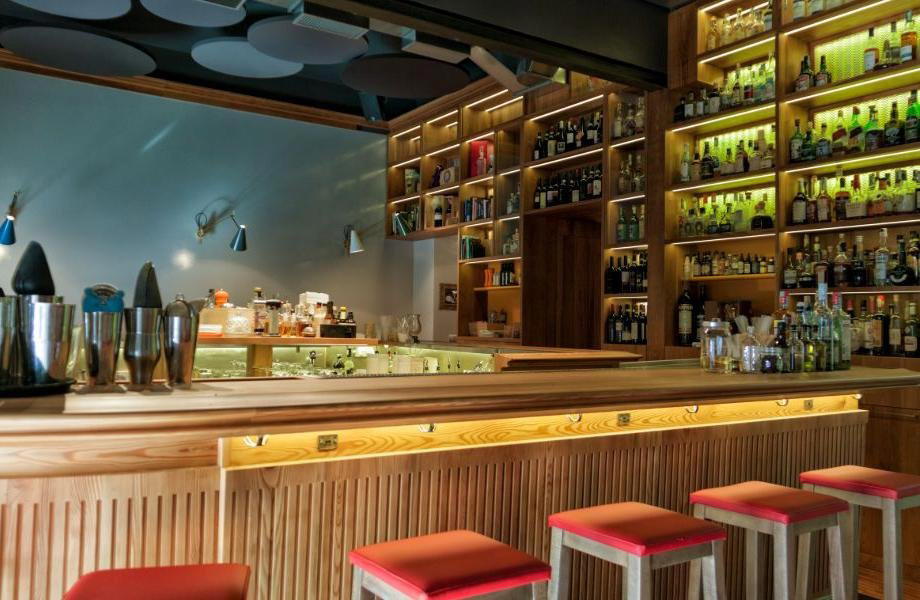
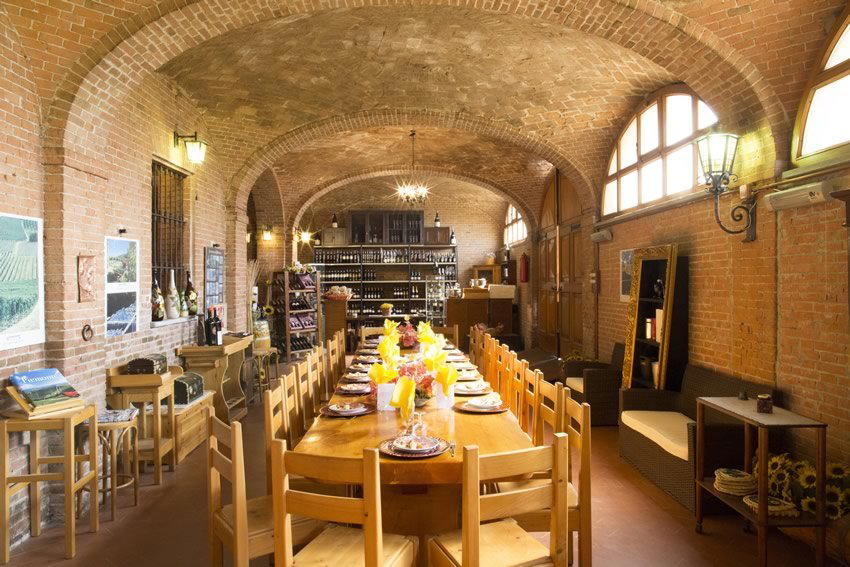
Pleasant atmosphere in rooms on two floors with fireplaces, coffered ceilings, and candlelit dinners evoking timeless old Milan.