
Ebata gives Kyoto yakiniku a Kamigyo setting rather than a downtown gloss: tripe and Japanese barbecue in a house-restaurant format, with counter and tatami seating shaping the meal. Its repeated Tabelog 100 selections for Yakiniku WEST, including 2025, place it in a serious regional conversation without pushing it into luxury tasting-menu territory.
Pearl is the En Primeur Club membership app — saves, bookings, and concierge access live there. Same editors, same standards.
- Address
- 148-1 Yonbancho, Kamigyo Ward, Kyoto, 602-8347, Japan
- Phone
- +81 75-463-8739
- Website
- tabelog.com
 Saves & bookings on Pearl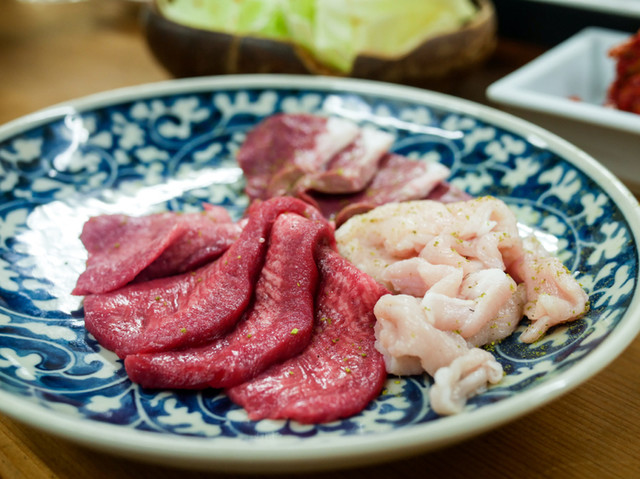
Approaching a Kyoto house restaurant for yakiniku changes the rhythm before the grill is even lit. The city’s better-known dining grammar often points visitors toward kaiseki rooms, counter sushi, temple-adjacent sweets, or French-inflected tasting menus, but beef and offal have their own Kyoto map: smaller rooms, local regulars, smoke control, and a preference for cuts that reward attention rather than spectacle. Ebata belongs to that register, a Kamigyo address where the format is closer to neighborhood ritual than destination theater.
That matters because yakiniku in Kyoto is often judged through sourcing and handling more than decoration. Tripe is listed alongside Japanese barbecue here, and that category tells the reader something useful. Offal-led grilling asks different questions from a marbled-beef showcase: cleaning, slicing, texture, heat management, and seasoning discipline carry as much weight as brand-name beef. The presence of shochu and wine also signals a room built for repeat eating, not a single ceremonial dinner.
Kyoto yakiniku with offal at the center of the table
Kyoto’s restaurant identity can be conservative in public reputation and much broader in practice. A traveler planning only around formal Japanese cuisine misses the city’s working appetite: grilled meat after office hours, counter seating where pacing is controlled by the flame, and tatami rooms that keep the meal social rather than hushed. In that context, Ebata’s tripe-and-yakiniku focus sits apart from the polished French bracket represented by Abbesses or the haute Japanese register of Mitsuyasu. The comparison is not about hierarchy; it is about what kind of Kyoto evening the table is built to deliver.
Recognition gives the room its external signal. Ebata was selected for Tabelog 100 - Yakiniku - WEST - 2025, with earlier selections appearing across the 2018 to 2024 cycle. In Japan, where user-review ecosystems can be exacting and category-specific, repeated placement in a regional yakiniku list is a stronger cue than generic popularity language. The listed Tabelog score of 3.70 also places it in a band where local consensus and specialist interest overlap, especially for a category where diners often have firm preferences on cut, sauce, and grill style.
The sourcing angle is clearest in the offal category. Tripe does not forgive careless procurement or lazy prep; texture is the point, and inconsistency is obvious at the grill. Kyoto’s broader food culture has long valued seasonality, craft supply chains, and ingredient differentiation, and yakiniku translates those values through butcher relationships rather than decorative plating. A room that foregrounds tripe is asking diners to pay attention to chew, char, and the difference between cuts, not simply to order the richest beef available.
A house-restaurant format, not a downtown performance
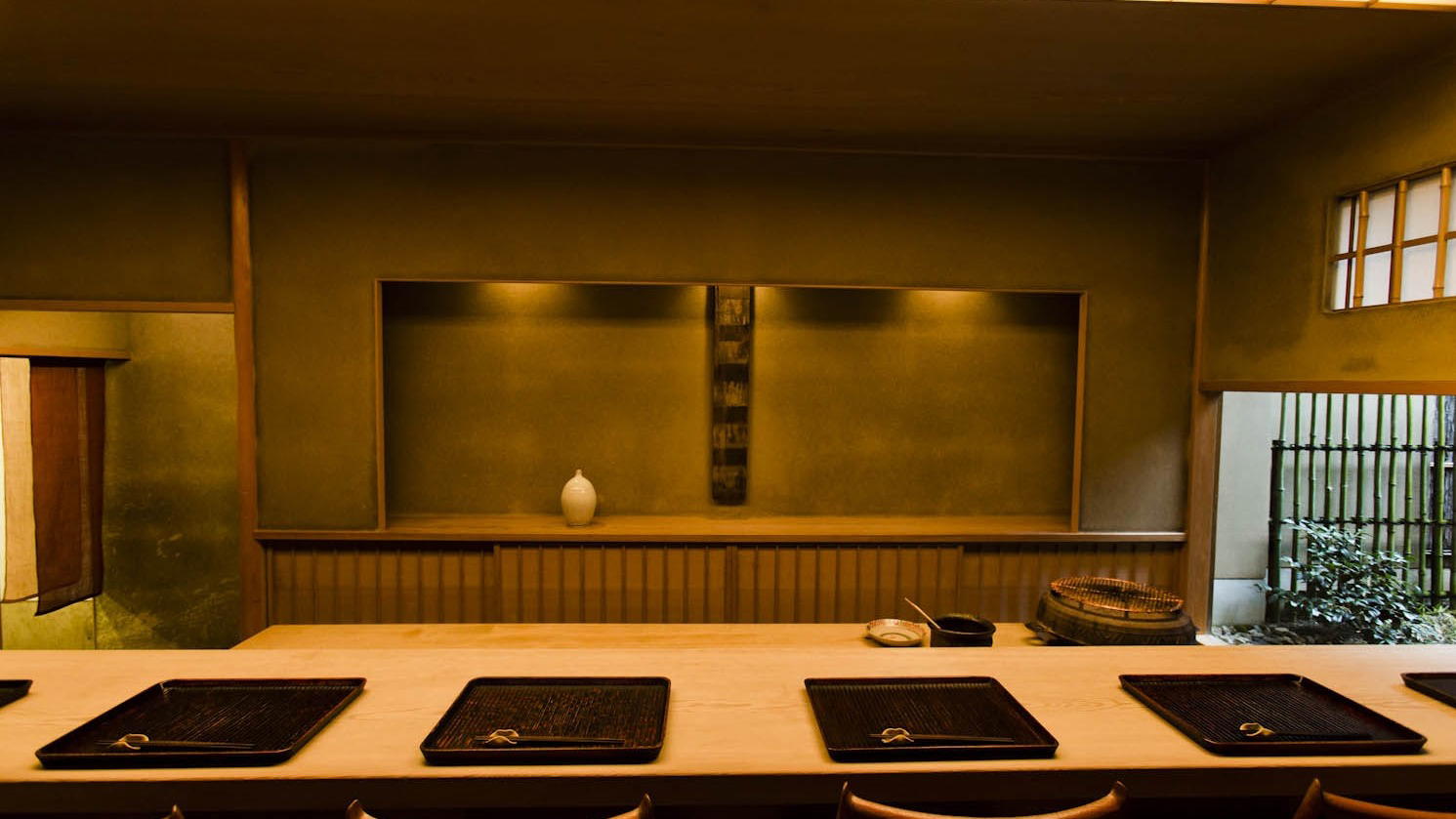
The setting reinforces the dining style. A house restaurant with counter seating and tatami space produces a different social contract from a hotel dining room or a chef’s-counter tasting menu. Counter seats suit close attention to cooking and pacing; tatami rooms lean toward groups of friends, which matches how this kind of meal is often used in Japan: shared plates, repeated rounds, and a table that talks between orders. Private rooms and private use are not part of the format, so the appeal is public-room energy rather than controlled seclusion.
Kamigyo also changes the itinerary. This is not the riverfront shorthand of Pontocho or the department-store convenience of Kyoto Station. The area rewards diners who are already thinking beyond the first-visit circuit, especially those pairing dinner with the city’s northern and western neighborhoods. For a wider Kyoto map, Our full Kyoto restaurants guide is the sensible planning layer, while travelers building a longer stay can cross-check Our full Kyoto hotels guide, Our full Kyoto bars guide, Our full Kyoto wineries guide, and Our full Kyoto experiences guide without forcing every evening into the same dining mold.
Within Kyoto’s broader table, the contrast is useful. Aburi Mochi Honke Nemoto Kazariya speaks to shrine-side confectionery tradition; 551蓬莱 serves a different Kansai comfort-food function; [ki:] and 3TOKU6MI Shijo karasuma ten point toward other contemporary city appetites. Ebata’s value is that it keeps yakiniku in the conversation as a serious Kyoto meal, not a fallback after kaiseki reservations fail.
How to read the room before choosing it
The practical decision is less about luxury and more about fit. A diner looking for polished ceremony should look elsewhere; Kyoto has formal rooms for that, from French dining such as La Biographie··· to Japanese cuisine at Mitsuyasu. A diner interested in ingredient handling, offal, and the communal pace of grilling has a clearer reason to prioritize this address. The average spend sits in a middle-to-serious dinner band for Kyoto yakiniku, and the cash-only policy makes planning less casual than the room might first suggest.
There is also a useful Japan-wide lens. Grilled beef and charcoal culture take different forms across the country, from -Grilled beef Sukiyaki- KAMAKURA TANUKIAN 鎌倉 たぬき庵 in Kamakura to. 鮪と炭火焼き うお炭 秋葉原店 in Tokyo. Kyoto’s version at this level is quieter and more local in feel, less about spectacle and more about the table’s control over heat. That makes it a sharper choice for travelers who already understand that Japanese dining culture is not only sushi, tempura, and kaiseki.
For adjacent reference points beyond Kyoto, the EP Club map stretches from.cafe in Osaka and.know in Kumamoto to (Shoku) Vietnam in Kawasaki, [Curry Senmon Ten] Maruyama Kyoju. in Sapporo, Jōdo Saké Bar in Los Angeles, and Onigiri Time in Pasadena. Read together, they underline the same point: category matters. Ebata is compelling when the evening calls for Kyoto through the grill, with offal, smoke, and shared pacing doing the explanatory work.
Side-by-Side Snapshot
Comparable venues for cuisine and category context.
| Venue | Cuisine | Price | Notes |
|---|---|---|---|
| EbataThis venue — the venue you are viewing | Japanese Yakiniku / Horumon BBQ | $$ | Not listed |
| Tasuki Pass The Baton | Traditional Japanese Tea Room & Kakigori | $$ | Gion |
| Coco Hana | Modern Japanese Organic Cafe | $$ | Kita |
| Yoshokudo Noro | Japanese Yoshoku (Western-Style Cuisine) | $$ | Nakagyō |
| aoi | Traditional Kyoto Obanzai | $$ | Sakyō |
| Kagizen Yoshifusa Shijou honten | Traditional Kyoto wagashi & tea house | $$ | Higashiyama |
Recognition history
Dated appearances from independent guides and award organizations, with the underlying list record or original source where available.
Tabelog 100 #4 · No. 4
Tabelog · Tabelog 100 - Yakiniku - WEST - 2025
Continue exploring
More in Kyoto
Restaurants in Kyoto
Browse all →
Bars in Kyoto
Browse all →
Hotels in Kyoto
Browse all →
Wineries in Kyoto
Browse all →
At a Glance
- Cozy
- Classic
- Intimate
- Group Dining
- Casual Hangout
- Solo
- Standalone
- Historic Building
- Sake Program
Current opening hours
- Monday
- 5–10 PM
- Tuesday
- 5–10 PM
- Wednesday
- Closed
- Thursday
- 5–10 PM
- Friday
- 5–10 PM
- Saturday
- 5–10 PM
- Sunday
- 5–10 PM
Hours can change for holidays and private events. Last verified .
A house-style, no-frills yakiniku spot with counter seating and a tatami room that feels intimate and local rather than polished or formal.