On Admiralstraße in Kreuzberg, Doyum occupies a corner of Berlin's most concentrated stretch of Turkish and Kurdish dining. The room runs long and unfussy, the grill smoke carries into the street, and the cooking draws a loyal crowd from both the neighbourhood and across the city. For those tracing the backbone of Berlin's working-class immigrant food culture, this address is a consistent reference point.
Pearl is the En Primeur Club membership app — saves, bookings, and concierge access live there. Same editors, same standards.
- Address
- Admiralstraße 36-37, 10999 Berlin, Germany
- Phone
- +493061656127
- Website
- doyum-restaurant.de
- Directions
- Get directions
 Saves & bookings on Pearl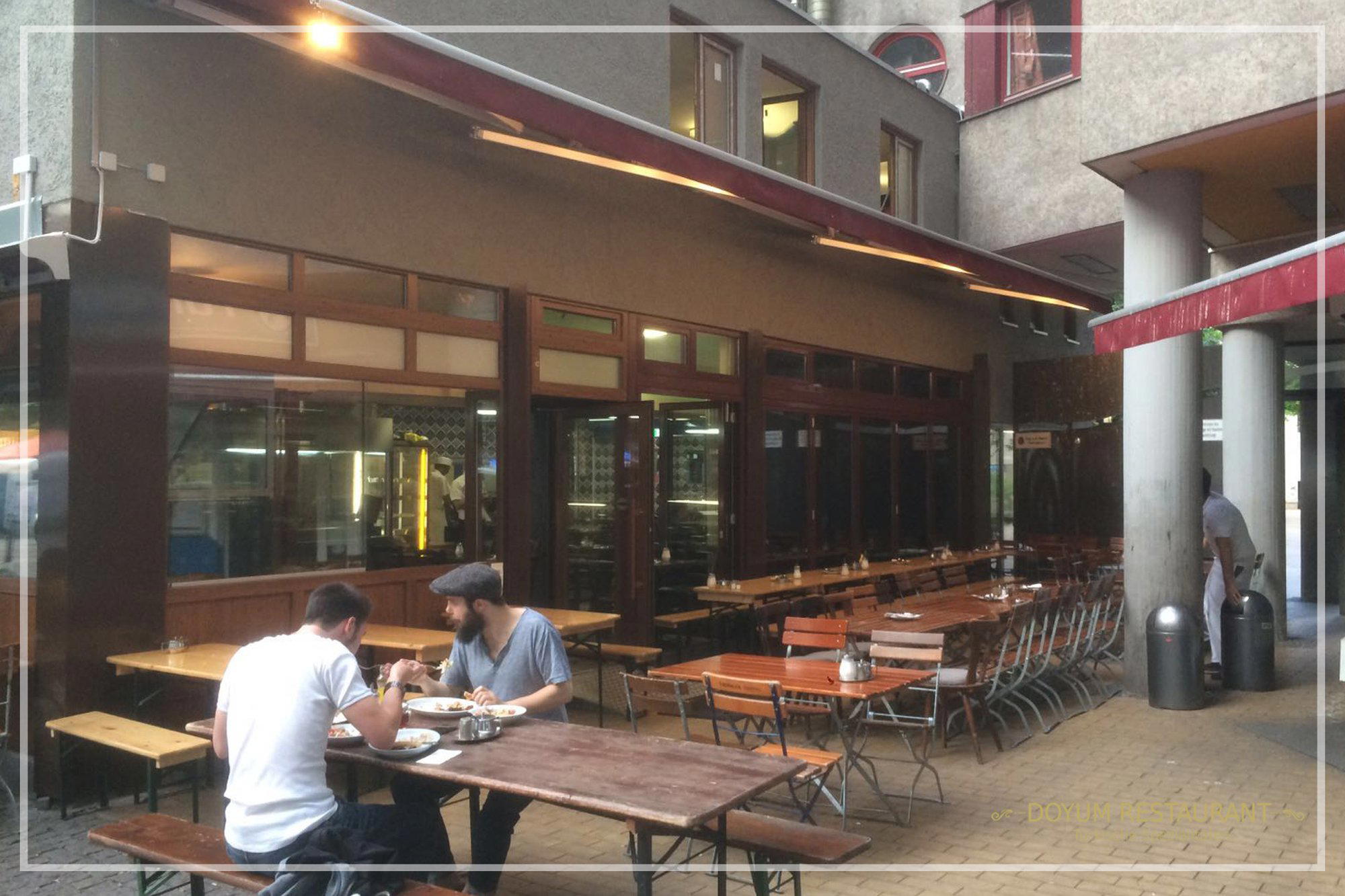
Kreuzberg's Grill Culture and Where Doyum Sits Within It
Doyum is a Turkish Ocakbasi Grill in Berlin's Kreuzberg district, with a casual dress code and a walk-in-friendly service model. Admiralstraße in Kreuzberg 36 is not a street that announces itself. The canal sits a short walk south, the refined U-Bahn rattles nearby, and the block between Kottbusser Tor and Kottbusser Damm has long functioned as a corridor for the neighbourhood's Turkish and Kurdish community rather than as a destination marketed to visitors. That distinction matters. The dining that happens here, Doyum included, belongs to a different lineage than the internationally oriented restaurants clustered around Mitte or Prenzlauer Berg. It answers to a local standard, not a critic's calendar.
Kreuzberg's Turkish restaurant culture developed across several decades, shaped by guest-worker migration from the 1960s onward and by the communities that built permanent roots in what was then West Berlin's most affordable and politically charged district. By the 1980s, the area around Kottbusser Tor had become the densest concentration of Turkish-owned businesses in the city. The food that developed here was not fusion or adaptation; it was transfer, rooted in regional Anatolian and southeastern Turkish traditions and maintained with relatively little concession to outside preference. Doyum sits inside that tradition at Admiralstraße 36-37, in a building that occupies a corner position on the block.
The Room: Smoke, Light, and the Logic of a Working Grill House
The sensory register of a Kreuzberg grill house like Doyum is set before you enter. On cooler evenings, smoke from the mangal carries into the street, carrying the specific char of lamb fat over charcoal, a smell that functions as both advertisement and orientation. The interior follows the logic common to this category of Turkish restaurant in Berlin: long, functional, lit with the kind of directness that prioritises visibility over mood. Tables are close. The room is not designed for lingering over wine lists; it is designed to move food efficiently between kitchen and table.
That efficiency is part of the point. In the category of Anatolian grill restaurants operating in Kreuzberg, the leading signal of quality is not decor complexity but throughput: a room that fills consistently, a grill that stays hot, a clientele that includes the neighbourhood itself rather than only those arriving from outside it. Doyum has maintained that position on Admiralstraße across years of significant change in the surrounding area, as Kreuzberg has shifted from a predominantly working-class district to one navigating significant gentrification pressure.
The Cooking: Anatolian Grill Traditions in a Berlin Context
The food at a venue like Doyum sits within a tradition of southeastern Turkish and Kurdish grill cooking that has been largely consistent in Kreuzberg for decades. The central techniques, open charcoal grilling of marinated lamb, beef, and chicken in various cut and preparation forms, meze built around yoghurt, herbs, and legumes, and flatbreads baked to order, are not innovations. They are maintained practices, and in a city with as many claims on your dining attention as Berlin, that continuity has its own value.
Berlin's restaurant culture in 2024 spans a wide range, from the tasting-menu formalism of Rutz and the dessert-led experimentation of CODA Dessert Dining to the ingredient-first sourcing discipline at Nobelhart & Schmutzig. Those venues represent the city's position in the European fine-dining conversation, where contemporaries include FACIL and the Asian-influenced Restaurant Tim Raue. Doyum is not in that conversation, and it does not need to be. It occupies a different and older stratum of the city's food culture, one that preceded Berlin's emergence as a fine-dining destination and that has survived largely by not orienting itself toward that audience.
Germany's decorated restaurant scene extends well beyond Berlin, with three-star addresses at Schwarzwaldstube in Baiersbronn, Aqua in Wolfsburg, and Vendôme in Bergisch Gladbach, and strong regional programmes at JAN in Munich, Victor's Fine Dining by christian bau in Perl, ES:SENZ in Grassau, Schanz in Piesport, Waldhotel Sonnora in Dreis, Restaurant Haerlin in Hamburg, and Bagatelle in Trier. None of that is the register in which Doyum operates. The comparison is useful precisely because it illustrates how Berlin's food culture distributes across a much broader range than its Michelin count suggests.
Placing Doyum in Berlin's Immigrant Food Tradition
The argument for Doyum, and for venues in its comparable set on Admiralstraße and the surrounding streets, is cultural as much as culinary. Kreuzberg's Turkish restaurant culture represents among the more sustained examples of immigrant food tradition in any northern European capital. The cooking has not been modified to suit tourist expectations, and the dining rooms have not been redesigned to signal aspirational positioning. That resistance, whether deliberate or simply the result of serving a consistent local clientele, is itself informative.
For comparison: venues in immigrant food corridors in other cities, the Sichuan blocks of New York's Flushing or the Vietnamese strips of south London's Tooting, follow a similar pattern. The quality signal comes from regulars and community use rather than from press attention. Doyum's position on Admiralstraße places it in that pattern for Berlin.
Those visiting Berlin with broader fine-dining ambitions will find a city of considerable range. Internationally, the city's culinary standing has grown alongside addresses like Le Bernardin in New York City and experiential formats like Lazy Bear in San Francisco in defining what premium urban dining looks like. For a full picture of what Berlin itself offers across price points and styles, see Berlin's broader dining scene.
Planning Your Visit
Doyum is located at Admiralstraße 36-37 in Kreuzberg, a short walk from Kottbusser Tor U-Bahn station on lines U1 and U8. The surrounding block contains several comparable grill restaurants, which makes the area worth a deliberate visit rather than a single-venue drop-in. Current hours are Monday to Thursday and Sunday from 8 AM to 1 AM, Friday and Saturday from 8 AM to 3 AM. Reservations are not the operating model.
Venue Comparison: Kreuzberg and Peer Context
| Venue | Style | Price Tier | Booking Format |
|---|---|---|---|
| Doyum | Anatolian grill, Kreuzberg | €€ | Walk-in friendly |
| Nobelhart & Schmutzig | Modern German, creative | €€€€ | Advance reservation required |
| Rutz | Modern European | €€€€ | Advance reservation required |
| FACIL | Contemporary European | €€€€ | Advance reservation required |
| CODA Dessert Dining | Creative, dessert-led | €€€€ | Advance reservation required |
Peers in This Market
Comparable venues nearby, for context on price, style, and recognition.
| Venue | Cuisine | Price | Notes |
|---|---|---|---|
| DoyumThis venue — the venue you are viewing | Turkish Ocakbasi Grill | $$ | Not listed |
| Oggi's Gemüsekebab | Turkish Gemüsekebab | $ | Moabit |
| Leylak | Authentic Turkish Börek, Lahmacun & Pide | $$ | Kreuzberg |
| Biermeisterei | German Brewery BBQ & Grill | $$ | Mitte |
| Kreuzberger Himmel | Authentic Syrian & Arabic | $$ | Kreuzberg |
| Lovebirds | Contemporary Neapolitan Pizza | $$ | Scheunenviertel |
Continue exploring
More in Berlin
Restaurants in Berlin
Browse all →
Bars in Berlin
Browse all →
Hotels in Berlin
Browse all →
Wineries in Berlin
Browse all →
At a Glance
- Lively
- Trendy
- Casual Hangout
- Late Night
- Group Dining
- Open Kitchen
- Street Scene
Current opening hours
- Monday
- 8 AM–1 AM
- Tuesday
- 8 AM–1 AM
- Wednesday
- 8 AM–1 AM
- Thursday
- 8 AM–1 AM
- Friday
- 8 AM–3 AM
- Saturday
- 8 AM–3 AM
- Sunday
- 8 AM–1 AM
Hours can change for holidays and private events. Last verified .
Bustling and energetic atmosphere with the sight and smell of live grilling amid Kottbusser Tor's lively street life.