d'Ouwe Smisse
Our verdict
In the village of Zonnemaire on Zeeland's Schouwen-Duiveland peninsula, d'Ouwe Smisse occupies a setting shaped by tidal agriculture and North Sea proximity. The kitchen operates within a region where the distance between field, water, and plate is measurably short. For diners seeking fine dining rooted in genuine Dutch provincial character rather than urban polish, this address merits the detour.

Pearl is the En Primeur Club membership app — saves, bookings, and concierge access live there. Same editors, same standards.
- Address
- Breedveld 3, 4316 BA Zonnemaire, Netherlands
- Phone
- +31111402932
- Hours
- Mon 12–9 PMTue–Wed ClosedThu 4–9 PMFri–Sun 12–9 PM
- Website
- deouwesmisse.nl
- Directions
- Get directions
- Booking
- Book on the venue's website
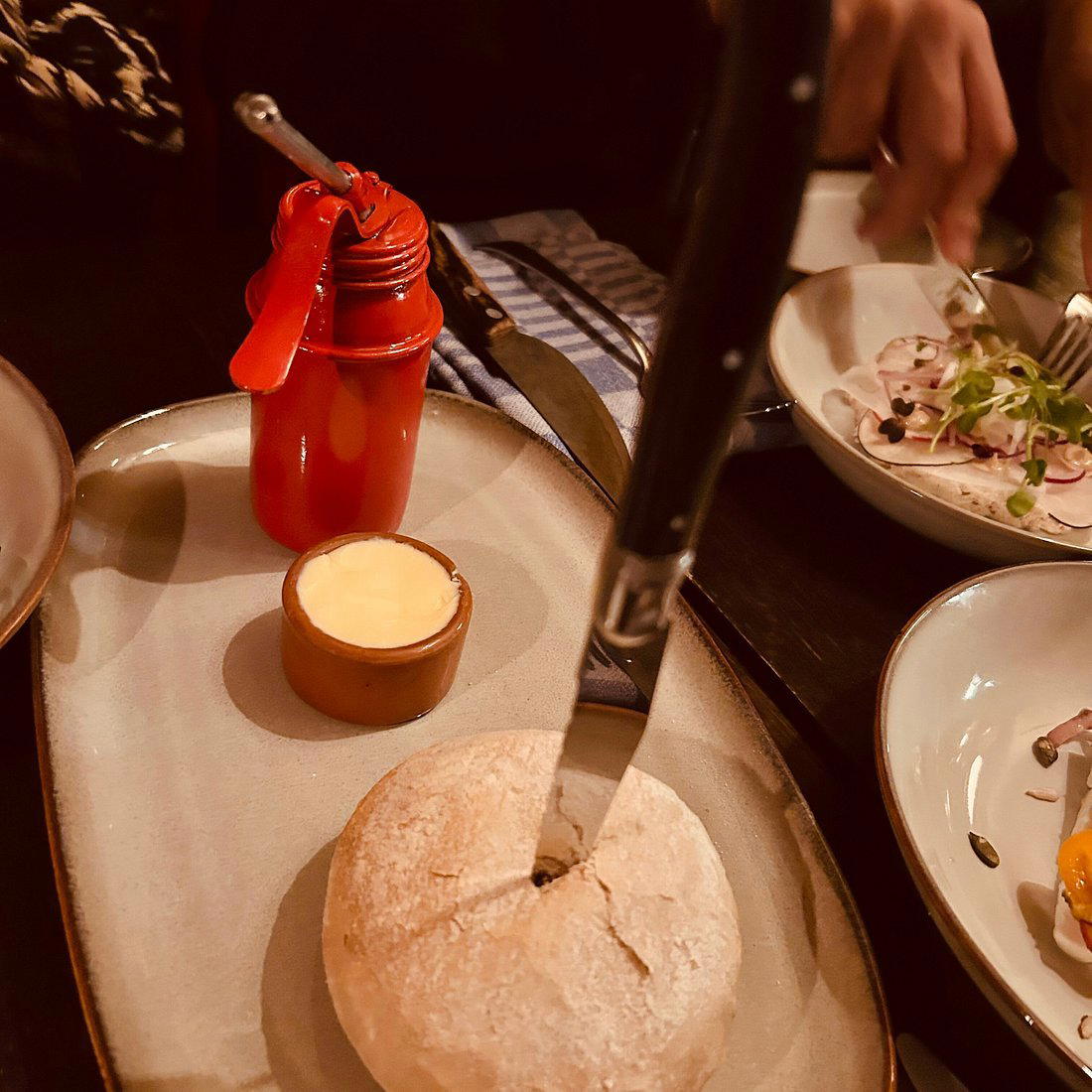
The menu
What to order
- Artichoke with goat cheese
- Roasted leek
- Grilled pork belly
Where the Zeeland Countryside Meets the Table
Approach Zonnemaire on a weekday afternoon and the scale of the place registers immediately: a village of a few hundred residents on Schouwen-Duiveland, the largest island in the Zeeland archipelago, surrounded by polders that sit at or below sea level. The land here has been shaped by centuries of water management, and the agriculture that grows from that managed terrain carries a character specific to this corner of the Netherlands. D'Ouwe Smisse, addressed at Breedveld 3, operates inside that context — a fine dining destination that draws meaning from a location most diners would never encounter by accident.
That remoteness is the editorial point. The Netherlands has developed a strong tradition of placing ambitious kitchens in rural or semi-rural settings, away from the metropolitan concentration of Amsterdam or Rotterdam. Venues like De Lindenhof in Giethoorn, De Groene Lantaarn in Staphorst, or Brut172 in Reijmerstok all demonstrate that Dutch fine dining has long understood the logic of proximity to source: position the kitchen near the ingredient, and the supply chain compresses to something almost domestic in scale. D'Ouwe Smisse sits within that same tradition.
Zeeland as a Sourcing Region
To understand what a kitchen in Zonnemaire is working with, it helps to understand what Zeeland produces. The province is among the most ingredient-rich in the Netherlands. Zeeland oysters from the Oosterschelde estuary carry a Protected Designation of Origin and are widely regarded as among the most prized bivalves available in European fine dining, appearing on menus from Paris to Copenhagen. Zeeland lobster, harvested from the cold North Sea waters immediately to the west, forms part of a shellfish culture that stretches back generations. The mussel harvest from the tidal channels is substantial enough to supply most of the Netherlands and significant portions of Belgium. On land, the polders yield lamb grazed on salt-marsh grasses, a grazing condition that concentrates flavour in the meat in ways measurably different from inland pasture.
This is the sourcing environment that a kitchen in Zonnemaire inhabits. The village sits roughly equidistant from the Oosterschelde to the east and the North Sea coast to the west — a geographic position that makes access to tidal and marine produce genuinely local rather than aspirationally so. The distinction matters in an era when provenance claims have become a standard marketing tool across European fine dining. Here, the geography makes the claim verifiable rather than rhetorical.
For comparison, consider how Inter Scaldes in Kruiningen, one of Zeeland's most decorated addresses, has built a kitchen identity explicitly around Zeeland's tidal produce, earning recognition that reflects both technical precision and the singular quality of the ingredients available in this region. The lesson from that model is that Zeeland ingredients, when handled with care, can support cooking at the highest level. The province is not a secondary location for fine dining, it is a primary sourcing environment.
The Village Setting and What It Implies
D'Ouwe Smisse's address in a village of this size places it in a category of Dutch dining destination that requires commitment from the diner. There is no casual footfall here. The guests who arrive at Breedveld 3 have made a deliberate choice, which tends to shape the atmosphere in a specific direction: quieter, more focused, and oriented toward the meal rather than the social spectacle that accompanies urban dining rooms. This is a pattern recognisable across Dutch rural fine dining, from De Treeswijkhoeve in Waalre to Tribeca in Heeze, venues where the setting enforces a certain deliberateness.
That atmosphere functions differently from the energy of city restaurants like Ciel Bleu in Amsterdam or FG by François Geurds in Rotterdam, where the urban backdrop is part of the dining proposition. In Zonnemaire, the backdrop is agricultural silence and flat horizon. Diners who find that exchange worthwhile tend to find it very worthwhile indeed.
Dutch Fine Dining Beyond the Randstad
The Netherlands' most recognised kitchens are not evenly distributed across the country. De Librije in Zwolle, De Nieuwe Winkel in Nijmegen, Aan de Poel in Amstelveen, and 't Nonnetje in Harderwijk demonstrate that Dutch culinary ambition extends well beyond the Randstad metropolitan ring. The consistent thread across these addresses is a willingness to plant serious kitchens in locations that force diners to travel with intention. D'Ouwe Smisse occupies that same category of deliberate-destination dining.
Internationally, the model has parallels. Kitchens like Lazy Bear in San Francisco built reputations through format specificity and ingredient commitment rather than prime urban real estate. At the highest technical level, Le Bernardin in New York City demonstrates what sustained focus on a single ingredient category, in that case, seafood, can produce over decades. In Zeeland, the ingredient logic points in a similar direction, even if the scale and context differ considerably.
Planning a Visit to Zonnemaire
Reaching Zonnemaire from Amsterdam takes roughly two hours by car via the A4 south toward Bergen op Zoom and then west across Zeeland's network of bridges and causeways, a drive that passes through some of the most engineered terrain in Europe. Public transport options to Zonnemaire itself are limited, making a car essential for most visitors. The village has no hotel infrastructure of its own; visitors typically base themselves in Zierikzee, the island's historic market town roughly eight kilometres to the north, which offers bed-and-breakfast accommodation and a handful of traditional Dutch restaurants suited to extending a stay on Schouwen-Duiveland. Booking ahead is the standard practice for any fine dining destination in a rural Dutch village, where covers are limited and the kitchen depends on sourcing to order. For a broader orientation to dining on this part of the island, our full Zonnemaire restaurants guide maps the options across the area. The Zeeland season peaks between May and October, when the tidal produce is at full availability and the polder landscape operates in proper light. A visit in early September, when the summer crowds have thinned but the sourcing calendar remains open, sits at a sensible point in the year. De Bokkedoorns in Overveen and Central Park in Voorburg offer reference points for what the Dutch fine dining tier looks like closer to the urban coast, providing useful calibration for placing d'Ouwe Smisse within the national picture. De Lindehof in Nuenen rounds out the picture of ambitious rural Dutch kitchens operating at some distance from the metropolitan core.
Frequently asked questions
Is d'Ouwe Smisse good for families?
D'Ouwe Smisse sits at Breedveld 3 in Zonnemaire, a village of a few hundred residents on Schouwen-Duiveland — a setting that signals a deliberate, sit-down dining experience rather than a casual drop-in. The village context and destination-restaurant format suggest an adult-oriented occasion. Families with older children who are comfortable at a considered dinner pace would likely find it more suitable than those with very young children.
What is the atmosphere like at d'Ouwe Smisse?
The address in a small Zeeland village means the atmosphere is shaped more by place than by urban theatre. Zonnemaire has a few hundred residents and no ambient city buzz, so the dining room draws its energy inward — the kind of quiet that comes with a two-hour drive from Amsterdam. Expect something closer to a rural Dutch inn of character than a metropolitan dining room.
Is d'Ouwe Smisse worth the drive from Amsterdam or Rotterdam for a dining destination trip?
Reaching Zonnemaire from Amsterdam takes roughly two hours by car via the A4 south toward Bergen op Zoom and across Zeeland's bridge network — a commitment that places d'Ouwe Smisse in the same conversation as De Librije in Zwolle or Aan de Poel in Amstelveen as a reason-to-travel Dutch dining address outside the Randstad. The village address at Breedveld 3, Zonnemaire, anchors the experience in Schouwen-Duiveland, a Zeeland island with genuine ingredient provenance in shellfish and coastal lamb. Whether that drive is warranted depends on current form, so checking recent editorial coverage before booking is advisable.
What dish is d'Ouwe Smisse famous for?
What the kitchen's location does imply is proximity to Zeeland's sourcing strengths: the province produces some of the Netherlands' most prized shellfish, lamb, and seasonal produce, which tend to anchor menus in this region. For confirmed current menu details, contacting the venue directly is the reliable route.
Where is d'Ouwe Smisse in Zonnemaire?
d'Ouwe Smisse is located at Breedveld 3, 4316 BA Zonnemaire, Netherlands, Zonnemaire.
How It Stacks Up
| Venue | Cuisine | Price | Awards | Notes |
|---|---|---|---|---|
| d'Ouwe SmisseThis venue — the venue you are viewing | Dutch Regional Grill | $50–100 | Not listed | Not listed |
| De Librije | Modern Dutch Fine Dining | $200–300 | 3 Michelin Stars · World's 50 Best #46 | Modern Cuisine |
| De Nieuwe Winkel | Botanical Fine Dining | $300–500 | 2 Michelin Stars · La Liste Top Restaurants | Organic |
| De Lindenhof | Classic French Fine Dining | Not listed | 2 Michelin Stars · La Liste Top Restaurants | Creative |
| De Lindehof | Surinamese-Hindustani French Fusion | Not listed | 2 Michelin Stars · La Liste Top Restaurants | Contemporary Dutch, Creative |
| Fred | Modern French Fine Dining | $200–300 | 2 Michelin Stars · La Liste Top Restaurants | Creative French |
Continue exploring
More in Zonnemaire
Restaurants in Zonnemaire
Browse all →
Bars in Zonnemaire
Browse all →
Hotels in Zonnemaire
Browse all →
Wineries in Zonnemaire
Browse all →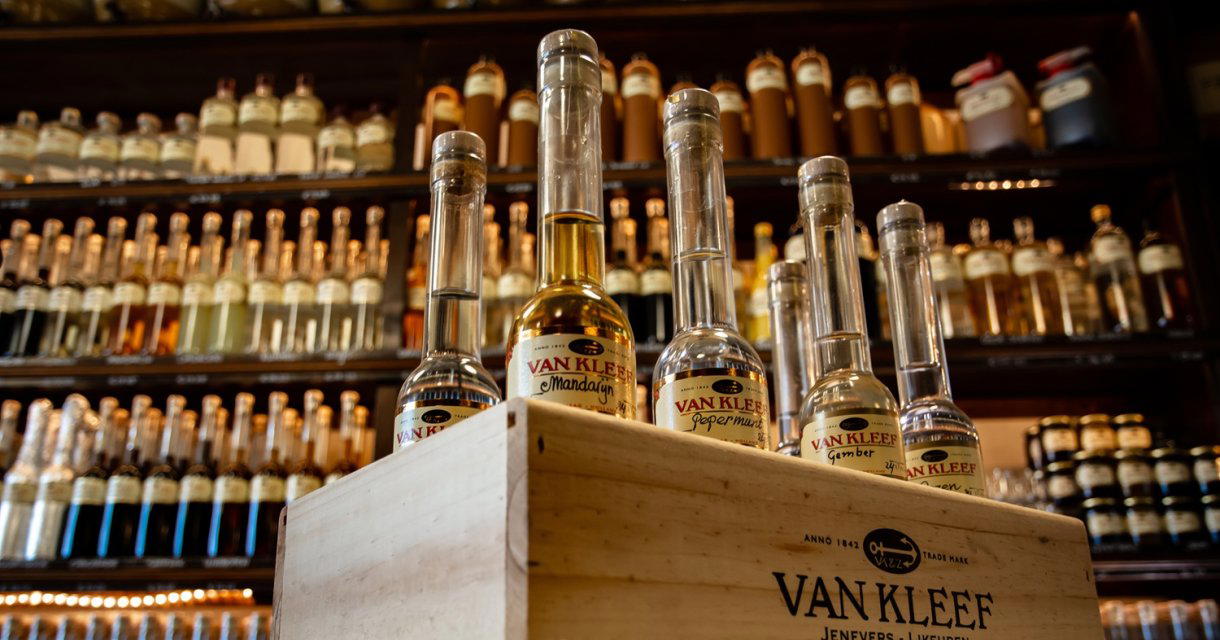
d'Ouwe Smisse
The wine
- Wine program
- Curated wine list
- Extensive wine list
Details
- Cozy
- Rustic
- Intimate
- Date Night
- Family
- Casual Hangout
- Special Occasion
- Historic Building
- Open Kitchen
- Terrace
- Extensive Wine List
- Farm To Table
- Local Sourcing
- Organic
- A La Carte
- Local Beer
- Wine
- Vegetarian Friendly
- Vegan Options
- Gluten Free Options
Current opening hours
- Monday
- 12–9 PM
- Tuesday
- Closed
- Wednesday
- Closed
- Thursday
- 4–9 PM
- Friday
- 12–9 PM
- Saturday
- 12–9 PM
- Sunday
- 12–9 PM
Hours can change for holidays and private events. Last verified .
Cozy and gemütlich atmosphere in a historic smelterij with crackling fireplace, warm lighting, and welcoming service.