Stadsbrouwerij De Pelgrim
One of Rotterdam's few working brewery-pubs, Stadsbrouwerij De Pelgrim occupies a canal-side address in Delfshaven, the city's best-preserved historic quarter. The brewing operation sits visible within the space, giving the room a functional, industrial character that sets it apart from Rotterdam's newer bar formats. For visitors moving through the neighbourhood, it functions as both a destination and an orientation point.
Pearl is the En Primeur Club membership app — saves, bookings, and concierge access live there. Same editors, same standards.
- Address
- Aelbrechtskolk 12, 3024 RD Rotterdam, Netherlands
- Phone
- +31 10 477 1189
- Website
- pelgrimbier.nl
- Directions
- Get directions
 Saves & bookings on Pearl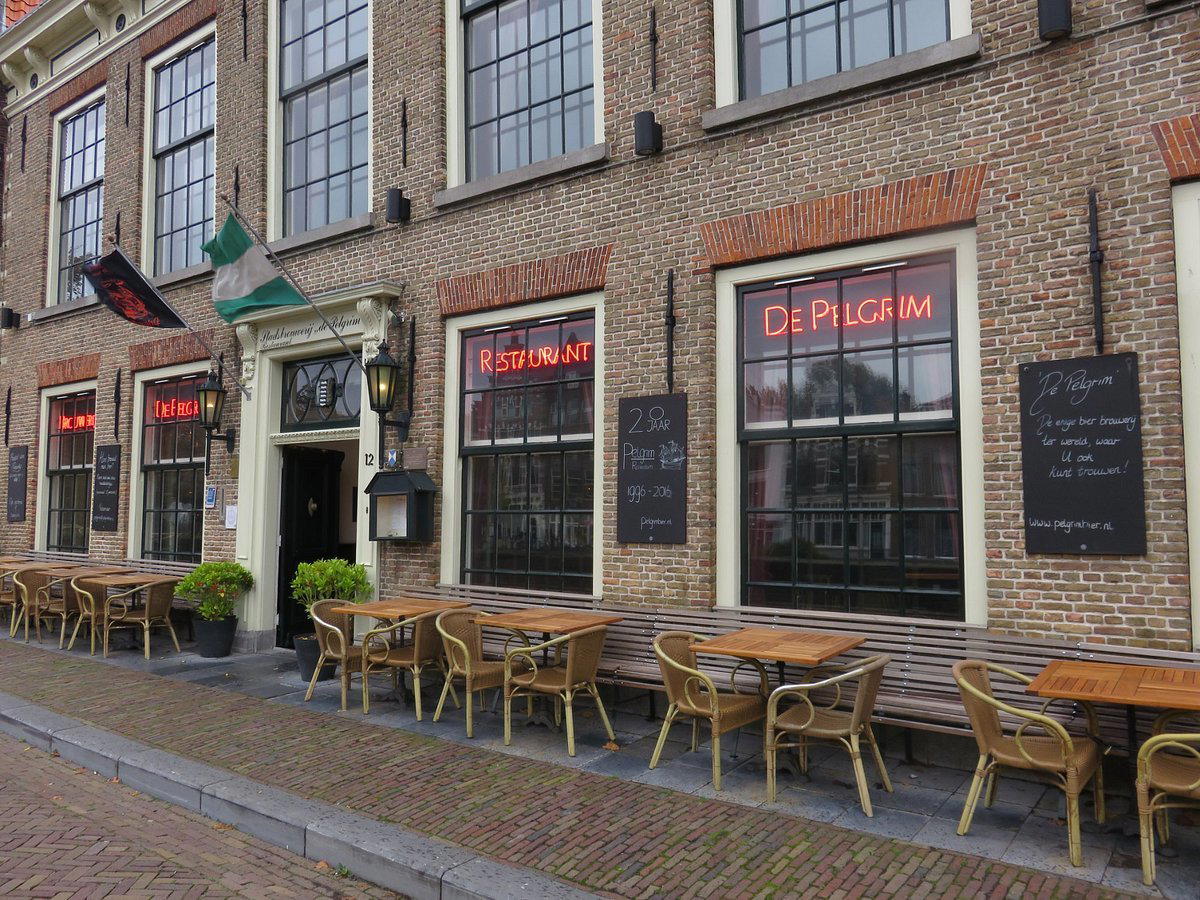
A Brewery Built Into the Fabric of Delfshaven
Delfshaven is the anomaly in Rotterdam's urban story. While the rest of the city was rebuilt from scratch after the wartime bombing of 1940, this small harbour district survived intact, its canal, gabled warehouses, and drawbridges still in place. Within that preserved streetscape, industrial production and hospitality have shared the same buildings for centuries. Stadsbrouwerij De Pelgrim sits on Aelbrechtskolk, the narrow inner canal that forms Delfshaven's spine, and the brewery's presence there follows a logic that newer bar districts in Rotterdam cannot replicate: the building was already old when the rest of the city was being razed.
That context matters when reading the space. Brewery venues in the Netherlands tend to split between large-format tourist operations and smaller craft producers whose taprooms are essentially functional afterthoughts. De Pelgrim occupies a different register, where the historic container and the production function reinforce each other rather than one serving as backdrop for the other. The brewing equipment is not decorative. It is part of the room's structural logic.
The Physical Space as Argument
The interior reads as layered rather than designed in a single gesture. Exposed beams, brick, and the kind of low-ceilinged proportions typical of Dutch canal warehouses create a compression that works in the brewery's favour: you are aware of the vessels, the copper and steel, the smell of malt and yeast, without the room making a theatrical point of them. This is a working production facility that also seats guests, not a showroom with a functioning prop in the corner.
The canal-side position adds a specific kind of light, the diffuse northern European grey-white that flattens shadows and makes old materials read clearly. In summer, that translates to a waterfront quality that most Rotterdam bar addresses cannot access. The city's newer hospitality openings cluster around Markthal, the Wijnhaven, and the strip along the Maas, all of which offer post-industrial cool but not this particular combination of intact heritage and active production. For visitors who have covered those areas already and want to understand what Rotterdam's pre-war character felt like at ground level, Delfshaven and this address specifically offer a physical argument that no amount of architectural recreation could make.
What separates De Pelgrim is the on-site brewing function, which adds a production dimension those venues do not carry. Elsewhere in the city, Botanero and Cafe Kiem represent the cocktail-forward side of Rotterdam's drinking scene, where the emphasis is on technical bar programs rather than house-made fermentation. De Pelgrim is positioned well apart from that tier.
Craft Beer in the Dutch Context
The Netherlands has a beer culture that is often underread internationally because of the dominance of the major lager brands, but the country has a functioning craft segment that has grown steadily since the early 2010s. Within that segment, brewery taprooms with genuine historic premises are scarce, and Rotterdam has fewer of them than cities like Utrecht or Haarlem, where the urban fabric suffered less wartime disruption. That scarcity gives De Pelgrim a positional advantage that has nothing to do with marketing and everything to do with geography and history.
Dutch craft beer tends to favour clean interpretations of Belgian and German styles, with wheat beers, abbey ales, and seasonal formats appearing more frequently than the hop-forward American-influenced styles that dominate British and Scandinavian craft output. Visitors familiar with venues like Florin Utrecht or those who have spent time in Utrecht's beer scene will recognise the format, though the Delfshaven setting carries a specificity that Utrecht's more heavily touristed centre cannot match in the same way.
Planning the Visit
Delfshaven sits roughly four kilometres west of Rotterdam Centraal, accessible by tram and a short walk. The neighbourhood is compact enough that a visit pairs naturally with the Historisch Museum Delfshaven and the Pilgrim Fathers Church, both within a few minutes on foot, making De Pelgrim a logical endpoint for a neighbourhood circuit rather than a standalone destination requiring a dedicated trip. The canal-side terrace, when weather permits, functions as a genuine outdoor room, not a pavement afterthought, which places it in a small category of Rotterdam outdoor drinking spaces worth timing a visit around in warmer months. For the broader Rotterdam drinking and dining scene, our full Rotterdam restaurants guide maps the key addresses across neighbourhoods and price tiers.
Those building a longer drinks itinerary across the Netherlands can use De Pelgrim as a reference point for what the heritage-brewery format looks like at its most site-specific. Door 74 in Amsterdam operates at the opposite end of the spectrum, in the technical cocktail register, while Bowie in The Hague and Brasserie Lalou in Delft cover adjacent cities for those doing a broader South Holland circuit. Further afield, Café Barolo in Eindhoven and Boode Foodbar in Bathmen represent different regional registers entirely. For international comparison, Bar Leather Apron in Honolulu shows how the craft-specialist format translates across very different hospitality cultures.
Continue exploring
More in Rotterdam
Bars in Rotterdam
Browse all →
Restaurants in Rotterdam
Browse all →
Hotels in Rotterdam
Browse all →
Wineries in Rotterdam
Browse all →
At a Glance
- Classic
- Rustic
- Historic
- Cozy
- Casual Hangout
- After Work
- Historic Building
- Seated Bar
- Outdoor Terrace
- Craft Beer
- Waterfront
Current opening hours
- Monday
- Closed
- Tuesday
- Closed
- Wednesday
- 12 PM–12 AM
- Thursday
- 12 PM–12 AM
- Friday
- 12 PM–12 AM
- Saturday
- 12 PM–12 AM
- Sunday
- 12–10 PM
Hours can change for holidays and private events. Last verified .
Classic brown café atmosphere with warm dark interiors, wooden panelling, low lighting, and historic charm.
Know Before You Go
- Getting there
- Aelbrechtskolk 12, 3024 RD Rotterdam, Netherlands