Don Dining Kounosuke
Don Dining Kounosuke occupies a canal-side address on Westerkade 27 in Utrecht, positioning itself within a city that has quietly built one of the Netherlands' more concentrated fine-dining corridors. The wine program is the editorial thread that runs through the experience here, framing a meal that rewards guests who arrive with curiosity about what a thoughtful cellar can do for a tasting format.
Pearl is the En Primeur Club membership app — saves, bookings, and concierge access live there. Same editors, same standards.
- Address
- Westerkade 27, 3511 HC Utrecht, Netherlands
- Phone
- +31302657910
- Website
- don-kounosuke.com
- Directions
- Get directions
 Saves & bookings on Pearl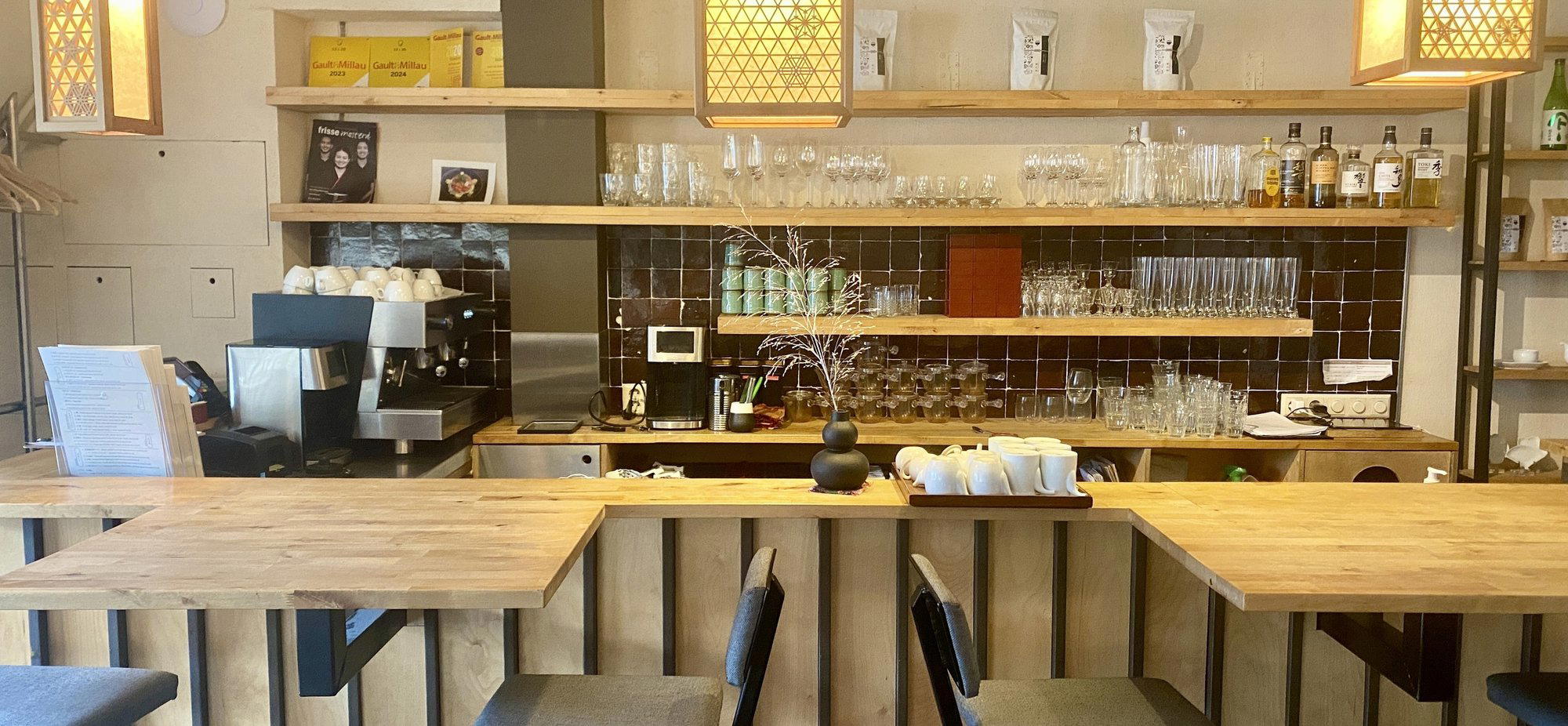
Utrecht's Canal Edge and the Restaurants That Occupy It
Westerkade sits along one of Utrecht's oldest canal wharves, where the brick warehouses that once stored river cargo now house a mix of design studios, independent restaurants, and the occasional unmarked door that rewards those who look. The street operates at a remove from the tourist circuit around the Dom Tower, which means the restaurants here tend to attract a local and regional clientele rather than passing visitors. Don Dining Kounosuke sits at Westerkade 27 in Utrecht, a Japanese donburi restaurant with a casual dress code, recommended reservations, and an average price of about $25 per person. Arriving on foot from the city centre takes roughly ten minutes from the central station, and the waterside position means the light shifts considerably across a long dinner as the sun drops behind the opposite embankment.
The Wine Argument at This Price Point
In the Netherlands' fine-dining tier, the wine program is increasingly the variable that separates a serious kitchen from a complete dining proposition. Across the country's most decorated tables, from De Librije in Zwolle to Inter Scaldes in Kruiningen, the cellar depth tends to reflect the same ambition as the kitchen: regional and international producers in dialogue, with a sommelier program that can articulate the logic behind each pairing. Don Dining Kounosuke's address in Utrecht places it within a city that has been developing exactly this kind of dual-focus dining culture. The comparison set locally includes Karel 5 at the higher price tier and Maeve in the creative French register, both of which have built reputations partly on the quality of their wine service alongside kitchen output.
A thoughtfully assembled cellar at a canal-side venue of this character typically draws from both established European appellations and the growing category of natural and low-intervention producers that have found committed followings in Dutch fine-dining circles over the past decade. The curation philosophy that defines this tier prioritises coherence over volume: a list of four hundred well-chosen bottles with clear pairing logic is a more useful instrument for a tasting format than a cellar of twice the size organised around prestige labels alone. Whether Don Dining Kounosuke's list operates on that principle is something a reservation will confirm, but the venue's positioning on Westerkade, alongside the name's implicit reference to a specific culinary lineage, suggests a deliberate rather than opportunistic approach to hospitality.
What the 'Don Dining' Format Signals
The 'Don Dining' framing, combined with the Japanese given name Kounosuke, points toward a specific register of contemporary European dining that has become more legible in the Netherlands over the past several years. This is the mode in which Japanese culinary discipline, particularly around produce handling, temperature precision, and the treatment of fermented or aged ingredients, is applied within a broadly European tasting format. Restaurants like De Nieuwe Winkel in Nijmegen and Brut172 in Reijmerstok represent adjacent expressions of this tendency, each finding a different answer to the question of how non-European culinary traditions can inform rather than simply decorate a tasting menu rooted in local produce. The wine program in this context carries an additional function: it must bridge the precision of a Japanese-influenced kitchen with the broader European cellar tradition, which tends to require a sommelier confident enough to move between Burgundy, the Jura, and Austrian orange wine depending on what the kitchen sends out.
Internationally, the equivalents at this type of restaurant operate at a high level of culinary integration. Venues like Le Bernardin in New York City and Lazy Bear in San Francisco have shown that a specific culinary point of view, sustained across both kitchen and cellar, produces a more coherent guest experience than attempting broad appeal across multiple traditions simultaneously.
Utrecht's Fine-Dining Corridor in 2024
Utrecht has been accumulating serious restaurants at a pace that its size alone does not predict. The city's population sits well below Amsterdam's, yet the concentration of tasting-format restaurants operating at the higher price tiers is notable. This is partly a function of Utrecht's role as a commuter hub and university city, generating a professional resident base with the disposable income and appetite for long evenings that fine dining requires. Badhuis and Bar Bet represent the city's more casual registers, while Bakkerswinkel Utrecht anchors the daytime trade. The tasting-menu tier, where the restaurant operates, sits above these and competes with the broader Dutch fine-dining circuit rather than just its immediate Utrecht neighbours. Venues such as De Lindenhof in Giethoorn, Tribeca in Heeze, De Groene Lantaarn in Staphorst, De Lindehof in Nuenen, De Bokkedoorns in Overveen, and De Treeswijkhoeve in Waalre define the national peer group for a venue in this format and price register.
Planning Your Visit
Westerkade 27 is reachable on foot from Utrecht Centraal in under fifteen minutes, and cycling, the default mode for most Utrecht locals, cuts that to under five. The canal-side location means street parking is limited on weekday evenings when the waterfront fills with after-work foot traffic, so public transport or a bicycle is the practical choice for most visitors arriving from outside the centre. Given the format and positioning of the venue, booking in advance is the sensible approach: restaurants in this tier in Utrecht typically operate on a reservation basis rather than a walk-in model, and demand on Thursday through Saturday evenings tends to outpace available covers.
How It Stacks Up
Comparable venues nearby, for context on price, style, and recognition.
| Venue | Cuisine | Price | Notes |
|---|---|---|---|
| Don Dining KounosukeThis venue — the venue you are viewing | Japanese Donburi | $$ | Not listed |
| Kong Izakaya | Japanese Izakaya | $$ | city center |
| Bakkerswinkel Utrecht | Dutch Bakery Café with Fondue | $$ | Binnenstad |
| Momofogu Hot Pot | Chinese Hot Pot | $$ | Leidsche Rijn |
| Rum CLUB | Caribbean Tropical Street Food | $$ | Binnenstad |
| Meneer Smakers | Gourmet American Burgers | $$ | Oudegracht |
Continue exploring
More in Utrecht
Restaurants in Utrecht
Browse all →
Bars in Utrecht
Browse all →
Hotels in Utrecht
Browse all →
Wineries in Utrecht
Browse all →
At a Glance
- Cozy
- Intimate
- Modern
- Date Night
- Casual Hangout
- Open Kitchen
- Sake Program
- Waterfront
Current opening hours
- Monday
- Closed
- Tuesday
- 5:30–10 PM
- Wednesday
- 5:30–10 PM
- Thursday
- 5:30–10 PM
- Friday
- 5:30–10 PM
- Saturday
- 4:30–10 PM
- Sunday
- 4:30–10 PM
Hours can change for holidays and private events. Last verified .
Tranquil Japandi-inspired interior with wooden panels and bamboo accents creating a serene and cozy atmosphere.