Deus Cafe Navigli sits on Via Privata Sartirana in Milan's canal district, where the Navigli's bar-and-workshop culture meets a format that draws on the brand's global identity. The cafe operates at the intersection of coffee, food, and creative community in one of the city's most socially active neighbourhoods. For visitors reading the area's hospitality scene, it offers a reference point distinct from the formal dining tier that defines much of Milanese gastronomy.
- Address
- Via Privata Sartirana, 1, 20144 Milano MI, Italy
- Phone
- +39 02 3826 7836
- Website
- linktr.ee
- Directions
- Get directions
The Canal District as Context
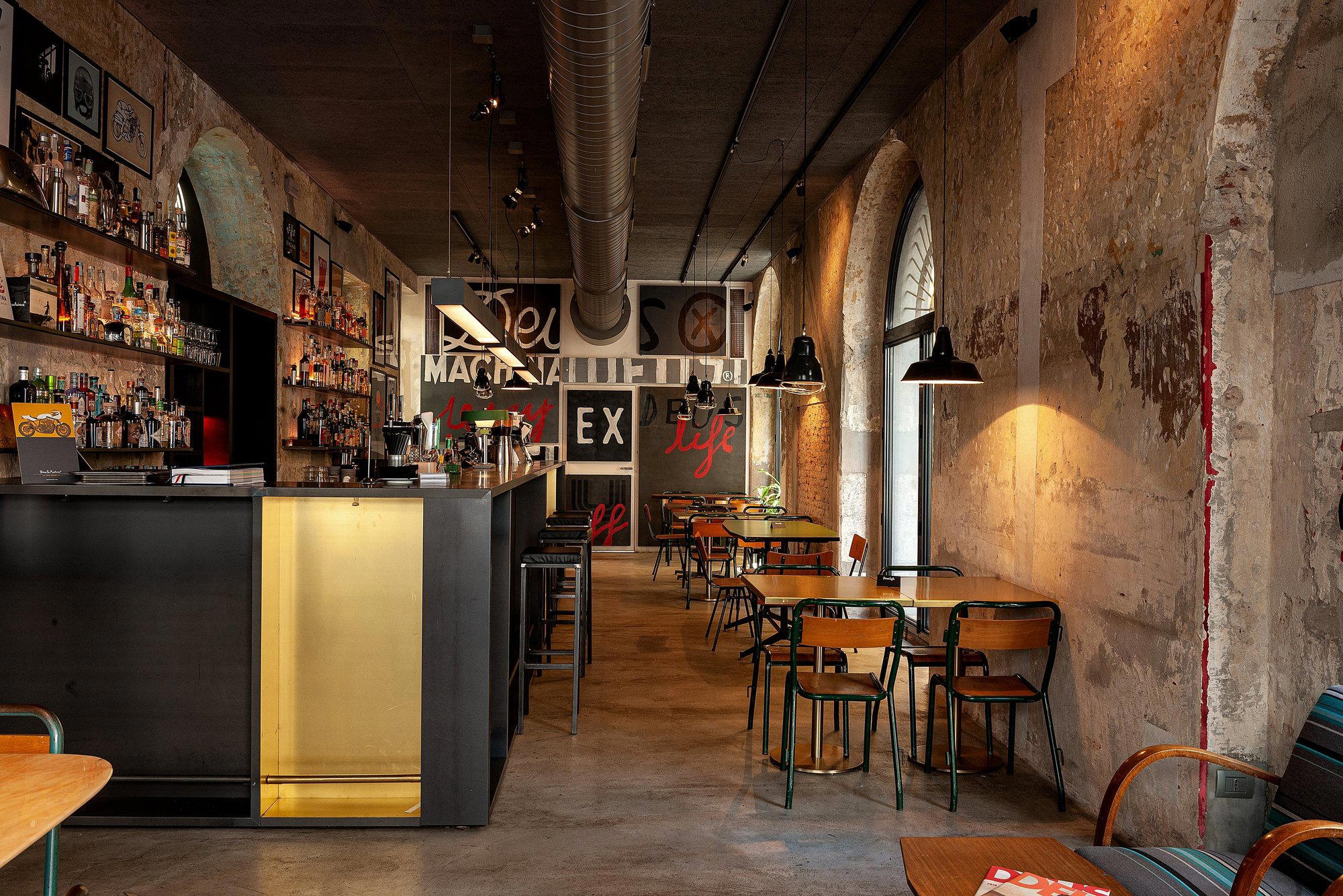
Deus Cafe Navigli is an International Fusion Cafe & Bar at Via Privata Sartirana, 1, 20144 Milano MI, Italy. Milan's Navigli neighbourhood has long operated on a different register from the city's fashion-district restaurants or the formal tasting-menu tier represented by venues like Enrico Bartolini or Seta. Along the Naviglio Grande and its side streets, the dominant format is informal and social: aperitivo bars that fill early, trattorie running on neighbourhood loyalty, and concept spaces that blur the line between hospitality and creative workshop. Via Privata Sartirana sits inside that web, a short address off the main canal drag where foot traffic carries a different character than the Duomo quarter or Brera. Approaching the space, what registers first is the industrial-meets-workshop aesthetic that the Deus brand has refined across locations on multiple continents, translated here into a Milanese setting where exposed materials and open layout read as consistent with the neighbourhood's own renovation-era architecture rather than imposed upon it.
Where the Food Comes From and Why That Question Matters Here
In the Navigli, sourcing conversations tend to be more visible than in Milan's formal dining rooms. The canal district's food culture has historically been working-class and market-driven, and that legacy shapes how cafes and casual venues in the area position themselves. Deus Cafe Navigli operates within that tradition, even as the brand's identity connects it to a global network of spaces that share a design sensibility and a commitment to quality-casual formats. The ingredient question in a venue like this is less about provenance certificates and more about editorial choice: what ends up on the menu reflects decisions about where the space sits between neighbourhood utility and aspirational positioning. Milan's casual food scene has sharpened considerably in the past decade, with international influences entering through both migration and design-culture tourism, and venues in the Navigli have absorbed those pressures in ways that the starred tier, represented by Andrea Aprea or Cracco in Galleria, tends to process differently.
Italy's broader conversation about ingredient sourcing has been shaped by producers and chefs at the formal end: places like Osteria Francescana in Modena or Piazza Duomo in Alba have set a high reference point for regional sourcing as a philosophical framework. What filters down to the cafe and casual tier is a general expectation among Milanese diners that coffee, bread, and core ingredients carry some mark of considered origin, even when the setting is relaxed. Deus Cafe Navigli operates in that downstream context, where the expectation exists even if the formal credential apparatus does not.
The Navigli Hospitality Pattern
The restaurant's position on Via Privata Sartirana places it adjacent to that rhythm, in a space where the format can move between coffee service in the morning, a cafe-casual midday offer, and the social hour that defines the district's evening. That flexibility is the core operating logic of the concept-cafe tier across Milan, and it distinguishes these venues from the fixed-format tasting counters that require advance booking and a different kind of commitment from the diner. For comparison, venues like Verso Capitaneo operate with a clearer format boundary. The Navigli cafe tradition asks less of the visitor in advance and more in the moment.
The Deus Format in Italian Context
Deus Ex Machina began in Australia as a motorcycle and surf culture brand that evolved a cafe format as part of its retail identity. That origin matters for understanding what the restaurant is and is not. It is not a restaurant with a kitchen program oriented toward the kind of sourcing rigour that defines, say, Atelier Moessmer Norbert Niederkofler in the Alto Adige or the coastal discipline of Uliassi in Senigallia. It is a branded concept space where coffee and casual food serve the larger atmosphere of creative community. In Italy, that format is a relative newcomer: the country's existing cafe culture is extremely codified, with the bar-standing espresso tradition so deeply embedded that concept cafes have had to negotiate their positioning carefully. Deus in Milan represents a globalised format landing in a city that already has strong local hospitality identity, and the result is a venue that reads differently to an international visitor than to a Milanese regular.
For Italian comparison, the sourcing conversation at the formal end runs deep: Dal Pescatore in Runate, Le Calandre in Rubano, and Reale in Castel di Sangro each anchor their identity in regional produce and a defined relationship between kitchen and landscape. The cafe tier operates without that explicit architecture, but benefits from Italy's general baseline of ingredient quality, which sets a floor that international visitors from markets with weaker casual food infrastructure often notice. A coffee at a Milan cafe, any Milan cafe, arrives within a production tradition that has no real equivalent in most Anglophone cities. That general quality floor is part of what the restaurant inherits simply by operating in this city. Internationally, the format finds comparison in venues like Lazy Bear in San Francisco, which also uses a concept-community framework, though with a far more formal food program at its centre.
Planning a Visit
The restaurant is located at Via Privata Sartirana, 1, in the 20144 postcode, accessible from the Naviglio Grande on foot or by tram from the city centre. The Navigli district is best reached via tram lines running along Corso di Porta Ticinese, with the side streets off the canal walkable once you arrive. The restaurant is walk-in friendly. Those looking for the formal Italian dining experience at a distance should also consider Enoteca Pinchiorri in Florence or Quattro Passi on the Amalfi Coast as counterpoints that illustrate how far the Italian dining spectrum runs from the casual canal cafe at one end to three-Michelin-star formality at the other. Casa Perbellini 12 Apostoli in Verona and Le Bernardin in New York offer further reference points for the international premium tier that defines how the formal end of the market operates globally.
At-a-Glance Comparison
Comparable venues nearby, for context on price, style, and recognition.
| Venue | Cuisine | Price | Notes |
|---|---|---|---|
| Deus Cafe NavigliThis venue — the venue you are viewing | International Fusion Cafe & Bar | $$ | Not listed |
| Fradiavolo Milano Sempione | Contemporary Neapolitan Pizza | $$ | Sarpi |
| Ristorante Pizzeria Convivium | Italian Ristorante & Pizzeria | $$ | Brera |
| Taverna del Borgo Antico | Italian Trattoria & Pizzeria | $$ | Brera |
| El Mora | Italian Grill and Seafood | $$ | Duomo |
| Alice | Dining | Not listed | Buenos Aires - Porta Venezia - Porta Monforte |
Continue exploring
More in Milan
Restaurants in Milan
Browse all →
Bars in Milan
Browse all →
Hotels in Milan
Browse all →
Wineries in Milan
Browse all →
At a Glance
- Industrial
- Trendy
- Lively
- Energetic
- Casual Hangout
- After Work
- Brunch
- Late Night
- Design Destination
- Standalone
- Open Kitchen
- Craft Cocktails
- Beer Program
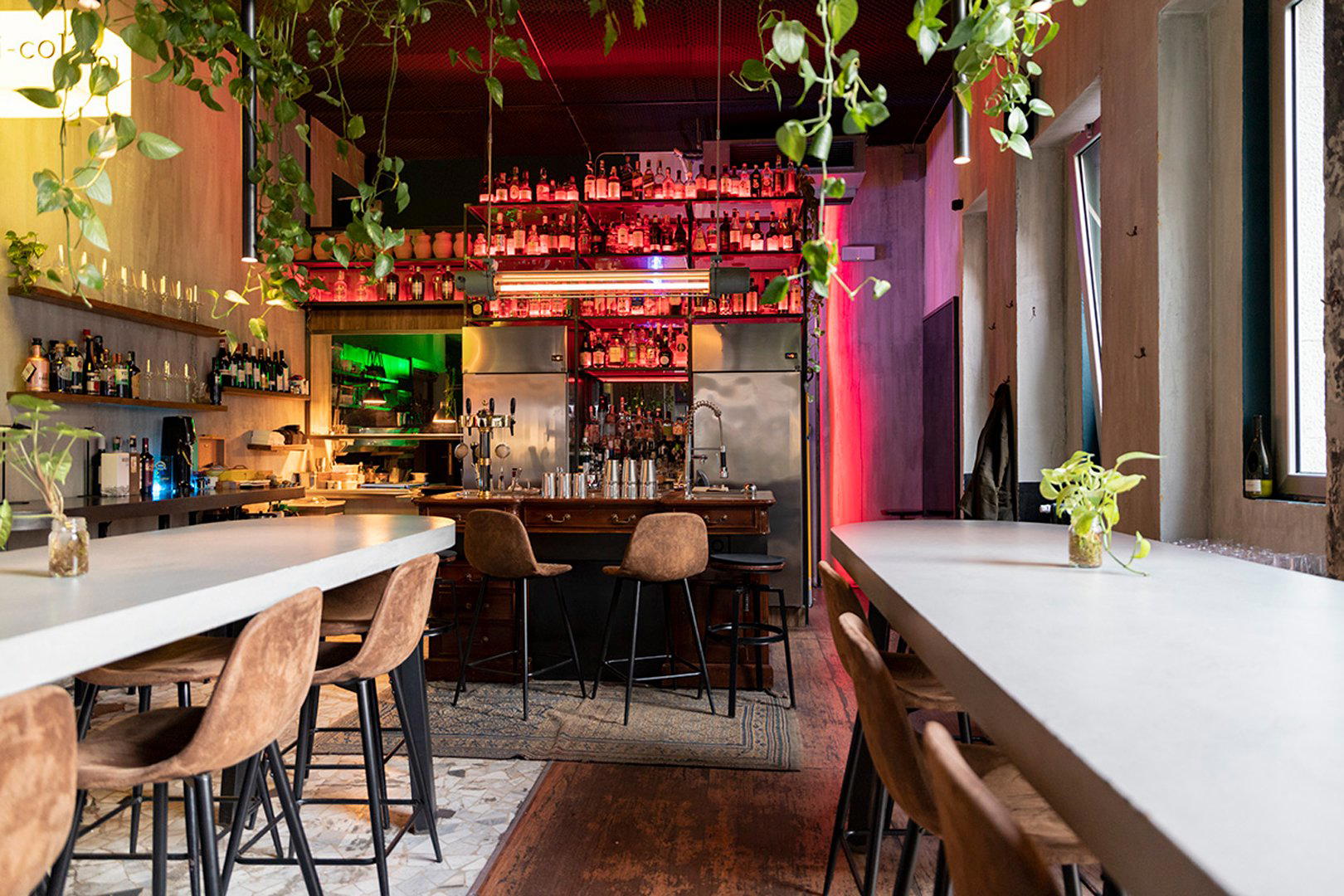
Industrial-style interior with warm wooden accents, colorful 1950s Americana touches, vintage gas pumps, surfboards, and motorcycle memorabilia creating a distinctive, energetic atmosphere.