Our verdict
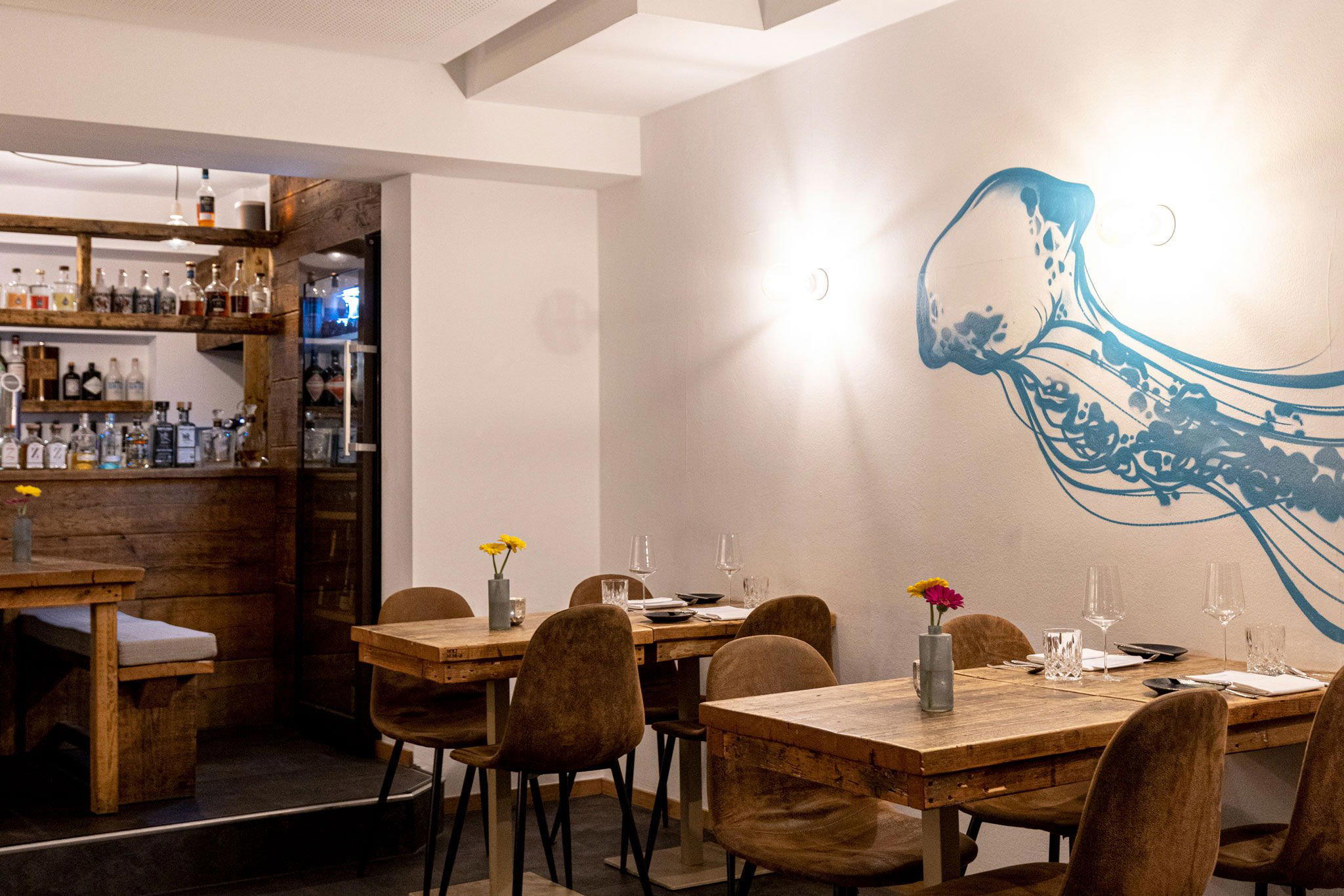
On Lagerstraße in Hamburg's Schanzenviertel, DELTA Bistro occupies a neighbourhood where creative cooking and informal formats have quietly reshaped the city's mid-market dining scene. The bistro format here draws on European traditions adapted to Hamburg's port-city pragmatism, placing it in a different register from the Michelin-tracked fine dining of the Alster waterfront. For visitors reading Hamburg beyond its starred tier, it warrants attention.

Pearl is the En Primeur Club membership app — saves, bookings, and concierge access live there. Same editors, same standards.
- Address
- Lagerstraße 11, 20357 Hamburg, Germany
- Phone
- +49404316136
- Hours
- Mon ClosedTue–Sat 3:30–11 PMSun Closed
- Website
- delta-hamburg.de
- Directions
- Get directions
Schanzenviertel and the Bistro Tradition It Hosts
Lagerstraße cuts through the Schanzenviertel at the point where the neighbourhood transitions from residential density to light-industrial heritage. The buildings along this stretch retain the brick-and-beam bones of Hamburg's warehouse past, and the dining and drinking culture that has grown up around them tends toward the unpretentious: places where the cooking is taken seriously but the room does not announce it. DELTA Bistro sits inside that tradition. Approaching from the street, the address reads as neighbourhood rather than destination, which in Hamburg's current dining conversation is increasingly a statement of intent rather than a limitation.
The Schanzenviertel has developed a recognisable character over the past fifteen years. Where Hamburg's fine dining gravitates toward the Alster waterfront and the hotel-adjacent rooms of the city's more formal quarters, this district has accumulated a different kind of ambition: chefs and operators who have chosen the format of the neighbourhood bistro over the tasting-menu counter, and whose cooking reflects that choice. The bistro register, in Hamburg as in other northern European cities, demands a different discipline than the omakase or multi-course format. Cooking has to hold up under volume, the menu has to read accessibly without being careless, and the room has to work for regulars as much as for occasional visitors.
Hamburg's Dining Tiers and Where the Bistro Fits
Hamburg's restaurant scene operates across a relatively clear set of tiers. At the leading, Restaurant Haerlin and The Table Kevin Fehling carry Michelin recognition and price accordingly, with formats built around extended tasting sequences and service choreography that places them in the same European fine dining conversation as Schwarzwaldstube in Baiersbronn or Vendôme in Bergisch Gladbach. Below that, a cluster of creative and Mediterranean-leaning rooms, among them 100/200 Kitchen and bianc, operate at the €€€€ tier with ambitions that track the starred tier closely.
The bistro format occupies a distinct space in this map. It is not a cheaper version of fine dining, and the better examples of the form are not trying to be. The bistro, in its European sense, is a room where cooking skill and ingredient quality are expressed through restraint in format rather than elaboration of it: fewer courses, shorter menus, less ceremony, and a room temperature that allows for conversation at a normal register. Hamburg has enough of these rooms now that the category has its own internal hierarchy, and a new address on Lagerstraße enters a competitive cohort rather than an empty field.
For context on how Germany's creative dining culture is evolving beyond its starred tier, rooms like CODA Dessert Dining in Berlin and JAN in Munich demonstrate the range of formats now operating outside the traditional tasting-menu envelope. The Schanzenviertel bistro fits that broader national pattern, even if its local expression is specifically Hamburg's.
Cultural Roots of the Bistro in a Port City
Hamburg's relationship with European bistro culture is older and more layered than its fine dining reputation suggests. The city's port history created a hospitality tradition oriented around practicality and directness: rooms that fed people before and after ships departed, before and after markets closed, before and after the working day ended. That culture never fully disappeared, and the contemporary bistro format in Hamburg draws on it even when the cooking references France, Scandinavia, or the Mediterranean.
The bistro as a cultural form rewards attention to sourcing and technique in ways that simpler formats do not require. In northern Germany, that tends to manifest in an emphasis on seasonal produce from the region, cold-water fish from nearby coasts, and a restraint with saucing that reflects both Nordic influence and the general northern European move away from cream-heavy classical cooking. Whether a specific kitchen follows these tendencies or departs from them is a meaningful signal about where it sits in the current conversation. For rooms like Lakeside, the German lakeside context shapes the ingredient logic directly. For a Schanzenviertel bistro, the urban context is the frame, and the cooking answers it differently.
Internationally, the bistro format has found renewed critical attention in the decade since rooms like Le Bernardin in New York City and more format-experimental addresses like Lazy Bear in San Francisco demonstrated that cooking ambition and dining formality are not the same variable. The shift in prestige toward less ceremonial formats has made the well-executed bistro a more interesting editorial subject than it was in the Michelin-maximalist years of the 2000s. Germany has tracked this shift with rooms at the level of ES:SENZ in Grassau, Schanz in Piesport, and Waldhotel Sonnora in Dreis anchoring the starred end, while a growing body of less formally structured rooms operate the space below.
Reading the Address on Lagerstraße
An address at Lagerstraße 11 in the Schanzenviertel carries specific meaning in Hamburg's neighbourhood logic. The area attracts a mixed crowd of creative-industry workers, long-term residents, and the kind of food-literate visitor who reads Hamburg beyond its waterfront. A bistro in this postcode is read by its local audience against a background of other serious neighbourhood rooms, and the competition is not abstract. The question a new address in this district has to answer is whether the cooking and the room earn the loyalty of regulars who have alternatives nearby.
Hamburg's broader restaurant guide, including the full range of the city's dining options, is covered in our full Hamburg restaurants guide. For visitors building an itinerary that spans the city's tiers, the guide maps venues from the Michelin-level rooms of the kind represented nationally by Victor's Fine Dining by Christian Bau and Aqua in Wolfsburg down through the mid-market creative rooms where DELTA Bistro operates, and across to waterfront rooms like the regional European format represented by Bagatelle in Trier.
Know Before You Go
Address: Lagerstraße 11, 20357 Hamburg, Germany
Neighbourhood: Schanzenviertel, Hamburg
Reservations: Booking method not confirmed; walk-in availability is not guaranteed at peak periods in this district.
Hours: Not confirmed at time of publication; verify directly before visiting.
Getting there: The Schanzenviertel is well-connected by Hamburg's U-Bahn and S-Bahn network. The Feldstraße U3 stop and Sternschanze S-Bahn/U-Bahn interchange are the nearest transit options for this part of Lagerstraße.
Frequently asked questions
Is DELTA Bistro okay with children?
The Schanzenviertel address on Lagerstraße 11 sits in a mixed neighbourhood that draws families alongside creatives and professionals. Bistro-format venues in this part of Hamburg generally accommodate children without issue, though calling ahead is advisable since specific family policies for DELTA Bistro have not been publicly documented. The surrounding area offers accessible street access and a low-formality atmosphere consistent with the neighbourhood's character.
How would you describe the vibe at DELTA Bistro?
Lagerstraße 11 occupies the transitional edge of the Schanzenviertel, where converted light-industrial buildings sit alongside residential streets, and that tension tends to shape the rooms that open here: casual in posture, considered in detail. Hamburg's bistro tier at this address draws a crowd that prefers a functioning dining room over a performative one. Expect a neighbourhood rhythm rather than a destination-dining spectacle.
How does DELTA Bistro fit into Hamburg's broader bistro scene compared to Schanzenviertel neighbours?
Hamburg's bistro tier sits distinctly below the Michelin-holding addresses like Restaurant Haerlin and The Table Kevin Fehling, occupying a category defined by neighbourhood regulars rather than destination diners. DELTA Bistro's position on Lagerstraße 11 in the Schanzenviertel places it in one of Hamburg's most active creative districts, where competition among informal dining rooms is dense and a loyal local following is typically the clearest measure of staying power.
What's the signature dish at DELTA Bistro?
Specific menu details for DELTA Bistro are published details are limited at this time. Check the venue's official channels for the latest details.
Where do I go for DELTA Bistro?
DELTA Bistro is located at Lagerstraße 11, 20357 Hamburg, Germany, Hamburg.
Can I walk in to DELTA Bistro?
Walk-in availability at DELTA Bistro on Lagerstraße 11 depends on the day and service period. Schanzenviertel venues at this address level tend to fill Thursday through Saturday evenings, so a reservation is the safer approach for those nights. Weekday lunches and early dinners are generally more accessible without advance booking in this part of Hamburg.
What's the signature at DELTA Bistro?
What the Lagerstraße 11 address does signal is a bistro format operating in Hamburg's Schanzenviertel, a neighbourhood where the dining identity tends toward produce-led, mid-register cooking rather than tasting-menu formality. Confirming the current focus directly with the venue is advised.
The Essentials
Comparable venues nearby, for context on price, style, and recognition.
| Venue | Cuisine | Price | Awards | Notes |
|---|---|---|---|---|
| DELTA BistroThis venue — the venue you are viewing | German Steakhouse Bistro | $50–100 | Not listed | Not listed |
| Beisser – Alsterhaus | Steakhouse & Grill | Not listed | Not listed | Neustadt, Steakhouse & Grill |
| MAQUIS | Refined Vegetarian & Vegan Bistro | $50–100 | Not listed | Altona-Altstadt, Refined Vegetarian & Vegan Bistro |
| Grill Royal Hamburg | Premium Steakhouse & Grill | $100–150 | Michelin Plate · Star Wine List | Hamburg-Altstadt, Premium Steakhouse & Grill |
| JIN GUI Hamburg | Modern Latin American | $30–50 | Michelin Plate | Neustadt, Modern Pan-Asian Fusion |
| Der erdbeerfressende Drache | Modern Fusion Small Plates Omakase | Not listed | Not listed | Rotherbaum, Modern Fusion Small Plates Omakase |