Defachang on Xi'an's West Main Street is the city's most visited address for jiaozi in the Tang Dynasty dumpling tradition, where dozens of filling varieties arrive in a structured sequence that reads less like a restaurant meal and more like an edible survey of Shaanxi's larder. The format is ceremonial, the crowds are real, and the dumplings are the point.
 Discover on Pearl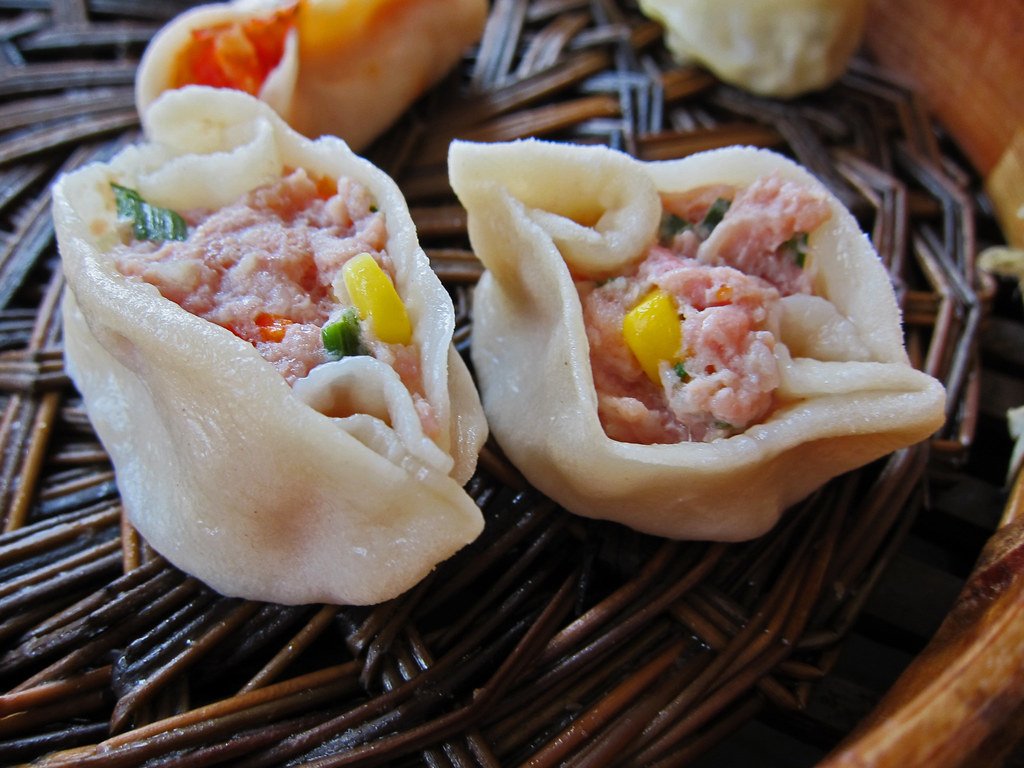
Xi'an's Dumpling Tradition and Where Defachang Sits Within It
Xi'an's dumpling culture predates most of what the rest of China now calls northern Chinese cuisine. The city sits at the eastern terminus of the Silk Road, and its food history reflects centuries of ingredient exchange: lamb from the northwest, aromatics from Central Asia, wheat grown across the Guanzhong Plain. By the Tang Dynasty, shaped and filled dough had become a fixture of court banquets, with fillings calibrated to season and rank. That lineage is the frame through which Defachang (德发长) positions itself, operating at 西大街3号 in the heart of the old city, a few minutes' walk from the Drum Tower and the Muslim Quarter. For our full guide to eating in the city, see our full 西安 restaurants guide.
The dumpling banquet format that Defachang practises draws from a documented historical claim: that Tang imperial kitchens served jiaozi as a multi-course ceremonial sequence rather than a single dish. Whether or not every detail of that claim survives historical scrutiny, the format itself has real logic. Serving dumplings one variety at a time, in small quantities, forces attention onto each filling rather than allowing the meal to collapse into a single undifferentiated plate. It is closer in structure to an omakase progression than to what most visitors associate with northern Chinese dumplings.
The Ingredient Argument Behind the Menu
The editorial case for Defachang rests less on the restaurant itself and more on what the dumpling format reveals about Shaanxi's ingredient geography. The fillings that cycle through a full dumpling banquet here span the province's agricultural range: pork and cabbage combinations that reflect the Guanzhong Plain's staple farming; lamb fillings that connect the menu to the Muslim Quarter half a kilometre to the north; seafood varieties that point to trade routes rather than local catch; and vegetable-forward options that use seasonal produce in ways closer to the region's temple cooking tradition.
That ingredient diversity is worth noting because it cuts against the assumption that Xi'an food is monolithic. The city's most recognisable exports — 老白家肉夹馍 and 老劉家BiangBiang麵 — are street-food formats built around one or two core ingredients. The dumpling banquet does the opposite: it uses the same dough wrapper as a neutral vehicle to survey as wide an ingredient range as the kitchen can credibly source. The result is a more encyclopaedic reading of the local larder than any single dish could provide.
The wheat flour wrapper itself matters here. Guanzhong wheat, grown in the Wei River basin that runs through central Shaanxi, produces dough with a particular elasticity and mild sweetness. That characteristic is load-bearing in the dumpling format: a wrapper that tears under filling weight, or that dominates the palate, would undermine the case for variety. The dough is the constant variable across all filling types, which means its quality sets the floor for the entire sequence.
The Physical Setting and What It Signals
West Main Street in Xi'an occupies a specific position in the city's spatial logic. It runs east from the Bell Tower toward the old city's western gate, parallel to the Muslim Quarter but operating in a different register: more formal, more commercial, less chaotic. Defachang's address at the western end of this corridor puts it adjacent to city government offices and within the orbit of domestic tourism infrastructure built around the Tang Dynasty heritage narrative. The building's architecture plays into that framing, with interior design cues that reference imperial aesthetics more than the utilitarian diner format that most northern Chinese dumpling houses adopt.
The result is an atmosphere that reads differently depending on what the visitor brings to it. Travellers arriving from markets and street stalls in the Muslim Quarter will find the formal service register and structured menu a deliberate contrast. Those comparing it to the high-end Chinese restaurant formats available elsewhere in China , Michelin-recognised operations like Fu He Hui in Shanghai, or the Taizhou-rooted precision of Xin Rong Ji in Chengdu , will find Defachang occupying a different tier: popular, institutionally significant, and built around a specific cultural argument rather than refined technique for its own sake.
For reference on how Chinese restaurant categories operate across price tiers and regional traditions, it is useful to compare the dumpling banquet format against the full-service Cantonese and Taizhou operations that dominate China's fine dining conversation. Xin Rong Ji (Xinyuan South Road) in Beijing, Imperial Treasure Fine Chinese Cuisine in Guangzhou, and Dai Yuet Heen in Nanjing all operate in the formal multi-course Chinese dining register where technique and sourcing are constantly legible to the diner. Defachang's claim is more specific and more populist: it argues for a regional format, not a refined cuisine. That distinction matters when calibrating expectations.
Planning a Visit
Defachang draws consistent foot traffic from domestic tourists, organised group tours, and Xi'an residents marking occasions, which means queues at peak meal hours are common and should be factored into any itinerary. The West Main Street location is walkable from the Bell Tower Metro station, placing it within the central tourism corridor that most visitors to Xi'an pass through at least once. The dumpling banquet is the format most associated with the restaurant, and it is worth committing to the full sequence rather than ordering à la carte if the intention is to understand the ingredient range the menu is built around. Those visiting Xi'an across multiple days might consider pairing Defachang with street-level eating in the Muslim Quarter to get a more complete picture of the city's food range. For context on how Chinese regional dining traditions compare across the country, the broader EP Club restaurant coverage , including Ru Yuan in Hangzhou, Chef Tam's Seasons in Macau, Shang Palace in Yangzhou, Pingjiangsong in Suzhou, Fleurs Et Festin in Xiamen, Wenru No.9 in Fuzhou, Ensue in Shenzhen, and Antstory in Quanzhou , provides useful comparative framing. For those curious how Chinese dining traditions compare against fully international contexts, Le Bernardin in New York City and Lazy Bear in San Francisco represent the kind of ingredient-forward, tasting-menu logic that the dumpling banquet format echoes in its own regional way.
Frequently Asked Questions
- Is Defachang Dumpling Restaurant (德发长) child-friendly?
- Xi'an's dumpling banquet format is approachable for children, and the bite-sized, varied nature of the menu tends to work better for younger diners than long tasting menus at higher price points.
- What should I expect atmosphere-wise at Defachang Dumpling Restaurant (德发长)?
- If you arrive expecting a casual street-food environment, you will find something more formal: the service is structured, the setting references Tang Dynasty aesthetics, and the meal follows a set sequence. In a city where much of the memorable eating happens at pavement level, Defachang's indoor, sit-down format occupies a distinctly institutionalised register , closer to a heritage dining room than a neighbourhood restaurant.
- What do people recommend at Defachang Dumpling Restaurant (德发长)?
- The dumpling banquet is the consistent recommendation, partly because it is the format the restaurant's reputation is built around and partly because ordering it in full allows the ingredient range of Shaanxi's larder to come through across multiple varieties. Single-order visits tend to miss the point of the format.
- Do I need a reservation for Defachang Dumpling Restaurant (德发长)?
- Advance booking is advisable, particularly for the dumpling banquet format and for visits during peak domestic tourism periods such as national holidays. Walk-in waits at lunch and dinner on busy days can be substantial, given the restaurant's position on the main tourist corridor near the Drum Tower.
- How does Defachang's dumpling banquet differ from standard jiaozi restaurants across northern China?
- Most northern Chinese dumpling restaurants serve jiaozi as a single shared dish, typically in one or two filling varieties chosen by the table. Defachang's banquet format delivers a structured sequence of small-portion dumplings in many filling types, one after another, in a format that references Tang Dynasty court dining. The variety count across a full banquet can reach several dozen distinct fillings, making it a categorically different eating experience from the diner-style dumpling houses common in Beijing or Shanxi.
Side-by-Side Snapshot
These are the closest comparables we have in our database for quick context.
| Venue | Cuisine | Price | Awards | Notes |
|---|---|---|---|---|
| Defachang Dumpling Restaurant (德发长) | This venue | |||
| Fu He Hui | Vegetarian | ¥¥¥¥ | Michelin 2 Star | Vegetarian, ¥¥¥¥ |
| Lai Heen | Cantonese | $$$ | Michelin 1 Star | Cantonese, $$$ |
| Xin Rong Ji | Taizhou Cuisine, Taizhou | ¥¥¥ | Michelin 1 Star | Taizhou Cuisine, Taizhou, ¥¥¥ |
| Five Foot Road | Sichuan | $$ | Michelin 1 Star | Sichuan, $$ |
| Aji | Nikkei, Innovative | $$$$ | Michelin 1 Star | Nikkei, Innovative, $$$$ |
Need a table?
Our members enjoy priority alerts and concierge-led booking support for the world's most difficult tables.
Get Exclusive Access