De Ridderhof
De Ridderhof sits at Sportlaan 2 in Maassluis, a port town on the Nieuwe Waterweg west of Rotterdam that rarely appears on the regional fine-dining circuit. The venue occupies a quiet stretch of the town's sports-adjacent edge, placing it outside the expected urban cluster of South Holland restaurants. For visitors building a broader picture of Dutch regional dining, it represents a lesser-documented stop in a city with deep maritime heritage.
Pearl is the En Primeur Club membership app — saves, bookings, and concierge access live there. Same editors, same standards.
- Address
- Sportlaan 2, 3141 XN Maassluis, Netherlands
- Phone
- +31105911211
- Website
- restaurantderidderhof.nl
- Directions
- Get directions
 Saves & bookings on Pearl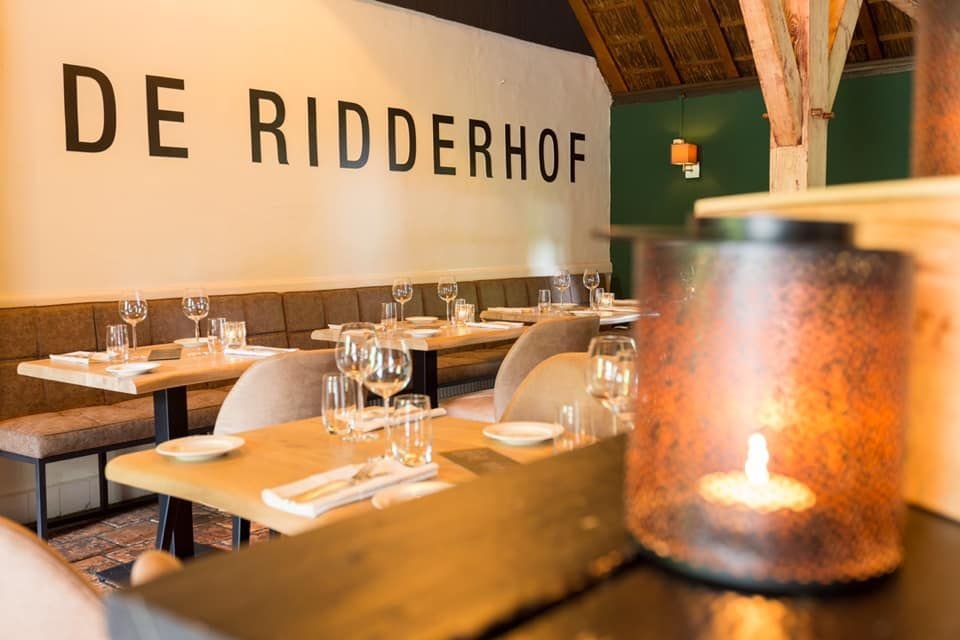
Maassluis and the Margins of South Holland Dining
The Dutch fine-dining conversation tends to orbit a familiar set of addresses: the multi-starred kitchens of Amsterdam, the technical ambition of Rotterdam operations like FG - François Geurds in Rotterdam, or the countryside estate format exemplified by De Lindenhof in Giethoorn and De Treeswijkhoeve in Waalre. Maassluis, a compact port town on the Nieuwe Waterweg roughly 20 kilometres west of Rotterdam's centre, sits outside that conversation almost by design. The town's identity is built around its historic lock system, its tugboat heritage, and a working-class waterfront that has never positioned itself as a regional dining destination. That context matters when assessing what a restaurant here is actually doing.
De Ridderhof at Sportlaan 2 is addressed to the quieter, sports-facility edge of Maassluis, away from the historic harbour and the narrow lanes of the old town centre. In Dutch regional dining, that kind of positioning is not unusual: some of the country's most considered kitchens occupy low-profile addresses, from De Groene Lantaarn in Staphorst to Brut172 in Reijmerstok. The address tells you more about the local tradition of neighbourhood restaurants serving a regular community than it does about ambition or quality tier.
What the Setting Signals
Approaching Sportlaan on foot or by car, the surroundings are residential and low-key, with the kind of broad, tree-lined street common to post-war Dutch urban planning. There is no theatrical entrance, no valet gesture, no signage designed to announce arrival to the wider world. This is a format common across the Netherlands' regional dining scene, where the restaurant's relationship with its immediate community often takes precedence over destination appeal. The physical environment functions as a signal that this venue is working within a local logic rather than pitching itself to the wider South Holland food circuit.
South Holland's broader dining geography includes water-adjacent venues that draw heavily on the region's delta produce and North Sea supply chains. The province sits at the intersection of river-fed agricultural land and coastal fishery access, which has historically shaped kitchens across the region. Restaurants closer to the Hook of Holland and the Nieuwe Waterweg corridor have access to both fresh North Sea catch and the market-garden produce of the Westland greenhouse belt, one of Europe's most productive horticultural zones. Whether a kitchen in Maassluis actively draws on that local supply network is the kind of detail that defines its place in the regional picture.
Ingredient Sourcing and the Regional Supply Question
In Dutch fine dining at large, the sourcing question has become increasingly central to how kitchens position themselves. De Nieuwe Winkel in Nijmegen has built an internationally recognised programme around organic and plant-centred sourcing. Inter Scaldes in Kruiningen works within the Zeeland produce tradition, where the estuary environment generates shellfish and coastal vegetables that define the menu's character. Even at the summit of the market, as with De Librije in Zwolle, the sourcing narrative is inseparable from what arrives at the table.
Maassluis's geography gives any kitchen here a plausible case for proximity sourcing. The Nieuwe Waterweg connects directly to North Sea fishing grounds. The Westland greenhouses lie within 10 kilometres. The Zuid-Holland polder system produces dairy, poultry, and root vegetables that supply Rotterdam's professional kitchens. A restaurant at Sportlaan 2 operating within that supply network would sit in a well-resourced regional context, even without the prestige address of a city-centre postcode. The restaurant's setting places it within a well-resourced regional context.
For comparison, the contrasting trajectory is visible in how venues like Aan de Poel in Amstelveen or Central Park in Voorburg operate just outside major urban centres, drawing on peri-urban supply chains while serving a largely local and suburban clientele. De Ridderhof's Maassluis positioning places it within that same suburban-Dutch category, where the local regulars rather than destination tourists make up the majority of covers.
Where De Ridderhof Sits Relative to the Regional Tier
The restaurant sits outside the recognised South Holland dining hierarchy. The awarded end of that hierarchy runs from Ciel Bleu in Amsterdam downward through starred regional addresses, and internationally it is worth noting the contrast with destination formats like Le Bernardin in New York City or Lazy Bear in San Francisco, where sourcing narratives are built into the menu architecture and communicated explicitly to guests.
Dutch regional restaurants that have not entered the Michelin or Gault&Millau; documentation systems are not necessarily lesser kitchens; they are often operating within a different logic, serving a community rather than a circuit. Venues like Tribeca in Heeze and 't Nonnetje in Harderwijk exist at different points of that spectrum. De Bokkedoorns in Overveen represents the North Holland coastal end of the same regional-restaurant tradition. The restaurant belongs to a category of Dutch neighbourhood restaurants whose depth of local knowledge and repeat custom often exceeds what their public profile suggests.
Planning a Visit to Maassluis
Maassluis is accessible from Rotterdam Centraal by regional train, a journey of approximately 25 minutes via Schiedam or Vlaardingen, with the station a walkable distance from the town centre. The Sportlaan address sits a short distance from that centre, reachable on foot or by local transport. Visitors combining the restaurant with a broader South Holland itinerary might use Rotterdam as a base, given the city's direct rail and metro connections across the province.
Comparable Spots, Quickly
Comparable venues nearby, for context on price, style, and recognition.
| Venue | Cuisine | Price | Notes |
|---|---|---|---|
| De RidderhofThis venue — the venue you are viewing | Dutch Seafood with European Fusion | $$$$ | Not listed |
| Chefsbar Seinpost | Modern Dutch Seafood Fine Dining | $$$$ | Scheveningen |
| The Seafood Bar | Fresh Seafood and Shellfish | $$ | P.C. Hooftbuurt |
| Mr Porter | Modern Steakhouse | $$$$ | Spuistraat Noord |
| De Gastendonk | Dutch Seasonal Fine Dining | $$$$ | Horst |
| Rooie Nel | Modern French Bistro | $$$$ | Oudwijk |
Continue exploring
More in Maassluis
Restaurants in Maassluis
Browse all →
Bars in Maassluis
Browse all →
Hotels in Maassluis
Browse all →
Wineries in Maassluis
Browse all →
At a Glance
- Elegant
- Romantic
- Classic
- Scenic
- Date Night
- Business Dinner
- Special Occasion
- Celebration
- Group Dining
- Private Dining
- Garden
- Wine Cellar
- Historic Building
- Terrace
- Extensive Wine List
- Craft Cocktails
- Garden
Current opening hours
- Monday
- Closed
- Tuesday
- 12–10 PM
- Wednesday
- 12–10 PM
- Thursday
- 12–10 PM
- Friday
- 12–10 PM
- Saturday
- 12–10 PM
- Sunday
- 12–10 PM
Hours can change for holidays and private events. Last verified .
Warm and sophisticated atmosphere in converted farm buildings with impressive architecture, featuring a large wine cellar and intimate dining rooms with natural lighting from garden views.