Biergarten
Biergarten on Schiestraat sits inside Rotterdam's working-class bar tradition, where outdoor drinking culture and neighbourhood regulars define the room as much as the drinks list. The format is unpretentious by design, placing it in a different register from the city's cocktail-forward venues. For an evening that runs at street level rather than above it, this is the address.

Pearl is the En Primeur Club membership app, where members save venues, book tables and use the concierge.
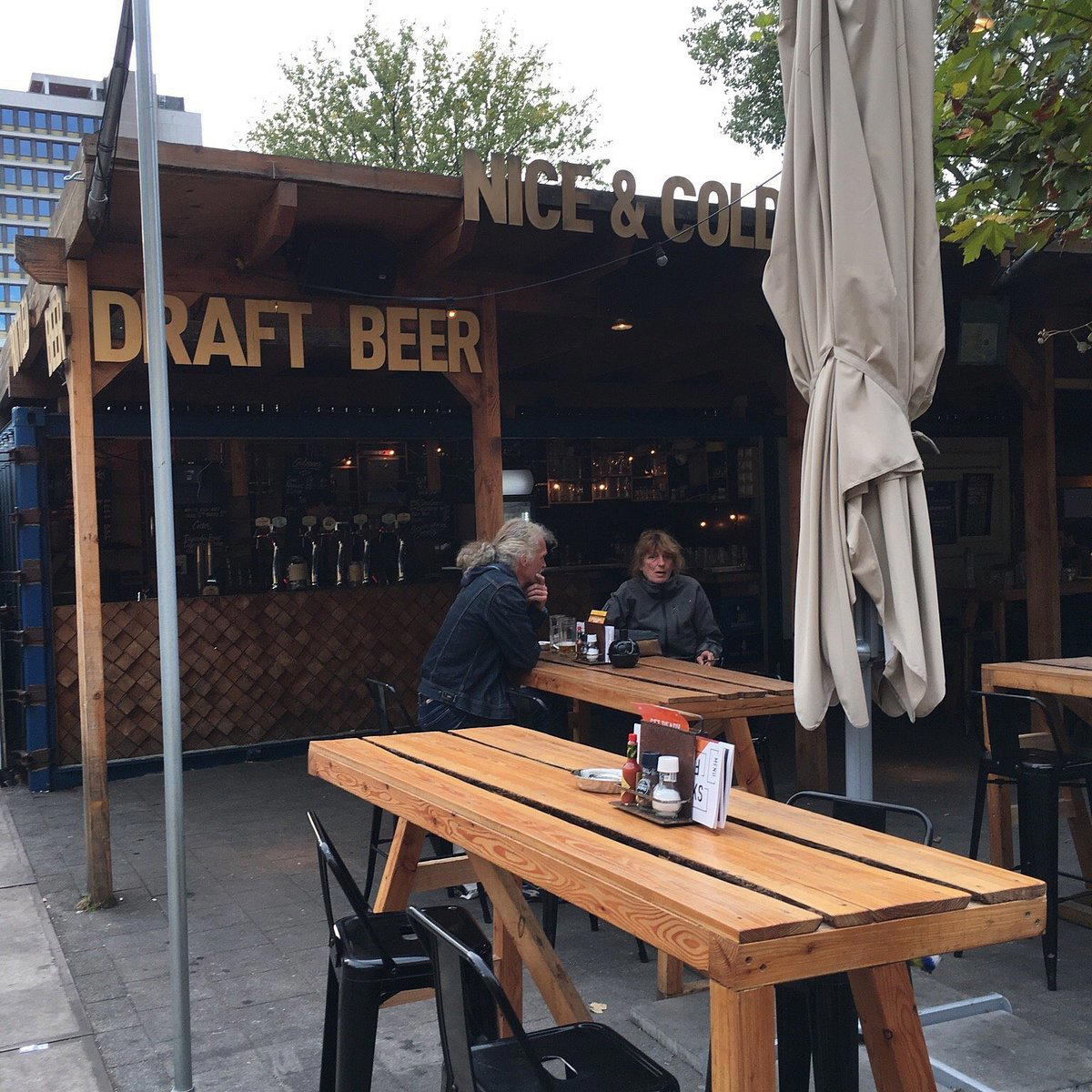
Rotterdam's Outdoor Drinking Culture, Ground Level
The biergarten format has a specific social contract. Tables spill outward, the pace is set by the neighbourhood rather than the venue, and the measure of success is how long people stay rather than how much they spend. On Schiestraat in Rotterdam's city centre, Biergarten inhabits that contract directly. The street sits within a dense residential and commercial corridor that has long supported a particular kind of bar, one where the threshold between inside and outside, between regular and newcomer, is low and deliberately so.
Rotterdam's bar scene has diversified considerably over the past decade. The city now carries a range of drinking formats that runs from precision cocktail programmes to craft beer specialists to neighbourhood cafés that have operated on the same block for generations. Biergarten belongs to the latter current: it is not trying to position itself against Botanero or against the technical ambition you find at venues importing ideas from Door 74 in Amsterdam. The competitive set here is the street itself, the rhythm of people moving between work, home, and a glass outside.
The Craft Behind the Counter
In a biergarten context, the bartender's role is less about theatrical technique and more about read and pace. The craft is social rather than alchemical. A good operator at this kind of venue knows when to fill a glass without being asked, when to let a group run its own conversation, and how to maintain a floor that feels relaxed rather than ignored. The training that matters here is not in clarifications or fat-washing but in the older hospitality discipline of presence without interruption.
Rotterdam has produced bartenders who move fluidly between these registers. The city's drinking culture, shaped by its port history and its relatively compact, walkable centre, rewards people behind the bar who understand the difference between service and performance. At venues like Cafe Kiem and 't Ouwe Bruggetje, that hospitality tradition runs deep. Biergarten operates in the same current, where the measure of skill is atmosphere management over the course of an evening rather than the complexity of a single drink.
The outdoor or semi-outdoor drinking format demands a particular kind of attentiveness from the team. Weather, noise levels, the flow of foot traffic on Schiestraat, all of it factors into how a session lands. Venues operating in this format across northern European cities have learned that the physical environment is as much a tool as the menu itself. Getting it right means the space does half the work; getting it wrong means no amount of good beer recovers the evening.
Where Biergarten Sits in Rotterdam's Bar Map
Rotterdam's centre and its immediately surrounding neighbourhoods support a dense cluster of bars at different price points and with different orientations. Café De Ooievaar represents one node of that network, with its own neighbourhood identity. Biergarten on Schiestraat occupies a position that is geographically central and socially open, meaning it functions as an entry point into an evening rather than a destination in itself.
That positioning is not a criticism. Some of the most reliable bars in any city are the ones that do not demand anything from you. They are not asking you to dress a certain way, understand a particular drinks programme, or commit to a long format. They are asking you to sit down and have a drink in good company. In Rotterdam, where the bar culture has developed enough sophistication that some venues now attract attention from the same travellers who visit Bowie in The Hague or Brasserie Lalou in Delft, there is real value in a place that stays in its lane.
For visitors arriving from elsewhere in the Netherlands, the contrast is readable. Florin Utrecht in Utrecht and Café Barolo in Eindhoven each carry their own regional character. Rotterdam's version of the relaxed neighbourhood bar tends to be less precious about its heritage than comparable venues in Amsterdam and more directly shaped by the city's working identity. Biergarten reflects that. The address on Schiestraat is not advertising itself as a preservation of something; it is simply operating in a tradition that the neighbourhood keeps alive by showing up.
Planning Your Visit
Schiestraat 18 sits in a section of Rotterdam that is navigable on foot from the central station district, making it accessible whether you are moving through the city or have planted yourself for the evening. As with most venues of this format, the practical logistics are uncomplicated: no booking infrastructure is required, no dress code applies, and the format does not impose a minimum spend or a fixed duration. The bar is leading treated as a station in a longer evening rather than as its own destination, though it functions in both modes depending on the group.
For those building a wider Rotterdam evening, the city's bar density on and around Schiestraat means you are rarely more than a short walk from a different format. Botanero offers a different register if the evening calls for it. For a fuller map of what Rotterdam's drinking and dining scene carries across all price points, the EP Club Rotterdam guide covers the city's venues in depth. Internationally, for those tracking outdoor and informal drinking formats with craft credentials, Bar Leather Apron in Honolulu operates at the far end of the same spectrum, where informal format meets technical discipline. Biergarten does not claim that ground, but it shares the underlying premise that hospitality does not require formality to be effective.
For visitors coming from outside the Netherlands and building a multi-city itinerary, Boode Foodbar in Bathmen shows how smaller Dutch venues outside the major cities carry their own distinct character. Rotterdam's bar scene, with Biergarten as one point on the map, sits in a national drinking culture that has more range than most international visitors initially expect.
Continue exploring
More in Rotterdam
Bars in Rotterdam
All bars in Rotterdam →
Restaurants in Rotterdam
All restaurants in Rotterdam →
Hotels in Rotterdam
All hotels in Rotterdam →
Wineries in Rotterdam
Browse all →
Details
- Lively
- Cozy
- Rustic
- Energetic
- Group Outing
- Casual Hangout
- After Work
- Beer Garden
- Communal Tables
- Outdoor Terrace
- Craft Beer
Current opening hours
- Monday
- 3 PM–12 AM
- Tuesday
- 3 PM–12 AM
- Wednesday
- 3 PM–12 AM
- Thursday
- 3 PM–12 AM
- Friday
- 3 PM–1 AM
- Saturday
- 12 PM–1 AM
- Sunday
- 12 PM–12 AM
Hours can change for holidays and private events. Hours as of .